Understanding Diagnosis Part 6 Happiness Isn't Brain Surgery Episode 30f
Dr. Dawn-Elise Snipes breaks down why you worry excessively: it might be low blood sugar, caffeine, thyroid problems, or learned patterns from trauma. She recommends getting a medical checkup first, then adding sleep, nutrition, and writing down racing thoughts to calm your nervous system.
Chapters
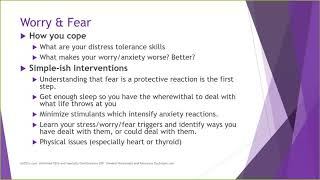
Welcome to Happiness isn't Brain Surgery with Doc Snipes. This podcast was created to provide you the information and tools Doc Snipes gives her clients so that you too can start living happier. Our website, Docsnipes.com has even more resources, videos and handouts, and even interactive sessions with Doc Snipes to help you apply what you learn. Go to Docsnipes.com to learn more. This is the last section in our section on symptoms, and we've been talking about the general symptoms of depression and anxiety, and I've been hopefully helping you see that the symptoms that we use to define depression and anxiety can be caused by a variety of things. It's not necessarily just a mental health issue. It can be caused by physiological problems, hormone imbalances, inadequate sleep, poor nutrition, etc. So just saying to somebody you're depressed, so you need to go to a counselor, that may not help them feel better if their problems are not only negative self talk or negative self esteem, which for most people that's not their only problem. So helping yourself, educate yourself about what causes these symptoms or what can contribute to these symptoms can help you go through and go, is that contributing to this symptom for me? And if it is, what do I need to do about it? In this last segment, we're going to talk about the causes and interventions for worry and fear and hypervigilance. So excessive worry or fear. Now remember, fear and anger are the opposites, or whatever you want to call it, of the fight or flight reaction. When you sense a threat, whether it's a real threat or not, when your brain perceives that there's a threat, you will probably either feel angry or fearful. And that's your body's way of saying you either need to fight to protect yourself or you need to run and get the hell out of here to protect yourself. Some people don't run physically. They will just kind of wall off into themselves and withdraw. But that's still an escape sort of thing. So understanding what worry and fear are about, that's the anxiety. That's your body sensing a threat, telling you you need to flee. Okay, so we got that. Now we got to figure out what's causing it. What is telling our body that there's a threat. It can be from a neurotransmitter imbalance, and that can be from medications, inadequate sleep, hormone changes. There's a lot of things, negative thinking patterns where whenever something happens, you view it in negative terms, which can add to worry or fear. Or maybe you just have you were raised in an environment maybe, or for whatever reason, you're somebody who worries about everything. You're always looking for what's going to happen and you're always expecting something bad to come around the corner. The effects of drugs, even over the counter medications like decongestants or caffeine can increase anxiety quite a bit. And then when you start feeling your heart racing and stuff, you might start worrying that you're having a heart attack, or you might take that symptom and go, I'm freaking out about something, I don't know what it is. And you associate that physical symptom and you call it worry or fear, and then you just try to find something and pluck it out of the air to validate what you think you're feeling inside. Give yourself a reason for your heart to be racing. So yes, there's a reason. It could be the Sudafed you just took, so pay attention to what you're doing. When your blood sugar gets low, some people also get shaky and their heart may start to race because your body secretes a bunch of cortisol when your blood sugar gets really, really low to raise your blood glucose. So that's the reason. So you want to look and say, well, when was the last time I ate? Is my blood sugar too low? Physical issues can also cause symptoms of worry and fear, such as racing heart and dizziness and shakiness. Heart and thyroid issues can. Now, you know, I don't. Heart issues are probably the least common cause for worry and worry and fear that you're trying to label. So I don't want you to get all freaked out about that. A lot of times, much simpler. A lot of times it's a combination between being overwhelmed, being overstressed, not getting enough sleep, having negative thinking patterns, and maybe some hormone imbalances. Either because you're going through a change of life or because you've got some thyroid issues going on that's also easily treatable. So I don't want you to get freaked out about it. But it's always good to have a physical to rule out anything that is easily treatable. The function of worry and fear is survival. So the body is saying, there might be something going on, there might be a problem. Think about your fire alarm. And this is very true. In our house, when the fire alarm goes off, it's telling you, there might be a fire, there is smoke, there might be a fire. Now, in our house, very rarely is there actually a fire. Usually it's me cooking or trying to cook. So walking away from the stove, getting sidetracked, and something burns and then the fire alarm goes off. Your threat response system is the same way. It's saying there might be a threat based on prior experiences, based on the information that I'm getting in, you need to check it out now then. Now you kick in your higher order thinking and you look around and you go, is there really something to be stressed out about right now? And that's where most of us fall short. We start getting worried and we start like getting frantic about how to make it stop. Like my daughter's dog, when the fire alarm goes off, she starts running around the house like a little mad woman and just freaking out. Now, granted, it hurts her ears. I don't blame her. So we try to get her outside as quickly as possible, but running around in circles isn't getting her away from the threat. It's not making the problem go away. It's just using up a bunch of energy. That's what a lot of us do. We start freaking out and instead of saying, okay, is there really a threat? I'm feeling this anxiety. What next? Well, next is to evaluate it and see if there's really a problem. And if there is, then to do something about it. And if there's not, then to go, false alarm, move on. How do you cope? It's important to develop what we call distress tolerance skills. And those are skills that you use when things aren't going so well, but you can't change it. Like, you have to go to the doctor. Well, for me, if you have to go to the doctor and get a shot, I'm terrified of needles, but I have to do it. So distress tolerance skills, when they're giving me a shot, mentally, I am somewhere else. You know, I'm thinking about something completely different. So I'm not focusing on needle. Now. We have multiple videos on our YouTube channel on distress tolerance skills, so I'm not going to go through a bunch of them right now. You can also Google distress tolerance skills and learn some additionally, what makes your worry or anxiety worse? So what is it that you do that makes things worse? So if you're starting to worry because you've had this cough for like two weeks and you get online and, and you start going to WebMD and other places and looking for what could cause a persistent cough, you will find some pretty horrific things. For most people, that is the worst thing to do is to go online, but for yourself, and maybe you have a friend that you talk to that tends to make it worse. Because they're like, oh, you know, I know somebody who had that one time and let me tell you, it wasn't good. Well, they can totally freak you out. Or you could have a friend that can help calm you down and go, you know what? I've had that before. It's no big deal. Or you've had that cough since I've known you and you've had multiple checkups and nothing's ever been wrong, so you know, probably nothing. And they can give you a different perspective. Maybe it helps to just distract yourself, maybe it helps to journal. But what makes your anxiety or worry better? Those are the things you want to have a list of. So when you start feeling all stressed out, you can do something. Simplish interventions. Understand that fear is a protective reaction. That is the first step. Once you embrace it and tell yourself, thank you for alerting me that there may be a problem, then you can move on and say, now is there a problem? And if so, what do I do about it? It's kind of like the fire alarm when it goes off, okay? My first instinct is, ah, crap, the fire alarm went off again. But a part of my brain goes, thank you for alerting me that there was a problem before it became a full fledged fire. So embrace it. Recognize that your body's way of wanting to survive. And then figure out the next steps. Get enough sleep so you have the wherewithal to deal with what life throws at you. You're going to worry and stress about a lot more things. If you're exhausted and you're going, I barely have the energy to get through the moment, let alone whatever is coming up next. Minimize stimulants, which intensify anxiety reactions. And learn your stress, worry and fear triggers. Everybody's different. Based on your learning, certain things may trigger anxiety for you. If you've been through a hurricane, then thunderstorms may trigger anxiety for you. If you've been through, you know, a car accident, then seeing a car accident or bumper to bumper traffic may trigger your anxiety. So know what triggers your fear and anxiety and then figure out ways that you have dealt with it or could deal with it. Some of the ways could be staying grounded in the present moment, staying focused on whether there's a current threat. You know, maybe you were in a car accident six months ago, but right now, is there a current threat? What can you do about it? And in that case, maybe it's getting off the interstate so you can drive on back roads and get around the traffic jam or whatever. It is, but look at ways to deal with that. And again, there's more videos on our YouTube channel that can give you specific ideas for how to deal with triggers. Physical issues, especially heart and thyroid issues, need to be treated. You know, just get a physical to rule out what I call the quote, easy stuff. The stuff that no amount of thinking or changing your thoughts is going to help because it's a physical issue. And once you get that stabilized, you're probably going to start feeling a lot better. Hypervigilance is another symptom that people experience when they're anxious or if they've experienced a trauma. And hyper vigilance means being easily startled. And you don't have to have PTSD to be hyper vigilant. If you're really stressed out and somebody walks up behind you, you may jump three feet more than you normally do because you're already kind of on edge. Your body's already in high alert mode because you're stressed out about something. The body doesn't differentiate between different kinds of threats. Usually it's just stress. And if you're like this and you know you are wound tighter than whatever is wound tight and somebody comes up behind you, you're probably going to unravel a bit. What causes hyper vigilance? Excessive worry or fear. So like I said, if you're already wound tight, it's probably. Things are probably going to startle you a lot more. A trauma history. So you know, if you are, if you've been in a position before where you've been unsafe, then you may be more easily startled. And stimulant overuse, which artificially causes your body to rev up and have that stress reaction, may cause you to be a lot more easily startled. The function is to keep you on high alert for a perceived threat. Your body says you're already stressed out, you are already in threat mode. So if another threat comes along, I'll be sure to tell you so you can be prepared for it. Think about a ship in the middle of the sea, a battleship, and it's focused on three planes that are coming in. And then all of a sudden another bomber comes up from the south. The alarms start going off and people have to jump to a little bit more because now they've got five things that they've got to concentrate on instead of four. And the body has to figure out how to deal with that. So how do you cope with hyper vigilance? This is one of those that's a little tricky. So what do you do to help yourself Feel safe at home, at work, and in public so you're not feeling threatened. I always have to see the entrances. I need to be able to see, or prefer to be able to see all of the entrances and exits and preferably the windows as well. That's not always possible, but I'm definitely more relaxed when I can. And people who have trauma histories, for example, may choose to put up more mirrors in their house so they always can see behind themselves and nobody can ever sneak up behind them. Other things in the environment, my dogs, I love them to death, but I will be sitting at the dinner table working on my computer on something and I'll be thinking about it, and then they will just start going bananas for no apparent reason and I'll jump out of my skin because it goes from being quiet to, you know, a bazillion decibels and I jump out of my skin. Kind of like the cat on the old Warner Brothers cartoons that jumps up and grabs the ceiling. And I think we've all been there. But that's another thing. It's not visual way to feel safe, but auditory. If you are one who startles easily by loud noises, what can you do to guard against that? You know, I will go downstairs and work down in the media room instead of working up where they are because then the sound is muffled quite a bit and it doesn't bother me. Make adaptations to reduce your stress so you can avoid being startled. Let your housemates know the things that stress you out if there are. If slamming the door stresses you out, you know, let them know so they can try to be cognizant not to do that. Create a safe environment. And I encourage you to go online and Google feng shui. Learn a little bit more about it. They have function. I think it's Feng Shui for Dummies. It's either that or Idiot's Guide, but I'm pretty sure it's Feng Shui for Dummies. It's a really simple to use easy book to implement some interior design concepts that can help you feel calmer, such as getting rid of clutter, opening up the room, being able to see entrances and exits, and a variety of things like that. It's not super complicated. I mean, you can make it super complicated, but most of what you need in order to address anxiety and hyper vigilance and stuff can be found in that book or online. And avoid stimulants when you can. It's easier said than done. I know. You know, it took a long time for me to break myself from caffeine. But if you avoid stimulants, then you're not going to artificially rev yourself up and set yourself up to be jumpy. Racing thoughts is something else people have when they're anxious. A lot less when they're depressed, more when they're anxious. When you're upset, the brain wants to find out a way to stop it. So you're going to have these racing thoughts and your brain is going to be racing through all the things that are causing you stress. Why? Because it wants you to get rid of them. It wants you to fix them. So it may be difficult to focus on one thing, simple things that you can do to try to address it. Write everything down on a piece of paper or a whiteboard. You know, just start writing. Every time you think of something, write it down and then start making a plan to prevent these racing thoughts. If you've got a plan of how you're going to tackle it, then your brain can go, okay, you got this under control. And please avoid taking on anything extra that you're going to need to balance. If you are thinking about this, that and the other thing, you probably need to focus on that. And until you can calm, your mind, probably don't have the energy to take on anything else. So try to focus on whatever it is. Sometimes our racing thoughts are about things like rejection and relationships and maybe our work or maybe our finances or, you know, each one of those things needs a plan. So if it pops into your mind, write it down on a piece of paper and then make a plan for how you're going to address it so it quits stressing you out. Sometimes it can be just these. Got to dos. I got to go to the grocery store today because we're out of toilet paper and I need to remember to pay the light bill. And I've got this other thing going on and, oh, next weekend I've got to do this. And, you know, you know how it goes. You can start having all these things pop into your head. Just keep a running list of them. You know, a lot of times our mobile devices have talk to text, so keep a notepad app that has that on it. So you can always just tell Google what to add to your list. Every symptom has a function. Each symptom is usually caused by some sort of a neurotransmitter imbalance due to poor nutrition, poor sleep, negative thinking styles, excessive stress, thyroid or hormone issues, or addictive behaviors. You know, any of these things can throw the system out of whack and excessive stress covers a lot of stuff there. Recovery involves identifying the function of the symptom. What's it trying to tell you? Eliminating the problem, you know? So if your body's saying there's a threat, then you need to figure out what the threat is and get rid of it and or find a healthier way to deal with it if it's not something that you can get rid of. If you like this podcast, subscribe on your favorite podcast app or join our community and access additional resources@docsnipes.com.










