Unlocking Behavior Change Secrets
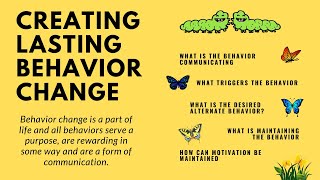
A recorded continuing-education webinar by Dr. Dawn-Elise Snipes introducing practical behavior modification principles and how to apply them across settings (pets, children, coworkers, self). The talk covers rewards and punishments (positive/negative), triggers and stimuli, extinction bursts, behavior strain/habituation, chaining/troubleshooting, and concrete tips for designing reinforcers, prompts, and alternate behaviors.
Chapters
This episode was pre recorded as part of a live continuing education webinar on demand. CEUs are still available for this presentation through all CEUs. Register@Allce.com Counselortoolbox you I'd like to welcome everybody to today's presentation on behavior modification universal application. And what do I mean by that? A lot of times we think of behavior modification in very narrow terms, like Pavlov's dog. But what we're talking about with behavior modification, think about it really, what it sounds like, modifying somebody's behavior. And isn't that in large part what we're wanting to do as clinicians? I mean, we want to help them modify their thoughts. And you can kind of think of thoughts as internal behaviors, if you will. So we're going to talk about the different ways behavior modification can be useful not only to our clients and helping them figure out how to change their own behaviors, but also in helping them modify their environment to make it work a little bit better for them. If you have clients who are parents or clients who work in an office where they've got co workers or bosses or whatever, we'll talk about some different ways that they might find behavior modification principles useful. Obviously, they're not going to put their boss on a schedule of reinforcement particularly, but they may learn some tips and tools on how to enhance that interaction so it creates a positive, rewarding experience. So we'll talk about how to apply behavior modification in the home workplace. And for self improvement, we'll explore rewards and punishments, examining the positives and negatives of behavior. We're going to look at the positives and negatives of both rewards and punishments because, yeah, there are some drawbacks to rewards, too. We will look at triggers and stimuli for new and old behaviors because there are a lot of things in the environment that trigger our behavior. I mean, think about your day today, and it's lunchtime. Wherever you are, it's probably somewhere close to lunchtime. You got up, you woke up this morning, you opened your eyes in bed. Now what was the trigger to get out of bed? Maybe your alarm clock. Maybe you were hungry, maybe you had to pee. That was a trigger or a stimulus, if you will. It got you to get up and get out of bed. Now some of these things we know have to happen because we've got to go to work in order to get paid so we can buy food and, you know, keep a house over our head or roof over our head and everything. But there are a lot of triggers in our environment that remind us of the Things that we need to do. If you take medication, you may have your medication bottles set out where you remember to take them. So we're going to talk about different ways you can add triggers to prompt positive behaviors, as well as eliminate triggers that may be reminding people to use those old behaviors. For example, if somebody's trying to quit smoking and they still have ashtrays and cigarettes around the house, those are probably going to trigger the desire to use. Likewise, if they can still smell the smell of cigarette smoke, that's likely a trigger for them to want to use again. And then we're going to finish with a little bit of chaining and troubleshooting. There's only so much we can really cover effectively in an hour. But we'll talk about some of the reasons why behavior change applications, things that we try to do may not work. And we're going to start out with each section. I'm going to talk about how I apply it to one of my foster dogs because, you know, he's 85 pounds and he thinks he's a chihuahua, and he's just. He's a bull in a china shop. So we'll talk about some of the things that I've done to help shape his behavior a little bit since he came into into my care. So I want you to think about a situation in which you want to change the behavior of, and I want you to do it for each of the following. A pet. And you know, it can be your pet cockatiel you're trying to get to whistle the Andy Griffith song tried and failed. It can be someone you live with, such as a child or a roommate, somebody you work with. Maybe you're a supervisor. And I use this a lot when I was a supervisor, trying to get people to stay up to date on their paperwork. It's not hard to get them to do group or individual, but paperwork, most of us just really don't like it. And a behavior you want to change in yourself. And as we go through these things, I want you to think about the applications, because what's rewarding for Fido is not necessarily going to be rewarding for you or for your child. So it's important to be able to individualize and differentiate the reinforcers and the punishments. So rewards increase the frequency of behaviors. And I will tell you on the quiz, I don't ask you about the difference between positive and negative rewards, but from a behavior modification perspective, it is kind of important these terms come up. So just so you know what we're talking about. Positive Rewards adds something to somebody's life. It can be presents, raises, praise. You're giving them something, you're saying you did a good job. So here you go. Negative rewards take away something unpleasant, such as chores. When my kids have a really good week at school, they may get to take Sunday off from doing chores. I know it's a big thing, actually, around our house. It is a big thing if they don't have to do any chores. For little kids, you may say, if you eat all of your main course, you don't have to eat your vegetables. Or as a boss, you could say, if you get all your work done and get your progress notes turned in, you can go home early. Now, you can't always say that, but those are some things that. And I don't want to say work's unpleasant, but when you compare staying at work versus going home and the vegging out in front of the TV or whatever you do when you go home, work is probably less pleasant, less rewarding. So we're giving them the opportunity to do something more rewarding. So the question comes, what is rewarding? And, you know, like I said, for Fido, this may not apply so much. He's pretty good with love, attention, and food, lots of food. But for humans, when we're talking about the people that we live with, that we work with and ourselves, what is most rewarding when you do something? If somebody were going to give you a reward, what would you want? Words of affirmation, somebody acknowledging it, going, wow, that is really awesome. Acts of service, you know, maybe if you get all your stuff done on time. And, you know, I used to do this for my staff. Occasionally would bring. I would have the cafeteria cater lunch at our. At our staff meeting. So I was. I was feeding them. It's kind of an act of service, kind of a gift. I don't know how you want to look at it. We had really good chefs receiving gifts. And, you know, depending on your relationship, if it's a spouse or a significant other or a friend, you may give them small gifts or cards. If it's an employee, I found that even just leaving notes or occasionally bringing in, you know, we had a list of what our employees that were on our team, we had a list of their favorite things, their favorite drinks, their favorite snacks, you know, things that were under $5. And occasionally I would bring in, you know, one of my employees used to love Yoo Hoos, so I would bring in a Yoohoo for her or, you know, stop by Starbucks and get somebody one of Those coffees that they like or whatever, that was a little less often because they're more expensive. But you kind of get the idea where if they're doing something and they're doing it well and you want them to keep doing it, even if it's not an expensive gift, the fact that you thought about it and you went out of your way and went to the effort to get them a gift for is definitely helpful. If you don't work in the same building as your staff, sometimes just getting an email and you know, in our day world where everything is digital, an email or a text message from your boss can go a long way. Spending quality time together. And this can be a staff meeting where you guys actually do some team building and fun activities, not just work or, you know, with significant others. What does quality time mean to that person if you're going to spend quality time with your kid? My daughter loves horror movies. Not my thing, but if I want to spend some quality time with her where we're sitting on the couch and, you know, watching a movie together or whatever, I'm much more likely to get her to stick around if I put on a movie that she likes. So understanding what quality time looks like to different people. For some people, watching a movie together wouldn't be considered quality time. So it's definitely very individualized, which is why I want you to think about each person, not just, you know, for the people in my life, I will do this. No. Each person has different love languages. Each person has different things that they find most rewarding. Physical touch. Again, obviously this isn't going to be so much with employees, but for my dog Brewster, if I pet him, oh, he's so happy, his tail wags so hard, his entire butt wags. For humans, hugs, those can be rewarding. But that's not true for every person. Some people grew up in situations where they weren't touchy feely. So hugs and stuff feel uncomfortable. It's important to know who you're interacting with so you know what's rewarding and what may actually be punishing. You know, you're like, oh, if I do that again, she's going to hug me or something. Don't want to go there. So think of three positive and one negative reward. That means three things you're going to give and maybe one thing you take away. So, you know, for a pet, it's a little bit hard to come up with four things for a pet, but you can give attention, you can give praise, you can give a treat, and you can eliminate. I don't know. I can't think of something you would eliminate for a pet, for a child. Like I said, with my kids, I eliminate chores for one day. If they've done their chores really well all week or they've done really well in school all week and they've met expectations, if you will, then they get to take Sunday off. They don't have to do chores. They don't have to, you know, do the normal stuff that they find mundane. If you're talking about a roommate, and a lot of our clients have roommates that they live with, they may not be in a committed relationship. They may have, you know, three other people living, and they share a common space. So thinking about if you want to increase their behaviors, and oftentimes it's something like chores. A lot of times it comes down to chores with roommates and picking up after yourself. How would you reward that behavior? And we're going to talk about how to sort of monitor that behavior without being overt about it necessarily. Somebody you work with, thinking about what it means, what's rewarding to them. Some staff members really may not care what you have to say that most of them do if you're their supervisor. But if it's a colleague, you know, what can you do to help that person out? What can you do to reward. Reward that person if they're changing their behavior in a way that's meaningful? We used to share offices at the place I used to work in Florida, and every clinician shared an office with at least one other, if not two other clinicians. So when you were working with a client or you were on the phone, if the other clinicians got noisy, it was hard to concentrate. So one of the things that we would often address with people working in the same office is if there's a client in there and the other people are needing to make noise for some reason, not just do paperwork if they would get up and leave. And then generally the therapist who was working with the client would thank the other therapists for leaving and giving them some time. And yourself, that's the easiest one. What can you do to reward yourself? And what things hint chores can you give yourself a break on if you've had, you know, you've worked hard and you've met your goals this week, so what can you take away that you don't like doing or maybe skip a week? It's not really taking it away if you don't do laundry, because it's all got to be done eventually, but you May not do it this weekend. So punishment decreases the frequency of behaviors. And I'm going to say this later, but it's important to recognize that we have a repertoire. We have a certain set of behaviors that we use to respond to a situation. And when we just punish that behavior, when we just punish a behavior not leaving the person or organism, if you will, anything to respond with. For example, Brewster, when I come home, he used to jump on me and bark and carry on. And he was just so happy to see me. £85 is a lot to be jumping on you. So if I would have just punished that behavior and not given him something, he's like, well, what do I do instead? I just want you to greet me and tell me hi. Eventually he learned that if he would sit, then he would get what he wanted. So I needed to give him an alternate behavior. If you just punish behaviors, then the organisms left going, well, I've got all this anxiety I've got to respond to, and coming out of my pores. What do I do? I can't jump, I can't bark, I can't bite. What do you want me to do? Mad in terms of punishment. And one of you got ahead of me a little bit, limiting attention. Whether it's a child or an adult that's doing something you don't like, you don't necessarily have to give them the silent treatment. But if they're doing something you don't like and you just don't pay attention to it, or an animal, if they're for Brewster, the first thing we started doing when I would come home, he would jump and carry on and lose his ever loving mind. And I would turn my back to him and he would run around and try to get in front of me to do it again. And I would turn my back to him, and eventually he was like, well, this isn't any fun. And he would settle down to the point where he could think clearly and I could give him a command, which was sit. He would sit and then get his reward. So, yes, negative punishment, if you will, is taking away something positive. So if they want your attention, you got to take that away until they can get their. Get their head around it. Positive punishment, add something unpleasant. I shouldn't have used the word negative, but so like a lecture. And when my son was little, he used to get in trouble, like all little kids do. And I remember distinctly one day, because I don't believe in spanking, he had done something wrong, and I put him in timeout and I went into his room after the timeout, and we had to have a talk about what happened. And he looks at me, he's like, I wish Daddy were here. And he would just spank me. It gets it over a lot faster. I'm like, thanks, son. I love you too. So a lecture from a parent or a supervisor can be considered a punishment. Giving somebody additional work when Sean would misbehave. We've lived on a farm since he was knee high to a grasshopper, and he would have to go outside in the yard and pick up sticks. Now, we lived in Florida up until recently, so in the summer, it's really pretty hot out there, and he doesn't like the heat. So it was unpleasant environmentally as well as he was having to do additional work. Trying to keep rewards and punishments with natural consequences when possible, is helpful. So if somebody's acting out in a store, removing them from the store, if you can't behave, then you can't be here can be helpful. But don't get too caught up on that negative. Punishment takes away something enjoyable, like attention. Air conditioning for my son, television is another one. Or freedom, and I use that term kind of loosely, when we put somebody in timeout or we put a dog in its pen or send him to his bed to lay down, we're taking away their freedom of movement. We're taking away their freedom temporarily. So it is a form of punishment. So, you know, okay, they find that unpleasant. They're like, okay, I'm not going to act that way again, but the next time I'm feeling anxious, angry, upset, and I have all those feelings going on, what am I supposed to do so I don't get put in timeout? We have got to make sure we give them an alternate behavior. Punishment is not necessarily the opposite of reward. Sometimes they're kind of unrelated. You could reward, like, I can reward Brewster by giving him pets, and I can punish him by not giving attention. But more likely I punish him through other means that we'll talk about in a minute. Generally, behavior change is more successful if you reward the positive. Remember, I said we have the repertoire. So if you have behaviors in that repertoire and 17 out of 20 of them are good behaviors, when those behaviors occur, reward those, because the more they're rewarded, the more likely they are to happen. And if this one's more likely to happen, then it's reduces the frequency, just by sheer mathematics, that the unpleasant behaviors are going to occur. Simply eliminating behaviors leaves the person with no response options. If you have little Johnny and, you know, every time he gets up out of his seat during class, he gets punished for it. Then when he has a need, he doesn't know how to get that need met. Maybe he has to go to the bathroom or who knows what his issue is? But we need to make sure we tell him, okay, so the next time when this happens, this is what you need to do. With humans, we can reason with them and explain that with animals, we want to give them sort of an immediate option. Like I said with Brewster, I would turn my back and turn my back and turn my back until he would calm down. And then when he finally quit jumping, I would turn around and I would give him a command and which we use hand signals. I would say, sit. He would sit. He would get the attention that he wanted, and he finally put it together like, oh, this is how I get the attention. So think about punishments. And I say one positive and three negative. Because, you know, generally we're not putting punishments. A lot of times it's removing something pleasurable attention. If you have roommates, maybe you don't cook that weekend or you can't go out that weekend. Someone you work with thinking about things that they might enjoy. Maybe you typically go out and go on smoke breaks together or go to lunch together or whatever. You may choose not to do that if you two aren't getting along very well. Now, ideally you're going to have some communication because just putting them on blackout doesn't solve any problems. But thinking about, you know, what the ramifications would be, remembering that it's ideal just to reward the positive when at all possible. One important thing to consider is an extinction burst. And it occurs when a behavior fails to provide a reward or prior to stopping a cherished behavior. So think about. At least for me, if I'm thinking, okay, Monday morning I'm going to start my diet. Well, Sunday I am going to have a good time eating. I am going to eat everything that I'm going to feel deprived of during my diet, which is one of the reasons why diets don't work. But that's a whole different class. When people want to stop smoking or stop drinking, a lot of times they do the same thing. They will. The behavior will increase briefly right before the stop day. So it's important to consider what might be bringing on this behavior from occurring. Extinction bursts will. The behavior will intensify until the energy to get the reward exceeds the value of the reward or a punishment is put in its place, which obviously makes it not so rewarding. So think about your stereotypical kid in a candy aisle where the kid is going, I want some cookies. And mom's like, no. And the kid gets louder, I want some cookies. And the mother says, no. Well, this keeps going on back and forth until the kids throw in an all out tantrum. I want some cookies now. If the parent gives in at that point, then the kid knows where to start next time. And he's not going to bother with asking, he's just going to start with the tantrum. But if the parent doesn't give in, then the kid at a certain point is going to be like, you know what? I don't want cookies that bad. It just ain't worth the effort. Another example is a client becoming more symptomatic the week before discharge. So most of us hopefully talk with our clients ahead of time and we say, you know, things are getting better. It seems like you're about ready to discharge next week. We'll talk about the progress you've made and kind of wrap things up and handle any last minute details. And then they come in that next week and all of a sudden the world is falling apart. So we want to have them be aware that right before this changes, old behaviors may come up. Why? Because we, if you will, therapy is secure, it's safe, it's comforting, and they're getting ready to get rid of that. So they're kind. There's a fear factor that comes up. So they may want to kind of subconsciously stay in treatment. The important thing for us is to empower them to look at how can you prepare for this extinction burst? How can you prepare for a resurgence of symptoms? Because even if it doesn't happen today, it may happen a month from now. If life hands you lemons, what tools have you developed now that you can use and empower the clients to take the reins? Because they have developed those skills and tools now instead of enabling them to stay in treatment. It's a fine line. Sometimes clients really do need to stay for a little while longer. But, but a lot of times, if they're prepared ahead of time for what might happen and they're reminded of how strong they are and how many tools they've developed, they're kind of ready to go out and try, especially if they know, you know what if things start going really south, you can come back for a tune up. I don't think you're going to need to come back for therapy, but you are always welcome to come back for a tune up that makes them know that there's still a home Base. It's kind of like when kids move out. They know that they can go back home at a certain point, if life gets a little bit too chaotic. It's important to examine the motivation for the extinction burst. Why is it the person doesn't want to stop the old behavior? The kid in the candy aisle, he wants candy. That's pretty obvious the day before we stop, start a diet, or stop drinking. Well, that behavior is pretty darn pleasurable. So we want to make sure that whatever behavior change we're embarking on has some pleasurable aspects to it, because we're not going to keep doing something that's painfully rewarding or painfully punishing. I mean, a client becoming more symptomatic the week before discharge. Well, why wouldn't they want to stop coming to us? Well, it's like I said, it's safe. And they know it's a routine that they have. They've probably been coming for a couple of months, so they've got a rhythm. They know that you're there, you're going to listen and you're going to accept and all the things that we do as clinicians. So, yeah, it's an ending of a relationship, and that's hard. So they may not want to face that either. So it's important that we talk about, you know, what fears do you have or what concerns do you have about ending our therapeutic relationship? Now, behavior strain is another thing. And when there's behavior strain, that means there's not enough reward. And generally there's an extinction burst right before it. Behavior strain occurs when the reward is not rewarding enough. So if you go on a diet and you know, you gave up all those foods you love, and now you want to reward yourself, and you're like, I've done really well on my diet, so I can have rice cakes for dessert. Hmm. Well, that's probably not going to be overly rewarding if you've eaten really well all day long. Not saying that you want to end your day with a food reward necessarily, but a bubble bath or a trip to go to the movies or something that has more rewarding power is probably going to maintain that behavior better than rice cakes. The punishment is not strong enough to deter the behavior. So if the old behavior keeps coming back, you're trying to quit smoking and, you know, you just keep. Keep relapsing. Well, we want to look at, well, what are the consequences when you relapse? You maybe feel bad about it for a few days, but it may not. That feeling bad may not Be unpleasant enough to completely stop the behavior. When you compare feeling bad over the relapse versus the cravings you were having, those cravings are probably worse. So we need to address the cravings and we also need to up the ante for what's the punishment when, when you do relapse, what do you need to do instead? For alcohol, for example, and it's not the same with, with cigarettes. And don't ever use nicotine when you're on the patch because it can cause all kinds of cardiorespiratory problems. But ant abuse, when people drink and they're taking antabuse, they will throw up, they will be sick as a dog. So that's pretty punishing. And it is enough to deter a lot of people if the rewards, punishment or follow up is inconsistent. And as a parent as well as a supervisor and just a human, you know, in all three areas where I've tried to apply this, and even with animals, if you're not consistent with, you know, when this behavior happens, giving a, giving a reward. And there are different schedules of reinforcement for those of you out there who are behaviorists. But in general, if there's too long between the reward, between the behavior and the reward, you know, maybe you've done the behavior seven times and there's still been no reward. And you're like, well, what the heck? Think about playing the slot machines. At a certain point you're just like, yeah, move on to a new machine. If the follow up is inconsistent, it's likely to not maintain the behavior. When I've tried to have my kids start doing more chores, you know, I'll give them a chore list and everything and I will tell them I'm going to inspect tonight when I get home and I inspect the first night, maybe even the first five or six nights. And then generally after about five or six days, if they're doing what they're supposed to do, I tend to forget to follow up. So it's really important to put triggers in the environment that remind people the person who's providing the reward and maintaining the contract, but as well as the people who are supposed to be doing the behavior. So everybody is consistent on following up on this behavior. If there's too long between rewards, there can be behavior strain. Having a 4 year old behave all week to get a reward is often too much. Usually they need at least small rewards at the end of every day. And this can be a star on a star chart for a lot of kids. That means if I get 6 stars then at the end of the week, there's something even bigger waiting. Even younger children need more frequent rewards. And when you're initially starting a behavior change, regardless of your age, it's important to get rewards more frequently because it's hard. Remember, change causes crisis and crisis causes change. You're doing something new. You've got to reward yourself and go, oh, yeah, this is the reason I'm doing it. Or if there's an alternate reward. Think about teenagers. I know it makes your head hurt sometimes. Teenagers generally want to please their parents because it keeps them from being lectured at and getting grounded and all that kind of stuff. So there's definitely a benefit to paying attention to the parents. But there's this competing reward out there of peers. You know, the peers that want them to sneak out to go to a party that night. So if you're being consistent and if you're rewarding providing rewards and these rewards have worked before, then all of a sudden they're not working. Is there an alternate reward out there? Is there something more rewarding that you're missing? So thinking about, you know, other examples where behavior strain comes up losing £30 before you get a reward. £30 takes a long time to lose. So you know, it's recommended if people are trying to lose weight or get in shape to make sure that they have some sort of reward set up every week for doing well. I mean, it doesn't have to be necessarily a weight loss because we all hit. If you're trying to lose weight, you can hit weight loss plateaus. Doesn't mean you're not doing the right thing. It just means your body's adjusting. So how do you set your rewards and what rewards are available? It can be going shopping, maybe going out to dinner, maybe a movie. Something that you can look forward to at the end of the week. And it makes your effort worth its while. Going from being a couch potato to completing a 5K. This is another one. You know, it takes a while to train that much. So you don't want to say, well, this will be rewarding when I get my medal. No, let's give yourself a reward for getting to the gym the first week and then the second week, maybe for walking a mile on the treadmill and then the third week, maybe walking two miles on the treadmill. Make sure that there's rewards implemented frequently enough that you're like, okay, I can do this. Because remember, rewards are the energy that keep that change moving forward. Completing paperwork by Thursday, staff meeting each week. This used to be one of my goals for my staff. And, you know, if I wouldn't follow up on it, then a lot of times, paperwork would start falling behind. So making sure that I collected the paperwork every Thursday when they came to staff meeting. And there were. There were consequences, There were rewards for getting your paperwork in on time, and there were, you know, consequences if you didn't get it in. It was really important because that's how we get paid and all that kind of ethical stuff. Other principles, rewards and punishments should use natural consequences when possible. With our dogs, when they start to act out, you know, sometimes I just need to give them a stern look. But initially, especially like with Brewster, he'd never really been in a house before he'd been an outside dog. So we use a technique, and I'm not saying that this works for everybody, but we use a technique that mimics what they experience in the wild. And when he would misbehave, I would push him. Not hard, just enough to get him on his side, and I would pin him down. And when he would calm down, he'd realize I was dominant. We'd be good. Did that a few times, maybe a dozen. The first month he was with us, and after that, I haven't had to do it. But looking at what would happen in the wild if a puppy was misbehaving, if a teen is too distracted, they're, you know, heaven forbid, texting while driving, or they're not getting their homework done because they're spending all night on video games. Well, the natural consequence of being too distracted by having this is to lose it. If you can't get your stuff done, then you don't have the privilege of whatever it is. If a child acts out in a store, they may have to go sit with a parent outside. And this is another one we used with Shawn. He would get irritable, and it was 40 minutes into the closest store. So I really didn't want to just go home. So his father would take him, and they would sit outside in the heat and wait for me to finish shopping. He only had to do that about three times before he didn't do that anymore because behaving and getting to stay in the air conditioning was better than acting out and having to go sit outside. Some parents will say, you know, I got to do a bunch of shopping today. If you're really good while we're in the store, then we can go to McDonald's and you can play in the PlayStation. That's great for kids, too. Making sure that they have a reward For a child, again, it needs to be pretty proximal, pretty close to when the behavior occurs. It's ineffective for, especially for children, but even to a certain extent for anybody, a reward comes too late after the behavior because you're like, well, I'm glad I got this check, but what's it for? Or, I'm glad you're praising me, but what did I do? Because there's too much time in between. One thing I see a lot of times is people yelling at the dog when they get home for something he did hours ago, like tearing through the trash. Well, when he comes in, he's coming up to greet you and he's all excited and you start screaming at him. He thinks you're screaming at him for greeting you, not for tearing up all the garbage. Now, you may say, well, my dog's smarter than that. He knows when he's done wrong. Maybe, maybe not. But strictly behaviorally speaking, if it's something that he didn't just do or you didn't catch him in the act, then whatever he's doing right before you punish or offer the punishment or reward is what he will pair with that punishment or reward. So for humans, again, if you're trying to eat healthily, charting your nutrition after each meal so you can see what you ate, what your breakdown is, what your nutrients were, if that's rewarding for you, it's rewarding for me. So coffee when you get to work, another little peek into my psyche. I love my coffee, even though it's decaf. When I get to work, first thing I do is make coffee and it's like, okay, good things are going to happen. Now, if you are a supervisor commenting on case notes as soon as you review them, so, you know, if somebody did a really awesome job, make sure to say that reward, the positive pairing is conditioning a person or animal so that a token, and I use that term broadly, marks the good behavior. And they know a reward is forthcoming. So with animals, we can do clicker training. Initially, the dog does what they're supposed to do. You give them a treat and click at the same time. Eventually, when they hear the click, they're like, oh, I did a good thing, A treat's coming. And you can click and then give a treat a little bit later. You can also pair praise with some sort of a treat, and it doesn't have to be food. So, for example, you take a kid to the doctor, and they don't like the doctor. Most of them don't. If you tell them, if you behave at the doctor, or thank you for behaving so well at the doctor. Let's go out for lunch. So it's not happening one right after the other. But the child knows that if I behave, then I'll get a reward. Or if you're talking with a roommate, you know what, if you help me get the house cleaned, it'll be done faster and we can go out to dinner. That works for my husband all the time because he likes to go out to dinner. So I don't know what that says about my cooking, but I digress Anyhow, so it works to my advantage to offer this reward if I want somebody to get something done. Because again, reward is the fuel that moves the behavior Pair stars on a star chart with a behavior log for a reward at the end of the week. Another thing we did in my adolescent unit that I ran is they literally would get tokens. And if they had good days, when they completed treatment plan objectives, yada yada, they would get a token at the end of the week. We had a closet that had stuff donated in it and stuff we had bought. Generally it was foodstuffs, and they were able to buy passes for video game time, and they would be able to exchange their tokens for things they wanted from the reward closet. So that helps. You can do that at home, too, with children not going to work so well with roommates. But it's helpful to make sure that, yes, the rewards are so important because you got to keep that momentum going. So triggers that prompt a behavior must be interpreted. When I train our dogs, we have down, we have sit, and those are the two big hand signals that we use. I have come as well. But if you have an especially smart dog, like a border collie, they may think that this means sit, but this may mean something completely different to them because it's not the same exact movement. So you need to make sure that whoever is interpreting the signals from you, interpreting them correctly. My mother had different looks she would give me. And there was one where she would look at me kind of like, what did you just say? And then there was another one where her tongue went to the side of her cheek. And I knew I was. Yeah, it was bad news at that point. So make sure that the person can effectively interpret what's going on. What are my thoughts about using candy in the classroom as a primary form of reward? I typically don't like to use food as a reward simply because. It can generalize to use to stress eating and other things. But that's one of My idiosyncrasies. Some people think it is effective. I've been to a lot of seminars where they've handed out chocolates to people who answered questions. So, you know, it depends on your philosophy. It depends on your approach. And can everybody in the class eat candy and do they like it? My son doesn't like candy. He preferred have an apple. Go figure. Making sure that the rewards are rewarding is important and that it meets the goals that you're. You're working towards. Does candy usually meet your objectives? Yes. So is there an huge ethical thing with it? I don't think so. Again, it's just one of my preferences because I don't want people to think that the only reward or the primary reward they get is eating, going out to dinner, or getting treats. So another trigger. For example, my dog Duke does what I call the pee pee dance. And he. But he does this pee pee dance for a lot of different reasons. When he gets nervous, he's a basset hound, and he will do this, like, excited, moving around, whining thing. And it can mean that he heard thunder, but it can also mean that he's got a pee. So it's important for me to understand his signals because he's trying to modify my behavior and tell me to either take him out or, you know, get out the essential oil of valerian, because we got a thunderstorm coming. So it's just as important for us to be able to interpret other people's signals and triggers. For a lot of dogs who get out the leash, they lose their minds. They're like, oh, we're going on a walk. This is so awesome. For my dog Raina, we found that sometimes on the weekends, she would just lose her little mind, and we couldn't figure out what it was. And anyway, for the sake of brevity, she doesn't mind anybody else's lawnmower in the entire neighborhood, except for the guy that lives caddy corner from us. And it makes some weird sound. But we figured out that the only time she loses her mind is when he's mowing. So when that happens, we need to move her to a room that has white noise in it that's on the other side of the house. But paying attention if behaviors don't seem to generalize. It's not every lawnmower, it's not every classroom that Tommy misbehaves in. What's different when Tommy is misbehaving? If company's coming. We tend to behave a little bit differently. When my parents come Over. You know, I tell my kids, okay, we're doing chores, Grandma's coming. I get a whole different level of clean than if grandma's not coming. You can set alarms. You can have notes and to do lists that prompt people to do behaviors, meditation, mindfulness, do their homework, school homework or therapy homework, clean the house, whatever it is. You can set triggers that remind the person. Put it in the way. This is one of my favorites. When I do laundry, I hate putting it away, so I will put it on my bed. Not in the hamper either. I dump it out. So I have no choice but to put that laundry away before I can go to bed. Homework is the same way. If you put it right on your bed or right on the dinner table, where you can't do anything else until you finish it, theoretically, it prompts you to do it. Evaluations often trigger people to behave better if they know that their annual evaluation is coming up. Work performance generally improves once they've had their evaluation, especially if there were areas that needed improvement. Work performance generally is improved for a little while, but then once you get away from that reward or punishment temporally, you know, you get three, four, five months down the road. Unless another reward was put in to remind them to keep doing that, then that behavior may come back or the work performance may go down. So if you've got an employee who needs to improve on certain behaviors, it's ideal to have evaluations on a much more frequent basis in order to maintain that level of responding. Habit time of day can also trigger certain behaviors. My mother used to smoke the minute she rolled out of bed. That was just what she did. She didn't even think about it. She'd light up a cigarette. So helping people identify. Are there certain habits that you need to break, and what can you do to break that habit? For her, she quit keeping cigarettes in the house. So she couldn't just roll out of bed and light up a cigarette. So she needed to choose a different behavior. Stress eating. When people start to feel stressed and they go to the kitchen cabinet or they're bored, it's another reason for eating. Or we eat looking for that kind of something to make you feel less bored. You can put little notes on the inside of the cabinet that says, are you really hungry? There are other things you can do to trigger yourself to choose a different behavior. And energy levels can also trigger unfortunate behaviors. If somebody's got a really low energy level, they may have a poor work product that day, or maybe they've been going through stuff at home. And they've had a low energy level for a while. So their work product has gone way down. So we want to look at all the things that might be triggering whatever this unfortunate behavior is, and what can we do to trigger an alternate behavior? Habituation is getting sufficiently used to the stimulus that it fails to prompt the behavior, especially if the reward or punishment are insufficient or inconsistent. Think about sitting in an uncomfortable chair. When you first sit down, you notice it. You're like, oh, this is really uncomfortable. I've got to sit here for an hour, really. But after about 10 minutes, you quit noticing how uncomfortable it is. You've habituated to it. An alarm. I have alarms that go off all day long, prompting me to do my social networking, prompting me to do this, to do that. And a lot of times I'll turn them off and I'll say, okay, I'll get to it in a minute. Then I never get to it. And there's really no super negative consequence for it. So the alarm, I become habituated to it and I'm just like, oh, just hit cancel. So it's important to make sure that if you put stimuli in your environment that you remember to do whatever it is. If you put a note on the mirror to remind yourself, for example, to practice mindfulness, you'll probably notice that note the first week or so, and then it becomes part of the decor and you almost don't even notice it anymore. So it's important to move those triggers. If you've got visual triggers, move them around so you remember you actually notice them and you don't just habituate to it. So what trigger? What would trigger the behavior you chose for your pet? For example, for Brewster, if I hold my fist up like this, he knows he's supposed to sit. It doesn't matter if I just walked in the door or we finished dinner or something. I hold my hand up like that. He knows he's supposed to sit with my children. What triggers their behavior? When mom comes home, generally they know that it's time to start chores. So I don't even have to say it anymore. I walk in the door, they start chores for yourself, triggering a behavior that you want to do. If you want to start doing 50 sit ups every morning, what would trigger that behavior? And some of you are going, there is not a reward in the world that could possibly trigger that. So paying attention to making sure that you set the occasion for the behavior to happen, you need to remind yourself, oh, I need to do this now. And when you do it, it needs to be rewarding. So you can't have one or the other. Both of them need to happen. And whatever behavior you were doing before, anything that reminds you to do that, for example, going back to bed. If you make your bed, then the sheets aren't there going come back to bed, they're all covered up. So removing that trigger that says, oh, that looks really inviting by making your bed can help you kind of get energized and start with the day. All of this adds together because behavior is often complex. You don't just get angry because of what just happened. A lot of times. A lot of times there are other things that contributed to it, that added to it. So chaining helps us explore the question, how did you get to this point? So you are in a God awful mood. So think to yourself, you know, this is not where I want to be. How did I get to this point? So you can start from a known point in the past, like getting up. All right, I woke up this morning and I woke up late and I got up and I stepped on a hairball and the hot water heater broke and. And then I was driving to work and there was a lot of traffic. No, none of this happened today. Just spitballing here. So, you know, this person has already had several unfortunate things happen. So if they're in a bad mood, if they are reacting more strongly to things that normally wouldn't bother them, I totally get it. The other time you can look at, instead of going all the way back to when you got up, is when did your mood start to change? You know, encourage them to look at, you know, you are in a fine mood until you had to come to this meeting or you were in a fine mood until this. Then you know what changed? What happened that encouraged you to get to this point? And then a lot of times it's working with cognitive behavioral things and distress tolerance interventions to help people deal with whatever triggered their unpleasant mood. So chaining your dog starts pooping on the floor. Brewster's done this recently. When did it start? Well, we've had him for a year and a half, and all of a sudden he started crapping on the floor every night. Well, what changed? That might be triggering it. He's been going upstairs, he hasn't been sleeping with me, and his buddy Duke has been sleeping with me. That's really the only change that happened. So what can be done to address the change? Well, I tried letting him sleep down in my room, and lo and behold, he didn't poop on the floor. So, anyway, we did a couple AB tests. Turns out if Duke sleeps in my room, then Brewster is going to poop on the floor. That's his way of marking his territory. Or I attribute emotional components to it, but whatever. So then you have to say, all right, what can be done to address this change? And my resolution or solution was to kick Duke out, too, because I need my rest. If your roommate starts to fail to pick up after himself, think to yourself, well, he was doing this before, and now all of a sudden, I've got underwear everywhere. What's changed? And it could be he has a big project due for his. One of the classes in his major, or he broke up with his girlfriend, or something else happened. So you want to not just assume, you know, the obvious, you know, he's just not doing it anymore. We want to look at what triggered this behavior and how can we address that trigger. And it may be, if he's got a big project due, that things just aren't going to improve until the project is done. But then you can wrap your head around it and go, okay, I can suck it up for two more weeks, or you can have a conversation about what's going on. If a client has an anxiety relapse, for example, again, we're asking, what changed? Well, the client says, I was busy all weekend. I got up this morning, Monday, I didn't sleep well. I got bad, bad news first thing in the morning and drank an extra cup of coffee at work, and then I just started feeling really lousy. Now, in my mind, it seems pretty obvious you're exhausted, didn't sleep well, you've already got some adrenaline going from the bad news, and you added stimulants to it. So I'm not surprised you've got a bunch of anxiety going on right now. But we want to help people see how there's often a lot of things that contribute to their mood state. So troubleshooting is the reward sufficient for the target behavior. What are the benefits of the new behavior, and what are the drawbacks of the old behavior? So we need to make this new behavior awesome. And. And we need to have them look at the old behavior and go, you know what? That wasn't all it was cracked up to be. Make sure you've considered all of the benefits of the old behavior, and there are some where people wouldn't have done it. Are there competing additional triggers or stimuli, such as peer pressure? Or, like we've talked about before, if somebody is acting out in a group, you know they've got an audience. So is that rewarding for them? Is their behavior strained? Maybe you're not providing sufficient rewards or rewards often enough based on the person's needs, whether it's how hard the task is or the age of the person. And are you sure that the behavior means what you think it means? My son, when he was in public school, would come home every day and it was like, I swear he had radar. He knew when I was starting to make dinner because he would lose his mind and he would just start to melt down and make poor choices. And I had to stop back, step back and think what's going on here? Because he's not a disrespectful child. And he was just, he was being rude, contrary, and all day long he had had to hold it together and behave and, and he had all this pent up energy. So it wasn't that he was being intentionally being rude and disrespectful. He was just, you know, at pressure point, ready to explode. So with him, for example, it was important that he had the ability to go out and get out some of that energy right after school. So when it came time for me to make dinner, he wasn't, you know, desperately need in need of stimulation and an outlet for, for his energy. And like the example I gave earlier, Duke's pee pee dance, you know, if he has to go pee pee or he starts doing the pee pee dance and I take him and I open the door, if it's raining, he doesn't get his paws wet. Oh no, he's too good for that. And he will walk outside and he'll walk back in and be like, no, it's all good. So the question is, in my mind is, well, did he hear thunder and that's why he was doing his dance? Or did he really have to pee and he's just not going out to get his feet wet? And I'm still trying to figure that 1 out 100% of the time. Are the signals and triggers clear? Make sure that what you're telling the person, for example, telling a child to behave, you know, if you tell a child to behave and they're still sitting there swinging their legs and messing with stuff, but they're not getting out of their chair. Are they behaving in their mind? They may be telling your roommate to clean the house, but not defining what that means, does that mean wiping down the counters? Or does that mean doing baseboards and mopping the floor too? Or telling your co worker to give you notes on group when you do group for me. I need you to give me the notes. But then not specifying when in your mind you're like, well, of course they're going to give it to me by close of business. And in their mind they're like, I'll get it to you by Thursday staff meeting. So you might have a misunderstanding there. So it's important to be clear about what you're asking, be consistent on your follow up and make sure there's a suitable alternate behavior that you know when they're excited. You know, if we're talking about the dog, when he's excited, he knows how to get attention. If he wants you to greet him, he knows he's got to sit. If the child needs attention, he knows what he can do in order to get the type of attention he wants. So behavior change is a part of life. Current behaviors serve a purpose and are generally rewarding in some way. So we need to look at how is this rewarding? And when we think about clients who are depressed, you need to get past the depression mood, look at the behaviors. What behaviors are they doing that are rewarding, which may be maintaining the depression, like eating junk, sleeping at all hours of the day, etc. So what's rewarding those behaviors? What are some alternate behaviors that would work to help them? How can we make those rewarding? When trying to change a behavior, examine what triggers it, what gets it going, and what maintains it. So after it happens, what makes them go, I'm going to do that again. What is the desired alternate behavior and how can you get it to occur, such as doing your homework, how can you reward it and how can you punish it or at least prevent the rewards of a current behavior. So, you know, I used to do my homework for fourth period and third period because I was really bad about not doing my homework. I got rewarded for that. I got good grades and, and I was always able to get it done the period before. So you'd want to look at how can you prevent that from happening? I mean, ideally you want the kid to get good grades, but you want them to do homework. So how can you make homework happen when it's supposed to? If the behavior suddenly stops or changes, explore the competing demands or rewards and remember that accuracy, consistency, and effective rewards are the key to behavior change. Are there any questions? Alrighty, everybody. Thank you for your input today and I look forward to seeing you on Thursday when we're going to go over some group interventions or group activities to teach cognitive behavioral therapy. If you enjoy this podcast, please like and subscribe either in your podcast player or on YouTube. You can attend and participate in our live webinars with Dr. Snipes by subscribing@Allce.com Counselortoolbox this episode has been brought to you in part by allce.com, providing 24. 7 multimedia continuing education and pre certification training to counselors, therapists and nurses since 2006. Use coupon code counselortoolbox to get a 20% discount off your order this month.










