Unveiling 20 Tips to Help You Lose Weight
Podcast episode (Happiness Isn't Brain Surgery with Doc Snipes) offering 20 practical, behavior-focused tips to support sustainable weight loss and general health. The host, Dr. Dawn‑Elise Snipes, covers calorie basics (e.g., 3,500 kcal ≈ 1 lb fat), portion control and tracking, meal/restaurant strategies, simple resistance and aerobic activities, and behavioral routines to prevent yo‑yo dieting and mindless eating.
Chapters
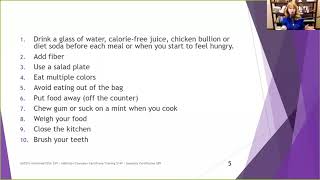
Welcome to Happiness Isn't Brain Surgery with Doc Snipes. This podcast was created to provide you the information and tools Doc Snipes gives her clients so that you too can start living happier. Our website, Docsnipes.com has even more resources, videos and handouts, and even interactive sessions with Doc Snipes to help you apply what you learn. Go to Docsnipes.com to learn more. Hi, everybody, and welcome to Happiness Isn't Brain Surgery practical tools to improve your mood and quality of life? Today, we're going to be talking about 20 tips to help you lose weight. Now, this isn't, you know, one of those mental health things that we normally talk about, but for a lot of people, being in shape and feeling good in their own skin helps them be happy. So we're going to talk about some things that you might be able to do pretty easily. Now, it's important to remember that I don't know you from Adam's house cat, so I am not making specific recommendations for you. You need to use good judgment and always consult your healthcare provider before making any changes to your nutrition or exercise program. So let's talk about this whole weight loss thing, because most of us have been on a diet at one time or another. A pound of fat is 3,500 calories. If you're losing more than 2 pounds a week, that's 1,000 calories a day in deficit. It's very likely you're losing muscle and or water weight as well. When you lose muscle, that means that your body's breaking down some of your muscle and muscle burns energy, so you're actually setting yourself backwards. And when you lose water weight, you know, okay, it's great in the short term, but you're going to gain that water weight back, probably. So it's important to be realistic. And when you're trying to lose weight, you're generally trying to lose fat. So let's focus so our body can lose the fat and maintain the lean muscle and whatever water it needs so you're not completely dehydrated. A pound of muscle burns approximately 50 calories per day. So I like to eat. I work out because I like to eat. So in my mind, five pounds of muscle means I can eat an extra packet of M&Ms. Each day, however it gets you through the day. But you think you're looking at yourself going, well, I don't want to put on muscle. There's a lot of places you can put on muscle that you'll hardly even notice it. Like in Your lats or in your back. If you strengthen your back, you're going to help yourself in the long run anyway. Your abs, you don't have to get huge. Five pounds of muscle really isn't that big, especially if it's spread out over your body. Think about some things. Your shoulders is another place that a lot of people can add some muscle mass around their shoulders, and that helps their hips look thinner as well as gives them more upper body strength. Consider where you might want to gain a little bit of muscle. You don't have to become a powerlifter. You can do Pilates, you can do body weight resistance exercises. There's a lot of easy things that you can do. And remember that a calorie is a calorie is a calorie. If it's fat, carbs or protein, it's a calorie. And if you eat more than 3,500 or if you eat more than you take in, then you're going to gain weight. And for every additional 3,500 calories you eat, you're going to gain a pound of fat. So think about it. If one week, you know, you're having a particularly hungry week and you eat an additional 500 calories every day over what you're supposed to eat, what your base metabolic rate is, you could potentially gain a pound. And you're like, well, you know, a pound, I'll take it off, that's fine. But if you do that over the course of a year, that's £52 you've put on. And a lot of people don't realize that when you go to restaurants and other places, one of the reasons their food tastes so good is because it's basted in a lot of fats and seasonings and stuff. And the amount of food you get at restaurants is far more in calories than you probably need. When I go to a restaurant, I look at the calories on the meal thing. But most of the time, you can't get a meal for less than 600 calories. And most meals at restaurants are around 1200-1600 calories. That's my entire daily allotment right there. So be cautious or cognizant. If you're one of those people who goes out to lunch every single day or goes out to dinner a lot, or you don't like to cook, so you're always eating out. You could be adding on a lot of additional calories. Making good food choices. At restaurants, it is possible to eat healthfully, but that's a topic for an entirely different podcast. So just pay attention to how many calories you're taking in. Now, you don't want to feel deprived, so the first thing you need to do, if you haven't done it already, is go online, find one of the calculators to figure out what your resting metabolic rate is, and it'll tell you something, like anywhere from like 1200 to 2000, depending on whether you're male or female and how big you are, and yada yada. All right, that's your base metabolic rate. Then you have extra calories that you burn for the activity that you do. So most of these calculators will ask you whether you're moderately active or slightly active. Always choose the one that's a little bit less than what you think you are because it's better to be conservative instead of saying, oh, I'm really active. And then you eat too much and continue to gain weight, so always choose the one right below. So I usually choose moderately active instead of very active, even though I go to the gym every day. That'll tell you about how many calories you're supposed to eat. Now, a lot of people don't want to get obsessed with counting calories. You will find that most people tend to eat about 20% less calories if they're keeping a nutrition journal. So download an app like SparkPeople, for example, or MyFitnessPal, that allows you to track what you're eating so you can see how. How much you're eating. And that'll really help you get an idea about whether you're grazing, how much you're eating, if you're eating more than you really thought you were. So some nutritional interventions you can use to help you lose weight. Drink a glass of water, preferably water. But some people are going, no, if I'm on a diet already, I really don't want to have just plain old water. Throw some lemon in it. You know, that helps a lot if you can't just can't stomach that. Look for a calorie free juice, chicken bouillon, beef bouillon, or even a diet soda before each meal or when you start to feel hungry, because that can stave off your hunger. That can help fill up your tummy a little bit. And a lot of people think they're hungry when they're actually dehydrated. So if you're drinking something that doesn't have caffeine, I should have put that in there, but you don't want to have caffeine in it. Either that will help you start to feel a little bit fuller and your stomach is about the size of your closed fist. So next time, before you start to eat, look at your closed fist and look at how much food is on your plate and you'll realize that your stomach stretches out quite a bit. So just to fill your tummy, you really don't need that much food. Add fiber to your diet. Chia seeds are great, but some people prefer fiber wafers. There are a variety of things you can do. Insoluble fiber bulks up again, like the water, it can help you feel fuller without ingesting as many calories. Use a salad plate. This is one trick that a dietitian friend of mine taught me. It tricks your mind because salad plates are smaller than dinner plates. So if you have a dinner plate and you only have enough food to fill the size of your fist, it doesn't look like you're eating very much. And you're not going to feel very satisfied when you're done because it just didn't look like you ate much. If you use a salad plate, it still looks like it's a reasonable sized plate, but it looks a lot fuller with the same small portion of food. Eat multiple colors. That's another way to trick your mind. When your mind sees all various colors, various shades of white or brown, it doesn't register as much as if you have multiple colors on your plate. If it sees multiple colors, the satiation thing kicks in sooner and you feel fuller. You feel like you ate more. Don't ask me why it works, but research has shown that it does work. Avoid eating out of the bag. It is so easy to eat out of the bag, but it is also so easy to overeat out of the bag because you're mindlessly eating. So whether it's popcorn, if you make a family size bag of popcorn, you know there's supposed to be three and a half servings in there. So pour out a serving or so into a bowl and eat that instead of eating out of the bag. Potato chips, especially Notorious. And cookies, you don't want to eat those out of the bag because you'll eat more than you wanted to and they're really high in calories per serving. So again, get a little bowl or a plate and go eat. Another trick that my dietitian friend taught me was when you're getting ready to eat, put as much as you want on your plate and then put half back. Because most of the time what your eyes thought you wanted was way more than you needed. So by the time you finish eating half of what you thought you wanted, you're probably going to be full. And if you're not, you know, you still have the ability to go back for seconds. Put food away. Food that is left on the counter tends to be food that is grazed on. And they found that people that have lower body weights tend to not keep food on the counter. If you have to keep food on the counter, keep something out that's like high in fiber, like apples, you know, you have to chew it. It's high in fiber, but it's also kind of sweet and somewhat rewarding. Chew gum or suck on a mint when you cook. I'm notorious when I cook for sampling. Is this right? Because I don't use recipes, I just use those as kind of a go by guide. You know, if they say a teaspoon of garlic, I'll put in, you know, two teaspoons and then I'll see from there. Because I like garlic, but I rarely use a recipe to fidelity. You know, I kind of throw in my own twist. So I'm always tasting it to see is it quite right. Well, those tastes add up over a while. So if you chew gum or suck on a mint, you're not going to be sampling what you're cooking. So you're going to be hungry when it's time to actually eat the meal and you won't have gathered all of those additional calories leading up to the meal. Weigh your food and I know you might be going, oh, that's such a pain. Yeah, it can be a pain. And eventually you can probably stop weighing your food. But most of us grossly overestimate or underestimate, however you want to look at it, how much food we're eating. My son makes peanut butter and jelly, lives on peanut butter. And you know, I asked him one day, how much peanut butter do you put on a particular sandwich? He's like, I don't know, about two tablespoons. And I watched him and I'm like, that's not two tablespoons. So we measured it the next time and it turned out it was more like four. Four tablespoons. Well, that's a pretty big difference when you're talking peanut butter because Peanut butter has 100 calories per tablespoon. A lot of people do the same thing with meat. You know, if you go to a restaurant and you order a three ounce something, I don't eat red meat, so. But I know they come in little small portions. Three ounces is really all you need at a sitting, your body can't do much with additional protein after about 30 grams in any one sitting. So three ounces is pretty good. But most people, you know, three ounces looks like two bites. You know, they want the 16 ounce sirloin or something. So get used to figuring out how much is it that you need. Four ounces is about the size of a deck of cards. But you know, again, if you're not good at estimating sizes, I know I'm not. It's always helpful just to have a little scale. You can get them really cheap at Target, Walmart, Amazon, whatever, And weigh your food. That way you're getting an idea. And measure your food, figure out exactly what a half cup looks like. My son, he's one of those teenage boys that can eat anything and not gain a pound. But he does the same thing with cereal. He said, I had a small bowl and I'm like, well, what's in a small bowl? He said, I don't know, a cup or. So we measured it out, it was four cups of cereal. And it wasn't Cheerios or something low in calories either. It was one of those real high density cereals. So paying attention to where your calories are coming from. His bowl of cereal was adding up to almost 800 calories just for that one little bowl of cereal, as he put it, where he could choose different types of cereal that are lower in calories and still eat the same amount if he wanted to, or, or he could eat the recommended serving, which is only one cup as opposed to four, and vary his diet a little bit more. So those are some other things that you want to pay attention to when we're talking about food. Weigh your food, measure your food, get an idea about how much you should be eating. If you're eating cereal, for example, don't use a soup bowl, use a cereal bowl. Or better yet, get some of the little Pyrex containers that you store food in that come in 1, 2 and 4 cups sizes. That way you don't have to measure ahead of time. You just pour it in and you know that a full dish of this is two cups or whatever. Close the kitchen. Once you finish your meal, clean up the kitchen and then close it, turn out the lights, and that's a motivation not to go back in and mess it up again. So if you close your kitchen, if everybody knows there's a last call and then the kitchen is going to be closed, it helps stop your eating and grazing throughout the night. Because some People find once they start eating, they just kind of mindlessly graze until they go to bed, which is one of the reasons they gain a lot of weight. So closing the kitchen, going along with that, My grandmother taught me this one. Brush your teeth. The taste of mint in toothpaste actually is an appetite suppressant of sorts. So if you brush your teeth, you're not going to still taste dinner on your tongue. So you're not going to be craving more of that sirloin or more of that casserole or whatever it is that you had. You're going to taste that, that fresh, minty taste. And it may help you quit thinking about food as much. So those are some food tips that you can think about for exercise. You know, some people hate to exercise and you know, I don't blame you. Some days I don't want to do it either. But exercise can help relieve depression, it can help release serotonin, it can help release stress. So there's a lot of good things about it. And if you do exercise correctly and mildly and you stretch, it can also relieve a lot of aches and pains and prevent future aches and pains. So I'm a big fan of exercise. So start slow. If you haven't been exercising during commercial breaks, get up and walk around. I have a fitness thing that yells at me if I don't move at least 75ft every hour. So that reminds me to get up and move around. Invest in an Xbox Kinect 360 or other motion oriented game. Xbox Connect is what we have. So that's what I'm familiar with. But I'm sure there are other alternatives out there. This is something that you can do with family in the evening or if you're not wanting to go to the gym. They have a lot of fun little games that you can play that get you up and get you moving. And I can tell you there are times that I've played with my family that I've gotten really sore the next day and the day after that. So look for fun ways to expend energy and think of it less as exercise and more as recreation. Get a reclining stationary bike for in front of the tv. Now, your spouse may not approve. They may look at it and go, that looks awful. Okay, well, put it in front of the TV in your den or something. But if you're sitting on the stationary bike pedaling while you're watching TV or while you're reading your book, you're going to burn some calories. You don't even have to have the resistance that high, you're still keeping your blood moving and doing something. Get a dog or two or three for that matter. There's plenty at the shelters and dogs love to play. Find a dog that really is a high energy breed, like a boxer or a lab or a Dalmatian, for example, and you will have a buddy that will not let you sit for long. My boxer. Whenever we're at home, if we're watching TV, if we've been sitting still for more than about 15 minutes, he starts barking at us unless he's asleep, but he'll start looking at us like, what are you doing? If I'm typing on the computer, you know, if I work from home, he tolerates that again for about 10, 15 minutes. Then he's like, okay, you've been sitting there long enough. Come on, let's go. Let's go outside and play ball. So that keeps me up and going and moving a little bit more. There are a lot of other things you can do with dogs or kids. You know, just try to find some active activities and it doesn't have to be super strenuous like going to the park and climbing on the jungle gym. It can be going on a walk and looking at leaves or, you know, there's a lot of different things you can do. You can go to the mall. In many places they have the mall open before the store is actually open. So people have a safe place where they can walk. Especially, you know, people that don't have to be at work. Don't over restrict. If you cut your calories down too much, and that should have been on the last one, but this is kind of a behavioral thing, then your base metabolic rate is likely going to slow down because your body's going to think there's a famine out there. I need to conserve energy. So you're going to burn even fewer calories. Well, that sets you up for that. Yo, yo dieting. So you don't want to restrict your calories so much that your body thinks there's a famine and you don't want to set yourself up for a binge. If you over restrict, if you say, I'm only going to eat this little amount of calories today, or I'm only going to eat breakfast and then I'll wait until dinner to eat, you're going to be really, really hungry, which means you're going to be more likely to binge. When you finally do eat. Or if you restrict like your absolute favorite food, you say, I can never have pizza again or I can't have pizza for the next three months. Then when you do eat pizza or if you're exposed to it, you may end up overeating on it because you're like, well, I'm not supposed to have this. So try to moderate instead of over restricting. Another thing you can do for exercise is dance like you hope nobody's watching and close the blinds. If you live on the first floor, put on your headphones, turn on some music really loud, whatever, and just rock out. I usually do that while I'm cleaning. So I'm mopping and dancing all at the same time. And it's quite the sight, let me tell you. My kids get a kick out of it. But it's a way to burn energy and it does help you, especially if it's nasty outside and you can't get outside to work in the yard or go on a run or whatever, you know, that's one thing you can do. Find a gym with personal TVs on the treadmills. Yes, it does mean going to the gym, but I found last week I was watching a basketball game when I was at the gym and I ended up working out, not intensely, but working out for an extra hour because I wanted to see the end of the game. And I don't get that channel at home. So if you have a gym with personal TVs, then you might be more motivated to go. You don't have to kill yourself. Again, going and just getting your blood moving is going to burn some calories. Invest in some adjustable dumbbells or resistance bands. You can get dumbbells that are really small and you can just add plates on them. Yet they even have nesting dumbbells that don't take up much space at all if you live in an apartment so you can work out at home. I don't like resistance bands myself because it's really easy. And then as you get to the end of your stroke, it's really, really hard. So you're not getting the same amount of tension throughout the movement. But some people really like resistance bands and they're cheap. They're like two bucks. So it's better than nothing. If you want to start trying to increase your strength, try doing 10. And what I suggest to people is to pick one exercise per day. Push ups, sit ups, calf raises or squats. That hits most of the major areas. And about every hour, do 10 of whatever that exercise is that day. So Monday you may do 10 push ups every hour. Tuesday you may do 10 sit ups every hour. Wednesday calf raises and Thursday squats and then repeat the process. This keeps any one muscle group from getting overworked too much and getting too sore. But it also burns some energy and gets you moving and will probably start building some muscle for you. Pick up an active hobby like hiking. Lots of state parks out there. You can go hiking on a state park or a greenway. Rock climbing. I would suggest indoor rock climbing until you become a pro at it. But you know, to each his own. I love going to indoor rock climbing gyms. They're, they're safe. I don't have to have my own belay because they we have auto belays and it works out my muscles in a way that I can't work my muscles when I'm at the gym. Some people volunteer to clean up state parks. There's a lot of squatting and pulling. I'm a gardener. I have a half acre garden. And I can tell you during gardening season when I'm weeding, I will come in and the next morning I will get up and my back will hurt. My shoulders were hurt because I've been, and my legs will hurt from squatting down and standing up and pushing a hoe and all that kind of stuff. So gardening and cleaning up state parks and stuff can be pretty active stuff for you. A final tip is to try to keep a routine on the weekends too. So get your exercise in on the weekends, but also with your nutrition. A lot of people find that they can do really well on their nutritional plan. Notice I don't call it a diet. You want to find a healthy way of eating that can last you henceforth and forevermore. Not a temporary change. And then go back to the way you were doing it because the way you were doing it caused you to gain weight. So you want to find a change that you can make forever, that you can live with, but try to keep that routine on the weekends instead of being really good during the week. And then on the weekends you are just kind of eating everything in sight. I am guilty of that. Whenever I am at home all day long, I tend to eat a lot more than when I'm at the office or during the week when I'm out and running about, not because I'm hungrier, but because I'm bored. You know, let's be honest, I get bored or something. Sounds good. I'm like, oh, popcorn sounds good. Am I hungry? No, but popcorn still sounds good. And you know, that's an extra 250 calories that I may not have needed. So if you keep your routine on the weekends. It will help you stick to your nutrition plan, especially until you break some of those eating habits that you have of mindless eating and eating just because it sounds good. I hope this has given you some ideas on things that you can start doing to start living happier and healthier and I will see you or you will hear me on next week's podcast. Take care. Thanks for tuning in to Happiness Isn't Brain Surgery with Doc Snipes. Our mission is to make practical tools for living the happiest life affordable and accessible to everyone. We record the podcast during a Facebook Live broadcast each week. Join us free@docsnipes.com Facebook or subscribe to the podcast on your favorite podcast player. And remember, Docsnipes.com has even more resources members only videos, handouts and workbooks to help you apply what you learn. If you like this podcast and want to support the work we are doing for as little as $3.99 per month, you can become a supporter@docsnipes.com join again. Thank you for joining us and let us know how we can help you.










