Most People Overcomplicate Leadership (Here's What Actually Works) | Paul Adamson
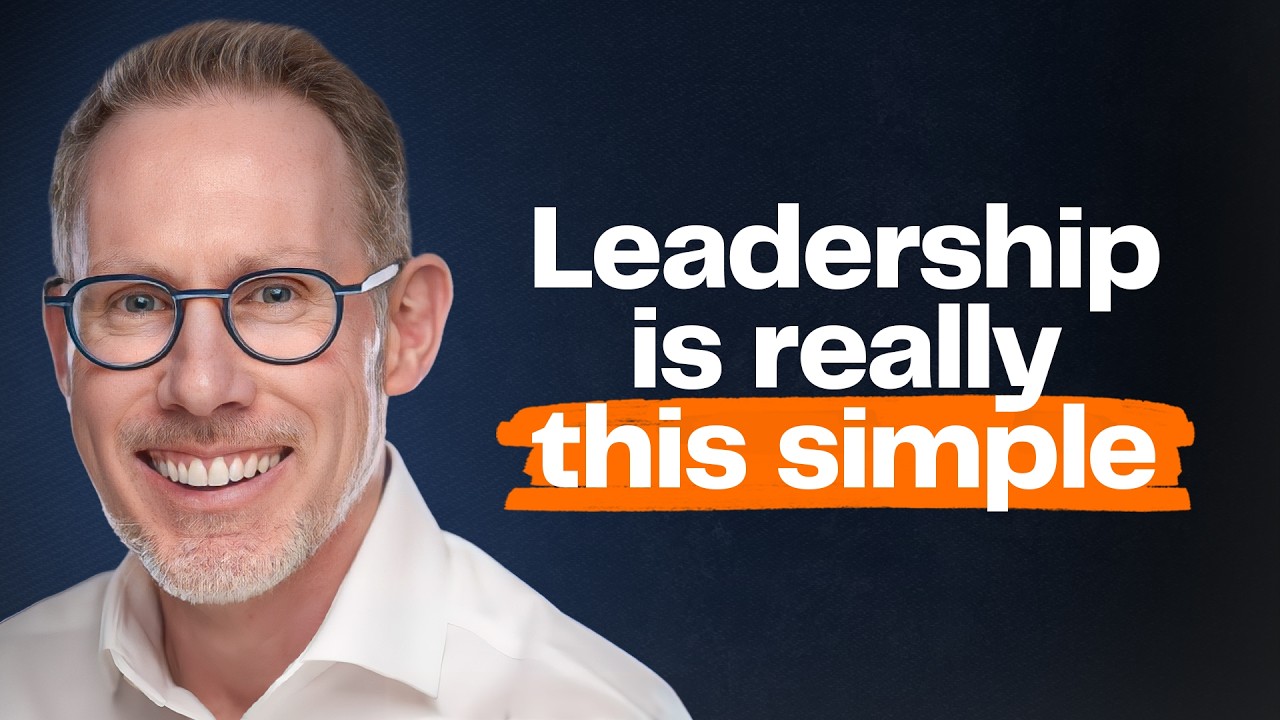
In this interview, leadership speaker Paul Adamson shares how his 25‑year sailing career shaped a no‑theory, action‑first approach to leadership. He argues that leadership is about state management – showing up with an energy‑rich, focused emotional state that radiates to the team – and distinguishes true leaders from managers by emphasizing vision, inspiration, and the willingness to break rules when it creates raving customers. Adamson illustrates his points with vivid anecdotes: a spontaneous Virgin Atlantic upgrade that turned a passenger into a lifelong brand advocate, the Ritz‑Carlton’s $2,000 employee‑empowered service model, and his four‑year turnaround of Oyster Yachts from administration to a $200 million order book. He explains how he leveraged non‑industry tactics (webinars, experiential events) during COVID to grow sales, and how personal health challenges (a lymphoma diagnosis) reinforced his belief that leaders must view setbacks as gifts, manage mindset, health, and support systems. He concludes with three books that shaped his thinking and introduces his upcoming book “Shine: How to Navigate Life’s Curveballs,” tying the lighthouse metaphor to leadership. The conversation blends practical frameworks (focus, inner dialogue, movement), storytelling, and actionable advice for leaders seeking to simplify and amplify their impact.
Chapters
Leadership isn't about theory. It's about making decisions without all of the perfect information. It's about leading from the front, and it's about remaining calm whenever the pressure is on. I quite often talk about state management, and actually our team, if we show up in the morning when we walk through that office door in a shitty emotional state, guess what our team does? They just reflect that back at us. Whereas if we show up in an energy-rich state and actually focused on all the reasons why it can work out, then guess what? We unconsciously give our team the permission to actually be their best selves as well, and they'll generally match our energy, right?
If you start a business in Warsash, right, or I start one in Salisbury, you know, and you say to people, we're going to be the best in the world at X, people just roll their eyes, you know? You know, and, and whereas in the US they go, they go, yes, what can I do to help you?
Exactly.
I mean, it's like, I love your, I love your passion. And over here people just go, oh, dickhead.
Great leaders know when to break the rules.
Yeah.
Knowing when to break the rules Hey, I'm Paul Adamson and I'm a leadership and teamwork speaker. Now, for 25 years, I actually spent 25 years sailing yachts like that all over the world. That's sailing yacht Lush, which is an Oyster 885, which I was privileged to sail around the world with Eddie Jordan 12 years ago now.
Okay.
And the thing is that when you go to sea and you're a private yacht skipper, you learn to lead pretty quickly from the front. Leadership isn't about theory. It's about making decisions without all of the perfect information. It's about leading from the front, and it's about remaining calm whenever the pressure is on. Because of course, in a high-stakes environment or at sea, if you're not leading from the front, well then very quickly you can get into issues. So, So my leadership really was developed at sea. And then about 15 years ago or thereabouts, I kind of fell in love. I moved to Ireland and then I realized, well, what's— there's not many jobs for a professional sailor sitting in Ireland. And that's really where I transitioned into the business world because out of, you know, during the Celtic Tiger, which was basically when Ireland was on fire, before the global financial crisis, I can remember very clearly standing on the dock wall in Dun Laoghaire thinking, what on earth am I going to do here? And everybody had cash but me. And so that was really where I kind of saw then a kind of gap in the market to know, okay, well, look, there's no real sailing school here. So therefore what I did was I set my first business up.
Yeah.
And that was a company called Sailing West, which was effectively a, um, a sales training center. And, uh, and that's really where I learned to set a business up, you know?
Yeah.
Um, and then, and then from there, I was fortunate enough to meet various different people that I taught to sell that were entrepreneurs. And therefore what happened was when the financial crisis hit, I was then asked to literally go into a business and work with the sales team to help them get through the storm, as it were. And of course, I agreed to this thing. I had no idea what I was doing, quite frankly, but I knew how to lead. I knew how to manage my emotional state. And I thought, well, I must know how to sell because I filled up my sailing school, all of the courses. So let's do the Richard Branson on it, which is say yes and worry about it later. Right?
Yeah.
So in I go. And actually then I cut my teeth kind of learning into the business coaching world, et cetera. And then during that time then, That transitioned me into the business world that then randomly or serendipitously, Eddie Jordan arrives on the phone and said, no, no, forget all of that. Forget all of that. I'm building an Oyster 885, and I've heard that you are the guy to come on board and skipper it and take us around the world, which is what we did 12 years ago, which was just the most incredible trip. No, we all, we almost said no. Thank God we didn't. And it was for myself and wives to go. And so I spent time at sea then meeting all of these incredible entrepreneurs, whether it be Eddie himself or from the Formula 1 world or from different Irish businesses, wherever it was. And I started noticing the patterns of actually how all of these guys and girls ticked whilst we did that journey around the world. I then came back and then it was time to reestablish myself of then It was around about that time, or maybe a few years after, I went back into the clients that I'd been working with. So I worked with founders and their teams to really turn the energy up, to improve their leadership, all of that type of great stuff. And then in 2018, Oyster Yachts, which is the yacht manufacturer that built that yacht there, Yes. went into administration. And I was lucky enough that I was then engaged by a private investor to say, come on, Paul, let's see if we can go and win Oyster Yachts out of administration. And we fought the competition off and we won Oyster Yachts out of administration. And so then I was engaged to go in and be the chief commercial officer of Oyster and literally reestablish the business. Now, this is the business that builds luxury yachts. They start at 50 feet, they go all the way up to 120 feet. And it's a business like any business, right, based on trust. And this is a real trusting thing because these yachts are really high-value yachts. And so we literally rebuilt that business back from the ground up. And so over, I was there for about 4 years.
Yeah.
And we built it up from zero to an order book of just under $200 million.
Hey.
And the number is kind of inconsequential because they're high-value yachts. But the point was, is that was really my MBA on the job. And so everything that I'd learned from leading yachts and teams at sea, really, we put into action to rebuild Oyster up. And so now, after exiting Oyster, I literally now work with founders across a variety of different industries, whether that be distilleries in Ireland, whether that be yacht manufacturers still, or all the way through to dental practices in America. So yeah, what I do is I go in and help the founders and their teams really navigate change and uncertainty under pressure, and kind of cut it all back and make it super simple and actually help them unblock the blockers and move forward as, you know, a cohesive team. And more importantly, having fun along the way.
Very, very good.
The—
how, how long was the voyage around the world with Eddie Jordan?
So it was 2 years. It was 2 years and it was wild, as you can well imagine. That's absolutely nuts. Eddie was a great guy.
Was he? And how often was he on board for 2 years or would he go off and come back?
He was on board about 60% of the time. And then, so generally he would fly between the Grands Prix where at that point he was commentating for the BBC. And so what would happen is we would arrange to fly him off to wherever he was going off in the world and then he would fly back to us and rejoin the yacht. Typically, he didn't do the ocean trips because he would go nuts on an ocean and the satellite phone bill would be massive. But actually, he kind of joined in all the nice bits. So, you know, in all the islands in the Pacific and things like that. And so, it's hilarious because when you spend time with somebody like Eddie, he not only became a dear friend whilst he was with us on the planet, but also you learn from a guy like that so much, how he built Jordan Grand Prix up, How he got from literally by the skin of his teeth through so many deals, how he changed global brands. There's all sorts, and how to create opportunities when most of the world don't see any opportunity.
Yeah. Fab. Oyster yachts, dear to my heart. I had raced one in Cowes Weekend. We managed to T-bone a Sunsail boat with the Oyster yacht, which sadly we had to retire.
Okay.
Because that's the, um, yeah, we were okay, but the Sunsail boat was a bit of a mess. That was—
I was about to say the Oyster wouldn't be a problem for the Oyster, but I'd say the other yacht probably was in for it.
That was the, uh, it was, it was an interest— it was an interesting day racing at Cowes Week that year. Right. Fab. Um, so look, um, Paul, what is it that you think to be true that the rest of the world would disagree with you on?
So I think that leadership can be super simple. I think, I think the rest of the world generally look to frameworks, et cetera, to be great leaders. And actually what happens in business is very easy, is people get promoted up and they end up quite uninspiring, boring managers as opposed to great leaders. And the truth is leadership and management, in my opinion, are 2 different things. Great leaders inspire action. Yeah. Fantastic. Great leaders inspire action.
What's your next, what's the next one?
Okay, so next one that I would say is that I just don't think that you can KPI great leadership. Many people go in and go, you know what, we'll put a KPI on it. And it's easy to judge. We generally will judge a business by the financial performance of the business, right? We totally get that because we're in business. It's got to be profitable, it's got to be cash flow positive, all those things. I totally get that. But there are many businesses out there that are in great shape financially, but the leadership isn't great. And actually they might have a high turnover of staff and all of those things. So I think, you know, really understanding that great leaders necessarily can't be KPI'd very well. So, okay, that's number 2. Number 3, I would say that the world probably hasn't totally aligned with me on, but I'm on a mission to make sure the world understands this. Okay. And I'm happy to be mad in my own little corner, banging my own drum on this.
Okay.
is that I believe that great leaders are like lighthouses. And I really understood this metaphor from years at sea. When you're out there on a dark and stormy night, right, where you can't see anything, and actually, you know, you are either approaching a dangerous bit of coast or you're trying to navigate your way through. And this would be before the days of GPS and screens and knowing where you are at any one time.
Yeah.
The one thing that gave you that bit of certainty inside was seeing that lighthouse. And I think that great leadership does that. It actually gives great certainty to their teams. So yeah, so I'd love to talk about that as well.
Fab. That's brilliant. Let's dig into that first one. So most people get promoted and are just boring, uninspiring leaders.
Totally.
And I mean, I think the stat is 70% of people in, I mean, 70% of people in management roles, um, have had no formal training in the UK, right? And it's, as you say, right, you know, because if you're scaling a business like, you know, like you did at Oyster, like I've done, like our clients do, listeners do, you know, you want to promote from within, right? That's what you want. You know, you maybe hire a few people from outside to give you some scaffolding and some experience, but You know, that's what you want. You want that the people who do well, you want to promote them. But then we don't actually do anything other than give them a new job title and hope that they're going to make it up and be good at it.
That's right. That's exactly right. And I think the difference is that, are we promoting people to be a manager, which a manager is about holding people accountable, right? Really, ultimately, or a leader. And a leader is really about setting the vision and inspiring people to take action. And I think that there's— and those are 2 different things. And I think the reality is what happens, and I think it's more so over here in the UK actually, our social conditioning isn't great for being able to kind of step up and be energy rich and all of those things, right?
Oh yeah. Look, if you start a business in Warsash, right? Or I start one in Salisbury, and you say to people, we're going to be the best in the world at X, people just roll their eyes. And whereas in the US, they go, yes, what can I do to help you?
Exactly.
And it's like, I love your passion. And over here, people just go, oh, dickhead.
Yeah, completely. And then wonder why that actually it doesn't work out. Because there's another piece in there that I believe the great leaders are energy rich, meaning that actually what they've learned to do is they understand that energy inside is generated. So I heard many years ago somebody say that the power station doesn't have energy, it's generated. And that's so true. But it's the same for us, right? Because imagine now if I turned up on this show and I was just like, all right, Dom.
Oh, the guest from hell, you mean?
I've had some of those. For the next 8 hours, we're going to talk about stuff that could really change. It's just not going to work, right? It just doesn't work. But the point is that actually all of us at times get into a great energy-rich state.
Yes.
And then the question has to be, okay, well, how? Okay, Paul, easy to say, but how do you do that? Well, there's 3 things of what drives our emotional state, right? One is focus. If we focus on consistently All the things of why it can work out and all the reasons why it is going to go our way. Guess what? It brings our energy up.
Yes.
And the Americans are great at that, right? They're all like, "Yeah, man, we're going to do this." Da da da. Okay. Us over here on this side of the Atlantic, we tend to focus on all the reasons why it can't work out and all the reasons why oh we've got to protect the down. And yeah, for sure, we've got to be intelligent thinking and protect downside. But hey, let's not stack ourselves up emotionally with all the reasons why it can't work out because guess what brings our energy down? And so focus. this is a really important part of a soft skill that isn't actually a soft skill because it underpins everything that actually as leaders we need to master. Because I quite often talk about state management and actually our team, right? If we show up in the morning when we walk through that office door in a shitty emotional state, meaning we're in a mood, we're low energy, all of that, guess what our team does? They just reflect that back at us. Whereas if we show up in an energy-rich state, we don't have to be like rah-rah over-the-top state, but just energy-rich and actually focused on all the reasons why it can work out, then guess what? We unconsciously give our team the permission to actually be their best selves as well, and they'll generally match our energy, right? And then so focus is number one. Number 2 would be inner dialogue. And that's the voice in our head, right? Some people call it imposter, the chimp, whatever the latest personal development phrase is. But the truth is we all talk to ourselves inside. And I always talk about we have the coach or the critic. And the coach being, come on, you've got this, Paul. You can make it happen. The critic being, who on earth do you think you are? Who's this guy full of shit? Come on, it can't be possible. You tried it 25 years ago just once. It won't work out today. That's the critic. That's the critic. And we've got really good critics over here, this side of the Atlantic. And then, so the key is actually mastering turning down the voice of the critic, but turning up the voice of the coach. So that's inner dialogue. Third lever we can pull, movement, right? If you chop E off the word emotion, what'd you get? Motion, right? And motion drives emotion. So, understanding that actually we've gotta get up and move and be physically fit and move ourselves, breathe, all that stuff. is actually so important. It's so, so important because those 3 combined give us state management. Why is state management important? Because energy drives engagement. And so, if we want to be great leaders in a business, we've got to first of all learn how to engage ourselves. Then we've got to learn how to engage our team. And if our team is engaged, guess what? We all spin up together. And who else do we then engage? Our clients, our customers, the market. Because the truth is, if I said to somebody, and quite often I'll say this either to an audience or to a group that I'm talking to, I'll say, hey, where do you consistently live on the energy-rich scale? Like 0 meaning you may as well be underground, right? And 10 being you're unstoppable, you're on fire. Where do you consistently live? And most people will go, well, maybe 4, 5, 6. You're like, well, okay, do you want to go and date a 4, 5, or a 6, or a 2, 3, and 4? No freaking way. No, of course you don't. You want to go and date the people that are good fun to be around, right? And so it underpins everything in leadership. And one thing that I noticed from that trip around the world and spending time with all those entrepreneurs is one thing they were all brilliant at. was they had energy. They had great energy. It was so clear and abundant. And when the world gave them a knock, because the truth is we are all going to get a knock at some point, right? We're all going to get the shit kicked out of us. It happens whether that be personally, in business, whatever. At some point, we're all going to go through challenging times, right? What they've learned to do is they take the challenge on, but it doesn't define them. As in, they meet the challenge with energy. They find the way through. And then once they found the way through, they always look for the gift in it that they can grow from and learn from. And I think that that is such an important thing because I think it was, I can't remember who said it, but I think it was who carved David? Michelangelo, I think it was. Yeah, yeah, yeah. He always said that David was in the block of marble. It was just everything was chipped out of that block that wasn't David.
Yes.
Meaning that as we go through life and as we go through those challenges, no matter how hard they are, and in the business world, right, it's tough out there, is that rather than go, oh my God, it's so challenging. This is happening to me again. If we can see it as actually this is what's shaping us to be the true business that we need to be. This is, even though I might not like this experience that's come in, I'll look for the gift. I'll find the way. I'll actually carve out who we truly need to be to actually create a business that adds massive value, not just to the marketplace, but also to the team as well, that everybody grows. So something like that. There's a good rant.
Yeah.
Well, I was just thinking the other thing, Elon Musk is so not British, right? Because he said, so what they do is they say, oh, there's a whole load of rules. And he goes, fuck the rules.
Yeah, 100%.
Or Uber, we're just going to launch all these taxis and they can sue us. Whereas in Britain we go, no, no, but there's a rule. No, you have to queue. No, you can't do that. No, that's very European. No, no, we're British. We queue, we follow the rules. And it's like, oh my God. I see it all the time where there's HR compliance and there's a rule. And so you can do compliance to have a better business. Or you can do compliance to just grind your soul and make you wish you hadn't been born. And so many— God, either the ISO 27000 folks or HR, and it's just applying the rules in a really rigid way. It's just soul destroying, but it's like a national disease. How could the government during COVID have been surprised when they said everyone should wear a mask?
Yeah.
And they went, and all, it's like, we didn't think people would do it. And everybody did it. It's a natural characteristic. It's like, oh, because then it's like, if you're following it and everybody else, then it's not fair. Just so, I think it's so hard to be entrepreneur. I don't think it's access to capital, but I think it's hard to be entrepreneurial in the UK. I think we just—
and you know, I think a great example of this, and I heard this said a few years ago, and I thought that is totally true. Great leaders know when to break the rules.
Yeah.
So it's important to have rules, you know, it's important to have process and, you know, just as long as it isn't crippling us, right? But, you know, it's important to have systems and we understand systems create scale and all of that, right? But knowing when to break the rules creates, you know, mega results. And let me give you a great example of this.
This is brilliant. Just before you do, I think it's the difference between managers and leaders, right? The managers will just follow the rules and the leader will go, We used to do it like that, but do you know what? We need to do it differently.
That's right. That's right. So let me give you a great example, right? So I saw on Instagram, and I'm, you know, I kind of learned this from Eddie, blag your way to wherever, right?
Okay.
And that, you know, that's part of building, you know, something, right? And then, so I saw on Instagram that Virgin Atlantic had basically put out a little, um, ad to say, look, whatever airline you're with, whatever level of card you have, Just submit it to us and we will give you the next card up. And, you know, that's absolutely fine. Just— but you've got to book a flight with us. So, you know, but we'll give you the next card to book a flight. So I was like, well, I happen to have a BA Silver Card, right? And it was only because I'd done a flight down to Australia that actually I flew business class. Most of the time I'm in economy, right?
Yeah.
So, you know, it was only the fact that I said, well, if I'm going down there, You know what? I need to lie flat because I'm only down there for 24 hours, whatever. So anyway, and so I had this silver BA card and it was running out literally in 7 days. So I thought, well, I'll just chance it. So I sent it in and lo and behold, day 6 and a half, get an email from Virgin. Mr. Adamson, welcome to Virgin Atlantic. Here's your gold card, right? Book your flight within the next week to wherever you're going to go. And actually it's valid. So I booked the flight because I was going to America and And so anyway, so I booked the flight. I was going over to Washington to speak at a mastermind group, right? And so I jump on this flight and I thought nothing. Well, the first thing is I went to the lounge in Heathrow, which was so stupid. I come up and as soon as they see the gold card or you hand the boarding card in, they were like, oh, Mr. Adamson, it's so good to see you again. Welcome back to Virgin Atlantic. I'm going, you know what? It's great to be here.
I love this airline.
It's so amazing. Thank you so much. Right? And so, go in and chomp through all the food and all this. Anyway, and then so I go and jump on the plane. And so, I jump on the plane, sit on the plane, sit down, get the AirPods out, whatever. Next thing, the flight manager comes down. Her name was Zombie. She comes down, she goes, Mr. Adamson, so great to see you on board again. Thank you so much for your custom. She said, the ground crew have actually got a different plan for you on this flight. So I was like, all right, okay. And she goes, if you just want to grab your things and follow me. I was like, perfect, right? So anyway, and then I follow her up to the bar in the middle of the plane. And she goes, look, she said, we got loads of seats up here in upper class. So she said, would you like to change seat and fly in upper class with us today? I was like, hmm, just let me think about it. Of course I want to fly here in upper class. And she goes, but she said, look, She said, we're actually not meant to do this because we would know then all you Gold Card holders, what you do is you'd book economy and then you'd know you get upgraded. So she said, I'm willing to break the rules, but she said, just promise me that you won't become basically a pain in the ass to all the other flight managers when you get on the return flight or any other flights you do with us. And I was like, you have my word. There is no way. That I will do that. So thank you. So she said, pick your seat. Which seat do you want? So I picked that seat. So I sat down and I was treated like a freaking king. All right? It was amazing. The experience was incredible. So I got chatting to her and then she was asking, she said, okay, so what are you going over to Washington for? And I said, well, actually I'm a speaker. And I said a bit, you know, I get engaged to speak about leadership and teamwork and business growth and stuff. And I said, but, and so I said, but I said, can I ask you a favor? She said, sure. I said, what you've done today has just really been a great example of knowing when to break the rules, because actually what you've done is you've not just— and I told her the story about how I blagged this Virgin Gold Card. I said that actually, you've shown how to make a customer for life. Not just customer or client. In fact, not even a customer or client, a raving fan.
Yeah.
I said, and by doing that, that is what you've created. So I said, do you mind if I share this story from stage? She said, no problem, you can do that. So then my mind is ticking. I'm going, well, I need a photo. So I said, listen, I'm not weird. I'm not unsure. Could we get a photo here in the bar? And she goes, well, she said, do you want all the crew in it as well? And I was like, yeah, that would be brilliant.
That's less weird. That's less weird. That's fine.
Yeah, it's much less weird. So she picked up the intercom and go, All crew to the bar immediately, right? And so suddenly, I tell you, within 10 seconds, we were like mobs. One had a fire extinguisher, but we're all at the bar, right? We're all mobs. And anyway, and anyway, and then so, and then so we snapped this photograph and, and it's super cool photo. And then so I said, brilliant, thank you. And then I can use it on a slide deck on stage. Yeah, that's absolutely fine. That, that's no probs at all. So I got chat, chatting to all of them, and it was just a fabulous experience. So then as I was getting off the plane, I said, look, I said, this is amazing. Thank you so much. What could I do for you? Because of course, I feel the need to reciprocate, right? Yeah. And she goes, well, she said, listen, you'll get an email in a couple of days. My name's Ombi. Just say you had a great time and da, da, da. That'd be really helpful. I said, okay. I said, do you mind if I share that photo on social media? She goes, no problem. She said, just copy Virgin Atlantic in because they like that kind of stuff and they might pick it up. So I said, fine. No probs. Thank you. So off I get. So the next day on the way to the venue, I thought, oh geez, I need to put on that photo and follow through on it. Mm-hmm. So, so I put, you know, great experience on Virgin Atlantic. Wow, what an airline. Bum, bum, bum, bum, bum. And then just before I hit post, I stopped for a second, right? And I thought, shall I copy the big guy in on this? Literally, shall I copy Branson himself in on it? I thought, and I kind of hesitated, right? Because we all get— that's, that, that's the Britishness in me. Okay.
Yeah.
Oh, should I do that? You know. And I thought, fuck it. Yeah, of course I'm going to copy him in because actually, he's not going to reply. He ain't going to answer this. It doesn't matter, right? So anyway, and then so @RichardBranson, thank you for creating an incredible team. This is amazing airline, blah, blah. Hit post. Boom. Jump into the venue, speak all day, come back out that evening, then hit Instagram, personal reply from Richard Branson. Saying, oh my God, Paul, so amazing to see this. Thank you so much for copying me in. And I just thought at that time, what a great lesson for all of us in business.
Yes.
Knowing when to break the rules. Because actually, guess what happens now? That story I've just told now, I told it last week in freaking— I was in Honolulu literally at the weekend speaking to a load of dentists. I was telling that story. I was telling it, I tell it pretty much every time I go on stage, not all the time, but if it's appropriate.
Yeah.
But isn't that amazing of how to make a raving fan customer? And I think from a— that's where the leaders come in, giving your team the permission to knowing when to break the rules and actually to realize that if we fall in love with our customer and not necessarily our products or our service, guess what? We win every fricking time. You know, we really, really do.
I'm just, uh, Hirst Schultz, who was the founder of Ritz-Carlton. Okay. I had him on the show a while ago. And, uh, Ritz-Carlton, they, the employees can give up to $2,000 to solve a problem that a guest has.
Perfect.
Right.
And so, and so what they've done is they've, they've even made this, uh, systematic or programmatic. So, and they have one of their other values is, uh, take, don't point. So Paul, if you're in, you know, if you're in the lobby and you say to somebody like, where's the gym? Like, there's a sign that says gym. So, you know, I could easily go, Paul, you idiot. Look, it says gym over there. Maybe if you just follow the signs to the gym, you'll sort it. Like, that would be your experience in most hotels, and that would be it. But that would be adequate.
Yeah.
The Ritz-Carlton, what they want to do is they want to— they want somebody to walk you all the way to the gym, which might seem totally unnecessary to you as a guest. But the purpose is on the way to talk— walk you to the gym, I say, how's your stay been? Is there anything else? Is there anything we could have done? Is there any little thing that wasn't quite perfect? And so I'm trying to tease that out of you, and then I've got $2,000 that I can spend to fix it for you and blow your mind, right? And so then, then, then because they've— then they look at all the employees and they go, who doesn't spend the money?
Yeah.
Right? Because, because your, your experience at Virgin is this is the person who breaks the rules. What they've done at Ritz-Carlton is they've said, that's the type of behavior that we want to make Absolutely part of our business. So how do we spot the people that aren't breaking the rules? Like, we make, yeah, we make breaking the rules possible for everybody every day. And then if you're— if you don't break them enough, like, maybe you need, you know, maybe you don't deserve, maybe you don't belong here, right? And so I think it's like the opposite. So I just— and that's the type of stuff that happens all the time. You know, you're on the phone to somebody, computer says no. Yeah, you know, it's just like computer says no. And you just—
Yeah, I think I know, and it's a killer. And actually, the whole point there is, I think, as well, is that's about trusting our team and empowering them, right? To make a decision as opposed to actually— and I think that this is where many managers kind of get it. Well, hang on now, this is not in the box. I need to make this decision. No, let your team make the decisions. Trust them. Are they going to get it right all the time? No, of course they're not.
It doesn't matter.
It's no problem. Let them crack on.
Let me interrupt the conversation just for a minute because I don't want you to miss this. My new book, Mind Your Fucking Business, is out on Amazon. If you're thinking yet another business book, I think you're wrong. This is actually a blueprint to cutting through the noise and achieving unparalleled success for you. It's based on 10 years of business coaching, spotting similar problems that people have had, and coming up with real-world solutions. If it's supercharging sales, if it's mastering talent acquisition, building a powerhouse brand, cultivating a company culture that breeds success, then this book is a ticket to your transformative journey. It's filled with practical tools and frameworks that I use every single day with my clients as part of their coaching program. If you want to to take your business from good to great. Look, you can go to Amazon and you can buy it, or you can click the link in the show notes and head over to monkhouseandcompany.com. And I'll give you a copy. I'll send it to you today. I'll send you a copy for free. I want to help you build a fantastic business. Now back to the conversation.
Look, before— what I'd love to do is dive into a bit about your time at Oyster.
Sure.
So, you know, you bought it out of You had the order— the order book was what, $200 million by the time you sold it?
Well, yeah, yeah, no, so it was still owned by the private investor at that point. But when we went in, the business was in administration. Basically, the order book was down at zero. And then so there were no orders at that point. There were half-finished yachts built, half-built. And yeah, so then it was really go in and there was a skeleton crew left of 10 people from 600. So it really was like when we walked through, well, first of all, we were gobsmacked that we won it out of administration because we were up against the likes of Louis Vuitton and people like that. But I kind of knew that actually, I know exactly when we won that bid. And it was the first time. So I knew that, you know, once I was engaged by the investor to go and acquire it effectively, or be part of that team, because I was part of a team, is I knew that that first meeting with the administrator would be critical to either win or lose. And then so what we consistently did was I made sure that whatever they asked for, we overdelivered on. So When I walked in, I remember I walked straight in because I knew it anyway, because I kind of knew the layout of the yard because we'd built Lush there.
Yeah.
And so I walked in, I said, oh, hi, I'm Paul. And I said something like, nice to meet you. Big smile. Nice to meet you. I said, I guess my role here is to show you why we're the only ones that could make this business successful after the last lot. He kind of looked at me and he goes, huh? And then I said, listen, I sailed around the world. I know this business inside out. And I said, I'm sure you'll have loads of questions and I'm sure there'll be loads of people wanting this. But I said, we are really the only ones that could make this successful. And the reason I'd gone on that angle is the girl that I was working with who was for PwC at the time, fabulous girl, right? Is that, so she had been in charge of UK deals for PwC, like big, big deals. And so she'd explained to me that with the administrators, legally, they have to basically give the business to the consortium that is most likely to be successful, that the administrator believes will be most successful. And so that was locked in my head to go, right, everything we do needs to build trust that we are the ones. And then so little things like when they asked for— and then so that first thing of building that rapport was so important. Right? And I had a bit of crack with them. It was good fun. And then they asked for, can you give us a paragraph on the investor and as to who would be the owner? I thought, I'm not going to give you a paragraph. I'm going to give you a 35-page slide deck of actually why it'd be amazing. Beautiful slide deck, sat up all night, made it look fab, all lovely pitch of the round-the-world trip. And this is why I did it. I handed it in. They said, Paul, you didn't listen to the brief. They said, this is beautiful, but we're only going to take a couple of sentences. I said, that's no problem. That's fine. The brief wasn't to pass on. The brief was for them because I knew that the other people going in to do the thing would probably just give the paragraph.
They'd follow the rules. They'd follow the rules.
They would follow the rules. Exactly. And then, so I remember when we were phoned to say, listen, you've got the business. And the investor couldn't believe it. We couldn't believe it.
Oh my God.
We've won this thing. And then suddenly it's like, right, we're going to meet you at 6:00 PM with the keys. And you're like, huh? So anyway, we go in and we're like this little entourage that drove in. And then we went in and there was like, I don't know, the 10 people were there and we came in and I said, hey, look, this is who we are and we're going to really help you. They knew me anyway because through building Lush, right?
Yeah.
And then it was really a case of then go, go, go because it was about Then we needed to reestablish the business as quickly as we could. And there's so many things that— there's so many skills I had to learn on the hoof, like hiring, for example, because I didn't have time to sit there and go through a lengthy interview process. I just had to interview people, start hiring people literally back, because part of the most important part of that business is the knowledge.
Yes.
Because this is a craftsmanship business, you need the knowledge. And when the knowledge disperses, you need to get that knowledge back as quick as you can. So, It was cutting deals, securing deals, et cetera. I'd already teed up the sales team to come back because even prior to winning the bid, I had driven to Ipswich one night and met the sales guys and made sure they were on board to come back into the business. So we teed it all up. So then we go back in, we start to rebuild.
So at the point you left, did it then change hands or did it change hands some— I was just, what I'm keen to know is, Is what economic value do you think you built in the 4 years that you were there?
Oh, well, if you take the size of the order book alone, I'd say—
Yeah, but the order book alone is, the business might have traded hands on a multiple of the order book.
Yeah.
I honestly don't know. I honestly don't know.
But at least a couple of hundred million. But to create $200 million of economic value in 4 or 5 years is just— Yeah. Yeah, gangster.
Yeah, yeah, yeah. And really, that was being part of a great team. So I was just one person, a part of a great team there. But actually, what was amazing was then it was all about, and I think that this is where, again, the difference between kind of maybe managers and leaders. I can remember speaking to the board because investors put a board together, et cetera, and they're all like, okay, what's the strategic plan? I said, dead simple, 2 words. Look at my eyes. Earn trust. That's it. I said, we've just got to earn trust. I said, and the thing about trust is that I can't buy it. So, you know, we've got to earn trust back in this brand. And I said, that's going to take— that is going to take time. But it's so worth it.
Because people can buy a boat from loads of places, and I'm going to pay you— is it deposit or is it— Is it, it's deposit, it's 50% deposit to start a build?
No, it's normally 10, it's somewhere between 10 and 20%.
Yes.
But if you bear in mind—
But if I think I'm gonna— and what's the cost of a boat? What's the cost?
Yeah, what's the cheapest one? And then, so the cheapest boat is about £2 million. Okay, so that's like, I'm gonna give you £200 grand at least, right? Yeah.
Now I need to know you're gonna be around when this boat comes out the other side, right? And so, so, because I could put my £200 grand anywhere.
Yes, that's right. That's exactly right. And I think it falls back to, I call this kind of like what I realized is that for anyone to move forward in life, we have to feel certainty inside. Certainty is a feeling, right? Confidence, certainty, whatever you want to call it. And then so I'd realized, I thought, okay, how are we going to earn trust? What does that look like? And I thought, okay, right. Number one, somebody's got to trust these yachts. And, you know, there was a yacht called Pelina Star that, you know, years ago, this was prior to the company going into administration, had an issue. The keel detached from the yacht, it turned upside down and it sank.
Right? Well, I'm just thinking about the one that sank in the Mediterranean with the British entrepreneur whose name escapes me.
Oh, the Bayesian. The Bayesian. Yeah, the Bayesian.
Yeah, yeah. I mean, that, like, anyone who was about to buy one of those hasn't bought one, right?
100%.
Right?
You just go, because nobody knows yet quite why it sank and it shouldn't have bloody sank.
Exactly, exactly. And then so effectively then I said, right, okay, we need to build confidence in these yachts. How, you know, because I asked the sales team, I said, so how many people didn't buy because of Paulina Starr? They're like, well, we don't mention Paulina Starr. I thought, no, no, let's talk about Paulina Starr, because how many people didn't even pick up the phone? Do you know that? No. Well, none of us know that is the honest answer.
Yes.
So I said, so it's ridiculous that these multimillion-pound yachts are not built with a third-party verification, such as classification societies, such as Lloyd's Register. And that was one of the first things. that I insisted we did is we built the structure to Lloyd's Register. Now, what does that mean? It adds a load of process, it adds a load of complexity. But do you know what? I can sleep at night now knowing every boat that was built under my time there is absolutely A1 from a structural point of view.
Yes.
And therefore, there is no way that they could have a structural failure like that. Again, because of the safety factors that are put in and all of these things, right? And then so that builds certainty or confidence from somebody buying around the yacht, right? Second thing is they've got to have confidence in the person behind the business.
Yeah.
Because the truth is, like you're saying, if you are putting down $200K, let's say, on the entry-level yacht unsecured, right, on a business that went bankrupt 2, 3 months ago, are you going to do it? Most people are not going to do it, is the truth. Yeah.
And if you've got 2 million, if you've got 2 million quid, it's 200 grand is slightly less, you know, it's, you know, if you're going to spend £2 million on a boat, you've got enough money that 200 grand is not quite as scary as it sounds. But sure, it's still, you're not going to, you're still not, you're still not going to do it. Like, it's not like, you know. Exactly.
Exactly. And therefore, you know, and therefore, right, we, we, we need to tell the story of, of the person behind the business. And then so we started started creating videos with him to do that, to actually explain why he bought Oyster Yachts out of administration, why he was the right guy, why it's, you know, private wealth, etc., and all of this stuff. So that was hugely successful, right, in terms of doing that. And so we created video content that could work for us in the digital world.
Yeah.
And then, and then we needed to then build confidence around us lot in the business, as it were. And then so we created video content, uh, around us. And it took 6 months to sell the first boat, right? And I remember every month the board would call, where are the sales, Paul? Where are the sales? And of course, the guys putting in a lot of money each month to keep this going. Where are the sales, Paul? And I said, they're coming, they're coming. And of course, and I remember one time he said to me, Paul, sales guys or girls either sell or have excuses. Which one is it? And I was like, oh, okay, come on. I said, no, no, trust me. I said, trust me, trust takes time, but when it flows, it's going to flow. It took us 6 months to get the first deal, right?
God, you must have been so happy to get that first deal.
It was amazing.
It was a—
but the other thing is though, 745, $5 million deal. And I remember calling, I can remember Dan over in the States called and said, we got him. I was like, yes, like this. And then I called the investor and the board, and they were just amazing. They were over the moon. And guess what happened? The first one came, the next one came, the next one came, the next one came. And so, because we could feel the pent-up demand for these yachts, but they needed confidence to say, well, okay, I'm not on my own here. I'm not on my own.
Yes.
And so, the next, the next, the next, the next came. And then, so that started us to build up. And then we almost had the double punch blow, right? And I think that this is probably the bit I'm most proud of, right? Is as we're building this back up, so at that point the business had 2 build yards and you've got to fill up the build bays because they're expensive. The overhead's big, right?
Yeah. If you've got people sitting around not building a boat, you still got to pay them.
Yeah, 100%. And I tell you, there's nothing as motivating of doing a town hall call and seeing, the whole shop floor of Oyster because I saw them, but I also saw all their families around them trusting us and being fed and all of this stuff. So we started and then COVID hits us, right? Boom, COVID hits. And so the world, right? None of us really know. Big uncertainty. The world's melting down. Now, we were fortunate because we're a manufacturer. We got a letter from the government at the time to say, you can continue to manufacture. Amazing. Okay, so that was great. So we could continue to build, but we still needed to grow that order book. You know, we still needed to grow the order book. And so then it was like, well, we can't do boat shows, we can't get on the market. Da da da. What on earth are we going to do? And there's a lot of pessimism, right? Pessimism from the board. There's pessimism. You know, uncertainty drives fear, really. Yeah. You know, and so I was like, well, that's what you know. Some people were like, it's over. It's not going to happen. This is our nightmare.
Da da.
I said, well, that could be one outcome. Or I said, maybe the other outcome is this could be the best thing that could possibly happen to us right now. They all look at me. Oh, Jesus, it's Positive Paul. That was my nickname in the business, Positive Paul. They'd say, don't take that to Positive Paul because he'll tell you it can be done no matter what. Right? Yeah. It used to bug people, but some people that really worked with.
Yeah.
And so I said, look, one thing I've learned over the years is that many breakthroughs come in industries when you actually look outside the industry.
Yeah.
Because generally what happens is in industry, we kind of do what we always do, right? So in the marine leisure, it's boat shows, boat shows, boat shows, and everyone looks to the competitors. We all try and be that bit better. So we get this incremental growth because it's kind of, we're all trying to be a few percent better, a few percent better. But then actually, if you look outside the industry, is there a strategy or a plan that we can bring and put in and try that could give us that real competitive advantage, that real unfair advantage? And so I thought, well, okay, the world is locked down. We can't get to our customers. They can't come to us. They can't come and view these boats, can't come do any of this stuff. Well, you know what? Let's go to them. I said, you know what? I said, I've done a lot of speaking. Why don't we take a strategy from the speaking industry called a webinar, and let's run a series of webinars? And they were like, what? I said, well, think about it. I said, what are you doing now when you're going home at night? Tell me exactly what you're doing. Like, well, first of all, I'm coming in from my hour's walk or whatever we're allowed, and then I'm just hitting Sky News, CNN, BBC. What's the death rate? What's— and it was really unfortunate what happened for sure, but that's what we were all doing, right? We were focused on that.
Yeah.
I said, here's the thing about human beings that I've learned along the way. At some point, we all just get a bit bored of doing the same thing. And so our focus switches. And I said, that's called the law of familiarity, right? Which is where we just do things over and over again. When it's the same, the same, we go, I'm bored. Look for the next thing, because we need a bit of variety. I said, when our focus switches, I said, what do you think our clients are doing? Well, probably the same thing. I was like, exactly. So I said, what we need to do is be prepared for when their focus switches and they look for something else to consume from a content point of view. We need to position Oyster as that shining light of possibility. I said, so this is what we're going to do. Let's run a series of webinars, meaning this is a strategy from the speaking industry. I'll run them, no problem. And, but let's talk about— I'll talk about the trip we did around the world on Lush.
Yes.
You know, that trip there. I'll talk about that trip, about the Oyster World Rally. And why don't we pitch the next Oyster World Rally halfway through that webinar, and actually let's see whether or not we can get a result from it? So, no idea. I said, but I said, let's see what happens, right? And they were like, ah, Paul, this is crazy, you know? And they were like, it's not going to work. I was like, well, Well, let's give it a go because we don't have any more.
Run an experiment.
Exactly. Anyway, and then so we get the webinar on and I remember that one of the team said to me, Paul, because I said, we need to get a Zoom subscription, guys. And they were like, well, you can pay for 1,000 or you can pay for 10,000. Which do we do? I said, well, pay for up to 1,000, thinking there's no way, that'll be loads. Well, we were oversubscribed, right? So actually I probably should have paid for the 10,000.
More than 1,000 people.
Yeah. And then, so picture this, right? And then, so if you're a business owner listening to this, right? Think about this because think about 1,000 of your ideal clients giving you their most precious resource, which is their time and attention, right? That is their most precious resource.
Yeah.
I said, so you know what? We are going to entertain them. We're going to give them a positivity, not just about the sport of sailing, but what can be done. And what was really interesting was with those webinars, the plan was I'd say, right, what we'll do, we'll talk about the entire circumnavigation, but what we'll do is we'll split it into the legs. So first leg can be preparation, then Antigua to Galápagos, right? And I'll share the stories of that, which is what we did. And I said, about halfway through, what I'll do, is I'll just stop and say, hey, look, you know what? Great news. We're going to be running another Oyster World Rally, which will go in 2 years' time. So if it's something you're interested in, the team are just about to pop a link in the chat. Just click on that link and then just express your interest. That's all you need to do, express your interest. Oh, and just so you know, the only cost of entry is really either a beautiful pre-loved Oyster, or we would love to obviously build you a brand new Oyster just for you.
Right?
So, this was the plan, right? What was really interesting was during that webinar, what I talked about, I did not talk about this is an Oyster yacht, it's beautifully built, it's this, it's the features and benefits, none of that. What I spoke about was the experience.
Yep.
And that's the lesson for all of us, right? I spoke about experience and the experience we had and the memories that we created for our lifetime, not just with our loved ones, our families, all of this stuff, right? I just spoke from the heart. Then I remember so clearly, this is probably my proudest moment, right? It's actually, I gave that little 30-second pitch just in the middle, right? And I had 3 screens and I could see my email on this screen, or I was monitoring the email, whatever. And it just went like this because I said, oh, and by the way, there's 1,000 of you online and we've only got 30 places. So hit a bit of FOMO, bit of scarcity, right?
Yeah.
And guess what? Now I'm going to get the numbers wrong, but it was something like we sold new builds about 14 yachts on that webinar. 14 Oysters. Bear in mind, they started at £2 million, right? So I'm not going to give the number.
And if somebody said, we're going to sell a £2 million yacht on a webinar, you'd have just said, that's ridiculous. We're wasting our time. Totally rational to say that's not going to happen.
Yeah. And then what happened is we got the early adopters in on the first webinar, and then the next webinar we said, oh, we've only got 5 places left, whatever the number was. But the point was, is not just the pivot, but I think the real point was taking that strategy from outside the industry and doing some— trying something different and creating a mega result from it.
Yeah.
And what that allowed us to do was during COVID we still managed to grow that order book. In fact, we doubled it, I think it was. And so again, all of this builds confidence, right? And the more confidence, the more trust. And then what we did to really reestablish that brand was then it was all about running kick-ass events.
Yeah.
Meaning that we would run events that just were great fun to be at, whether it'd be the regattas, where it was all about the element of surprise. We'd bring big dancing bands out, cool stuff. We'd have them all up singing. We'd have just, We would just create a mega experience. And so Oyster was like, the brand is very close to my heart because I was a private yacht skipper on Oysters many years ago. I started as a junior commissioner, then I was introduced to an owner. I then skippered an Oyster 56. That's where I met my wife in the Caribbean. We then got married. I came back and then of course Eddie called then to take his Oyster around the world. And then so when the brand actually foundered, it really hurt. I felt genuine emotional pain from that.
Yeah.
And so it was a privilege not only to go in there, but to spend my time and have that passion to really learn those skills to then get the result to build that business back up. And then so when I left the business, which was in October '22, I think it was, It was so satisfying because actually we'd gone in, there were 10 people. When I left, there were 700 people employed. The yards were full in advance for 4 years. That business then was all about how do you build a boat profitably now? We had done the bit that we needed to do, which was create the order book. Why did you—
Full order book, 4 years worth of work, 700 people fully employed, which is more than it was when it went bust. Stability put back in place. But why did you leave?
I think it was just time that it was my time to move on to pastures new. What I love to do, what I'm passionate about is helping people get from A to B, wherever B is for them. And so, I've always been a passionate speaker. I'm sure you can hear that come across, right? And so it was like, this is actually really what I want to do. And I just felt I'd added all the value that I could add, really. Right. Okay. And so naturally, it was time to leave. And then when I did leave, then I ended up with a personal challenge myself, which was, and this is the bit that life sometimes throws you that actually none of us get. And that was— so I'd literally, I'd left the business and I can remember, right? So, and all this will tie up now that whilst I was building that up, I never would've said that I was stressed ever. I would never have said that. I'd said, nope, just challenge, whatever. I would never use that word. But I can remember when then the email was going to go to the company to say that I was going to go back to consultancy and therefore I'd be a consultant for always. officer, but I was stepping out of chief commercial officer role, right?
Yeah.
And so we had written the email, agreed the email, and then Lucy said to me, who was my EA, had said to me, Paul, do you want me to send this now? I was like, no, no, please don't. I don't want to kind of do almost like, not the walk of shame, but going to walk to the office and I'm going, oh my God. So I said, just see my car go out the car park, send it. All right. So cool. So I arrived back at home, I remember, and then I kind of flick on the iPhone, see the email's gone, and I just felt, Dom, right, this, this like deep relaxation in me that I'd not ever felt. It was like a, like a, like this. It was almost like a decompression. It was almost like letting the air out of a tire that's overpumped, right?
Yeah.
And, and it was 2 weeks later, I think it was, that I was diagnosed with lymphoma, which is blood cancer. Yeah. Wow. And not that it would ever be linked to that, but the point is that actually then I needed to go through a health challenge of my own. Now, I'm 100% okay now, and that's fantastic. And then, so obviously then it was like, holy moly, then your life gets turned upside down.
Yeah.
And so, you realize that building this business up and doing all of these things or being part of this team, Although it's amazing and it's brilliant, if I didn't have my health, I'd have nothing. So then it was a time then to really kind of get through that. And straight away, my skipper brain kicked in. And the skipper brain is solve it, lead from the front, solve it, right? 1, 2, 3, too many, because that's how our brains work, right? What's step 1? And I realized, okay, right, okay, I've now got to do what I've taught for years. whether it be leadership or personal development, whatever it is. Maybe this is my test to actually, can I really do this? Right? So then I was like, okay, step 1. I realized that there were 3 things I needed to put in place to sort this out. And 2 of them I could fully control. Step 1 was mindset, because us human beings, we are meaning makers. Meaning, whatever we think something means to us, an experience, will will really determine our emotional state.
Yeah.
And so, I could have come up with, this is the end or the beginning. I chose it was going to be the beginning. So, I can absolutely manage my emotional state no matter what's going on around. Even though I feel the fear, it's okay. I'm going to make sure that I'm going to find the gift in this, the positive. I'd learned that from the entrepreneurs as I went around the world, right? Is that kind of find the gift, look for the gift. So, that was step 1, manage mindset. Step 2 then was, Okay, I'd lost control of my health. I was drinking too much. Not that I was like a drunkard, but I was going out and partying, having a great time, and I'd put on a lot of weight. And so what I was putting in here wasn't supporting me health-wise. So I was like, straight away, I can control what I do with this, so therefore I need to get that under control, eat healthy, sleep right, all of that stuff. Third thing then, I needed a world-class medical team that could come in and do the intervention. So I was lucky enough that at Southampton General is the center of excellence for lymphoma in the UK. So the guy treating me was absolutely, you know, he is the guy, right?
Yeah.
And then so when you combined all of those 3, I was so lucky that 3 months in it had completely gone. And we could have just, we could have just, uh, stopped the treatment at that point, but actually it's recommended complete the treatment and then you'll go into long-term remission. So, so, so the thing with non-Hodgkin's lymphoma or follicular lymphoma, which is the type that I had— and I always talk about something I had— is classed as incurable, meaning that at some point it'll probably resurface. But you'd hope that would be 20 years down the line, right? But you don't know when you're a patient which patient group you fall into.
Yeah.
And so, and then so you have to kind of live with this thing, but you don't let it define you, right? And then, so going through that whole piece, then fast forward, then when I can remember about, I don't know, halfway through the treatment when I felt really sick, right, is I can remember thinking, this is ridiculous because surely this is something— because I'd asked my oncologist, I said to him, I said, when was the science done for this? He goes, like 1983. I was like, 1983? I was 6 years old, for heaven's sake. I was watching Back to the Future. I mean, that's just ridiculous. He goes, no, but Paul, the outcomes are so good. that no one's really put their money into follicular lymphoma because most people live for a long time. So, we see it as a condition as opposed to something else. I said, okay, I got it. But that to me is not good enough. So then, the middle of the night, hit Google. There must be someone in the world that actually is out there searching for the cure for this, like long-term curative.
Yeah.
So anyway, so then I stumbled across Nicola Mendelsohn. Now, Nicola Mendelsohn is the head of global business for Meta, right at the top, right next to Zuckerberg. And she was diagnosed around about the same age as me. And she was like, this is ridiculous that FL can't be cured for long-term. So therefore I'm going to set a foundation up called the Follicular Lymphoma Foundation. So I was like, little voice, 3 in the morning, it's dark, goes, maybe this is why you were given this gift. maybe it's to help these guys out. So I reach out to her and say, hey, look, I can't help you with the science. I've just been diagnosed. I'm halfway through my treatment. It's looking good, but I'd love to get involved in some way. I said, probably I can't help you with the science, but for sure I've been part of a team that sold yachts to many wealthy people on the planet, and I'm sure I can help you fundraising. So straight away she got back to me. She said, so she introduced me to a team in the FLF, And then, so I said to them, I said, hey, how are you doing your fundraising? And they're like, well, we've got a few wealthy individuals. I was like, great. What else are you doing? That's about it. And a few people do smaller things. I said, you know what we should do? One thing that Eddie did when he was alive was he's the patron of a charity called Amber. And Amber basically gets kids or young adults that have lost their way, whether it be victims of domestic abuse or drugs or whatever it is, gets them into safe houses in the UK, turns their life around, has agreed with certain employers, whatever their history is gets disregarded, and they'll get them into employment. They turn their lives around. It's beautiful. The work they do is incredible, right?
Yeah.
And so what Eddie would do every 2 years was he'd run this thing called Amber Rocks. He was brilliant at it because he'd fill the room with his network because he had more connections than Vodafone, this man, right? And so basically, it'd fill the room and they'd raise a load of money. And that was a massive fundraiser for Amber. So I said, why don't we take, hey, a strategy from another place and try it in this?
Yeah.
And then so fast forward, we go into Nobu Hotel and they said, look, if you want, let's do this, but let's, um, I, you know, I would love 5 minutes just to tell my journey with follicular lymphoma. And actually, if that helps raise a bit more cash out the room, that would be great. And I remember on the night I asked the team, I said, guys, what would be like a number that you'd walk away with going, we've nailed this, we've totally nailed this? And I think they said something like 100K, like net profit into, you know, into the foundation. I was like, I just thought, okay, great, great. Thinking massive undershoot. Come on, we can do more than that. Anyway, so then I get up, I give this 5-minute, like, little speech. And right at the end, and it was really emotional, I did it to music and it was really emotional. And, um, I did it at the end, and just before I came off that stage and walked back down to the seat, I heard that little voice again that said, this is why you were given this gift.
Uh-huh.
Just wait and see, Paul, what happens now. So I go back, I sit down, right? They didn't raise £100K that night, they raised £500,000 for follicular lymphoma, right? And the fulfillment you get from that. And even I was up with them before Christmas this year. They've run that event now 3 times. It's now raised just under $3 million that goes straight into follicular lymphoma. And what I didn't realize is with follicular lymphoma, this little-known blood cancer that's not had the research, is if you cure follicular lymphoma, it spills over into leukemia, other blood cancers, and all the big incurables like pancreatic cancer.
Wow.
You have renal carcinoma, breast cancer, all different stuff. So it's a real linchpin to actually creating a breakthrough. So that became part of the journey as well. So I think the lesson I got from that was whatever challenge comes into our life, then if we can view it as a gift and look for the gift, even though it was something I'd never obviously wanted to experience, but it was given to me, that actually then it's how do we make the best of it and move forward and lead from that place as well?
How do we make this bad news the best news we could have got this year?
100%. Making our worst day the best day. 100%.
What a fantastic story. Thank you for sharing that. What books have you read along the way? And we've got a couple of minutes left. What books have you read along the way that have inspired you on this journey or helped you on this journey, or I don't know, maybe even given you solace on this journey?
So I think there's definitely 3 books, right?
Okay. Because more than 3 would be too many.
Exactly. You got—
yeah, yeah, yeah.
Okay. Book number 1, book number 1, right, is Man's Search for Meaning.
Brilliant book.
Yeah, yeah, yeah.
And if anybody's never read it, go read that book. And it's basically about somebody going into Auschwitz and actually realizing, noticing the patterns of who survived and who didn't. And it all came down to meaning. And then a therapy emerged from it, and it's incredible. Viktor Frankl, incredible book. So I'd say read Man's Search for Meaning. Second book I love is Who Moved My Cheese? by Spencer— I'm going to say it's not Spencer Matthews, it's Spencer somebody else. But yeah, or it may be. But brilliant book, right? And so that book is all about change, right?
Yeah.
So I think that is a brilliant book. Now, the third book, this book is a really special book, and this is pure shameless self-promotion. It's called Shine: How to Navigate Life's Curveballs, and I'm writing it right now. And therefore, it'll be out in a couple of months. Shameless self-promotion because I believe that great leaders are like lighthouses.
Yeah.
And I've named my company Lighthouse Training because of that. Because if you think about a lighthouse's job, a lighthouse's job is to stand there on an exposed bit of coast, wherever it is in the world, get battered by all the wind, the rain, the horrible stuff. Sometimes it sees a beautiful sunset, beautiful dawn, calm seas. Sometimes it sees storms. Sometimes it can't see anything because there's no visibility, but it stands there present, not moving, having one job. And that is to shine a light out to sea or make a sound or be seen to actually give that mariner out there certainty, confidence to either guide them safely away from danger or to guide them safely into port. And I believe that the best leaders in this world are like a lighthouse, meaning whatever comes into their experience, They choose to shine their inner light bright out for their team, out for their family, out for themselves, but to guide people safely or to guide them in. And I think I just love leaders that operate like a lighthouse. So there you go. There's my third book. Now, I should give you a fourth book, right?
No, no, that's fine. That's fine. Paul, it's been an absolute pleasure chatting with you today. Thanks for coming on.
Likewise. Likewise. Brilliant to be on, and thank you so much. And I've no doubt that this is the start of an amazing friendship and relationship between you and I, Dom. You know, brilliant.
Next time.
Failure is a better business school than an MBA. I believe that most agencies or businesses will never scale because their founder is the product. The one common denominator across all of the people that I'm talking to, and also in myself, is that you can't undo hard work and preparation. The more they do, the more they prepare, the more they put themselves in those situations, the better they are at dealing with those situations.
Because you can be in a really miserable place, but if you haven't been in a miserable place, you don't know that dawn will come.
And then as you get towards 100, you've got to start playing football.
You've got to get yourself off the field and the team have to be self-sufficient.
Most acquisitions fall over or don't go as well as they should because the founders aren't incentivized. And if they're still at the center of that storm, you've got to keep them burning and keep them pushing.
More from Dom


E372 | Oliver Cummings: left Goldman Sachs for a 4-person startup. built a 60,000 expert network


E370 | James Ashford, 8-Figure Founder: The Person You’re Protecting Is Destroying Your Business





$40M/Tech Founder Reveals the Smart Way to Run & Grow Your Company With AI in 2026

