Why Hiring for Skills Is Dead (Look for This Instead) | Alex Cooper
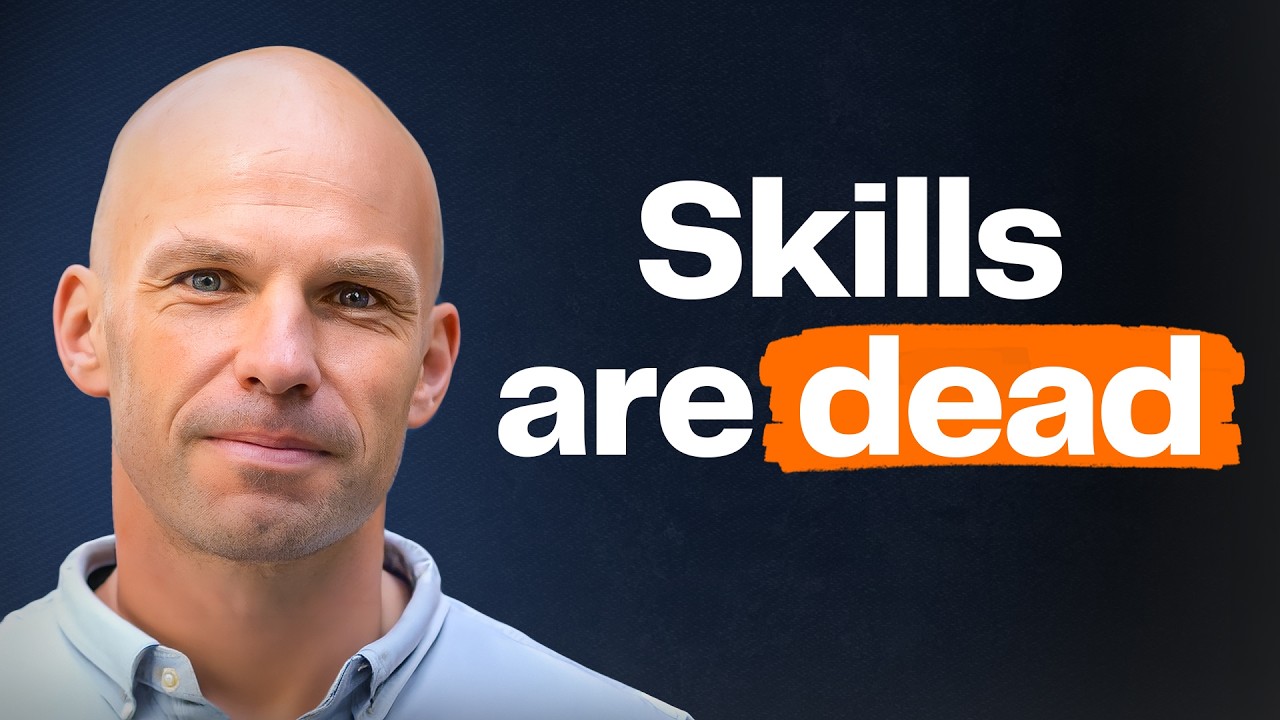
Alex Cooper, co-founder of Electric Twin, argues that hiring for specific skills is outdated. Instead, look for talent density, agility, and a learning mindset, since AI will automate desk jobs anyway. His synthetic audience platform lets companies test decisions in real time using language models and agent-based simulations.
Chapters
I just think this concept of balance is pretty well bullshit. If I look at my life, like the phases that I think I'll remember on my deathbed are the times where I've had no balance. Well, as founders are always moaning about sales and fundraising, but I think they're hugely fun.
In the military, you always used to talk about the OODA loop: observe, orientate, decide, act. If you can cycle through that faster than your adversary, then you've got a decisive advantage.
It's fascinating. There's some great data because most people go, oh, when the economy's up, everybody's up. You know, rising tide floats all boats. The 2 companies I scaled were in 2 recessions. And you just got to stop listening to the noise because you've got to create your own sort of bubble of optimism and just make it work.
And I think a lot of leadership is about, it's a personal journey, you know, about learning about yourself.
And I think as a near enough 50-year-old, I'm still only just learning what my strengths are, what my weaknesses are, and how I can use them effectively.
Hey, I'm Alex. I'm the co-founder of Electric Twin. Yeah, probably different background from many of the people you spoke to. I was actually a derivatives trader after uni. I did a history degree at Oxford, ended up being a derivatives trader in the city.
I got bored and was walking down the street in the days they used to have army recruiting centers and just walked into one having never had any contact with the military and just said, I want to join the army, resigned from my job.
Thought I'd do 2 years, That was just before 9/11, so I kind of timed it pretty well.
Ended up having a very busy 20-year career there, which is amazing.
Then without having really—
I never had any career plan, but my wife said, you can either stay and become a general and get divorced, or you can stay married and have to find something else to do. So I thought, well, it's time for something fresh.
That was just before COVID which again is like, Not very good when it comes to planning, but I ended up getting asked into Number 10 to help with the COVID response.
I was like the operational leader for setting up the COVID testing program through the pandemic, which was awesome. And then there I met my co-founder, this guy called Ben Warner, who's a superb individual. He was the Prime Minister's Chief Advisor for Data and Digital. And we became quite good friends, having a beer, sort of a couple of years after the pandemic and he said, how would you like to set up a business together? And that's what we do.
I've been doing that since then with Electric Twin where we build simulations of human behavior for businesses, which is helping people.
It's going to radically change the way in which businesses understand their target audiences and go around sort of navigating a very complex world.
Fantastic. We'll get into what Electric Twin is in a second, but What are some things that you think are true or things that other people think are true and you think are bollocks or vice versa? What's some contrarian takes on the world that you have?
Yeah, I think education, specifically skills-based education is becoming increasingly irrelevant, particularly with the advent of AI. That's my first one.
Okay. And you don't mean plumbing, you mean mental skills?
Yeah.
I mean, interesting, like manual skills have a relevance that will last for a few more years.
Yeah.
We've got a plasterer in today who hopefully is not going to disturb us. But that's something that robotics will take a bit of time to get up to speed with. But I think a lot of skill, particularly desk-based skills-based roles like accountancy, legal work, A lot of these are going to get replaced with AI very quickly. So what you're looking for in employees in the future, and also as people go through education, is disciplines where which you can build agility, ambition, and a sort of willingness to engage on a lifelong experience of retraining, learning, and upskilling, as opposed to a single event where you can learn a discipline and then apply that through your life. Okay.
What's next?
I think the UK is great for building a business.
I know everyone's always moaning about the UK at the moment, like the UK's broken.
But from my perspective, it's like the UK's got huge energy, great talent, and I love it here.
Okay. Next?
Balance is bullshit.
Okay. Leave that. We'll dig back into it. What's your last one?
Well, as founders are always moaning about sales and fundraising, but I think they're hugely fun.
Great.
Excellent.
And it— okay, look, let's keep on the fundraising and sales is fun. Is that because of your personality type, do you think? Can you— or is it, if it's not fun, then you're never going to succeed. And so maybe you shouldn't be a founder.
I don't know. When I was leaving the army, I had no experience of business. A lot of people are like, oh, you don't want to go into sales. You had this idea of basically door-to-door salesmen going around trying to flog things that people don't want. But the reality is that it's not that at all. You're going around, you're learning stuff about other businesses. So you're constantly finding—
I find it fascinating going into different businesses, learning actually what they do, what their problems are.
And then you're trying to work out a way in which your products or your capabilities can align with those and help make someone's world better. So it's a very positive engagement. You are getting a lot from, as a supplier, and you're trying to help a business achieve its goals.
And I just really enjoy the process of understanding, learning, and getting into a business.
And then trying to help them get to a solution.
I think it's, in fact, it's a great— if you like learning and like getting new experiences and broadening your horizons, it's a brilliant game.
And how much money have you raised or how many rounds of fundraising have you done?
We've done 2 rounds. We're about to announce our second next week.
So by the time this goes live, we'll have announced that. Yeah.
Okay. And how have you found that? I did a panel podcast a couple of months ago with 3 guys who'd raised money. So obviously I had the survivor bias. I had people who'd done it successfully. But were you in a position where you had a number of people who were keen to invest or did you have to go and pitch?
It was a combination of both. I mean, I think anyone who goes in and thinks he's going to start from cold, and be able to raise money is going to find it very difficult. So we spent a lot of time making sure that we already knew what the conditions would look like when we thought we'd be ready to raise. I'd spoken to a lot of investors who knew us and were interested.
So the moment we were ready, we sort of went to market and said, right, now's the time. This is where we are. And actually the fundraising process itself from start, we had term sheets after, at the end, sort of in the 3rd week, and we decided in the 4th week who we were going to go with. So The sort of the formal fundraising experience for, you know, particularly in sort of a pre-seed and a seed phase has been relatively short. But there was a sort of, there was a preparatory phase for about 6 months before where we got things lined up. We knew who the key people we had likely wanted to speak to were.
They knew us, and you start to build that relationship because it's not a challenge of, I don't think it's a challenge of raising money. It's really a challenge of finding a partner.
Um, yeah.
And then make sure that you've got the right partner for the next phase of the business.
And were you in a position where you were raising that you'd, you were, you generated some revenue, you had some, you had some traction?
Yeah, we had, you know, good early revenue, good early traction, really good endorsement and referencing from those, those first clients on the impact that it was making into the business. You know, like we, for instance, we'd done loads of work with News UK. who'd gone public already on the impacts it was making on them. And that really helped. And they helped, okay, when they were giving the referencing into the fundraisers, that made a huge difference for us.
And what impact had it had for them? What was the work that you'd done for them?
Well, I think, yeah, what we're building, so synthetic audiences, it just allows a completely different form of engagement with, you know, your customer base, or, for example, with the Times, with their readership, that you can get immediate feedback, the same level of accuracy that you would do from like traditional surveys or focus groups, but you're getting it in seconds. So you can have this ideation and decision-making in a very different manner to the way in which businesses have been running it before. If you wanted to move quickly in the past, you basically just had to make a decision based off your own experience, which is really difficult when you're looking at broad audiences of lots of different makeups, of different opinions, cultures, And this allows decision-making at speed. In the military, you always used to talk about the OODA loop, which is this concept of observe, orientate, decide, act. It was a guy called John Boyd who was an American fighter pilot.
And his concept was the faster you could cycle through the OODA loop, if you can cycle through that faster than your adversary, then you've got a decisive advantage. And I think that's very true for businesses.
If you can orientate yourself and decide, at a speed that's greater than another business. You're going to get a product aligned to customer needs in a shorter timeframe, and you're going to have an advantage in the market. And we're giving that to clients.
And how do you create that? Because that means we can have a thought, decide how that We're going to do a thing, launch a product, change a price, and we've got instantaneous feedback rather than have to go out and test it. We have a model that allows us to test it in real time. How do you create that? I mean, you don't have to tell me exactly, but conceptually, it seems fascinating. We don't have to go and ask anybody anything. We've built the model and we just ask the model. How do you end up with a model that is as accurate as asking the people?
Well, we basically combine 3 things. So the first is very high-quality seed data. So we either use businesses' own data on their target audience, or we'll find data that can match that. And then we'll build out a whole load of agents. So we'll build out basically a synthetic population. We then built quite a complex process of how you place them into a decision-making context, how you present additional information against that audience, and then how we interpret the responses to get To get results that match what we'd expect to see from the real world.
And we're always running evaluations against that. So we've run 40,000 to date on that, measuring our outputs against where we know real-world responses have been.
And a lot of those stages are powered by commercial models.
So we don't have our own large language model, but we use a whole different combination of large language models in that process to generate that output.
One of the teams, a great We've got Ben, who's obviously superb on the data side.
We've got a guy called Professor Michael Mathurakrishnan at London School of Economics, who was at London School of Economics, now actually going across to NYU. And Michael's work's really been— he refers to it as cultural evolution, but it's best thought of what's the software layer of humanity. So you and I have very similar hardware, but our software layer will be different, shaped by our societal background and our experiences. And he's helped How can we sort of codify that so we can run an accurate simulation of individuals? Fantastic.
And do you think your fundraise was helped by the fact that you're an AI business as opposed to not?
I don't know. Yeah, it wouldn't be possible. This business couldn't have existed without AI.
we are powered by generative AI. Generative AI enables simulations. The early models just weren't able— when Ben was experimenting.
So a lot of this started during COVID where we would sit and we had no idea how people were going to respond. A lot of the experience in COVID was just so far off. The good example is, so during the testing program, which I was running, one of the sides of it, we had this idea that you could order a test and get it sent to your house. And we partnered with Amazon for that. Now, Amazon had just built their latest fulfillment center in Darlington. They're like the newest in the world. These things are amazing if you ever get a chance to go around one.
And Amazon's modeling of the population was that demand for e-commerce would just not be enough to justify turning on this new fulfillment center. So they offered it up to the program so we could use it for a bit to do stuff.
Now, of course, their modeling was completely off.
So one of the biggest tech companies in the world, completely off in how they thought consumers were going to behave, because obviously demand went through the roof in Very quickly we had to share capacity with parcels being sent out.
For lockdown, no one thought people would comply to the level that they did.
All the expert assumptions were way off. And then when we pushed out lateral flow tests, a lot of the clinicians thought that people would always prefer to have a PCR test with a higher level of accuracy, whereas actually people wanted a test that would give them a response in 30, 40 seconds and didn't want to wait for 24 hours for a PCR. And so repeatedly we saw that sort of expert opinion just couldn't get it right. And there was no way of getting research in the time that we'd need to make decisions. But at the time, there was nothing in terms of machine learning or AI that was able to generate results as accurate as what we're able to do now.
It's fascinating. In my mind is a parallel between— I was at a talk at Web Summit a few years ago by the guy who set up Optimizely. And he was at Google when Obama visited and he handed his notice in and joined the Obama pre-administration to be head of their digital technology because he wanted to use digital technology to help Obama raise money. And he said every single time they sat there and said, what's the photo? What's the headline? What's the music? What's the offer? They asked the experts and they got it wrong every single time. What you had to do is you had to test thousands of variations and the market would decide, but the experts would never ever get it right. It might not be a good-looking picture. It might be an ugly picture. And so counterintuitive. So fascinating to be able to do a similar thing in real time with business decisions.
What are the types of decisions that your clients are helping them Yeah, well, Times very helpfully went live on a podcast and sort of detailed through it. So they've used it for a whole load of different ways. First of all, like understanding how they're positioned in the market.
Send me the link to that and we'll put it in the show notes.
Yeah, actually it was on a podcast at DigiDay. So even for the Times launched a podcast last year, for example, they wanted to understand a business-related podcast.
You know, like, which sections of their audience would be interested in a business-related podcast to get a response in sort of 10 seconds on that? You know, what kind of content would you like within that? What kind of hosts would appeal to you?
What kind of guests would attract more people? And even down to like, what would be the best title of it?
And they ended up like testing various options and the audience came back with The Business as the best one.
So they were able to use it through quite a few different layers of of like the product offering, test it, refine it, and then help with the launch.
And that's a really good example of how, you know, a system like this can help you go through like early stage ideation all the way through to like the tactical delivery of an offering.
And I, historically, something like ChatGPT, you would have thought it would be an enterprise product. But the fact it's $20 a month means it's actually a consumer product. I just wonder, is your Is your offering enterprise or is it available to anybody? Like, you know, what's the size at which it makes sense for you to engage with a client for that? Because people might be listening going, oh, I've got loads of things that I would use, like, you know, decisions I might want to test. But, you know, how big do you have to be? How much money do you have to part with to work with you?
At the moment, we're mostly dealing with enterprises and in time we would want to do, lower down and start dealing with smaller and smaller businesses. The challenge is making sure that you can get very accurate responses and so build out a data—
both a dataset that can cope with a large, large number of use cases, but also a product that's very, very scalable and very usable. So I think in a year or two, we'll have an offering that small and medium-sized businesses can use at scale. At the moment, we're focused on enterprises.
Okay. Look, I'm going to pull you back to one of the other things that you said, which is balance is bullshit. So let's do— why? Why? See, I have— I too think if you love doing what you're doing, or you have some level of obsession around something, then you can work 24 hours a day, 7 days a week and still I mean, you know, not forever, but the whole, oh, I think I can build a business 3 days a week just seems fanciful.
Yeah, it's really, I think we're on a journey with this, with the sort of working from home and portfolio. I think, I don't know, it's, if I look, I'm nearly 50.
If I look back at my life, the periods that I'll be most proud of, the periods that I remember are definitely the periods where I didn't have balance and where I'm utterly focused and giving everything to something. I did a bit of sport when I was younger, and if anything, then I wasn't giving it enough. But through the military, if I take those 20 years, the periods that I definitely remember are the very intense periods, be it trying to get through a course to qualify or getting into a particular role, or I did a very intense period learning Arabic. And And then COVID, the COVID experience was, I was working probably the hardest I've ever worked in my life with huge demands and huge stress on me. And I definitely wasn't in balance. And there's times when you're running a business where you just have to really focus to get through a certain phase.
And I think it's very fulfilling.
I get huge enjoyment out of those periods where you know that you're not You're not optimizing your wellness. I just think I'd much rather live a life like that than be Bryan Johnson and live to 150 and just have the most boring existence that you could imagine.
And do you actively compensate when you— is it sort of, I'm full on that move, so then I focus on family and wellness so that I've got something in the bank? Are you deliberate about it?
I try to be quite ruthless. So, the way it's personally set up at the moment, for instance, with work, I tend to try to work very intensely during the week.
I come home where I am now on a sort of Friday, and then at the weekend, I try to do something completely different to give me a real break. I will end up working a bit over the weekends, but actually, I find everyone talks about working from home, but I find the physical dislocation really helpful in that regard.
Yeah.
I'll be here and I'll be like walking around mending fences and checking that sheep aren't escaping or making cider or laying hedges on a Saturday. And then in a very different world from generative AI during the week, that does help. And certainly when I was in the, you know, in the military, it'd go from like quite intense combat and then I'd just go surfing for 2 weeks and not look at a phone. So I do try to sort of break out, but there have been periods where I've done you know, up to a year of pretty intense, not much break.
Yeah.
So it's a sort of, yeah, I think you obviously have to, you, the whole point about intense focus and being unsustainable is that it's unsustainable and you have to take a break at some point.
Yeah.
Let's, and the UK, great place to build a business.
Yeah, it's great.
I mean, there's like, particularly London. I think that's changing. I think it's really interesting. We've, I think AI is gonna start, you are seeing clusters start to emerge of talent across the UK.
And obviously in certain specific businesses, you know, if you wanna be in Cambridge, you wanna be in Southampton, or, you know, even where we are, you know, I could go 20 minutes down the road to Newport and it's one of the best places in the world if you wanna build like wafers.
But London for like building a small, you know, tech business is amazing.
There's such good talent. the investors, you know, I never, we never have to go more than half an hour for a meeting, which is just so, so cool for like getting people into the office, going to see a VC firm, you know, everything's kind of like there ready. It's super easy to set up a business. You can get office space amazingly. You get lots of good applicants, you know, it's just, it makes, and it's a great, and also it is actually a really fun, vibrant place to be with, you know, abundance of talent, very diverse communities there. I just think it's— Really enjoyable place to work.
It's fascinating. There's some great data because most people go, oh, when the economy's up, everybody's up. Rising tide floats all boats. The data says the top 1% of companies grow 5 years on the trot. And in a down economy, there's still 1% of companies growing 5 years on the trot. And the 2 companies I scaled were in 2 recessions. And you just got to stop listening to the noise because you've got to create your own sort of bubble of optimism and just make it work.
Yeah.
I think someone asked about fundraising yesterday. Did you find it hard to raise or do you think it's harder to raise? And I think there are periods where it's harder to raise if you are average, but you should never want to be average.
And I think particularly in London, if you're looking to raise money and you're a good business and you've got a good offering, then I don't think there's ever really a hard time.
What's funny is there was a great study by McKinsey that looked at drug development teams. And 85% of the teams believed they were above average. Right? And so there's team delusion. The top team, the top 1% actually delivered everything 10 times faster than the average. But because most people have not been in a high-performing team, So that sort of rowing experience, your military experience, you've been in some elite teams. And so you know what being in the 1% looks like. Most people have never been in there. They think they have, but they've never been there. So their opinion counts less maybe.
Yeah.
Because they just don't know what they're talking about.
I'm an unashamedly elitist.
Look, the other thing— go on, go on.
No, I just love being around super smart people who are the best at their job. That's all I've known really for the last 20 years. And it's just a sort of energy and a vibe to being in that kind of group, whatever school you're in. If you could bottle the sort of atmosphere when you're in that kind of room, It's like an elixir. It's great. I just love those times.
Let me interrupt the conversation just for a minute because I don't want you to miss this. My new book, Mind Your Fucking Business, is out on Amazon. If you're thinking yet another business book, I think you're wrong. This is actually a blueprint to cutting through the noise and achieving unparalleled success for you. It's based on 10 years of business coaching, spotting similar problems that people have had and coming up with real-world solutions. If it's supercharging sales, if it's mastering talent acquisition, building a powerhouse brand, cultivating a company culture that breeds success, then this book is a ticket to your transformative journey. It's filled with practical tools and frameworks that I use every single day with my clients as part of their coaching program. If you want to take your business from good to great, look, you can go to Amazon and you can buy it, or you can click the link in the show notes and head over to monkhouseandcompany.com, and I'll give you a copy. I'll send it to you today. I'll send you a copy for free. I want to help you build a fantastic business. Now, back to the conversation.
I was, I was just thinking though, um, you know, do you, um, how competent do you feel when you're laying a hedge or doing a fence, you know, or are you doing it with your local hedge-laying maestro and feeling incompetent, you know, around it. Because, you know, even in, even that sort of farming community stuff, when, you know, when we have people on the farm working with us, it's like, I'm just fucking making it up. I know I'm completely shit at this. And they turn up and, you know, like they'll talk to the cows and the cows will just willingly go everywhere they want them to go. And I'm, I've spent 3 hours trying to get these fucking cows back in a field to no, to no avail at all. So, it's great meeting experts.
I'm not an expert in those. I mean, hedge laying's a particular skill that is, it just takes time and hard work. My cider making's pretty average, but quite fun to drink in the summer.
And fencing, well, when we were doing our pre-seed, raising our pre-seed round, I was Like putting up a fence before it was, it was about, when was it? Like November, December.
So we had sheep in and I've managed to put up one of those metal post drivers through my head.
I mean, you can't really see it. It's like on one of my many frowns, frown lines.
Ended up in hospital and then going around investors with this, you know, big bandage on your head looking, it's not the best.
Yeah, very much namaste there.
And what lessons do you take from your time in the military that are— could you have been a general? I'm just thinking back to your wife's comment. Could you have been a general? Or would you have just been trying to be a general and ended up being a divorced not-general?
I hate people who say I could have done something.
because he didn't. You make choices in life, and if you don't go for something, you then don't achieve it.
So loads of my contemporaries are now sort of generals, but I didn't.
You chose not to do that.
I chose not to take that path. I would've been pretty bad, I think, because I'm not terribly good in hierarchies. And I've managed 20 years, but it's a sort of hierarchies and big bureaucracies suit some people.
I don't, just don't think I was a great fit for that.
Hence why you're a fit as a founder.
I like working, I like leading things.
And there's, you know, one thing you get as a founder is a very, very high degree of autonomy. Yeah, you can't blame most of the, most of the, most of your problems are by your, of your own creation really. And you're, you know, you're the only way that you're going to sort them out, by either you or getting someone else on the team to help you get there. I quite like that.
What lessons do you take? What other lessons do you take into business from the military?
There's tons. There's loads of transferable skills in the military.
Organizing and running teams is one. A lot of what you do is sort of in the military, all levels actually, from the very lowest level up to the most senior level, is sort of working with people and getting teams to work to their highest level. And often you're doing that under very adverse conditions. So you learn a lot about resilience. You learn a lot about what people are like when they're under lots of pressure and what you are like under a lot of pressure.
And I think a lot of leadership is about—
a lot of leadership's a personal journey about learning about yourself, And I think as a near enough 50-year-old, I'm still only just learning what my strengths are, what my weaknesses are, and how I can use them effectively. And you definitely learned that at a pace in the military that I think people struggle to do in the real world because you're just put under much more pressure at times.
Well, and you volunteered. to do it. And so there's a sort of, you know, there's a choice, whereas often people are an employee in a business and they don't necessarily volunteer for, you know, particularly when the organization goes through a period of change, they haven't volunteered to be, you know, in that situation. They didn't think that's what they'd signed up for, and then they find themselves there. Whereas in the military, you know, I didn't know we were going to go to war. Like, you shouldn't have joined up then.
Yeah. I think in the real world, you have a bit more agency over your career. In the military, you do volunteer, but you have much less ability to go, I want to do this next.
Okay.
It tends to be managed for you. And also, it's much easier to move around and do different things. But you do become much more of a generalist.
Most people come out with very generalist skills, which is quite interesting looking at businesses where generalists are, like, good generalists are exceptionally valuable, but it's very, very difficult to find opportunities for them. CEOs, chief of staffs are pretty rare. They're difficult. Good opportunities is difficult to come by.
I mean, the work that I do, I find the fact that I've worked in many different retail, hospitality, worked with loads of different businesses, I'm constantly pattern matching. And if I hadn't had that broad experience, it wouldn't be possible. I wouldn't have the experience. So certainly what you were saying fits with my own personal experience.
Yeah.
But I, if I'm, what What tips have you got for hiring? How many people have— where have you got to in size in terms of team size now?
We're 17 now, so we're about to enter that quite difficult phase. I think 17— I think so, 20 to 50 is quite a critical phase for a business. It's very easy to have— it's very easy to accidentally get a good culture as a small team.
It's quite difficult to scale that. So I'm really looking forward to this next stage, how we can—
Daniel Priestley calls it crossing the desert.
Yeah.
You've got to bring in managers.
Yeah. You're bringing in management layers, you know, employees, early-stage employees get used to having a lot of exposure, a lot of visibility to what's going on across the business.
And then suddenly it just becomes a little bit more complicated and you get like teams, you get like the sort of the technical team, a commercial team, and as opposed to like one team. And I like the challenge that comes with that, of trying to still have a coherent business culture as you develop through that. But it's certainly a difficult phase. I think a lot of businesses underestimate how much effort you need to put into that. And hiring is a key part of that, hiring people that are not just good at their job, but are able to keep on contributing to the team as it scales. And we're lucky in that sense. We've really over-indexed on this. So I think that's—
so what are you doing? Would you enthusiastically rehire the other 16 employees today?
Yeah.
I mean, we've hired some really, really good people actually.
And it's— How are you doing that in a tight market?
I don't know. We're looking for outliers, first of all. So we will spend a long time. We'll wait until we've got the right person.
So we're not rushing to fill roles. I think one of the, you know, there's foolish metrics for businesses at our stage, like how much money you've raised, how many employees you've got, and how fast your team's growing. And we're not, you know, those aren't the metrics that I'm looking at or interested in. It's like, what's your talent density? And are you able to sustain that as you grow?
Very careful on not, you know, making sure we don't hire the wrong person.
You know, quite early on, actually, one of the persons who scored highest in any of our technical assessments, I said no at the end of it. because I just had a couple of concerns about him and actually ended up, it actually really upset one of the people that had been sort of championing him through the process. And then he ended up getting a job with a business and it ended up failing for exactly the reasons which I said were a concern. And I think that's, you know, just having that eye and making sure that you don't bring in, well, you bring in one bad seed into the business, it can end up being very damaging. And take a long time to recover.
Indeed. And what about your tips on go-to-market? How are you approaching enterprise? Because historically, B2B enterprise businesses have been particularly hard to scale in Europe because once you get to a certain size in the UK, everyone in Europe looks different and then it's like, oh, it's the US. Whereas in the US, you've got 350 million people you could sell the same thing to in the same currency, much easier to scale there. So how are you finding sales?
Well, US is definitely part of the plan.
Okay.
And will be something that we'll be tackling. We've already had, we've got some US clients and we're looking to get more and then getting a presence in the States. It's a matter of when, not if.
I think, yeah, I've learned a lot. I've never done sales, never been directly responsible for sales before co-founding. So it's definitely something that And same for Ben. We both had to learn along the journey.
I think it is really important that you go through founder-led sales for a period. And we've gone on that journey and learned a huge amount about the business, about our products, about the markets, and then brought in a great head of sales at the end of last year. And I think, you know, that has been so helpful. And then just looking back at where we made mistakes in the past, it was failure to have a strong framework and failure to abide by that. So we hired Doug, who's our head of sales, came from MongoDB, where they are excellently drilled in the MEDIC framework, and he's helped build that out in a very disciplined way within us.
Yep.
And that's been really helpful.
So we're not rushing to close a deal.
It's much better for us to make sure that we've got a very clear understanding of the client, very clear understanding of their use case. We've aligned the products, we've aligned metrics in the right way, and we've got things set up. It's not just going to be a case of recognizing revenue in the short term, but setting up a relationship that can be a long-term success. I think that's one of the biggest lessons I think we've taken over the last year or so.
Fab. And what on your— no, another question. Founding a business at 50.
I'm not 50.
I would've been like, how old was I like 3 years ago?
I would've been I don't know, 45, I think, when we found out.
Okay.
But it's like, well, I mean, what I mean is, yeah, I don't know. I've got contemporaries of mine who have retired, right? And I'm like, I don't know what they do with their lives.
But has it—
do you know, what's your— is this a 10-year journey, 20-year journey, or is it just, I'm just going to keep going until— and I've got no particular end date? Or is it Do you feel time capped or is it like, this is just it and I'm going to put my energy into here and I've got no particular exit plan?
I know some people have very clear plans, but my career's been a chain of surprises.
If you had asked me 5 years ago or told me 5 years ago I'd be doing what I'm doing now, it's way off what I thought I'd be up to. And then similarly, What I was doing in 2020, 2021, there's no way I could have conceived doing that in 2015. So I just really enjoy like the continual challenge and just, yeah, I personally, the last thing I'd ever want to do is retire. I'd like to be busy well. And one of my closest mentors was a, you know, he's now dead, but yeah, I went to have lunch with him in the House of Lords when he was 93. And I said, yeah, how often do you come in here?
Like once a week?
And he sort of looked at me and went, no, I come in here every day.
Otherwise, he's like, he said, otherwise my brain would rot. And I was like, do you know, actually I can see, he was like very, very, he sat down with his family about 2 months later and said, right, I'm going to die soon, so we need to plan my funeral. And I just think that attitude to life of just sort of really going for it, And so right until the end is much more fulfilling than—
last thing I want to do is be here just sort of kicking around gardening or something like that.
Fabulous. Look, what books have you read along the way that you found helpful or even just enjoyable that other people should pick up?
Helpful or enjoyable? I read a lot.
So I do, as a family, we have— my daughter reads, I think my daughter's off the chart when it comes to reading.
So we are very much bookie family and eclectic as well.
So we'll range. I tend to dive into subjects. So I'd be boring my team.
I spent Christmas surfing in Mexico reading about pirates.
So I read about 5 books on piracy. I did about 4 years ago, dived into container shipping and shipping containers as a sort of niche area that I read about 5 books on.
And actually, I think The Box is a fantastic book. So The Box is like the history of the shipping container.
And I think if one, a single product that's changed the world in the last century, nothing comes close to the shipping container. It's a fantastic book. And in terms of socioeconomic impact of a single product, it's staggering.
Like we wouldn't have, we wouldn't be doing this conversation without globalization.
Globalization simply wouldn't be possible without shipping containers. And it's a fascinating thing if you've never read into it.
That's my first. Fab. Okay, I'll get that. I'll get that.
Second is, I'm not sure it's relevant for business, but it's a beautiful book.
It's My War Gone By, I Miss It So by Anthony Lloyd. And it's about Bosnia and he's a war correspondent in Bosnia. And it's one of the best books ever written, I think. It's also the only book I've read that makes me want to take heroin, which I haven't, for the record, done.
Sorry, what's the title again?
My War Gone By, I Miss It So.
So Anthony Lloyd was a war correspondent in Bosnia, and he was flicking between being a heroin addict in Notting Hill, going out to Bosnia, and going completely clean and covering the conflict there. And so as a soldier, he captures an essence of combat which very few people do in books. But it's—
That intensity on tour, and then you come back and the mundanity of life, and then Yeah, with the thrill of something else.
There's a couple of books in this kind of genre. There's a thing called Barbarian Days. It's another brilliant book about surfing actually, but also by a war correspondent.
And I think it's quite interesting. Soldiers and war correspondents quite often have this need to hunt intensity in their life. I see that in a lot of my friends. Your life has been shaped by small periods of Very, very intense experience and you're constantly trying to sort of re— you know, get that hit again. But he captures it in that book in a very beautiful way. It's a very well-written book actually.
Yeah.
And then, so I saw him the other day in a bar and like randomly, it's a really, really, you just about, it'll push you.
Did you say hello to him or did you just go right over?
Yeah, very much so.
Yeah.
We had a few whiskies because he was, um, He was off for his 18th trip to Ukraine the next day.
Right.
And do you have a third?
Third book would be Bad Blood. I think it's just about— for businesses, it's awesome, I think. Yeah, the Theranos Elizabeth Holmes story.
Oh yeah, yeah, yeah, yeah, yeah.
It's quite a remarkable book about From a founder perspective, I think she's amazing.
Obviously an amazing person with just huge charisma.
And in terms of investigative journalism, it's just fascinating how close she got to getting away with it.
I just think it's a brilliant book. It's just amazing if no one's ever read it. And there's a lot you can, the good bit, Obviously, she's a criminal, but there's some amazing attributes to her. And I think it's quite interesting to read into that and understand that.
Yes. I listened to an interview with somebody who'd met her, and he just said that he felt as though she must have some sort of an encyclopedic memory because he'd met her twice. And she said, oh, hello. I remember from the last time we met, blah, blah, blah, blah, blah. And he's thinking, fuck, like she remembers that. Like it appeared to be so vivid. And then he said she had that sort of hypnotic way of making you feel like you're the most important person on the planet and the only person, like, you know, for that brief moment that you're with her. And he said, you know, that would just— now he reflects back that, that sort of intensity that she could, you know, put on a situation is just, um, amazing, like her superpower.
So that, yeah, there's a, there's a wonderful transfixed— There's a wonderful interview with, uh, with the author where he describes like literally bumping into her in a corridor somewhere. I think either when he was covering the trial and like she knows exactly who he is and he basically was the agent of her downfall. And then he suddenly is like, I was almost like, she got me, you know, even though everything I knew about her, she sort of like It captured me, and I had to remind myself of who she was and not fall under her spell.
It's really interesting.
Well, it's funny because as you were talking there, I was just thinking, Epstein must have had a similar capability because people had this noise about him and then he was able to just pull people back into his circle again.
Yeah, I think there's a lot of people in history like that.
Quite remarkable, quite remarkable charisma that it can have that effect on people.
Alex, absolutely brilliant to have you on. Thanks for coming on today.
No worries. Still very nice to meet you.
Next time.
Some of the bullshit that people have to stop peddling is work-life balance is a complete myth, you know, for founders and CEOs. Yeah, it's more like work-life satisfaction.
How much of that do you think Is cultural, right? So I feel as though if you're in the US and you say, I'm gonna build the world's biggest whatever it is, people go, yes, fantastic, how can I help you? And you say that in the UK and people go, that's not gonna happen, is it?
I used to be the world's worst procrastinator. Uh-huh. So bad that I bought a set of books on overcoming procrastination in the year 2000, and I didn't read them until 2010. You know, anybody listening or watching, You know right now that there's something you should probably be doing that is critical for your growth and development, whether they're the company or yourself, and you're not doing it. And rather than get caught up in what those things are, just have the courage and be bold enough to just do whatever that thing is.
More from Dom


E372 | Oliver Cummings: left Goldman Sachs for a 4-person startup. built a 60,000 expert network


E370 | James Ashford, 8-Figure Founder: The Person You’re Protecting Is Destroying Your Business





$40M/Tech Founder Reveals the Smart Way to Run & Grow Your Company With AI in 2026

