EP2: Measure Your Wealth By How You Spend Your Time with Maya Elious
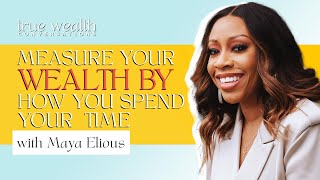
In this episode of True Wealth Conversations, host Dominique Broadway interviews Maya Elious, CEO of Built to Impact, a coaching company that serves women of faith who want to turn their expertise into profitable coaching, consulting, or service‑based businesses. Maya recounts her unconventional start creating custom MySpace pages at 19, which led to a web and graphic design agency, and eventually to a focus on branding, messaging, and launch strategy. She explains how Built to Impact now serves about 150 program clients and 1,500‑2,000 digital product customers annually, and hosts a large yearly conference. The conversation explores trends in the coaching industry, noting a shift toward genuine entrepreneurs and away from superficial “coach‑cousins.” Maya identifies the biggest client hurdle as self‑doubt and lack of concrete examples, which she addresses by sharing transparent results. She discusses her personal evolution toward wealth building, including a move into real‑estate investing and the desire for an exit plan that provides “F‑U money” and time freedom. Maya and Dominique also talk about the challenges of public visibility, the importance of honoring commitments while allowing for change, and the difficulty of leadership roles—Maya prefers operational or chief‑of‑staff responsibilities over being the CEO. The interview concludes with Maya’s definition of true wealth as measured by the amount of free time one can spend on values‑aligned activities, and she shares her social media handle for further connection.
Chapters
It's okay to change your mind and you still have to honor your commitments. And I think that's where we get really nervous because we're like, well, I told the world I was going to do this. I have to do it. And it's like, but girl, it's still okay to change your mind. So I think it's kind of like figure out how to finish what you started, but still honor what you're feeling in this season. Like, what's a way for you to gracefully exit?
Welcome back to another episode of True Wealth Conversations. I'm your host, Dominique Broadway, and we are in Mexico today, and I'm interviewing some of my favorite people on the earth. We are currently in Cancún, Mexico, at the Planet Hollywood for the Wealth Demystified Retreat, and I'm really excited because I get to interview the infamous Maya, which I ain't gonna lie, when I first started following you, I thought— I definitely thought it was Myalicious. But it was like interesting because you were posting all this like really quality content. Yeah. And so it's actually Maya Elias. Elias.
Elias. Yeah.
But in my mind, I still call you Myalicious, just FYI. So many people do.
My Twitter handle is Maya Elias, and then in parentheses it says not Myalicious.
I noticed that, and I'm like, I know I ain't the only one that's like, oh, Myalicious, because you give it, you know, you giving, you giving sexy vibe, but you give such great content, and you've helped impact the lives of so many women. So for people that don't know Maya, who are you and what do you do and how do you impact so many people's lives?
Yeah. So I am the CEO of a company called Built to Impact. It's a coaching company for primarily women of faith who want to package up their gifts, their skill set, their expertise, and want to learn how to create a brand message, package up their skill sets, and start their own coaching, consulting, or service-based company. I started out as a personal branding strategist, so really just helping people build their personal brand, grow their online business, and find clients.
I love that. So this is such a— it's like a niche market, right? Not everyone knows how to do it or are good at it, to be honest. Some people think they're good at it. They're not. But you are. How did you get into this space? Like, how did you start? I heard it was something with MySpace or Black Planet.
Yeah, yeah. So I started out with MySpace pages in high school. I think I had a MySpace page actually, and then I remember that my early days in college had one, and I just loved how I could custom code my page and manipulate it and just make it look cool. Somebody offered me money to create a custom MySpace page for one of their clients. They managed musicians and models, which is primarily what the platform was used for. And once I learned how to custom code, then I started telling people I was a web designer. I was totally not a web designer, had never made a website in my life, but I'm like, if I can custom code a MySuites page, I could be a web designer. And then I ended up building a web and graphic design agency, and that's how I really started growing my business.
And how old were you then?
Uh, when I first started, I was about like 19 years old.
You were 19? Wow. So you were basically running this web development company at 19, kind of, kind of developing websites, but not really, but a little bit. Yeah. Um, also web development then I think was like a little simple, not simpler, but like people were just looking for like MySpace pages or what's the other pages people was using? Not Black Planet, that was dating. It was MySpace. And then there was another, there was another page that people was using. I don't know.
Back then, I'm not sure, but I know people then like eventually moved on to like WordPress. Yeah, they were doing Blogspot.
You know, Blogspot was another big one. Okay, so you're making these web pages or MySpace pages. And then you go from, you know, starting to do that, running this whole kind of business. And then what did you do after that? Because like at 19 to start having like have your own web development company is pretty, pretty awesome. So it's like, what do you do after that? Yeah.
So I did that for a while. I was learning a lot about branding and, you know, I had this design agency where people would come and hire me and stuff, but it was still really small. You know, I was still learning a lot. You know, I had no plans to be an entrepreneur. It just so happened that I had a skill set and people were willing to pay me for it. And so during that time, I was still in college trying to figure out what I wanted to do. I eventually dropped out when I was 23 because at that point I probably should have already graduated, but I was just not doing well because I was so focused on me. It's clearly not for me. Yeah. And so how I kind of transitioned was as I started getting better, a lot of my clients would call me and say like, Well, what should my website say? They didn't know like what type of copy to write. They didn't know how to attract clients. And it was frustrating for me because as a web designer, when you're building your portfolio and you say, oh, you can go to this website to see my work, if a client's website was down a year later because they weren't generating enough sales, I'm like, I got to figure out this gap. And so I was helping them.
I thought about that because a lot of people do not pay their hosting fees. They do not.
And I'm like, girl, and you look at me like, $60 a year. Like, what are we doing here? Like, your company didn't make $60 $60 in a year.
You know, people can't manage money. I got a whole business teaching people how to do that, right?
I know. Yeah. So yeah, I was helping them, you know, marketing strategy, messaging, and that's how I got into messaging and launching.
Wow.
Okay.
So you're helping people with their messaging, helping them with launching. What do you feel like— so now in this space, um, your business helps about how many people a year now?
Now, um, in our programs, we probably have about like 150 clients a year. And then with our digital products, I would say 1,500 to 2,000 people a year.
Okay.
Wow.
And then you have your big annual conference every year as well. So do you feel— and this is interesting, right? Because like the branding and the marketing and, you know, so many people are launching things. A lot of people launch to crickets, but you help to make sure that people launch. It's a successful launch, right? At least a 5-figure launch.
Yeah.
What are you seeing that like as far as the way the industry is evolving? Right. Where do you see that this industry is headed? Like, based on the clients that you're working with, like, do you feel like things are changing? I feel like there was this big increase in, like, coaches, and I feel like now the coaching space is changing. And I feel like the real true coaches are, like, rising to the top. And all these people that gave advice to their cousin one time in a good way are dwindling away. Where do you see this, this space going as far as people launching? Not just coaching services, but even products and various businesses that are— that are— that their goal is to be impactful?
Yeah, I think you're going to just see a lot of true entrepreneurs who are sticking it out. I think there are people who had good intentions of wanting to sell a product or service and, you know, they expected it to go well because they did hire a coach or whatever it is. But whether you hire a coach or not, entrepreneurship can be challenging.
Yeah.
And you really get to see who can ride these waves. And there's a lot of people who are drowning. Running, and there's people who are like, listen, I'm gonna ride these waves, it's gonna be tough, but I'm gonna figure it out. And if I fall and crash, I'm gonna get back up. There's a lot of people falling and crashing and they're like, I'm not willing to fall and crash again.
So yeah, it's a lot. I mean, entrepreneurship is hard. I, I have actually never had a coach, like I've never had a business coach or no coach really other than like therapist. They're not helping you really with your business. So it's really interesting, but I, I know the value of it, right? I just, I've just never had it, honestly, because I haven't found anyone other than like you, right, that I could trust. I felt like there were a lot of coaches that were like a lot of coaches with 5-figure businesses trying to show you how to have a 7-figure business, and it didn't make sense, right? Right. And so my thing was, if I'm gonna go to someone, I want to see if they've already done it, right? And that's one of the things that I really love about you is you actually run a 7-figure figure business. So you're not a 5-figure coach trying to teach people how to get to 8 figures. You're like, no, this is my thing. Like, I've already hit 7 figures, you know, I've done it in a lean way, and I'm able to, you know, scale and still have impact, right? Which is, which is really great. With a lot of the clients that you're working with, what do you feel like is their biggest issue, like, that's preventing them from, like, starting? Because a lot of times when people come to you, they're probably like, I have this idea, right? "but I don't know what to do." Do you feel like that's the biggest thing that you hear?
Or, "How do I start?" Yeah, I think it's a level of doubt. Like, they're not really sure. And I think they probably also just don't see enough examples of what that could look like. And that's one of the reasons why I do share my numbers so transparently. Like, I think it's really important to be able to see people that look like you who are winning, so you have a very clear example of what winning could look like for you. So I think they're just kind of like, Is this possible for me? Is my story enough? Am I able to sell at higher price points? And so once we get over that mindset hurdle, we get them doing the work and they get the results. They're like, wow, I didn't know that it could happen this quickly. And so I really just like establishing that, that foundational confidence in them.
Okay, that's, that's awesome. So what do you feel? What is next for, for you? And, you know, it's interesting because it seems like You've been doing this for a while, right? Starting kind of at 19 to now. I mean, she's not much older than 19 now, but what do you feel like is next for you? Because you obviously have been able to keep up with the changes in the industry and the changes in the space from going from MySpace to now being able to help other women scale their business, start and scale their businesses successfully. What do you see like for you personally? Like what's next for you? Like what's that next thing that you personally want to accomplish?
Yeah, I think over the past maybe year or two, I've really been trying to educate myself more on wealth and recognizing like even your business can sometimes start to feel like a 9 to 5 if you don't have a very clear plan.
Yeah.
So, you know, when I started my business and I would say probably the first 7, 8, 9 years, it's like, oh my gosh, this is fun. I could do this forever. And then I'm in my 30s and it's growing and it's scaling. It's getting more challenging and it's like, I don't want to do this forever. I don't think that I do. Or even if I do, it's like I want to be able to have an exit plan. I want to be able to have that fu money where I could be like, if I want to throw this away tomorrow, I can. So just don't even try me today.
Yeah.
Yeah. So just getting more into real estate investing. I'm going to close on my first investment property probably within the next couple of weeks. I'm excited about that. Thank you.
In Atlanta?
Um, in St. Louis, Missouri. Oh yeah, actually one of my clients, she has a real estate investment agency where basically like they go, they find the property, they, they do everything, they find the tenant, all of that, and they take care of it. So I'm excited to just start doing that.
So congrats.
Yeah, thank you. Thank you. So just building wealth so that way I'm not tied to one stream.
Okay, I love that. So it's interesting, right? You're talking about that exit plan, that exit strategy. And I think a lot of times with entrepreneurs, especially I would like to say service-based entrepreneurs or coaching-style entrepreneurs where the business is dependent upon them, right? Thinking about the exit plan, exit strategy is not something that they talk about, right? But when you are raising money, investors are like, what is your exit plan? What is your exit strategy? Because that is when they have their, their, uh, their— that's when they make their money, right? When you exit, either you go public, you get acquired, or do something of that nature. So as you talk about this exit plan, it's really interesting because it's something that I've been thinking about a lot more. I, I joke about, hey, I got about 2 more years of being public-facing and then I won't be. Yeah, but I mean that, I'm very serious. Um, but I had— I was actually online the other day and I saw Actually, I think Arian Long, I believe her name is, from Finly, she had wrote something and I was like, whoa, this was really deep. She said that for many of us entrepreneurs, we create these businesses and they end up starting to feel like jails, right? And we've built this thing and we built this structure and we think that is what we want, but we end up just becoming almost like slaves to this business and we don't love it as much as we used to. And you can't get out. You feel like you can't get out because you've invested so You invest so much time.
Yeah.
You invest so much money.
Yeah.
You've— we blood, sweat, tears. Blood, sweat and tears. What are your thoughts like on that specifically? Because, you know, there's, there's so many people that are looking at us right now and they're like, what are y'all talking about? I want exactly what you have, Maya. I want exactly what you have, Dominique. Like, you guys are being ungrateful. And that's not what it is, right? It's just sometimes you've created something and as we say, it's okay to pivot, right?
Yeah.
Is that how you, how you feel or what are your thoughts?
Yeah, I definitely think it's okay to outgrow some things that you wanted at one point. You know, like what I wanted at age 10, and when I got it, I was excited for it. And then when I was 12, I was over it because I'm not a 10-year-old anymore.
You know, it's also very like, like men, right? So really quickly, right? So it's funny. I remember like, you know, when you're a teenager and you're dating a guy and you're like, Mom, I'm going to marry this guy. You know, my mom's like, girl, you was not going to be thinking about him at 20. But that 16-year-old boy, we all had a boy at 16. It was like, this is it.
This—
A man for life. And you wouldn't even look twice at that man today. And I think even some of the guys I dated at 20 or 21, even some of the guys I dated 5 years ago, I'm like, I would never again, right? And that also comes with, like you're saying, that growth and being okay to say, I liked that then, I don't like that now. How do you feel like even within your business, anything specifically that you don't like or something that you're like, this is something that I need to get off my plate? Soon. Yeah. What is that for you?
Um, let me come back to that. But I want to say, I think it's also important for people to find this healthy balance of like, it's okay to change your mind and you still have to honor your commitments. And I think that's where we get really nervous because we're like, well, I told the world I was going to do this, so I have to do it. And it's like, but girl, it's still okay to change your mind. So I think it's kind of like, figure out how to finish what you started but still honor what you're feeling in this season. Like, what's a way for you to gracefully it. But yeah, I think for me, kind of where I, you know, I saw some changes where I'm like, I don't know if I really want this. I think it's like what you said, the public-facing thing. It's like as you continue to grow as a public figure, it's almost like you start to get dehumanized. Like people start to just see you as this like blue checkmark or they see you as whatever they see you as. And it's like, girl, I'm still a human. Yeah, I'm just a human with a lot of money and a lot of followers. Catch me outside. Right. You ready to fight?
Sometimes you be like, Russ, come. Fly down to Miami and say that to me.
I'm saying, it's like, I'm a woman of faith, but I'm also a woman of hands. So if we really want to go there, you know what I mean? So it's like, it's hard because especially when you feel like your purpose is serving people, which I do feel like our purpose is always aligned with serving somebody else that's outside of ourselves. But it's like, when the people you serve kind of like turn on you, you're like, I'll throw this whole shit away. It's okay. I know how to launch. I'm good. That part.
I had an interesting Actually, a few months ago, I had got— I got mad at my students, but they weren't listening, right? And I was just like, y'all keep showing up and you keep saying this isn't working. And I was like, y'all aren't doing the work. I'm like, we can see you're showing up to the live classes, but you're not doing the courses. And I'm like, let me tell you something. I don't need to do this no more. I ain't gonna lie. I don't need to do this. So if y'all not going to— if you're not going to be like showing up and doing the work and yes, you're paying to be here, but I still need you to do your part, right? You can't keep showing up. It's like showing up to class and never having your homework done.
Right, right.
I also had another situation which was the year before last, and I shut down one of the highest ticket programs I had ever launched. I had launched a program, did about $3 million in sales in like a couple of days to this specific program. And 2 months in or a month and a half in, me and my partner decided, realized we just could not do it. Yeah, like it just— I was, I was just about to have my second daughter.
Yeah.
You know, he had gotten sick and we just realized that we did not want to do this. And it was crazy because anyone would think you're bananas. Like, hold on, y'all just sold $3 million of this thing. Yeah. And really in about 7 days.
Yeah.
And now you're telling me you're not going to do it. And so I, we, you know, my team, we contacted everyone and said, hey, we're not— we're shutting this program down and these are your options. You can continue with just this one piece and this will be the set amount. Everyone else, we send back. So I'm wiring $50K back, $50K back, $50K back, $50K back, $50K back. And I felt so free after.
Yeah.
And let me tell you something, if anyone would have ever told me that you was going to set yourself up to make an extra $3 mil on top of the $8 that you were already going to make this year, like, yeah, that was like 95% profit and give it back.
Yeah.
I'd be like, are you stupid?
I know.
And I did. And I felt better. And it's something that I don't regret. And it's something that a lot of times entrepreneurs, as you're saying, like having to, like, be real with yourself and having to shut things down.
That's when you start to realize, like, the money really is not everything. And we already knew that going in. I know we— none of us do this for money. Like, of course we like making money, and I think money is very important, but it's just like, I enjoy making money. I don't do this. I'll refund you in a second. Like, oh, if you're causing any type of stress, like, girl, take your money back. I will actually pay you on top of the refund to just get out of my face because you're not going to stress me out.
Literally, because money is energy. And if someone's coming and they're giving you your money and it's like, hey, take this money, but you work for me and are just being just crazy. You be like, oh, I don't need that. You can take it. Go somewhere else. We don't.
Yeah.
Here you go. Yeah. Like, I've asked people like, why did you refund me? Because we don't like you. We don't like how you're acting. We don't. We don't need this here.
You just don't match our values and our standards. Yeah. I think what's interesting is like, you know what you said, people not doing the work, which can be frustrating. And I think we've mitigated that a little bit with our company, with attracting the right people. But I think in the coaching space, coaches are really important, but it's, it's important to understand that you don't get results just by paying the coach the same way you don't get a college degree by paying the tuition. You get a college degree by enrolling in the classes, showing up to the classes, and getting good enough grades. You still have to do the work. You can't throw money at something and think that you're going to just get results.
Yeah, yeah. And that's, that's how I was like, I was like I said, when I was frustrated, my students, I'm like, Well, you're like, oh, I've been in the program for 6 months and I haven't made any money. Okay, well, when did you make your first trade? Well, I haven't. Well, ma'am, what do you want me to do with that? I don't understand.
Like, you want me to trade for you? Like, what is this?
Like, I understand. Well, they're like, I just, I, you know, I just opened the account. I haven't— you've been here for 6 months and you ain't got no results, but you're telling me that you have not implemented anything that you've learned? Yeah, this is a you problem, not an us problem. We're literally providing you with all the resources. Yeah, like you said with with college and it's, it does get frustrating. But, you know, we have a purpose and I know, you know, I think my mom was asking me, she's like, oh, we were talking about the lottery recently and she's like, oh, if you lost $1 billion, what would you do? Would you still work? And I was like, yeah, I would actually still run Finances and Misified. I would make it a nonprofit and I would do it for free because I love what I do.
Yeah, that's what I would do. I would do it for free. I think it would actually just make it less stressful because it's like I got the money that I need to survive and it's like now I just get to help people. If you do the work, cool. If you don't, cool.
But that's the thing too, when people don't pay something something, they tend to not do the work for sure. And so I would want to structure it where it's just a very— it's a lower cost program where even if it's like, hey, you're doing this work and you're putting in, you know, $500, we're going to match you back $500 when you complete X, Y, and Z or something of that nature to give people some sort of incentive. That's my longer term goal. But yeah, it's, it's, it's interesting. People have to— even with coaching, right? Because there's even like some free, like, coaching programs, not as high level as yours, obviously, but like some free coaching programs. And like you're saying, they sometimes they still can't get the people to show up. There's actually a lot of programs with like the SBA and things like that that offer free coaching and with, with veteran executives and employees and entrepreneurs. And it's a very underutilized program and people are there to help you and people, they don't use it because it's free. Yeah, right. It's very interesting. Now, going back, I want to know what is one of the things that you don't absolutely love in your business. And I will tell you what mine is, just to level set here. I love people, but I don't love managing people.
Yeah.
And that's why I like— one of my most important hires was my chief of staff. Like, she is that buffer between me and everyone else because I am like, I am a true ambivert, right? And it's just like, and I, I don't, I don't like that part. Yeah. And so that's also another reason why I'm like, I don't want to be the CEO long term. I'm also not that great with like logistics and operations. I know that's something that you're, that you're really good at. I'm a very high-level, like, I have the vision, but I can get the work done. I can do all the jobs, but I'm not the most organized person, you know, things like that. So those are all the things that I'm like, I don't want to touch. Yeah, right. In my business. What about you?
But that would make you a good CEO. I feel like I understand that. Like, it's— leadership is one of the most challenging things. It's just so challenging for so many reasons. It's like especially if you are a recovering people pleaser, you want to be like, yes, it can definitely be challenging because it's like, oh, I don't want to make you mad. And then it's like, girl, you're paying these people. It's like you're battling in your own mind.
Like they work for you.
Yeah, but you know what?
I don't want to overwork anyone, right? I don't know.
I'm like, oh my God, I don't want to overwhelm them.
Oh my gosh.
And they're like, girl, can you please give me work? Like, girl, I need hours. Like, what is going on here? So yeah, I think definitely the leadership portion. And I agree with you, like I would much rather be like an operations manager, chief of staff, COO than a CEO. Yeah, like, I like making sure that things get done. I execute at a high level. But when it, you know, when people are looking to me for direction or vision, I'm like, oh my God, like, let me figure something out. Is my answer good enough? Like, I don't know why I'm trying to impress my own team. It's like, girl, you're paying them. That's impressive.
That's funny. But those are those things that, like, people don't realize. And also, I think we were talking about this before, like just because you are the person that created the idea of the business doesn't mean you need to be the CEO.
Yeah.
You know, and so I think that's, that's really important because some people just aren't that great at it. They're just, you know, or it's not where they really shine.
Yeah.
So I know— so the name of this podcast is True Wealth Conversations. So I would love to know, when you think of true wealth, what, what comes to mind? What's true wealth to you?
I would say true wealth is measured in time and how you can spend your time. Like, I think about if I decided to shut my business down, how much time would I have before I'm like, damn, I got to do something. Yeah, I might have to apply at Target. So I think about that. Definitely the time. How much of my free time do I have and how that time is spent? Like, I personally love spending my time with my family. So if you could spend your time doing things aligned with your values— love, family, peace, joy, travel, all of those things are really important to me. So yeah, that's definitely how I think about it. So I'm like, I need to keep putting as much money in my savings, investments, my bank account so I can create that time if I ever just need a sabbatical.
Yeah, that is beautiful. I love that time. Time is so, so important, right? Just having that time and that freedom and that F.U. money, which allows you to have the time to do the things that you want to do. Well, thank you so much. Joining me today for True Wealth Conversations. I will put all the links below of where to find you. Anything you want to add or anything you got coming up you want to share, anything like that?
You guys can follow me on Instagram @Mayaelius, M-A-Y-A-E-L-I-O-U-S, and reply to my stories. I love connecting with you guys in the DMs, so let's just connect on there. Mhm.
Send good DMs, not naughty DMs, or else I'll fly out and find you. No, I'm just kidding.
I'll pray for you.
Thank you again for letting me interview you today, and let's get back to this fun in Mexico.
Let's do it!
More from Dominique





Wealth doesn’t start in your bank account… it starts in your mindset. Before the money grows, befor


Inflation Won't Drop, Jobs Are Slowing Down, and the Fed Can't Fix Both #economy #reality



