EP5: Build Long-Term Wealth & Legacy through Real Estate Investing with Kyara Gray
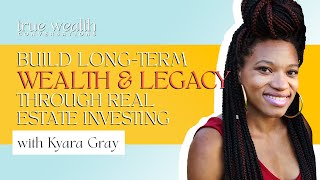
Kierra Gray and her husband Khalil got a $120,000 loan at 22 to buy and renovate their first property in Baltimore. They've since built Charm City Buyers into a $20 million portfolio and created the Next Gen Accelerator program to help professionals like an ER doctor invest in real estate. Gray defines true wealth as options, knowledge, and the ability to pivot.
Chapters
Real estate is cyclical, and there is money to be made at every stage of that cycle. The point— the— what's important is that you understand how to shift and pivot based on where the market is.
Welcome back to another episode of True Wealth Conversations. I'm your host, Dominique Broadway, and I am excited because I have another amazing person that I'm about to interview, and I am I am still live in Cancun, Mexico at the Planet Hollywood for my Wealth Demystified retreat. Now, before I introduce my guest, I know we all follow Charm City Buyers on Instagram. I'm not going to lie, before I met her, I followed Charm City.
I followed you too, girl.
Me too. We were following her. And I was like, oh my God, I met her in person. I'm like, oh my God, this is the girl from Charm City. And I was like super excited because you were probably one of the first people I saw in like the real estate investing space that look like me, that was a Black woman that wasn't just buying, like, like doing it on a grander scale. So shout out to you. So my guest today, I already pumped it up without even telling you who they are. Tell you who she is. We have Kiera from Charm City Buyers, and I'm so excited. Thank you so much for being here.
Thanks for having me. I'm excited to be on your podcast.
This is lit. She's also one of my really good friends. So you probably will notice, like, all these people I'm interviewing, are my good friends. So get you some good friends in high places. It's very important, helps you, helps you grow that wealth. So Kierra, can you tell everyone a little bit more about you and what you do?
Yeah, so I'm Kierra of Charm City Buyers. We are buying back the block in Baltimore, um, currently— or past tense, actually, we did a couple blocks already. Um, so we're out here in Baltimore really focused on how do you build wealth and build real estate, knowing that real estate is the cornerstone cornerstone of wealth building. And without a clear understanding of how to get into real estate, how to scale, how to do your thing in that space, you know, how are we going to catch up when it comes to that wealth gap? So let's close that wealth gap through investing in and being intentional with real estate so we can build wealth for ourselves but also build wealth within our communities. I love that.
So when I was— I tell the story of how when I was, when I was 16, I was like already getting tired of working all these random jobs, Target, pitching people. I'm like, all right, there has to be some other ways to make money. And my mom would drive me around Potomac, Maryland.
Yep.
And she would show me these big mansions and she'd be like, you know, if you work hard and you work smart, one day you'll have homes like this. And I'm like, wow. And then I started trying to figure out like, well, how are these people making all their money, right? It was really pretty much 3 ways, like entrepreneurship, real estate, and the stock market. And I had dabbled in entrepreneurship, you know, as a teenager and decided to go straight into the stock market because it was way easier than buying a house. But I set a goal and I said, I'm going to buy my first house as soon as I get out of college. And I did that. And my plan was to keep buying more, but, you know, life lifed. And— but the real estate piece is literally, as you say, like the cornerstone to wealth building. If you're able to start accumulating properties, and as I always like to say, people will always need somewhere to live. As long as we on this earth, right, they're always going to need somewhere to live.
There's no more land coming.
No more land.
None.
Unless you start building—
what? I don't know.
Mars?
Maybe. I don't know.
So what made you decide get into real estate. Yeah, such a young age.
Absolutely. Yeah, because we started at 22, 23, fresh out of college. Um, so what's funny is I have a degree in economics, so my goal at first was to be a financial planner. And so I was really into stocks and all that good stuff. I know, that's how I was thinking while you're talking. Um, and, um, and then I did an independent study on real estate because growing up I used to hear these stories all the time, um, where the land that Lincoln University sits on— because I'm from that area, okay— my family owned in the early 1800s, like 1820.
Like what?
Lincoln University. Okay, so HBCU, the first. Shout out to Chaney. Um, and so no smoke. I, I could take the smoke. Okay, I'm in Baltimore, what you want to do? Um, so, so that liar coming out. So that land was, was owned by my family, and it was, it was lost over time. And there was tons of land, um, that was owned. And so I always had this love for ownership, for transformation, for community, and the value of all of that. And so growing up, I, um, said that I was going to— when I graduated college, I was going to buy a house and start investing in real estate and get a dog. So I did both of those things in the first year out of college, and, um, and we kept going and we just kept, um, building, and the vision got bigger and broader, um, because that very first house that we bought, we had this, this goal. So everyone wants to talk about wholesaling. Yeah, when it comes to real estate and as being a good place to start. Um, and we tried that, but when we were trying it, the feedback we were getting was, um, basically that there was no value in this neighborhood, there was no value here. And we were going through the numbers like, well, the math is mathin'. Yeah. But what they weren't saying was that this neighborhood doesn't have value because of who lives there, of what it looks like, of all of those things. And so we learned to really, um, we learned some of the value pieces that we move in every single day, which is seeing the opportunity in our neighborhoods first, right? Because just because it's Black don't mean it's bad.
Yeah.
Um, and being able to turn vacant houses into homes. And so, um, that was our first project, and then that really kind of framed out all the other ones that we did from there.
Wow, that's so awesome. Y'all are so aspirational to me. Um, so I want to know, how did you learn this? So A lot of people don't know this, but I was— I've always been kind of a nerd. And I told you I was always really into real estate. And so on the weekends, when I was at Bowie State, I would go at like 8:00 AM to these real estate investor meetings that took place like up the street from my school. And I was always the youngest person in there. I'm trying to remember the name. You probably know that guy. He was like really big in real estate in the Maryland area. Kind of chunky.
I probably know him, so we're going to keep going.
Yeah. Anyway, so he would host these things. And I would go in, and I was always so inspired. People like wholesaling and what's the other one? Dog?
Bird dogging.
Bird dogging.
Yeah.
Like, I'm like, some of these terms sound sexual, but like, it was really interesting. Yeah, with the bird and the dog. You know, but, you know, it was really interesting to see like all these people who were buying homes and like I would go like religiously every Saturday and just sit in the meetings. And at the time I couldn't really afford to like buy his program or anything, but I would just kept going and kept going and kept going. And that to me gave me like my first just seeing how other people were doing it. And I was young, right? I didn't have tons of money to do anything, but it was, it was very aspirational for me. That was when my education, I felt like, started. How did you learn? Because you guys are like you and we— I keep saying you guys, we— your husband as well, Khalil, you guys, they own Charm City Buyers together. And so how did you learn? Like, where did you go?
Yeah, that's a really good question. So we So I wanted to invest in real estate, so we started to get in the room because we know the value of being in the room. And even you being in those rooms, it— even if you don't do everything that you hear, it's about the power of knowing that there's other ways to get it done. There's a lot of ways to get it.
They say a lot of ways to skin a cat.
There's a lot of ways. I don't even like cats. So anyway, either—
but you know, I wouldn't harm the cat, but yeah, I don't like cats.
You got birds, dogs, and cats already. What are we doing? Um, so So, uh, so we were getting in the room, so we would go to like those real estate events and hear what they were saying and kind of take what we could get, but also understand that what we were trying to do was a little bit different. So, um, so when we went into that very first deal, realized that the plan that we had wasn't going to work, we pivoted and decided to start telling people what our vision was. We see value in this house, we see value in this neighborhood, we just need some cash, right? We own the house, it was going to cost $120,000 to get it done. How, right? At 22, 23, like, that's more than we both made, right? Um, and so, um, so we started to share our vision and we connected actually with the organization because this first property was actually in Hartford, Connecticut. So it was this organization called the Hartford Community Loan Fund that literally invested in our vision.
Wow.
They invested in our vision and so they, they gave us the $120,000 to do that first renovation. And believed in us, and we weren't gonna let them down, and we were going to accomplish what we said we're going to do. So we did that $120,000 renovation in about 6 months, turned it into a home for, for 3 different families, and, um, continue to work full-time, leverage the funds that we're making from that. We were cash flowing probably like $1,000 to $1,200 a month with that first property, built it up, used that money to buy the next one, and just kept going until eventually, uh, I went full-time, and then so did he.
So how did you at 22, 23 know what to do? Well, no, like, how did you even qualify to get that loan? Because most people ain't giving 22-year-olds $120,000. You had just graduated college. Your credit probably like, it's okay. Yeah, great.
Yeah. Yeah.
So if someone's brand new to this, like, how— and obviously you went to the Hartford.
Mm-hmm. Yeah.
But like, even they probably still like, how did you qualify? Was it just like, hey, we have this program, or were there certain things that you needed to have in place?
Yeah, so they did look at our income. So we were both working full-time. So they did look at that, and then they also looked at the viability of the deal. So they looked at it and said, you're right, the math does math, right? You guys are going to be able to cash flow and cover the expenses here. And so they took a risk on us for sure, being so young. And then we actually hired a contractor that not only did they recommend, he lived across the street from the property.
Oh, that's perfect.
So it actually worked out. I mean, it's literally divine. It worked out really, really well because they believed in not only our vision and who we were, we had the funding, we, you know, went to college, got good jobs, and then built a great team. And so they invested on that.
So I want to know what you guys are working on right now. But before we get to that, I want to know, so if I am, you know, 25-year-old Dominique, right?
Yeah.
And maybe I have a job, so I make some income and I'm like, okay, I just want to live, but I want to buy my first investment property.
Yep.
Um, it could be for flipping, it could be for rental income, whatever. What is the first step that I need to take?
So one, I think, so you want to make sure your ducks in a row, right? So that means you got your credit together, right? You have, um, your income, all those types of things. But honestly, I think the best thing for folks in their mid to early 20s, buy a multi-family property, live in one unit, rent out the others, and mitigate the largest expense that most people have, which is their housing, and be able to leverage that property to set a foundation for long-term wealth building. So with an FHA mortgage, which is typical for most people who are buying properties to live in, you can buy up to 4 units. It's the lowest interest rate for the most part that you're going to find out there other than some more affordable programs that, you know, whatever. But, but buying a multifamily means that you can keep that if you wanted to and leverage that cash flow to be able to buy something else for yourself. And you don't have to live there for a year, is the typical requirement for FHA. Okay. So I always say like, buckle down and, you know, sacrifice short-term for long-term gain. Um, Khloé actually wanted us to do that for the first house because it was a 3-unit, and I was like, I'm not moving over there, I'm not doing that. And so I always give him props to say he was right. Yeah, you know, if we had done that, you know, things— a lot of things would have changed. We probably would have stayed in Hartford, so we wouldn't be able to make the impact we did in Baltimore. But, um, But doing that would have, you know, gave us an opportunity to do so much more because we would have had more cash.
That's really good. So, and a lot of people don't know that you can get an FHA loan as a first-time home buyer, and typically you're putting down 3%, 3.5%, 3.5%, um, and you can purchase multiple units, live in one, and then have everyone else pay. Like, that's what I—
it's the ultimate hack for sure. Yeah, it's a smart way.
Where do you go and find 3 units that you afford? Because that's the issue, right? Let's say like I live in Miami. Yeah. So 3, 4 units, we talking millions, right? Even if you go and find something you have to fix up, it may still cost you $800,000, $900,000. Um, do you feel like that's another reason why you love Baltimore, because there's so much opportunity there? Or like, what are your thoughts if someone's like, well, where do I do this?
Yeah, so I think if you're thinking long term, right, sometimes, um, you have to make short-term sacrifices.
Yeah.
So if you're trying to build wealth long term, you probably don't want to be in a market that's top, right? You probably don't want to be in some of the most expensive markets in the country. Yeah, there's a lot of ways to get things done, right? So, so to your point, yes, Baltimore has tons of opportunities because not only is it lower property values, um, and great, beautiful, charming homes, um, it's, you know, you're able to—
more advocate.
I am. I really, really am. I love Baltimore. Um, but, um, what do you think about it?
Because, you know, first of all, you're a DC girl, so let's— if you really want to do this, let's do this because like, you know, when you from DC and you got your Baltimore people and it's like people like y'all, we're not the same, first of all. Like there's DC and then there's Baltimore. First of all, where did this beef start between us? I even remember when I went to Bowie State.
Yeah.
And it was a lot of Baltimore people that went to Bowie, then you have like your DC, and it was like almost like Crips and— yeah, it was crazy. And I'm like, y'all really don't like each other.
And So, and I'm like so neutral because I'm like, yeah, you know, Maryland. Yeah, right, right, right, right. In the middle. No, I mean, it's, it's so unproductive first of all because we all, you know, and DC, DC was Baltimore 20 years ago, 25 years ago, the, the murder capital of the world.
DC was Baltimore?
Oh no, you know what I'm saying? And that, from that perspective, right? So there's like kind of like this like air, I think, of Baltimore where Baltimore is a little bit more, um You know, we're just— I feel like we get how we live.
DC, when they changed up, got really bougie. Yeah, we're better than Baltimore because we're not having as many murders.
What does that— yeah, right, but come on now. And I think, what does that actually— how does that add value? Because the truth of the matter is, if we hold— if we hold true to that, right, DC versus Baltimore, I'm from DC, I'm not going to Baltimore, yeah, DC, y'all know what it looks like and feels like for your city to change underneath your feet.
Oh yeah, right.
You can't— you can't afford to live in your neighborhood. You went to college, came back, the Starbucks was there, the old mom-and-pop spots were gone. You know, DC's not DC. Chocolate City is looking real—
I call it caramel macchiato. It is not— when I was going over to Chocolate City, now it's a caramel macchiato. It's with the milk, right? It's not giving splash of espresso. That's it. And they're far and few between.
It is. And so what's really, really important now, and I think one of the reasons why I'm so rah-rah Baltimore, is If people don't see and understand what's happening and be able to spot the trends and all the things, so many people are going to miss out on what is and has been happening in Baltimore for a really long time. Like, to me, the reason— one of the reasons why I love Baltimore so much is because I truly, at my core, believe that Baltimore is the biggest opportunity for building Black wealth that we will have for a very, very long time.
I can see that. Yeah, I can, I can see that. So I share with you, like, I was like, okay, I'm looking at a deal because I'm trying to start doing some investing.
I'm like, don't look at nothing without talking to me.
Of course I'm not. I'm like, I don't want to bother you. But like, even looking and seeing, I'm like, wow, there's this home, you know, it's— they're saying it's $90K, it needs about $80K of work, and then the house up the street sold for $270K recently. So that's like, wow, that's a flip that you could rent or you could immediately sell it and make like almost like $100,000. That's great.
Right?
And you can leverage, you know, the home or getting, you know, other loans to make it happen and not really have to come out of pocket a lot of money. And that also comes back, and this is another reason why I personally love real estate. I think for me, it gets that strategic part of my brain working where it's like, how do I do this deal and how do I make it happen?
Right?
Like in an efficient way. And then how do I keep doing it? That's like my goal this year.
I'm like, I'm really excited to do that. Yeah, I'm excited for you. I'm excited for you. The biggest, I love Baltimore. The biggest kind of thing that, like, when it comes to the opportunity for people to build wealth and invest and be able to transform communities, my challenge is sometimes there's more to the story than the front numbers, which is why I was talking to you about that deal. Like, well, hold on, this is what's happening around the corner and this is what's going on 3 blocks down, and this is why those numbers may look like that. And so I've been really intentional about— Baltimore is great, food's great, vibe's great. You know, we're waterfront too, all those types of things.
Water's different.
I'm not gonna jump in it, but it's there. So, um, stare. Yeah, it's cute.
Um, it's like that DC water. You say you jump in that DC water, you might get a needle on you. Yeah, you might hit a dead body.
Glowing in the dark. They say it's gonna be swimmable in the next like 10 years. I'm like, I won't be there to test it. But, um, but anyway, like, the numbers look really good on the front end, but if you don't understand the nuances and the history and the challenges behind Baltimore and the fact that Baltimore is the birthplace of redlining, period. You won't understand the challenges when it comes to why everyone can't come to Baltimore and win and why you can't just buy a vacant and whatever. Yeah, it doesn't work that way. There's too many other things, but like underneath all those layers. And so it's like, for me, it's rah-rah Baltimore. There's so much opportunity. It's beautiful, it's fun, food's great because, you know, I'm a foodie.
Yeah.
And we have to recognize the history to be able to make better decisions for not only ourselves, but for the city and for the communities. So, yeah. So I'm—
what is redlining for people that don't know? Yeah.
So redlining is the practice that lenders took. I would say way back in the day, but honestly, it's some sprinkles here and there, right? But really what they did was they literally took like a red marker essentially and drove drew circles around certain neighborhoods and areas that they deemed as quote-unquote hazardous. Now, those neighborhoods happen to be Black, right, or— and Jewish, honestly. But they deemed them as hazardous, and that meant that it was too risky to lend. So you couldn't get access to capital to buy property or to even invest in businesses. And so if you think about Baltimore and you think about low property values, well, some areas couldn't appreciate because they had to trade cash right? So supply and demand. Yeah, right. And so you—
capital to—
yeah, there's no capital to, to drive up the prices that drove up the prices everywhere else. We can get loans. So you have those types of issues. You have literally red lines creating differences. So Baltimore's block to block, right? Like all those things that you hear and see come from somewhere. And if you don't understand that, you may not have the best foundation to make decisions. So I want to make sure people make better decisions because if someone comes up and buys a house in Baltimore fails, doesn't do anything with it, sits vacant, you messing up my money. Yeah, that's my deal across the street, right? I need people to do well so that we can, we can do what we got to do individually and collectively and for the city.
And you teach, uh, you and your husband teach people how to do this specifically in Baltimore. They can implement this information all throughout the country. Yeah. How— tell me about some of the successes. I think you were telling me recently, like, how many, or how many deals your students closed last year. Yeah, what happened last year?
Yeah, they did about $20 million in Baltimore. About 98% of that was in Baltimore. Wow. Um, renovations and acquisitions in, in the city. So collectively, our group that we've built, the largest residential buyer in Baltimore City is your group.
Really?
We're like— I, I have some meetings and conversations with folks in, um, in DHCD, but, um, if, you know, top 3, I don't think we number 3. Yeah, you know, so it's—
that's impressive. Yeah, like literally changing Absolutely. Helping to change Baltimore. Yeah, that's phenomenal.
And one of my students, she, um, was an ER doctor. She built her portfolio. She's in my first cohort of the Next Gen Accelerator. She left her job a couple months ago as a doctor because that doctor stuff is a lot. Yeah, she was tired. She was sick of them. But, but she was able to build her portfolio under her to support being able to, to do that. And like, those types of—
probably making more money. And even if she's not making more time.
It's a better quality of life. Yeah, I mean, talk about wealth. What, like, what is wealth? What's it about? It's about having the option. That's literally having the choice. It's having the opportunity. And it's about, you know, for her, it's about her nieces and her nephews and stuff like that. So, you know, it's, it's beautiful to be able to have had that vision and actually be able to, to execute and then build up even bigger visions.
Yeah. And impact everyone else's life. That's, that's what this is all about. Yeah. So tell me what you guys are working on now, like what projects you have coming up.
Yeah.
Um, and I I think the fun. Yeah, like tell me about all of that.
Yeah, so, um, we are building— I'm about to build a 54-unit new construction townhome units, um, about 3 blocks from Johns Hopkins Hospital.
Wow.
So right there in East Baltimore. Um, super exciting because we started out with that first deal and trying to figure it out and doing it wrong, and then eventually, you know, buying back the block and doing that to literally naming our own community, which is like awesome. So we're able to— yeah, I'm super excited about that.
Yeah, literally, literally a goal of mine. So when will these 54 units be done?
Yeah, so folks will see, and we'll actually be doing a groundbreaking soon, and then, um, they'll start being built in like 2024. So we have to— there's a lot of stuff that goes on, um, before— yeah, before you start swinging hammers, but it'll be available 2024, 2025.
Yeah, that's so cute. Okay, um, and then they'll all be for sale, right? Okay.
Yep. Yeah, they'll be for sale housing, and then we actually have, um a partnership where, uh, a few of them will actually be affordable as well. You won't be able to tell from the outside, but we're trying to make sure that we're bringing folks back and making sure people are staying in the community. So we haven't—
so that was literally actually how I bought my first condo. It was an MPDU. So it's a moderately— MPDU stands for moderately priced dwelling unit.
Yep.
Um, and so my mom had bought an MPDU when I was younger, and so she was like, all right, you want to buy this house, we're gonna find you a spot. We were going to go through the MPDU program. And at the time, I think I was making about $42,000 a year, which made me eligible for the program. So I was able to purchase a condo at the time that cost $167,500. The re— the market price was about $325,000.
It's amazing.
And so I lived on the 15th floor, high-rise condo, concierge, rooftop pool when I was in college. Actually, I bought it before I graduated college, and I was able to leverage the, um, down payment assistance. So I think I may have gotten to that condo at maybe $2,000, like all in, right? And then I was able— although the house ended up going into foreclosure, I got out of foreclosure.
It's the longest— it's the longest story. That's okay.
But when I sold it, I ended up— and I lived there for 10 years.
Wow.
I ended up pocketing about $100,000.
Yeah.
And that's when I was— I think I was like 30 or so when I sold it.
Yeah.
And, um, it was even for me, it was like this. I didn't get to buy all the houses I wanted to because, you know, I became entrepreneur and life got hard. But I still really saw the value of just owning this thing and then selling. It's interesting, the person that bought it, uh, was an Asian young lady. Her dad bought it for her. He paid cash. I ain't never seen a closing go so fast. Like, he put the offer in, we was at closing a week later.
He was like, when you— when you moving out?
Like, let's go. Yeah, it was, it was awesome. And, um, just the power of real estate, right? And it gave me the flexibility. I ended up actually moving to Houston and like it gave me time and I started traveling for a little bit. It gave me so much just extra financial freedom. Yeah. You know, just by making this one investment and leveraging the current state that I was in with my finances. So I tell people all the time too, like the earlier you can start, the better, because even like the program that you mentioned, there are so many programs that are out there for first-time homebuyers and especially when you're at a certain income bracket. So Like, I wouldn't have been able— like, even if I had waited 2 years, I wouldn't have been able to purchase that home.
Absolutely.
Because I would have no longer been eligible income-wise. And so I think that a lot of times people use their income as an excuse, but the lower income that I had—
so much opportunity. Yeah, it's so much opportunity. Yeah. And I love it because it's such a gem. Like, people, you get stuck— rents are high. Yeah, right. You get stuck paying these super high rents thinking that you can't, when there are programs. There's programs like NACA, N-A-C-A. There's pro— there's tons of programs that are awesome that folks can use. And then in Baltimore specifically, but really all over the country, there are the down payment assistance programs. There's cash available. So if you are like focused, you can definitely get it. And, and there's, um, and for college students as well, you got a job while you're working, like they can leverage their student programs. You can wrap your student loans in. Like there's so many things out there. We don't have to be stuck.
You don't have to be. We don't have to be all about being resourceful. Absolutely. And I would say like one of the things, like my mom found this program, but she's very resourceful. I'm very resourceful. Like she's created two children who are very resourceful.
Yeah.
And people just Even like I said, I used to go on the weekends and go to these real estate classes. And, you know, even you were being resourceful and finding programs. I always tell people, like, if you have a goal, if it's real estate, whatever it is, do something. Do something. And don't say, oh, I'm in this situation, I can't do it. There's so many opportunities. We both just proven that there's ways, even if you don't have a crap ton of money, that you can start bringing these— there's a million ways to go from not trying to figure out, I mean, not trying, not knowing how you're gonna get $120,000 to do a deal, to getting someone, convincing someone to lend you the money, to now helping people do $10, $20, $30 million a year in real estate acquisition, to now building your own community of 54 units. Like, so everyone starts somewhere.
You gotta be where you are now. You just gotta start.
He's got to start.
You just gotta say—
what's that quote? Uh, the best time to plant a tree was 25 years ago, then the next best, second best time is now, right? It's now.
Absolutely.
And even now, I want to ask you one more question before we wrap. Um, what are your your thoughts with the current state of the real estate market, right? I know some people are like scared, but like, what are your thoughts?
Real estate is cyclical and there is money to be made at every stage of that cycle. The point— the what's important is that you understand how to shift and pivot based on where the market is. Lean in, okay? If they're running away, you need to be going towards that, right? Buffett said that. Okay. Um, and so, um, right now I think people are starting to just get realize, like, realism. So interest rates are like, oh, they're so high, but actually they're kind of average over time. Yeah, like if you look long term, it's kind of back to normal. Um, and so those types of things will continue to shift. So I think there's tons of opportunity when people are scared, one. Um, two, prices ain't finna come down, honestly. Like, if they were going to, they would have came down when interest rates went up really high, and the prices are still going up, and people are still buying houses, and they're still buying, and they will. You want to know why? Because everybody needs somewhere to live, and rents are high. So when rents continue to increase, folks gonna need to shift into buying. So, um, so yeah, as always, you have to know and understand what you're doing. You have to understand when it's time to do what. Um, but there's always opportunities in the real estate market regardless of what cycle we're in.
That's good. Thank you for sharing that.
Of course.
So last question. So obviously, you know, the name of this podcast is True Wealth Conversations. So when you think of true wealth, what does that mean to you?
Yeah, to me, true wealth is options. It's opportunity. It's being able to pivot. It means I wake up when I wake up and I fly where I fly, maybe for 4 hours to my— right, to Mexico, right? Um, and, um, and it's about being able to— it's about what you know. Like, that wealth of knowledge, I think, is so much more powerful than, than money, because you and I both know money comes and it goes, and it can come fast and you can roll out just as fast, right? And quicker, absolutely. But it's about knowing and understanding and how to think and how to control your mindset and what are you teaching your kids. And you're, you know, that to me is the truest wealth, right, is, is knowledge and being able to have the option of choice.
I love that. And she has a daughter. I do, who is a boss, literally.
Big boss.
She'll be like, yeah, biggest real estate person ever.
She's gonna be something else.
That's something like Dawson and Demi gonna have to start following her around, like, you go do what she doing.
Yeah, you can have a babysitter soon.
I'm ready, I'm ready, I'm ready. Well, thank you all so much. Actually, before we go, one more thing. Yeah. How can they find you? And how can they tell us about your programs too?
Yeah, absolutely. So, um, all over social everywhere, it's Charm City Buyers, um, on, on Instagram. We have a really great YouTube with tons of information in general and about Baltimore specific. I think totally underutilized, so definitely check out the YouTube channel. Um, but the Next Gen Accelerator is my baby. That's my passion. That is my, my, um, you know, they— people ask like, what do you want people— what do you want to not be known for when you leave this earth? Or those types of things. I think the things that we've been able to accomplish and Next Gen really become a big part of that.
Yeah.
Um, and so our program is focused on how do you get your mind together to be able to take that action, but also be able to implement and accomplish your goals in real estate, um, so that not only are you building wealth for yourself but adding value in the communities in which you're investing. Um, so you can learn more about Next Gen at, um, the link below, and, um, it'll be somewhere down here, um, and, uh, be able to tap in and join the family, join the community, and together we're taking over Baltimore and a few other places coming up here soon.
I love that, girl. Hats off to you, you're amazing. Well, thank you so much for tuning in to another episode of True Wealth Conversations. We just had an amazing conversation with Kierra of Charm City Buyers. She's buying up not just the block, but I guess the state and a little piece of the country and everything.
We are friends of the state.
Yes, we're so excited to see, see your next, your next big thing. So thank you so much for being on today.
Thanks for having me.
More from Dominique





Wealth doesn’t start in your bank account… it starts in your mindset. Before the money grows, befor


Inflation Won't Drop, Jobs Are Slowing Down, and the Fed Can't Fix Both #economy #reality



