EP6: True Wealth is a State of Mind with James Simpson
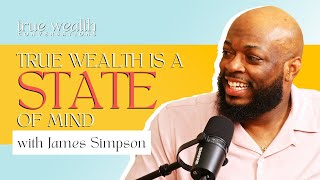
In this Wealth Demystified Retreat interview, host Dominique Broadway talks with high‑performance coach and serial entrepreneur James Simpson. James explains his dual background in brick‑and‑mortar fitness gyms and online verticals, describing how he grew 6‑ and 7‑figure businesses and now helps entrepreneurs scale to 8‑figures through a three‑stage framework: grow, scale, then leverage. He differentiates high‑performance coaching from traditional business coaching, emphasizing vision, belief, and focus, and the importance of intentional daily routines, discipline over motivation, and optimizing time for parents. The conversation covers navigating the 2009 recession, the COVID‑19 shutdown, launching online fitness, and creating new ventures like Get Fit CEO and Stage Ready. James shares personal stories of grief, loss, and the need to “bury” old versions of oneself, advocating for a mindset of true wealth—freedom from money constraints and the ability to make choices without financial limitation. Practical tactics discussed include purposeful morning rituals, intentionality, leveraging a 4‑6‑hour workday, and reframing motivation as discipline. The episode ends with James’s definition of true wealth as a state of mind and how listeners can connect with him.
Chapters
I've got to properly bury, not trying to be morbid, this old season, even this old version of myself, and let it actually die off so that that version of, you know, where it's like, you're like, oh, I thought life was gonna look different. And it's fine.
It—
when people think different means, oh, it's not gonna be as good as it was. Yeah, we can optimize that version. Yeah, we can. And so I would say that to you is like, okay, how— what can I do? And then what are you willing to give up?
Welcome back to another episode of True Wealth Conversations. I'm your host Dominique Broadway, and we are still here in Mexico, Cancún, Mexico, specifically at the Planet Hollywood. We are wrapping up the Wealth Demystified Retreat, and I was able to bring in some absolutely amazing speakers to speak to a few of my students. And one of them is James Simpson, who is a high-performance coach and serial entrepreneur, not just in the online space, but also in the physical and brick-and-mortar space. And as you guys know, that's rare. People usually dominate in one space and not the other. And I'm really excited because he's going to be giving us tons of tips and tricks to get our minds right so that if that's something that you want to do in the online and offline space, that you can do it as well. So thank you so much.
Thank you.
First of all, for coming to Mexico. I really, I really appreciate that on a whim at the last minute. And also just being here and pouring into our students and they absolutely loved everything that you said. So for those that don't know you, what is it? I already, already pumped you up. Well, what is it that you do? Who are you? And what are all the businesses you run?
So I'll say what I spend the majority of my day doing. I spend the majority of my day operating as a high performance coach for my business. So that's me overseeing them as a CEO, leading, guiding, directing, and for my clients as a consultant. And essentially, so a lot of business coaches, they know how to coach people based on the 1 or 2 things or 3, 4 things, ways that they found success in their business. And they're like, oh, let me help somebody else now. And a lot of business coaches are business coaches first. So I was an entrepreneur for over a decade.
Wow.
And 7-figure, 8-figure businesses. And then said, okay, now let me go coach. Let me help someone else. And the ability to do that was just, it wasn't, I think some people think, oh man, that's awesome. And I was like, it was a huge responsibility.
Yeah.
Because I'm looking at someone else's, how they make a living and giving them advice. The difference between a high-performance coach and a business coach is a high-performance coach, that business coach knows those 1 or 2 ways. A high performance coach knows when to hit pause on things, throw it all away, optimize it, and say, let's start over. It's kind of like, I know you and I both have Mercedes, and when you get to the AMG version of Mercedes, they sent that to a custom shop and said, let's fine tune it, let's optimize it. That's the op— that's the difference between the high performance coach and the business coach. I come to optimize things. I'm not here to build a business. I'm here to take what you have that's working. I tell people, if you have a fire, I will pour gas on it. I will blow it up. So that's, that's the idea behind what I do, essentially.
I love that because that was actually my next question. Like, what is a high performance coach exactly? And it's funny because, you know, I will say probably over the last couple of years of me wanting to fine tune myself. Right. And so I think a lot of times when people first start out and I will, I will say actually was, was talking to Maya about this. I've never had a coach.
You've— this level of success?
Yeah. I've never had a coach.
Yeah.
Ever. And so that's why also I'm like, I want to talk to you. But like, outside of like, I, I see the value in it, but I never had a coach because I felt like there were a lot of 5-figure coaches trying to teach people how to become 7-figure entrepreneurs, and I didn't like that.
It's not a feeling, that's a fact.
It's a fact. And so my thing is like, you know, most of the coaches, and then you have these higher, you know, like yourself and even like Amaya who's hit 7 or maybe even 8 figures. And I respect that a lot more. And so I felt like a lot of the coaches that were even approaching me or even that I was talking to when I was even potentially considering a coach, they hadn't reached the heights that I wanted to reach. And so one of the things that I appreciate about you is that you're entrepreneur first, right? And so I actually feel that same way myself. Like, I'm entrepreneur first. I don't do any business coaching, right? I get asked to do it, but I don't do it. I still feel like I have a long way to go, right? So when it comes to high performance coaching, who are you typically working with?
I'm working with— so I do work helping six figures, six-figure entrepreneurs get to seven.
Okay.
They have the average six-figure entrepreneur, low end is making $250,000 to $300,000 a year when they find me because they're doing something. I'm not teaching them, you know, oh, you got to get up and you got to do this. It's like they know how to sell. They know how to market. They're just— we need to optimize that.
Okay.
And then my bread and butter is taking those 7-figure earners and saying, listen, how do we double down? When I say double down, not more work, but how do we do less work in an optimal amount of time? Because I believe that you can honestly, in about a 4-hour— if we're trying to get 8 figures, you probably need a 4 to 6 hour day.
Okay.
And depending on if we have children, partners, etc., but a 4 to 6 hour day and we can learn how to optimize that. And then that operating business, the one creating that operating income, get that to 8 figures or take that 8 figures even higher, $10 to $20, $20 to $30 million, and then say, okay, what's my exit strategy? At least with money to go and do something else, leverage that. So my one is grow and scale. How do we grow and scale? And after grow and scale, we go to leverage. And that's, those are my 8-figure entrepreneurs because that's all about leverage. It's like, what, what's the one thing I can do that can make 10 dominoes fall? And a lot of entrepreneurs, you know, when you're at 6 figures, you're like, I got to do more. I gotta do more, I gotta do more. And so you're growing. People say scale to 7 figures. I don't believe you scale to 7 figures. You grow to 7 figures, you scale to 8, and then you lead with leverage. Okay. So that's really, in my opinion, what that— and, and I might— when I— my opinion is based off of, you know, almost 2 decades of experience.
Yeah.
So that's my personal experience. I'm not here to argue with other people and say you can't do it another way, but that's been my experience and that's how I help people.
I love that. So I know you have the, the high performance coaching business. We'll get back to that, but can you tell us a little bit more about your brick and mortar business? I know right now a lot of entrepreneurs are so focused on, uh, digital space, online space, right? But there's so much opportunity still actually in the brick-and-mortar space. So you tell us a little bit about your brick-and-mortar businesses that you've built.
So brick-and-mortar— started brick-and-mortar in, man, what, 2009 was when I opened my very first brick-and-mortar. And actually one of the people— it's funny, uh, who's in this room— it was one of my coaching clients Years, what, 15 years later. But it was because— so my brick and mortars have seen the economic crisis, the real estate crisis of 2009. So the ups and downs of that. And then— and one thing I don't know if you guys, if you're in boutique services of any type, so you're a hairstylist, you're— and I was a personal trainer. If you have any higher ends, like people are using discretionary funds, you're the first to go when things get tight. Yeah, I'm not getting my hair done every week, I'm getting it done once a month or however often. And we're not getting as many pedicures, manicures. Everyone becomes the, the own jack of their trade. They're like, I'm gonna learn how to do my nails myself. Yeah. So people are like, I'm going on YouTube to learn how to work out. So you had— I had to learn. It's like, well, guess what? My landlord doesn't care. No, you know, of those, of those, those warehouses where we're renting space, he's like, I still want to get paid. So After that, we went through another economic crisis. And after that, we went through the downturn of COVID People don't know this. I live in North Carolina. We're the 50th state to open gyms back up. The very last state.
Really?
Yes.
Why so late?
I said the same. I was asking the same questions to our governor.
So how long were your gyms closed?
Man, I blocked that out. That was traumatic. To say— to say— let's bring it back out. To say exactly how long, I don't know. It's funny because here's what I became obsessed with. I said, I looked at what everyone's doing. I saw gyms going out of business left and right. And I said, what do I do here? And I said, how do we grow? Everyone is down. How do we grow? So I became obsessed with what do I do to feel my, you know, and we're going to be losing revenue, but we can still grow in other areas. We had other verticals that we could grow within that business. And so I started looking for, to me, those are opportunity, growth opportunities. Found those growth opportunities. And we were, I mean, our doors were closed for, I think literally closed for 8, 9 months. And then we went, we were doing outdoor workouts. We're doing, I mean, I couldn't say enough about my team of coaches. And I have a team of all females. So, and I say that to say, these are women that were carrying barbells outside, carrying mats outside. Like they were there. So I can't say enough about my team of coaches because I wouldn't be able to get it done. Yeah, by myself. You know, entrepreneurs have a mindset of like, hey, I'll get it done. No, I couldn't have got that one. Couldn't have done that one.
We can do it all. Jack of all trades, right? Wow. That's— that's wow. And so how were you able to even keep things up and running when you had your, your, your, your basically your business shut down. I mean, I know you moved some workouts outside and stuff like that, but like, how were you able? Was it just like, because you were able to, you had cash reserves on hand, you know, obviously there was money coming from the government to help businesses, but like, how were you able to navigate through that time?
So I'll tell you that. I'm glad you said that. Yeah. Cause we were, I was scared. I got on a call with my accountant and we're on Zoom, you know, cause no one can leave their house and all this stuff. And I said, what's up with this PPP and this is, and all the, you know, acronyms and different loans. And he said, listen, I don't advise right now you take any of this money. He said, unless you have to. And I said, well, you know what my cash reserves are. He said, what do you want to do? You know, why don't you lay some people off? I said, I want everybody to get paid full time.
Yeah.
What they, or whatever they're, whatever they're getting paid, part-timers, whatever, full time and keep paying them. What do you, I don't know, but tell me how long we can do that. And so we, we were fortunate enough to stay at that through the entire pandemic.
Oh wow. Okay.
And then we, what we did is we launched an online vertical. That was the first time we had taken our fitness online. And then so we're now reaching a whole different demographic of people and that's spinning off. I have another business that's going to be forming later this year specifically to help CEOs to get fit. It's the name of the business, Get Fit CEO, helping CEOs get fit. Need that one. That's the program. I have a program called Stage Ready, so it'll be helping speakers, etc. Those people, they're like, look, I got to get ready to get on stage. But it's funny because I believe out of adversity, out of pain, other things get born. In my brain, that you've had two beautiful children, and I, if I were to ask you about that experience, no matter how beautiful it was, those contractions, everything was real. You know, I don't want to take anybody through that, but you, you know what that was like. But at that, at that, that, that hardest, most challenging moment, on the back of that comes one of the most beautiful moments of your life. And I think there are a lot of times in entrepreneurship where if it's I tell people there is a blessing on the other side of through. You just got to break through. So it's like, you just got to go through that. Jessica and I were talking about that yesterday, just like some points in her life where it's like, looking back now, it's like, oh, wow. You know, but in that moment, you feel like you're drowning. You're like, you're just trying to keep your head above water. And then when you're on the outside of it, you're like, oh, wow. You almost don't want to give yourself enough credit because you're like, I wasn't even there. But it, it, the fact is you're so much better for it. And I feel like that's what COVID did for us. I feel like that's what a variety of things. And the brick and mortar is a different, it's a different beast.
Yeah.
Because you're, you have a 3 to 5 mile radius for the most part that you're looking at. So now these people, you know, it's like you go live and do all this, but you have zip codes, you're working with those zip codes. You cannot control, you know, it's like, hey, these are the neighborhoods that I want. These are neighborhoods I don't. Sometimes the neighborhood that you don't come through your door. And you're like, okay. And you take them on as clients.
Yeah. Yeah.
And you have to figure out how to operate, which online space is like, look, my neighborhood is the world for the most part, or the US. So it is a different animal, but I believe it is one that teaches you quite a bit about sales and marketing and being the best because you have to— the difference from brick and mortar is I have to deal with people face to face.
Yeah.
You know, people dodge people on the internet. You run into them a couple of times a year.
You talk about this recently. People be saying what they want to say on the internet. You be like, Yeah, pull up on me, pull up on me.
And they pull up on me in brick and mortar. They pull up on you. Yes, literally consistently.
Yeah.
So you have a different modicum of respect for entrepreneurs. I developed a very different respect for entrepreneurship, for customers, for clients, etc. And we call them clients for the longest. Clients means under my protection versus a customer, someone I do business with.
Okay.
So I've always looked at it as clients. They're It is my job to protect them, to protect their interests. So I've always seen it that way and done my best to operate that way.
I love that. So let's get back to this high performance coaching because this is something that I am very interested in. Like I said, I've never hired a business coach. Maybe I need one. I don't know. But I am very intrigued lately with reaching my fullest potential.
Mm, that's the question.
And I feel like lately— I don't like to use the word obsessed. Semi-obsessed with it, right? Like I am, I was talking to my therapist the other day and I'm like, okay, so right now, you know, I'm navigating, I'm a single mom now, right? So I went through last year, just the, like the tragedy of like separating from my partner and like navigating like, and actually accepting like, okay, this is my new life now.
Right.
And what I originally had planned for my life isn't going to happen. Right. So that's an acceptance piece. And then now I need to restructure my day-to-day so that I can still attempt to reach my peak performance. And it's changed and it's harder, right? It's harder than it was before because now you have like in the morning. So before, right, my schedule in the morning, my nanny would come at 7:00. At 7:00, I go straight to the gym. I work out with my trainer. Boom, boom, boom, boom, boom. Right? And now things have shifted quite a bit. So I don't have the nanny that comes in the morning. I'm in charge of getting the kids ready, getting them out the house, blah, blah, blah, blah. And so now it's like gotten harder and harder for me to work out. I come back home, I trade, you know, and then it's like, it's more difficult. And so one of the things I'm like, I was talking to my therapist and I'm like, so what I'm doing every morning is like trying to mentally document the, like the timing.
Right.
Like what time do I need to get the kids? Like, because it's like, okay, I get up at 6. And then usually I have about 6 to 6:45 by myself. So I use that time to get myself ready, maybe start preparing. They want pancakes every morning. Preparing their pancakes, you know, cutting up strawberries, things like that for the kids. Then they're up, they wake up, they act like they've never eaten a meal their entire life. Feeding them.
Right.
And then while they're eating, I do their hair. Right. So while they're sitting at the little, the bar table, the island, they're watching their little shows, whatever, eating their pancakes. I'm doing their hair. So I am like literally trying to optimize this time that I have. Because I know that if the kids wake up too late, the whole morning gets screwed up, right? And so I feel like I'm getting semi-obsessed with like, how can I optimize this time getting back in time, getting back home in time to work, blah, blah, blah, blah. So when it comes to this coaching and trying to reach your peak performance, for someone like me or maybe anyone else that's watching, like, what do you feel like is the biggest reason why as entrepreneurs or as individuals in general, that we don't reach our peak performance at all?
So there's 3 reasons, in my opinion, and I'll just give them for people because some people watch this and they just tune out. So one of those is the reason. So vision—
and I have ADHD.
So there you go. This is for Dominique.
Yeah.
Vision, belief, and focus. So I see people that have a lot of vision, they lack belief. People that have a lot of belief lack vision. And then the people that, oh, okay, I'm wondering how to— learning how to master one or both, they lack focus. And so if I'm coming in to— because at the end of the day, you know, we're getting money to buy back time, whether we buy back that time through people, employees, things, you know, whatever. So when I hear that— have you ever seen the show? One of my favorite TV shows, it's fairly new, been on a few years, is Billions.
Oh, yes.
So—
Yeah. My ex was obsessed with Billions. So we watched it—
All the time.
Yeah, my ex, Dion.
Yeah, so you know—
Over and over and over. So, yeah.
Ex was brilliant in his own right. But Wendy came in to find these— and Wendy, I would— I'm— that's where—
You're the Wendy.
I'm the Wendy to come in and put the screwdriver and just tighten that just— it's like, oh, this screw's a little bit loose. When you tighten it, it's like if this chair were creaking, It might be one screw a quarter turn, but it's affecting— it's creaking. Then it's affecting their experience because they're hearing it. And it just keeps going.
And yours because you're sitting in a chair and you're not confident because it might fall.
And I'm leaning a certain way, putting pressure on the chair, about to fall over. So that's what happens when just that screw is just the slightest bit loose. And I will say it. I don't think there's anything wrong with it. I am grossly obsessed with being the best version of myself. I want to leave this earth with nothing left in the tank. I— when you get in the vehicle of James called life and you were going to drive it after I leave here, I want there to be nothing.
Wow.
No own fumes. I don't even want it to turn over. I want to have exhausted the vehicle in such a good way, not for myself, but a life that is definitely impacted, encouraged others to just become that best version of themselves and not from a cliché standpoint, but from an actual let me do this work.
Yeah.
You use such keywords, therapy. Getting help, addressing things that have slowed me down. And then in other words, you said actuality. I want to say that is in, you know, you said my life is— it looks different now.
Yeah.
Enough entrepreneurs, they're not enough entrepreneurs that accept change. And then when change happens, I understand they have to grieve that previous dream that they had to go, I got to let this die. You know, that's one thing that I learned. I lost my dad at a young age and And the most pivotal, one of the most pivotal birthdays, a week after my 16th birthday, he passed. And so it was like, wait, this is sweet 16. And then boom. So that I learned so much for the next 5 years of my life until I was 21 years old is where I was just understanding grief because there weren't as many therapists then. I didn't have the help and the outlet or anyone. So I had to really study, read, understand. And finally, when I worked with a therapist and understanding that the process of grief, and we think grief is just a friend, a family member dying. Things die all the time. And I like, seasons die. And before you can go and embrace a new season, you gotta go, wait, I've gotta properly bury, not trying to be morbid, this old season, even this old version of myself, and let it actually die off so that that version of, you know, where it's like, you're like, oh, I thought life was gonna look different. And it's fine. People think different means, oh, it's not gonna be as good as it was. It's like, no, we can optimize that version. And so I would say that to you is like, okay, what can I do? And then what are you willing to give up? Because I'm hearing you doing a lot of stuff, running the game. So it's like, okay, is doing the girls' hair important? Are we going to start doing braids for a season? Or can I—
I can't say nothing about—
I've been looking at it, I'm like, I be feeling bad. I'm like, I'm a girl dad. And I'm like, my daughter is getting fresh braids every week. Because I got to choose, you know, we choosing what we doing here. It's like, wait. And she's not gonna probably want me in her head anyway. But that being said, it's like, But it's the choices, right? And, and it's that time and it's exchange. And it's like, look, so I think it's going, what can I optimize here? And what matters? Everything, you know, optimization. I'm not the person to just like throw money at everything. It's like the time for you in that relationship, for your daughter in 5 years ago. I remember when my mom was doing my hair and she told me.
Yeah.
Priceless.
Yeah, I agree. I mean, even now, like, I think about those times when my mom— you've met my mom. She is, you know—
Amazing.
She is amazing. She is amazing. And she's raised me and my sister— and my grandma's the same way— to always look our best, right? And just always be our best selves. You don't leave the house looking crazy. Love it. And, you know, I love that. But then there also are some downsides to that, right? Because then I started feeling like I needed to be perfect to do everything. But going back, looking at those times and the care that my mom put into me every day means a lot, right? And so even now, something as simple as like doing my daughter's hair. Yes, you know, I could do some protective styles so it can last a few days, but just that time and energy that every day that we have. And sometimes they hate me that I'm doing it, but like I am putting time and energy to make sure that they look beautiful. And then when they go in the mirror, I'm like, do you like your hair? Like, oh, Mommy, it's so pretty. Thank you. I love that, right? I love that, that time.
Definitely.
It's something that I value, and it's also something that, um, I enjoy doing. And to me, it's one of the things that makes me feel wealthy.
And I think it is a man interacting with other women and having a daughter. And not only does it make— it creates wealth, because wealth starts in the mind.
Yeah. So they already see their value, the luxury of being able to do this, like any— if we're late for school, it's not a big deal, but I don't have to go anywhere.
Right.
Like, I am not rushing anywhere. So, you know, I want to take extra time to do their hair or whatever. I can do that. And so those are those things where— and I was also talking to Jessica about this, but those are those things that even as a mom, you're like looking at the lives we built for ourselves and you're like, wow. I mean, I know how much my mom sacrificed for me and my grandparents and my dad. And but they had to rush to work every morning.
Every morning.
And we didn't have— we don't do that, right? And so I'm rushing the kids out the house because I'm ready for them to go. But I ain't rushing to go nowhere. I'm rushing to drop them off, and then I'm just doing nothing. But, you know, I work. But you know what I'm saying? So that's a luxury too. What do you feel— or what are some tactics and strategies, right? Because we've all watched Billions, and we all— I ain't going to lie, I've always wanted a Wendy in my life. You know, Wendy is like the high-performance coach to all of these billionaires on the show Billions. And so— What do you feel like, what are some tactics or strategies or things that I can do or people that are listening that can do to optimize their lives and help them reach more potential?
Peak performance?
Yeah, just even a couple of things.
So I would, first of all, I would start without getting deep into it. Part of my morning routine, and I operate off a lot of acronyms, but is intentionality. Doing things on purpose.
Okay.
You know, and maybe your morning routine is different. Like, I have a morning routine when I'm going to one business and I have a morning routine when I'm going to another.
Okay.
And they do differ, but they're done by design. You probably have a different morning routine when you have your daughter. With intention and all that. Yeah, it's like, okay, I got to go this way, this way, this, this day. But it's with intention. It doesn't just, oh, well, I woke up when I woke up and this happened, man.
And I didn't—
See, no, it's by design. Did it on purpose. Things aren't happening in my— I tell people life doesn't happen to me, I happen to it. And that's important. It's like someone's like, well, you know, I got a question asked me and I say this often at my live events. People are like, well, what do you do, you know, to get motivated? I say I motivate motivation. Like I get up to put enough energy out there so other people can have it. I'm not looking. And that's because I have a deep desire. And so after I always say intention is desire. What do you really want?
Do you feel like people are just naturally motivated? Like, some people are just like, like full of motivation.
I think the people that are full of it know their deepest why.
Okay.
They wake up going, this is why I want this, and I'm going after it.
This is weird. And like, even like when I tell people I've never had a business coach, my motivation has always been so strong. And it's weird sometimes.
But you know your why.
I do. I feel like I feel like I know my why. And even when I knew that why, before the why was clear. Does that make sense? Like I had an inkling of what it was. Now I feel like I have more clarity in the why, in the why, because I went broke trying to fulfill my why. Right. And now I'm like out on the other side of it and I'm like, oh, I get it now, right? I get it now what I'm doing. And I'm still very passionate about waking up every, every day. And it frustrates me. You can tell me if I'm wrong. It frustrates me when people tell me that they don't have the motivation. And I'm like, tell me if I'm just being like an asshole, because I'm like, how do you not have motivation to get up every morning and make money or build wealth or take care of your children? I don't understand it. What are your thoughts on that? Because that pisses me off.
I fundamentally agree with you. And here's— so I've been— I'm just now getting on social media. You know, I'm not— I haven't— I have been on it, but I wasn't utilizing it. So I believe comparison is a thief of joy. Yeah. People log on and they're looking, comparing, comparing, comparing. And so when you do that, how can you have motivation? Because every time you go to do a thing, you're like, oh, it's not good as Dominique. It's not good as this person. Oh, I thought I could have done this, man. I had my little live event and a little live event. You just loved it last week till you saw someone else's. So it's hard to feel motivated to want to do something when you keep seeing someone do something, quote unquote, bigger and better than you. But that maybe— maybe that's their assignment. Maybe that's their life. Or maybe that's just— that's chapter 15 for them. And you're just now writing the preface for your life book. So I definitely agree with you. I— A, I don't even think motivation is a necessary recipe. Because discipline has to kick in and go, I know what— You're a mom whether you feel like it or not.
For sure.
It does not— you do not have to be motivated to be a mom. No, there is no, oh, I'm going to be— I'll feel— I'll cook breakfast if I'm motivated. I'll do hair if I'm motivated. I'll do homework motivated or not. The fact of the matter is it's a priority. And if I interviewed a million moms, they're going to say— I'm like, you're just going to put your kids up for adoption when you don't feel like doing it no more? No, I can't do that. That's crazy. Everyone— that would never be an option. But we put our business up for adoption. We put our vision up for adoption. We put our beliefs, our mindset, we put all those things up for other people to adopt them and use them. And then when they start to profit off of them and grow, we get mad. Well, that was mine. You didn't do anything with it. It's just like Child Protective Services. You're not taking care of your child. They're going to like, you're not doing what you— give us a child. And that child is your vision, your business, your baby. And when people, we see you're not doing anything with it, it's like, well, you're not motivated to do something with it. I'll do something with it.
Yeah.
So I think that's what happens. And I fundamentally believe the our thought processes are flawed around it. I don't think that, A, you should be motivated. Look at your bank. I tell people this: by the time you look at your bank account, look around at your life, or look at your grandparents and parents. If one of those three things don't encourage you to go to the next level, yeah, you know, because the only people that really probably would be discouraged are our children when they're adults, because they're like, look, the trust fund got me. Yeah, so it is—
that's a whole other conversation.
That's another conversation. We need a part two on that one.
I'm like trying to figure that I'm trying to figure it out too.
I'm like, I'm doing all this, but at the same time, I'm like, what is it?
Are we setting these people up for failure? Like, I don't know.
I'm with you. We'll do a part 2 on that one. But that's it. It's like, if you want anything, if you don't have certain creature comforts or just the life you want that's designed the way you want it, that should be a motivation in itself.
Yeah. That's so— it's so weird. I used to always say, like, I've, you know, dealing with people, dating people, and they're like, constantly just laying on the couch watching TV. I'm like, you can't afford to sit on the couch, bro. You can't afford— I can afford to. You can't, you can't, you can't afford to. Um, so it's, it's, it's interesting. That's awesome, the conversation the other day. Um, so the other thing I wanted to ask you, when it comes to, um, just being consistent, like, when I tell you I've learned Consistency is key. I am— and it's, and it's, it's so funny because I'm actually not a consistent person.
Yeah, no, I'd argue.
Let me— you would argue because you don't really know me, right? I'm not a consistent person. The only thing I've ever been consistent with is Finances Demystified. The only other thing I've ever been consistent with is actually investing in trading because I started doing it 2016. But outside of that, I am not really super consistent with anything. Like, I'll have, I'll have sprints where I'm like, I'll work out for 8, 9 months, things like that. Um, but I am not the most consistent person. It's one of the things that I would say frustrates me most about myself. And one of the things that even as I selected my last partner, I loved about him, he was very, very consistent, right? And so, you know, a lot of times you're looking for a partner, you're looking for someone that has like, has that balance. And it's not something that I feel like is my strongest trait, which is also weird because I am constantly motivated. So let's say even specifically with working out, right? I've always been naturally thin, so the motivation isn't always there. It's kind of like for me, I mean, right now I've gained some pounds, but like before now, if I go to the gym or not, I typically look the same. I'll be a little bit more defined, but I look the same. When I was in high school, I struggled with gaining weight. So I was always drinking like Ensure and things like that to gain weight. And so that is one area that I wasn't— I've never been consistent in, right? And so even little things like journaling, right? I'm the kind of person where I'll buy a beautiful journal and write in it for like 6 days and then die and then find it 2 years later. Literally, I just started writing in a new journal recently and I was like, Wait, the last entry was in 2021? What in the world? Like, literally, that is me. So what do you say to someone?
You want to know the why?
Yeah.
So here it is.
Why? What is wrong with me?
Why do I— So nothing is wrong. Very human. So what you're— when you want to fulfill that, what you're saying is I want to achieve mastery. Yeah. So it's like I want to be able to do what I've done in finances. Finances, I want that what I've done in trading, I want to do that in every area of my life. Every area is mastery.
Is that crazy?
So it, it's not crazy, but we have to consider the body of work. So when Michael— when I look at Michael Jordan, Michael Jordan was a great what? Basketball player. Look at his kids.
What are they doing?
Nothing.
Nothing?
No.
Nobody? Oh, one's a—
I mean, I'm not knocking them, but they're not basketball players. They're not in the NBA.
What does he have? A couple girls, a couple boys?
Two boys. That's it that I know of.
But they do.
I think you got something. I might have a daughter.
Have to do anything.
But here's the thing though, there you— your dad was the greatest, considered one of the GOATs, if not the GOAT. You would think they would be great at what? Something at least, but at basketball, wouldn't you?
I mean, well, not necessarily though. What?
That's—
I think something.
But if they—
I know they pay a lot for some schooling.
Exactly. So But I'm guaranteeing your children are going to learn or know how to trade at a fairly young age.
Yeah. I mean, their investment portfolio is over 6 figures and I didn't even get to over 30, right?
So my point, so there's a time and season for it. And so it's like we hear Vanessa talk about Kobe and then Kobe missed a lot of things, life events, because he was totally committed to being the best basketball player. And then when he retired, he was committed You know, to what? Being the best father and husband. So there's seasons to where you achieve mastery. And sometimes we want all of it at once. So then I say to you, okay, what's the focus? If you look like this, the focus can't be, I want to look cute because you know you're going to look cute regardless. So the focus then, what about my health?
Yeah.
So we have to shift from— it's still going to give me the same outcome. I still got to go to the gym, but I go to the gym for a different reason.
Okay.
No difference than you were doing, running your business, but you run it for a different reason when those two little ones came.
Yeah.
So the why shifts. And as the why shifts, it's like, oh, OK. This is it. So when the why— when you can shift your why, it's like, OK, I'm not going to the gym just to look cute. Cute is a byproduct. I'm going for my health. I'm going for this. So I would tell you and tell everyone else, on that endeavor to achieve mastery, you need to understand as seasons change in your life, your why might change. And to go deeper. Why am I journaling now? Am I journaling because I want to write a book? Am I journaling because I want to leave a memoir for my children? I want my children to know my thoughts for the next 5 5 years. So I send, I have an email address I created for my daughter. I send her an email. So one day she'll be able to open these emails and be able to go, oh, this is what's going on. Wow. This was 15 years ago, 30 years. So that's, that's the why behind it, you know? So as those whys change, you have to go back and address that and know why you're doing it. And then you'll find yourself the same motivation you had for the company, the same motivation for learning trading will then roll over in other areas of your life.
That's good. I didn't think about that. Very good. Okay. All right. Another question. Well, I got you. So you went and talked about the grieving process, right? And so that was one of the things that I had to deal with last year. I felt like I lost, you know, my partner. We separated. And then I also lost my grandfather at the same time. And it was hard because it felt like I lost two of the most important men in my life in a short time period, right? And so it was like grieving to the third power, you know, or grieving squared, or grieving— cubed or whatever, and, uh, squared. And that was difficult, right? So what would you say to someone who, you know, I lost what I felt like was, you know, I lost my grandfather. So that's losing, physically losing someone here in, in this human, human space. Um, and then also losing a relationship and losing what you thought your life would look like over the next 5 years, right? I'm sure there's a lot of people that are having, maybe going through breakups, or their life is changing in general. What are your thoughts on on that grieving process of the previous vision that you had for your life? What are your thoughts on that?
Well, one, because I'm big on staying in my lane, I will tell you one of the things I've, I've had, I've experienced an unfortunate amount of loss. You know, I lost my grandmother and my uncle in the same weekend. And it was my mom's only brother and her mother. So I was grieving those two people I lost and what my mother was going through. And I will say what I learned from all these experiences was one, get a grief counselor. Get someone that understands. And because they have the— that usually they have some— a good grief counselor is also a therapist. Like, I like that. You can't just find a counselor. But I found grief counselors that were therapists because they said there's how you process, you know, loss and trauma and things of that nature. But then there's how you process it according to you and your personality. I'm a high achiever. My foot's going to be on the gas. I'll take it. I'll feather it just enough. But don't tell me to just sit down and take breaks and go on vacation.
I am the same way. I'm like, I don't got time.
No.
We gonna do this grieving, but I gotta keep it moving.
I gotta keep it moving. And me keeping it moving is that— yeah, that's what makes me feel good. Like, that's what keeps me— I'm not depressed. I'm not stressed. I'm not anxious. And I'm not doing it as busy work. I love to be doing, you know—
Busy. Not busy, but yeah.
Busy in the right sense, you know? So—
Active.
Yes, that's a much better word, because I hate the word busy. Yeah, me too.
But active and in pursuit of goals.
Performance in pursuit of my peak potential. So that being said, I would say, hey, find someone that understands grief, well-versed in it, and well-versed not just in the experience of loss, but in how to help you move through it. Because a lot of people think you should just get over it. It's like, get over it. You know, it's like, when am I going to wake up and feel good? It's like, when you deal with it.
Yeah.
When you deal with it, it's kind of like, you know, that spring cleaning. You got to get all the junk out, then we clean everything up, then we got to get rid of it.
Yeah.
So it's a process. So I say, hey, you got to— You got to look through that and say, I had something familial happen relationally. And then I had another familial event towards my future, towards someone I was building. I was building a future empire. So you have to look at that and go, OK, well, now what does this look like? And then you've got to create a new belief system that is lined up with a new reality. It's like, OK, where am I now going? And build new beliefs and new systems and new processes. Like you said, your day-to-day has changed. That are in alignment with where I'm now going. I say it's origin, path, and destination. Here's my origin. That's where I want to go. My path is changing. It's 100 ways to get back to Miami from Cancún.
Yeah.
And you might stop through a couple of different airports, but you're going to keep hitting those layovers. And I think right now you just experienced some layovers, a little turbulence.
Yeah.
And it's okay. Let me hop back on.
A lot of turbulence.
A lot of turbulence. But you don't let it stop you. No, you don't get off. You don't tell them, hey, I'm getting off the flight.
Journey.
Yeah, so that's it. That, that's— and then, you know, there's people like, oh, it sounds so simple. It is a simple task but a hard task, and it takes time.
I think that, you know, a lot of times we all just want to flip the switch and make things right and get back to just focusing on, you know, operating at our highest performance, and it's not always that simple. I think that was, you know, for me it's kind of like, okay, all right, this is happening, I want to get back to just being great. And I couldn't, right? Because you still have those thoughts. It's like, no, this is happening. You need to address this. You can't just sweep over it. You can't just create— keep buying new businesses. Like, that's not how it's gonna work. Like, you have to address it so that you can move on to be your best self.
So, and you become the better version of yourself.
Yeah.
The sooner you do address and deal with it, and you know, in the future, as you address it, or people in your company or family deal with it, you're like, I know how to deal with this. I've navigated this before.
Yeah.
And that's where the experience comes in. Yeah.
It's crazy.
Awesome.
I love it. Crazy. Awesome. All the things. Okay, so the name of this podcast is True Wealth Conversations. So I would love to know, what is your definition of true wealth?
Doing what you want when you want it without money being part of the equation. Okay. So in other words, and when I say without money, not saying I promised myself, I said, hey, by the time I have kids, I don't want to say I can't do something because of money, because if money's the answer, you don't have a problem.
Okay?
You know, if that's the answer to the question, you don't have a problem. I tell people that.
Yeah.
Anytime I got a problem, does money solve it? Then it's not a problem. You just need more money. So that to me, what I want— wealth is a state of mind. It's not just revenue, but it's a state of mind. It's a place I get to where I'm like, okay, I'm unbothered by any of these things because I have the means, I have the things to to afford myself different opportunities.
I love that.
So that is, to me, it's all about that opportunity and the ability to do and make decisions that aren't limited by means or lack thereof.
So that's true wealth to you. I love that. I love that. Well, thank you so much for being here today. How can everyone find you and get this high performance Wendy-esque coaching.
Wendy Rose. And I don't even know Wendy's real name, but if you're watching this, yeah, hey, yeah, pull up on me because I want to grab coffee. I want to have coffee. I don't know if it's with a character or with the real Wendy.
That's not her real name.
No, it's not.
But there's a real one because Billions is actually based off a true story.
Exactly.
So I don't know. I don't think that's her real name on the show. No, it's not.
That's why I said, but I don't know her real name. So hey.
But Wendy—
The character Wendy Rose, whoever you are.
Real one.
But no, you can find me on @iamjamessimpson. I spend most of my time right now on Instagram. And I am on YouTube and you will find me at I Am James Simpson. And I just, I love people like Dominique. Dominique, when you, if you've never met Dominique, very just cool, calm, collected, very laid back.
Thank you.
You're in the room, not, there's nothing loud, there's nothing boisterous, there's nothing that has to prove herself. She is, as much as I've described her, she is also a thunderstorm. And it's kind of like you're walking and you don't realize there's a thunderstorm coming in and it's calm. It's like, oh God, I'm caught in the rain, the lightning. So in other words, don't fuck with her because she is a beast. So, so I appreciate that.
I received that.
So you know, you ever been chilling? You be chilling as a black woman with natural hair. It's like, wait a second. And you got caught up and you're like, oh man. And I think that's what some people— I like that. I make sure people that are close to me because when you tell people that they're sweet and they're nice, people tend to want to think they can take advantage of that. And it's like, I have to remind you at the same time, hey, don't do that. If you do, I still pull up on you, you know? I don't mess with you.
We've had to say that in numerous episodes. Meet me outside.
Meet me outside.
Don't fuck with me.
At all.
That's not what we're here for. Don't play no games.
Don't let a little bit of money fool you.
I'm still from DC.
Don't play. Riding away. She from the area. From the area.
Fort Totten.
Thank you so much.
Start calling these gang signs.
I know, right? You were like, wait, what do they know?
No, I was actually born at Washington Hospital Center. Like, raised a little bit, Fort Totten was 8th Street. Okay. Yeah, so like 4th Street. 4th Street.
Okay.
Off of Northeast. Yeah, like, yeah.
Yeah, that's true.
Yeah.
Like all my mom's sisters except for I think one right now lives in PG County.
Okay. Yeah, my whole family lives in PG County now. So, yeah. Anyway, me outside. We're not trying to fight anyone. That's— but thank you so much for being on. I really appreciate you. And once again, thank you so much for coming to Mexico and just really pouring into our students and me and everyone, all of our speakers that are here. You know, we— it's so funny. I think a lot of times in the African-American community, we don't value the coaching. We don't value the mindset evolvement. I want to say the evolving of our mindsets and the growth of our mindsets. And it's so important. I was reading something recently. It was like, I think humans only reach— like we're only using like 5% of our brains or something of that nature.
And I think, I think it's the capacity that not the lack of awareness to and desire to fulfill the utilization, the capacity, but also the not stretching ourselves.
And not like really truly adding all of the value education that we can, we can handle, you know what I mean? Like we can learn so much more, right? We meet people that, that know 10, 12 languages or things of, you know, crazy things. You're like, wow. And it shows me like how much more our minds can be stretched and how much more power and energy we have in ourselves. We're just not utilizing it. So it's something that I will say I'm 38 now, but like over the next couple of years, that's really what I want to focus on, right?
Excellent.
I feel like it's something that rich people do. I ain't gonna lie. It's like, okay, now we made some money. Let's be the best person possible. But it's really, it's, you know, I've noticed it. Everyone's like, oh my God. I'm like, oh, we're shaka. What's that? Like, what are you doing, girl? We doing mushrooms, reach our higher elevation, go to the third realm and blah, blah, blah, whatever.
But that's actually that. They were out there.
Yeah. What is it? Oh, shaka.
I forgot. Don't get me.
I'm messing it up.
Yeah, something like that.
Awawaka? Awaska. Awaska.
Awaska.
Yikes. Messed that up.
But yeah, I feel like we just told on ourselves. Yeah, a little bit.
But yeah. But yeah. So I'm really excited about all of this. And I just wish that more people poured into themselves, you know, and invested into themselves. And it's really important. So I appreciate the work that you're doing and also that you're doing it after already, like, reaching heights. And I love that. Like, I appreciate that so much. So thank you so much again.
Thank you so much for having me. I appreciate it.
¡Gracias!
More from Dominique





Wealth doesn’t start in your bank account… it starts in your mindset. Before the money grows, befor


Inflation Won't Drop, Jobs Are Slowing Down, and the Fed Can't Fix Both #economy #reality



