True Wealth Conversations: Ep. 4 - Is Raising Money the Right Route for Your Business?
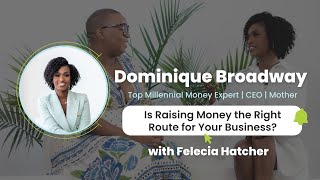
Felicia Hatcher, CEO of Pharrell Williams' Black Ambition fund, discusses when to raise money and when not to. She explains that startups needing 5-10x returns in 2-3 years should seek external capital, while traditional small businesses can thrive on customer funding. Know your exit strategy from day one.
Chapters
Welcome back to another episode of True Wealth Conversations, and we're live here today at Black Equity Con with another amazing, amazing guest who's been making it rain all throughout the conference, giving away money to amazing entrepreneurs. And I'm super excited to have our guest. Her name is Felicia Hatcher, a friend of mine that I've known for quite some time now, believe it or not, right?
Closer to 10 years.
Yeah, that's, yeah, that's, that's a little scary.
So we're not gonna age ourselves at all, but you know, a couple years.
But Felicia, tell everyone a little bit about you.
Sure. I am a Florida native. I am the CEO of Pharrell Williams' Black Ambition Opportunity Fund. So I get to give away money to Black and Latinx companies as well as HBCU startups as well.
Wow.
And then I co-founded the Center for Black Innovation with my husband, which is a really cool space here in Miami.
Yes. And I remember when I first met you, you had Pop.
Feverish Pops.
Yes. You had these like amazing popsicles. That was like your first kind of launch into entrepreneurship, right?
Big launch. I had a company in college that got stolen from me and I had swore off entrepreneurship. And so I'm always surprised that I ever ended up back into it because I was just so burned by having that first dream.
Do you mind sharing how it got stolen so we can make sure it don't happen to us?
It was— Hiring someone and also really young, right? I think I was probably like 20 years old when I started the company. Had gotten like this really big grant and contract, was doing educational consulting for like DeVry University and churches. I had won $130,000 in scholarships as a C student.
Wow.
Oh, wow. Wow. Right. So when that happens, your mom tells all her friends and all her friends are just like, teach my kids too. And then I stumbled upon actually having to turn that into a business because I was spending so much time doing it. And so I had hired actually someone I went to school with to help me with this contract. I had 25 students, had to build out the program. And, you know, you sometimes you don't see the red flags, but then when you look back and he just kept asking me for information all the time and I was just like, I need the help. So I'm just readily giving it. And because, you know, if you're not planning your business right, you operate in a form of desperation. As opposed to like strategy and like thinking big picture, but then also protecting your intellectual property that you built. And I actually went to a leadership program over the summer at John Hopkins University. And when I came back, I actually found out through a voicemail that he had stolen the contract from me. So I was devastated. I was like, I never ever want to, if like, if this is what entrepreneurship is like, I want no part of this pain and suffering.
They made it for me.
Right. But the biggest lesson that I— That's horrible. Yeah, which I think a lot of entrepreneurs just struggle with, is trusting enough people to live on and carry on like the vision so that they can focus on business development or like whatever their genius is in their business. Wow, that's— I didn't know that.
That's— yeah, that, that's, that's tough. I think, like you said, as entrepreneurs, you, you, you want to, you want to entrust someone else, but it hurts when especially someone close to you comes in and attacks you. And I've personally dealt with it, and it's, it's It's hard and it makes you not even want to do it. Like you said, you don't even want to do this anymore. This isn't even fun. Let's get back to the fun. So after you did that, so we talked about Fever's Pop, which I know you were like taking over Miami with your popsicles.
We were one of the first ones to do it. Yeah. One of the first companies across the nation to actually put alcohol into popsicles successfully. Wow. And that required a like high output commercial machine from China. Like more info than people want to know. But like, if you're ever wondering why can't you freeze popsicles with alcohol at home, that's the reason, right? Yeah. Yeah, good point. And that was a journey within itself that taught us a lot of lessons too. And, you know, we started Code Fever that turned into Black Tech Week that's now The Center out of wanting to support our employees when we were building that company.
So.
Wow. It's been a journey.
Yeah, it has been a journey. So now you've sold Black Tech Week, which is congratulations. Thank you, thank you. And now you are focusing more on your Spanish speaking, right? You're a dynamic speaker, um, and also working with, uh, Pharrell Williams on, uh, Black Ambition. So what has that shift been like? I remember we had a happy hour like a couple— like a year ago, and you were saying that, you know, you were thinking about making this transition. I know a lot of times with, you know, as entrepreneurs, we start something and it kind of turns into our baby and we never want to leave it. What has that transition been for you? Because I know there's a lot of entrepreneurs who may have started something and feel so connected to it, and you almost feel guilty for wanting to do something else. So how did you navigate that?
Definitely a mixed bag of emotions, right? Like, I— some people come to me and they're just like, that had to be like such an easy, like, transition. I was like, no, it's probably one of the hardest things that I've done. But, you know, I went to therapy for 3 months in order to, like, just mentally prepare. There's an identity shift of, like, who are you without this identity or this brand that you created? And I had to— I spent a year going through that separation before I publicly start saying I was ready to transition to something else. And then it's like, and then there was this moment where, you know, how— not to sound cheesy, Oprah, but like Oprah's Super Soul Sunday. And she's like, you know, when you make a decision, the world will transpire to, like, support you in that decision.
That's so true, though.
Right? And so when I finally said I am ready to leave and I start publicly sharing it with some of our partners, My husband and I had many conversations. Our other business partner, who was not happy that I wanted to transition, he told me, you need to wait another 5 years. I'm like, there's no way.
That's too long.
I'm ready.
I'm ready now.
Right. But when you— there comes a time where you need to transition, and if you don't, you start to do more harm than good for the business.
Very true.
Because you don't show up as your whole self. You start resenting the work. I was starting to pop off on people I shouldn't be popping off on because I was just frustrated.
I was just like, this isn't— over it.
My heart isn't in it anymore as it was for the first 7 years of building this. And so I knew a collective of all of those things. And then I also want to do other things. And Catherine Finney, who founded Digital Undivided, you know, she transitioned from her organization that she founded and now launched a fund. But I just remember this LinkedIn article that she wrote and like the beginning of it said, "I have built things and I will build again." And I probably read that article 10 times, but I read that line at least 20 times. And for me, I was like, all right, that was confirmation that like, whatever this next thing was, and I didn't know what it was going to be, that like, I've built things and I can absolutely build again.
Yeah.
So that was it. So Black women always be like, yeah, giving you, giving you the things without even realizing it, right? It was probably— it's her manifesto of leaving. But I think it allowed all of us to say, I can build something else again. And there are other levels, other things that we can do because we're brilliant. First of all, you are brilliant. Thank you. Absolutely brilliant. Right. But there's new levels in which how we want to impact people, how we want to change lives. And it's not always going to be in staying with the thing that we created for 10, 20, 30, 40 years. Like, I don't, I don't think that that happens anymore.
It doesn't. And that's— I'm so happy you said that because I've even met people where they're like, in something and they're just like, oh, I'm over it, but how do I transition? How do I separate from this and not lose myself or no longer be relevant? Or, you know what I mean? Like, it's, it's, it's a hard transition and it's something that, like I said, I've seen more and more people running. I don't know if the age we at now, but, you know, more and more people feeling like, I want to do something else. Am I wrong for wanting to do something else? So thank you so much for, for sharing that. So now You're the CEO of Black Ambition, which is an amazing organization that is just really— what they say, putting your money where the— what is it? Where your mouth is. I'm so bad with sayings. I'm always trying to drop a saying and I never got it right. Really putting their money where their mouth is. So tell us about the work that you're doing at Black Ambition.
You know, one of the things that I haven't been— myself and my husband haven't been able to do at a grand scale with Center for Black Innovation was actually directly fund startups. Like we could make the connections happen, but like actually putting and being able to write really big checks for founders was what attracted me to this role among other things, right? And then being able to do this work from a completely different lens, pot of resources, like all of those things. And so, you know, we fund Black and Latinx and HBCU startup founders at what we feel is like the highest level, right? And then also equally match them to like really high-quality mentorship and then high-quality resources. And so like a lot of the relationships are literally Pharrell's relationships and leveraging them to accelerate where our founders are and where they need to be, ultimately where they want to go much faster. And so we know wealth has a need for speed, right? Fundraising has a need for speed. And oftentimes Black and Latinx entrepreneurs waste so much time trying to navigate proximity to power, proximity to money, racism, bias, the gaps in the funding. Like, there's all these things that take so long for them to get the capital that they need. And so how can we take that out the way? How can we create pathways for them where their entrepreneurship journey is uninterrupted by all of that stuff, which is big and weighty, but that's also the responsibility that we've been taking on. So we funded 34 companies last year.
Wow, that is amazing. Right.
And they've gone on to raise another $50 million in venture capital funding.
Wow. Wow.
Rolling out into like 250 Targets and all the Marriotts. Like just really great group of founders that also prove the thesis, like give them the money, give them mentors that don't just say, good job, Dominique, but like, no, I'm going to pick up the phone and call Target because I know somebody.
Yeah, that's what it's about. And I know even me, I'm like, I was thinking, I was like, wow. I've been running Finances Demystified full-time for 9 years. 9 years.
I remember. I remember those days.
I've been working and I'm like, wow, I have never raised any money. No one's— I mean, obviously you have your connections, but a lot of the things I've done, I've done on my own, right? So let's say someone like myself or someone just brand new that's getting started. And I know y'all got— they're accepting applications right now. They're giving away $1 million, but I'm sure— 3. 3. 3. We'll be at close to $3 million.
$3 million.
Okay, a lot of money. Give them the $3 million. Go, go, go.
Gotta add those zeros.
Yes, that's a lot. But how do people prepare? Because I feel like a lot of times I meet entrepreneurs and they're like, well, I have this good idea, just give me the money. And I'm just like, well, what did you do, right? How do you prepare? And I'm sure y'all probably get applications and you're like, what in the world?
A lot of those. Yeah.
How do entrepreneurs, let's say even someone like myself, we're trying to maybe get outside funding that you've never gotten before. How do you prepare or best position yourself so that you can shine through on the application? Right.
I would first say there's a few things, right? Like one, start being vocal that you were actually raising capital because we assume that the capital will be attracted to us if we just keep our heads down and do the thing or build the thing. Like, no, you actually need to let people know, like, I'm raising and this is how much money I'm raising, right? There's that. There's some of the typical stuff, right? Product market fit, being able to showcase that you have a really good team. I always tell like Black people, like, please share your receipts because when you're— especially when you're sitting with VC or angel investors that don't look like you.
Yeah.
And if you have not told them what makes you qualified to sit in front of them, they don't hear anything that you're pitching until you get to that point.
Yeah. And it's so hard. So brag, brag a little. And Black people, we are so humble. Okay.
So helpful.
Like I do a little thing.
Like you'll talk to a founder and they'll be like, I went to school in Boston. I'm like, what school? Harvard. I'm like, why did you leave Harvard? You paid for that brand name so that people sit up when I say it. You paid for that network. Like, and the reality of it is like, we're not asking you to lie, embellish. I'm just asking you to step into your truth and say, why are you qualified to build this? Right? And letting people know then also the journey that you were going to take them on together, how they going to get their money back.
Yes.
And then what else do you need? And I think a lot of times we just talk about the money, but you don't also make sure that that's the best investor for you too. And so as much as they do their due diligence on you, you also have to do your due diligence of who do you want on your cap table? Because that's a bit of a shotgun marriage, right?
Like, yeah. Yes, it is.
Quickly making a decision. There's a transaction, but it can go left really fast if you're not bringing the right person into your company and in your environment. And so those are some of the things. And then I think resource magnetism, right? Like if you don't get the funding, are you still going to be able to build the business and attract the resource and attract the talent? Share how you're able to do so, right? With the lack of capital. But then when you do have the capital and then more than anything, know what you got, you're going to do with the money.
Yes.
Because so many founders say, I need $1 million. What you gonna spend $1 million on? Oh, I'm gonna, you know, hire an influencer. But like, how are we gonna measure that, right?
It's not a plan.
And what employees? You wanna run a million dollar— you're gonna take in a million dollars and you're not gonna hire any staff? And so be strategic, but then also ask really good questions of the people that you're meeting with so that you can make sure that they're a good fit and see what else can they bring to the table for you.
That's That's all very, very good. Um, and then let's say, because the other thing too, like you said, I feel like everybody wants to raise money. I want to raise money. I want $500,000. I want a million. I want a couple million. And a million is great, but it can— if you don't have a plan for it, it can go very quickly. What are your thoughts on— because like I said, I don't feel like everybody needs to raise money. Who do you feel like when you're looking at companies, what makes a company like, like, oh, this company should be raising money versus this one, it ain't, they don't need to be raising money. How do you, how do you determine, or even as an entrepreneur, how do you determine, yeah, do I need, do I raise money or I just keep doing this thing the way I'm doing it?
Yeah, it's, um, there's a few things, right? So I think that's really the bit, the difference between knowing if you were a small business that happens to be playing well in the startup space, or if you're an actual true startup, right? And so the core definition of a startup is a company that has a scalable and repeatable business model that can rapidly scale within 2 to 3 years top. Traditional small businesses are not scaling that fast.
Yeah.
And they're not able to give their investors a sizable return, you know, 5, 10x return in a short period of time. And so being very honest with yourself is saying, hey, you know what, there's nothing wrong with good old customer funding. There's nothing wrong with that. And a lot of our businesses will just play much better with being a traditional startup, looking at ways in which they can increase the number of customers that they service, they service, but then still being able to use some of the resources, maybe still joining some accelerators, like be very clear and be very honest. And then I think the other part of that that we don't often talk about is like once you receive the money, a lot happens. And so making sure that you were the type of leader that can lead leaders, you're someone that can communicate with investors on an online on an ongoing basis, you're now bringing someone that's going to want to look at the numbers.
That's a lot of people to answer to. That's a lot of people to answer to.
And is that what you want in your business? And so you have to— there's no just— there's no silent— there's no such thing as a silent investor. When people are giving you their money, they're going to be loud in some sort of capacity.
Yeah, they give you their money.
Do you want to manage that?
Yeah.
Do you want to manage a board? Like, there's all these things that you just have to almost kind of checklist of like, is this a company that I want to raise? And Some businesses are lifestyle businesses, and that's perfectly fine. They'll do $100,000, $200,000 in revenue. The person lives a really kind of like modest life and they're a nomadic life. And so realize the type of business that you want and be very honest and not just be wowed by like the shiny object of OPM. OPM is great. Yeah, Derek talks about, yeah, he teaches OPM, right? But it's not for everybody.
Yeah, we were talking about the, um, uh, we had Gamal on earlier just talking about even the exiting Right? So what's your exit plan? Like, are you starting this business where you're just like, hey, I want to start this business and pass it down to my daughter, and I'm gonna bake cookies and she gonna bake cookies and we're gonna be a family of cookie bakers? You know, or like, you, hey, I want to create something that I can scale and then sell. You know, me personally, I'm trying to scale and then sell, um, and my legacy for my children might not be Finances Demystified, it might be something else, right? Because we can rebuild new, we can build new things. So I think that's a, that's another important thing too, you know, thinking about what is that exit, what do you want that to look like? Because a people don't even think about the exit at all, you know.
You have to answer that question the day you start your business. Like, are you building something that you plan to sell at a certain point, or you want to keep in your family for generations? Either way, you want to operate in the mindset that you plan to sell it because you start putting the systems in place. Yeah, um, that you are not working in the business, you're working on the business. I know, you know, just in full transparency, when we took on venture funding for Feverish, like, we were like— we randomly got a deck from one of the associates that had the investor's exit strategy in there. I think within 3 years they wanted to exit. When I say Derek and I were heartbroken, we're like, what do you mean? We're not going to be married for the next 5 to 10 years. Like, we're not in this for the long haul. And they were like, no. I mean, the associate was like, whatever you do, please do not tell them that you think that. But it was the biggest eye-opener to us as entrepreneurs that like we didn't have an exit plan. We weren't even We weren't thinking about an exit, but then it made us ask some really hard questions of ourselves. Like, what does an exit look like for us? How long do we actually want to run this business? What does scale actually truly look like for us? And then we were also starting to build a family. And so like, how is all of this going to impact us? Right. And so those were— we needed that moment just to really understand, have a better understanding of how business and venture actually work. But when I said we weren't thinking about an exit strategy, we just weren't at all.
Wow.
Wow. Yeah.
And that's like, I remember when I first started my business, I was like, I want to— I was like, man, I would love to start something and sell it to like Mint or something like that, or Quicken or, you know, QuickBooks. Those are like some of my original thoughts for sure. So, well, thank you so much for joining me. This is all so good. I hope this information allows you to start thinking about what it truly takes to raise money and deciding, do you even need money, right? Is this something that— and I think that's a lot of times like people don't think about all that. So hopefully these are a lot of tips that can help you prepare. Where can people find you and all the amazing things you have going on?
I'm literally @feliciahatcher on everything because it's easy for me to remember. And then Black Ambition Prize is where you find more information about, you know, the 5 verticals in which we fund, our big prize competition, and then our regional prize competitions that we do at events and across the nation as well.
I love it. I love it. Well, thank you again for coming on. You've seen another episode of True Wealth Conversations Live. Here at Black Equity Con. See you soon.
More from Dominique





Wealth doesn’t start in your bank account… it starts in your mindset. Before the money grows, befor


Inflation Won't Drop, Jobs Are Slowing Down, and the Fed Can't Fix Both #economy #reality



