True Wealth Conversations: Ep. 9 - Lessons in Entrepreneurship with Khaazra Maaranu
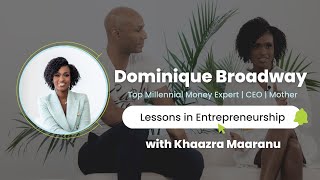
Fintech entrepreneur Khaazra Maaranu built a full-service payment processor after stints at Goldman Sachs and the Federal Reserve. He warns merchants about opaque chargeback practices and fund holds that cripple businesses, and emphasizes that most entrepreneurs accidentally create jobs for themselves instead of scalable companies.
Chapters
Welcome back to another episode of True Wealth Conversations, and I am your host Dominique Broadway. And today we are live on site at Black Equity Con talking to some amazing entrepreneurs, founders. It's just been absolutely dynamic. And now I am very excited for this guest because he is in a whole different space than anyone that we've talked about today. Uh, cause Yes. He let me call him a short name. I couldn't get the whole name right. Kaz, tell everyone a little bit about you and what it is that you do.
Sure. So, Kaz, Kazra, Marwanu is my name, and I am in the fintech payment processing space.
Okay. So what does that even mean? Like what we all, well, hopefully we know what fintech is, which is short for financial technology. But what does it mean to be in the payment processing space? And what is it? What is a payment processor?
A payment— so there's different levels of payment processing. You have the sales level, you have a lot of companies who offer payment processing that's white label solution, you have banks that offer payment processing, they outsource it to an entity like ours who actually does the processing. And what we do is we hold the risk, we do the underwriting, we hold the risk, we have the tech support, we have the customer service, everything is 100% 100% in-house.
Wow, wow.
So processing is basically anytime you swipe a credit card, somebody's getting paid off of it. So whether it be online or at a restaurant or at, you know, your local grocery store, whenever a credit card is swiped, people are being paid, people are making money.
You know what's funny? So I'm— I don't know, are you a fan of The Office? I've seen it once, maybe twice. I'm a big Office fan.
Okay.
And I don't forget, it was this episode and they were bringing in entrepreneurs to like help them with their business. But their goal was just to sell them paper, right? The office is a paper company. And this guy walks in and he has this idea and he says, I'm going to start this business. And every time someone swipes their card, I'll get like $0.03 or something. And they were like, I never forget the people on the show. They're like, oh my God, this is horrible. Where'd you get this trash group of entrepreneurs? Right? And obviously like this guy probably ended up being like a billionaire. But when I hear the paper, I always think about that guy and how they laughed at him. But now we think about a lot of these even like big payment processors, Stripe, PayPal, stuff like that. Multibillion-dollar companies because we're always, you know, either swiping or doing some sort of transaction online or virtually. So how did you get into this space? Because this doesn't seem like a light or easy undertaking, right? Like, how did you get into this space and what's your background?
So it is definitely not an easy undertaking for sure, 100%. My background, you know, I'm not a brilliant genius or anything like that, but I do have a finance degree.
Okay.
Right. And I've never really used it per se. I have an engineering degree, but these things, you know, they help you think. They don't necessarily prepare you for payment processing because I never thought about getting into payment processing before. The way I got into it is, literally speaking, I was— I had worked on Wall Street before for Goldman Sachs. I worked for the Federal Reserve Bank on a consulting basis. And then I moved to Florida and I was sucking air. Like, I couldn't find a job, right? Like, for real. And so I lucked out, you know, maybe destiny or whatever at that particular moment. Started working for an elementary school, believe it or not. A Title I elementary school, which means basically a school in the hood, right? That receives funding. And so I started off as a volunteer, then, you know, I kind of worked my way up or whatever to technology and things like that. And I did that for about maybe 2 or 3 years, and it was the hardest job I've ever had in my life.
That's interesting. Okay.
So much freaking work. Like, it was so much work. I wrote letters for the principal. I was, you know, doing cross guard duty. I was doing lunchroom duty. I helped the dean with discipline.
Yeah.
I mean, I did videos, I built websites, I did everything. I said to myself, you know what? I need something that gives me more time with my family, or if I just want to play basketball, right? Do whatever I want to do. But I also need something that doesn't limit my income. And so I went online and I found the opportunity to get into payment processing, and I didn't even really know what it was. Somebody said, hey, you can make a bunch of money. I said, say that again. He told me how he was making money. I flew out to California and they gave me like a 2-week training that I did not understand at all, right? Came back to Florida and literally was so bad that I thought I was going to be homeless.
Wow.
Because I couldn't like make the connection because I had the manila folder or the binder and I was doing these sales presentations that people weren't really relating to, you know, some Black guy coming in and, you know, talking this like corporate talk, but looking like he is from somewhere else. And then so I dropped that.
It wasn't matching. It wasn't matching.
So I dropped that, you know, I'm from Detroit, and I said, you know what, I know people, I know how to relate to people, and I dropped that and then I just started having success. Success after success after success. So I did that for about, uh, 2 years, made more money than I ever made before.
Wow.
And then I went up another level and doing that, and then I started to see like a lot of holes in the industry, but I didn't understand it.
Okay.
Right. You know, you work for these big financial firms and they send you out as a salesperson to do XYZ, but you really don't know what you're selling because you're not the one who put the contract together. You're not the one who also understands what's in the contract. You're just selling. And you would do whatever you gotta do to get the sale.
Whatever they told you to say. Yeah.
And I realized like, wait a minute, I'm selling BS. And so I invested and put more money in to start a company. And then I realized that even doing that, I still didn't have control of the paper. Whoever controls the contract in the payment industry, that's who really, that's their business. And so after about maybe 6 or 7, 'cause we were making, we were making, great strides with sales, but our income felt like we were going backwards. Yeah, because whenever we were— I don't want to say the name of the processor, payment platform, because they're super huge, the biggest in the world. But we couldn't get the information, the data, to figure out why we were receiving X. And, um, so we finally got up to the point where today we're called an FSP. That stands for full service payment provider.
Okay.
And that means now we get to produce the numbers.
Oh wow.
So that means we're good, we get to control everything, but that means we also have all the risk. And so that's the difference that I found out, you know, with the other positions I had before, is that since I didn't have any risk, they didn't have to tell me nothing.
Yeah, yeah, right.
To be honest with you. So that's how I got into it. And, um, I really got into it not to make money. I just wanted something that allowed— that I had money coming in even when I wasn't working. But I love to you know, to talk to people and to help people at the same time.
Wow, that's an amazing story and interesting how the start to like where you are now. So what do you feel like kind of, I guess, based on where you are now, like what do you do next, right? It seems like you've built or created, it sounds like a pretty amazing business that is bringing in the money. It seems somewhat, automated in a way. Um, so like, what, what, what, what do you do next, or what is next for you?
Okay, so one, it is automated, but there's still a ton of, um, working with people. So you mentioned Stripe and PayPal earlier, they're 100% automated for the most part. They have even their underwriting and risk is based upon algorithms.
Oh wow, okay.
And so they strictly work with online businesses. We work with online and brick and mortar.
Oh, okay.
And so for brick and mortar, you still need feet on the street for the most part. You know, you can sign someone up obviously through online links, but a lot of people who are brick and mortar, they're not necessarily tech savvy. So we still probably have like maybe 200, 300 sales reps at the same time, and we're also online. And, um, you in the beginning you said that, um, it's an undertaking. My God, that is an understatement. And so I got some stripes.
Yeah, I can only imagine.
God, I have some stripes, you know, um, the industry needs a, um, what's the word? I don't want to say a facelift, more regulations.
I don't even want to say regulate.
It needs people, different people, like, um, and if I can say this, so have you ever heard of valutainment?
Oh yeah, yeah, yeah. Okay, so, oh yes, yes.
So I was talking with, uh, his name is Patrick, but they was talking with Patrick and The way he built that business, you know, he says initially, you know, your insurance agent was like, you know, an older white male, and he kind of changed the model up by bringing in, you know, quote-unquote minorities, and that's what really grew his business. And in the payment space, it's changing but slowly changing, where it's the same situation, and there's a You know, I don't want to say that they're all unethical, but it is an industry that has a lot of very unethical people in it. Yeah, yeah. A lot of unethical people. You know, you sign up for the most popular payment processing, uh, processing, and let's say you're processing, you know, maybe $100,000 and your funds are held. Let's say you get $40,000 held maybe for 3 months, 6 months. By the time you get it back, it may only be $50,000. But how do you know? Like, no one's like really doing the math today to check their numbers. Like, most people who are running businesses— not most, but a lot— they don't know their numbers.
Yeah.
So if you don't know your numbers, in my opinion, you don't know your business. So it has been my desire to, instead of just pushing payment processing, because we can do that all day— you sign up, you process, and then month 2 you're out of business, or month 6 you're out of business because maybe you know, you didn't manage your chargebacks properly, you didn't manage your fraud properly, you don't even have fulfillment, you know, set up properly. So it's been my mission to help people protect their cash flow, to teach you how to set up the business not just for this weekend, not just for, you know, this program or this whatever you're selling, but so that it'll be here today and to be here maybe 3 years from now at the same time.
And how do you best do that?
Education. Okay. Absolutely education. Um, I've had to learn the hard way as well, is to surround myself by some really smart people. Yeah, yeah, like some really smart people. I went through a situation, I won't go into it here, but it was like, you know, I don't know, maybe easy 7 figures in legal fees. And, um, it taught me a lesson.
Like, some of these lessons are more expensive than others. I've also learned that. So I get a huge lesson.
And so, um, since I had to, you know, spend so much money, um, so much stress trying to figure things out, and, you know, by the time I figured it out, it was because other people brought it to me. So now I have brought them on board, these same people that kind of helped me through turmoil situations. I brought them on board, and so we literally have a program called Protect Your Cash Flow. Has nothing to do with payment processing. Yeah, you can go wherever whoever you want to go to after that. But we want you to at least understand the basics, like how to build a real business. Not a business that's, you know, it's cool to build a business just to make some quick money, but is your business sellable, right? Is it scalable, right? You need to have all those systems, like build a real business. So that's, that's been the goal. To go about it, to answer your question, I'm sorry, it's through education.
Yeah, that's really important. And we kind of talked about this earlier, but just most people don't create businesses that are scalable or saleable, right? They just don't. They're not thinking big enough. They're not thinking far enough into the future. They're just creating something that, yes, provide— honestly, a lot of entrepreneurs just create jobs for themselves.
Correct.
Literally, that's literally what they did is created another job for theirself and just so they can say that they're working for theirself, right? But they've just created a job just for theirself. I know you mentioned before we wrap that you have a lot of stripes. You've had a lot of blood, sweat, and tears. What is, or what do you feel like is the biggest lesson you've learned that you can share so that hopefully someone else can avoid that same mistake?
Sure. So, so many lessons, but one of the biggest lessons is to trust but verify. And what I mean by that is, you know, we're quick to jump into things without understanding it. And so I may not be skilled enough to read legalese on a 48-page, size 7 font contract. Yeah, that's not my thing. But there are people out here who specialize in that. And I got into a situation myself, even though we were successful doing billions of dollars every single year, and then one day just it came to a screeching halt. And it's because I trusted, you know, people who were extremely close to me. You can't get any closer than this. And, um, you know, the paperwork wasn't set up properly. It was set up, but it wasn't set up properly. We tried to go the cheap route, right? I don't know if it was— what do you call those organizations?
LegalZoom or something? Something crazy like that.
And it wasn't set up properly, um, and it was a huge wake-up call for me. So Trust but verify was probably one of the biggest lessons.
That's good, y'all. Make sure— trust but verify. Don't go the cheap route when it comes to setting up your legal entities. It's very important. And even too, if you're in business with friends or family or who— people you, you trust, you still need to have those legal things in place because the people closest to you will screw you over the quickest. I've learned that. So I think we've That's unfortunately a lesson that many entrepreneurs have to learn, and it's unfortunate.
You said something too that in the, like, maybe, I don't know, 6 or 7 years ago, there was a consultant in the industry, and I think, I forget what his name was, but he had a program where he charged you $10,000 for, he called it success fee. But, you know, being small-minded at the time, I was like, yeah, success, all right, success for him. I would pay, $100,000 today for his advice.
Yeah, yeah.
So, you know, and that's another thing that I would— if I had to do it all over again, I would spend as much money as I can to bring on the proper people because I had to end up doing that anyway, but I had to do it 10x. Yeah, because I was like, you know, in the hole, so to speak.
Yeah.
So if I had the opportunity to, you know, rewind the hands of time, I would invest that money upfront to make sure that I'm set up the proper way. And I wouldn't be cheap about it at all.
Yeah, that's been pretty major for me even now, like looking to grow my business fantastically, but I don't know if I necessarily feel equipped to get to the next level, right? And so even now I'm like starting to, now that I have more time, investing into myself and to put myself in the rooms to be around the people that have, Yes, I've done the millions. I need to work with the billions. I need to reach, be with the people that are hitting the billions, 'cause that's gonna help me get there. And that's not being cheap, investing in yourself. You can't just Google your way to success. It's not a thing, right? 'Cause as I always say, if you don't know what to Google, right? And there's a lot of things that we've learned that we don't, if no one told us, we wouldn't have known to Google it, right? So how can people find you if they're interested in any of the things that you're working on or even your program?
They can go to my website, khazra.com, which is K-H-A-A-Z-R-A dot com. Khazra Maranu is my name. That's probably the— I'm the only Khazra that I know. And that's like, you know, K-H-A-A-Z-R-A, then M-A-A-R-A. And if you type that up in Instagram or Facebook or anything, it'll come up.
And we'll put this in the show notes as well. Thank you so much for your time, guys.
Thank you for having me.
I really appreciate it. Thank you. Thank you. Thank you. This has been— Likewise. This has been— a dynamic conversation, and it's so great to learn from someone who's made the millions, and it sounds like even billions, and get that knowledge and information so that you can avoid some of the mistakes that we've both made, right, that can cost, as he said, 7 figures in dollars, right? So thank you guys again for tuning in to another episode of True Wealth Conversations with me, your host Dominique Broadway, live today at Black Equity Con. See you all very soon. ¿Qué?
More from Dominique





Wealth doesn’t start in your bank account… it starts in your mindset. Before the money grows, befor


Inflation Won't Drop, Jobs Are Slowing Down, and the Fed Can't Fix Both #economy #reality



