True Wealth Conversations Episode 2: Broke to $8.5M
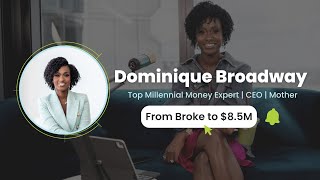
In this solo episode of True Wealth Conversations, host Dominique Broadway narrates her personal and professional evolution from a modest $48,000 starting salary to generating $8.5 million in a single year. She begins by recounting her academic background at Bowie State, early roles at UBS, Edelman Financial Services, and United Capital, and the realization that the traditional wealth‑management model serves only high‑net‑worth clients. Defying a mentor’s warning, she quits her corporate job to launch a financial‑coaching business, investing $1,000 in a booth at the “For Sisters Only” event, which yields 95 leads. Early on she charges hourly rates that are too low, leading to cash‑flow strain, mortgage arrears, a repossessed car, and $15‑20 k in debt. With the help of her mother and grandfather, she confronts the debt, creates a detailed ledger, negotiates payment plans, and adopts a pay‑for‑delete strategy. To accelerate revenue, she takes a side consulting gig and creates the “Finances Demystified Bootcamp,” eventually serving over 14,000 students. Recognizing she was under‑pricing, she triples her rates, which boosts profitability. During the pandemic, while caring for two newborn daughters, she revives her trading skills, teaches friends, and co‑creates the “Wealth Transfer Investing” course. The course scales from $0 to $800 k in five months, hits a $1 million month, and reaches $8.5 million in its first full year, enrolling over 4,400 students. Throughout, Dominique reflects on the psychological impact of being a woman of color in finance, the fear of judgment, and the importance of family, faith, and perseverance. She concludes with a forward‑looking vision: expanding course offerings (including crypto and tech‑enabled tools), impacting tens of thousands more learners, and emphasizing purpose over profit.
Chapters
Welcome back to True Wealth Conversations, and I am your host Dominique Broadway. So you guys sit back for a second because it is story time. So today I'm going to tell you the story of how I went from being broke, broke, broke, broke, broke to having my $8.5 million year. So if you follow me, you may have seen that there was a recent Forbes article that basically kind of talked about how I went from being a broke financial planner to generating over $8.5 million in a year. And believe it or not, this was a story that I was hella scared to tell because, um, you know, being a traditional financial planner previously, you know, there's certain standards that you hold yourself to. Well, at least I did. Um, and then also the other side of it, making such a large amount of money I was also scared, one, from the other part of, you know, feeling like a hypocrite, but then the other part of it, after making the money, scared at how people would judge me. I don't know, for making so much money. And also, are people going to start asking me for money? Am I going to get criticized? Things of that nature. And it's something I realized that only as women and only sometimes as a person of color do we even think that way. Versus, let's say, a white male, or even just a male in general, would be more, you know, braggy about what they made. And instead, I decided to hide it for a while. So let me give you— just take you back for a second to explain to you how I went from broke to where I am now, right? So quick backstory, um, if you follow me, if you watched the previous episode, you know I shared with you how, you know, I went to Bowie State University, majored in banking and finance, got an internship at this company called UBS Financial Services, which ended up offering me a full-time position at UBS Financial Services. And I went on to work at a couple of different companies. Now, when I was working, you know, at UBS and some of these other companies, you know, when you're first starting out in the financial services industry, you don't make tons of money. You make decent money, but not tons and tons of money. I think my starting salary— and I'm sure I could probably find like my original offer letter— but my starting salary out of college I think was like $48,000, right? So it was like $48,000, and then once you got your, your licenses that you had to get under in a certain time frame, and then your pay would increase, and then you're eligible to start earning additional commissions, bonuses, etc., etc., for this wealth management that you'll be providing because then you would be licensed. So I was able to, you know, pretty quickly, you know, out of college start generating a decent salary, you know, pretty almost doubling that salary within the first probably year and a half, you know, out of college. I always had a great, a great income. And as I mentioned, I, um, came out of college, or even before I graduated college— oh, I forgot to say that. I graduated college a semester late, okay? Not everyone finishes on time. So I did graduate college a semester late, and I also graduated with like a 2.8 GPA. So I barely got up out there, but I got out of there, okay? And I almost did not pass because of accounting, which is a whole other conversation, But anyway, that was, that was that part. So I ended up, um, you know, coming, having, having these jobs, like I said, that, that paid very well. And after my friends really kept coming to me asking me for financial advice and guidance, like I said, I realized there was just this huge gap in information. So after working at UBS Financial Services, I worked at another company called Edelman Financial Services, working under Rick Edelman, one of the top financial advisors in the United States. Working with United Capital, which was recently acquired by Goldman Sachs, and a couple other firms, I realized that I wanted to just launch out and do this on my own. Honestly, I was like, I can do this on my own and I'm gonna help more people. Now, I remember my mentor told me that I could never make money helping people that didn't have money. And if any of you guys are like me, anytime someone tells you that you can't do something it just gives you all the fuel and fire that you need to go make that thing happen. And I also realized that who cares if I don't make tons of money off of these people? I am here and trying— my goal is to help them anyway, right? And I realize that if I'm working in my passion and doing whatever it is that God wants me to do, the money will follow, whatever that money looks like, right? And so that was the path that I took. And I realized in the financial services industry— and this has shifted a little bit, it's not super different, but it shifted a little bit. And the financial services industry, traditionally, they're going after high net worth individuals, people that have at least $1 million of investable assets. $2 million, $5 million, $10 million, $10 million, $20 million is ideal, right? But at least $1 million in investable assets. And if you don't have that, they don't want to talk to you. They're like, call me when you get some money, because right now you're not, you're not, you're not worth anything to me. So I realized that I wanted to go after all the other people that weren't getting that financial advice and help. And my mentor told me, like I said, that I would never make money doing that. But my thing was, look, if you guys are going after the 1%, I'm gonna go after the 99% because I have better odds there. I'm gonna help all the people that you guys don't want to help. So I ended up quitting my job. Everyone thought I was crazy. I probably was a little bit. Obviously it panned out. But I ended up quitting my job, and this was about 7 years ago. So I also want to make sure you guys keep that number in your mind, because a lot of times people feel like, or you see a lot of us like that may be doing great now, there were years of struggle, right? Years of struggle, which I'm gonna talk about for a second, before, um, things really, really got to where I envisioned them to be. Now really quickly, taking it back, when I did quit my job, I didn't know what I wanted to do. I was so tainted and just over the financial services industry. Honestly, it's a very just corrupt industry, the way that they move. And I was like, I don't want to be a part of it. This is not what I thought this was going to be. And I thought I wanted to do something else. So I had this idea originally to create, um, oh my God, what was it called? It was like alcohol-infused cupcakes. I can't remember the name of. Anyway, I wanted to create alcohol-infused cupcakes. I liked alcohol, I liked cupcakes. Let's put them together. This sounds amazing. But I wasn't a baker and I had like no secret recipe or anything, so that idea kind of quickly fizzled. And then, um, I went to, uh, Baltimore. I said, you know what, I want to get into real estate. So I went down to Baltimore. I was living in Maryland at the time, and I was like, I'm going to start renovating houses. So I went down to Baltimore, I started putting contracts, all these houses And these houses were cheap, right? They were like $5,000, $6,000, $7,000. Every single contract kept falling through. I'm like, what is going on? Nothing I'm doing is working. So I honestly kept just going back to the drawing board and praying on it, praying on it. And all this was happening in like a 3, 4 month span. Then I went to, um, I was actually driving. I was, I was driving one day and I heard on the news, I mean on the radio, that they were having an event called For Sisters Only. And I said, you know what, I've been going back and forth in this whole like financial education thing and financial coaching thing. Maybe I'll start, launch my financial coaching company at For Sisters Only. So I call into the radio station like, hey, how much is it for a booth? And he was like, $1,000. And I was like, oh my God, $1,000. Like, I'm like, $1,000 for the booth? Like, does it come with anything else? He's like, yeah, 2 chairs. I'm like, got it. Cool. Okay. But you don't keep the table or chairs. Okay. I'm just borrowing it for the day. Okay. So I remember also aging myself. Filling out the form. I had to fax it in, okay? So I fax in the form, put my little credit card information, they charge me, and boom, I'm starting my company. So I call my good friend Christian, who was doing— helping me with some graphic design stuff. I was like, hey, I'm starting this business next week. I need you to make me like a website, or at least a landing page, and some business cards, and like a banner. He's like, I got you. So he creates the banner, creates the landing page, and then one of my best friends, Shanika, drove down from Jersey, and she helped me with worked the booth and I, like I said, I invested that $1,000. That was my first big investment into myself outside of college. I ended up getting about 95 people that signed up to become potential clients. So that was literally how I kicked my business off. So I was super excited. As soon as I got home, I put out all my new— pulled out all my leads. That following Monday, I sat down and I started hitting the phones, right? I was picking up the phones, calling everyone that wanted to potentially be clients, tell it like saying, "Hey, okay. Yes, I can help you with your financial services needs. Let's do a one-on-one coaching session, a one-on-one financial planning session." And I was locking in my clients and I was just calling them one by one. If they weren't answering, I was writing down whatever date it is, left message, whatever date it is, left a voicemail, whatever date it is, talked, locked in the appointment. I had to go back to my old school how to bring in clients. So, I was hitting the phones. That ended up doing pretty well. I ended up bringing on a decent amount of clients from that. But this is where I went wrong. I was not charging enough, right? I was charging— I actually can't remember what I was charging at the time, but it wasn't enough. So, I was charging these people for hourly sessions. And I was also still licensed to sell life insurance. So, if people needed life insurance, I would help them get those life insurance policies. So, I would make money through that as well. But I was really focusing more on the education coaching part. So I'm doing this and it's going well and people's financial lives are getting changed, y'all. They are out here buying houses, they're paying off their debt, they're feeling more confident to put their children through school, they're consolidating credit card debt, just starting to invest in their retirement accounts. They are rolling, okay? And the months and months are going on and I'm making money, but I'm not making enough money. To make ends meet. So the money that I had saved, and I had about a year's worth of my salary saved, the money that I had saved quickly started depleting because I was living off of the money that I was making but also living off of my savings. So I look up about a year and a half, almost 2 years in, and I'm broke, like dead broke. And I'm like, oh my gosh, what happened? Now in true entrepreneur fashion, you know how we think it's cool, I'll catch up next month, I'll catch up next month, I'll double down next month, I'll bring on more clients next month. And it wasn't happening. And I was spreading myself so thin because when you're working with clients one-on-one, it takes a lot of energy, right? It takes a lot of energy, and I just was not able to duplicate myself. So I look up and I'm behind on my mortgage, my car got repossessed, and The funny thing about when your car gets repossessed, you always think it's stolen, although you know you ain't paid the car note. And I remember going to my garage like, oh my God, someone stole my car! And obviously, you know, daggone, I haven't been able to pay the car note in a few months. Um, and so all these things started falling apart for me financially, and I was absolutely devastated. I felt like a hypocrite. I felt like I had failed myself. I had failed my family. Um, I had failed just everyone that knew me because I felt like I just shouldn't be in this situation when I knew exactly what to do financially. So there was this huge mental block that was just not allowing me to address like the financial problems or situations that I had put myself into because I was so disappointed in myself and because I did not want to accept and acknowledge where I was. And I was in a pretty bad spot, as I mentioned, My car was repossessed. I was behind on my mortgage, which meant I had no money. I had accumulated credit card debt, you know, trying to keep things up. And I was just letting the mail just stack up. I was not opening it. I was ignoring phone calls. I was ignoring any mail that came in, and I was just turning a complete blind eye to my situation. So to dig out of that, I had to do the unthinkable, which for me felt like the unthinkable. I had to verbally admit to someone where I was at financially. And I forget, I was sitting in the car with my mom one day and I just— she was like, what is wrong with you? And I was like, burst out in tears. I'm like, Mom, I just messed up. I'm like, ruined myself financially. And I was just so disappointed and I didn't want to let her down. And she explained to me that she's been in these types of financial situations before and, you know, told— explained to me how she got out of it. And that was just comforting to feel like I wasn't the only person that was going through this. And obviously we know we're not the only person going through these things, but a lot of times when we are going through them, we do really feel like it's just us, we're the only ones. And then I, um, ended up also talking to my grandfather too and saying, look, Papa— this is like, my grandfather is like a second father to me, he's always just been a big ride-or-die proponent for anything that I'm doing— and I went to him, I'm like, look, I need your help, I need you to treat me the way I treat my clients. I need to sit down, I need to open all this mail with you, and I need to go through everything I have and get an idea of where I am currently financially. And that's exactly what we did. I went to my grandfather's house. He said, bring all the mail you have. It was like a large stack of mail that I had not opened in like months, y'all. Like, most of those months, we opened it up, we started going through everything one by one. In my mind, I had built this monster, this huge debt monster that was weighing on me mentally, weighing on me physically. I was physically stressed. I could feel the stress in my back of the debt or the financial situation I put myself in. And what we did was we literally sat down, we opened up every single piece of mail, and we threw away stuff we didn't need. Stuff that was debt, we opened it up, um, and we wrote down you know, any debts that I had. So I made a list of all the debts that I had, and then we essentially made a strategy to start paying those off. And the funny thing is, when I sat down and actually really did the math, it was like $15,000 to $20,000 total debt that I had. But in my mind, it was like a million bajillion dollars that I owed that I could never pay back, and they were going to lock me up in jail for owing all this money, because that's what we tend to do mentally when we're in a situation. We always think the absolute worst-case scenario, and a lot of times that ends up paralyzing us. Right? It ends up paralyzing us from actually taking control, where if I had just communicated with these debtors and creditors, I would have been able to handle these situations way sooner. So honestly, communication is truly the key when it comes to finances. If you're communicating, just think about if you borrow— if you lent somebody $100, and when it came time, uh, for them to pay it back, and you calling them and calling them, and they start ducking you and not answering your calls, you like, come on now. So I get it, right? You lend someone some money, they don't pay you back, you're mad about it, right? So I understand that concept. So when I sat down and we looked everything over, as I said, I didn't owe as much as I thought. And basically we just quickly created a strategy to start paying down these debts. We made this list, made a list of who I owed, how much I owed, and then I also did a budget to determine based on what I was currently bringing in how much I could afford to pay all these debtors. And I started calling them one by one. Negotiating payment plans to pay them off. For some of them, I was able to do what we call a pay-for-delete, where I paid the debt off and they were able to delete the debt off my credit report. And just one by one, started figuring out how to attack that debt. From there, that was a pivotal moment for me because that was the first time I ever really admitted how bad of a financial situation that I was. But after that, I realized that I had already experienced one of my— actually, all my worst fears had came to light. I used to joke and say, hey, if I start this business and I go broke and lose my house, that's the worst thing that can happen. Well, those worst things had happened, but the good thing was I was able to get my car back from being repossessed, and I actually was able to work out a plan because communication is key with my mortgage provider, and I ended up not losing my house. I actually ended up selling it at a profit a few years later. All right, so we'll talk about that on another episode, but kind of explaining how that pivotal moment really helped to, to get me to, to where I am now. From there, I realized that I was going to have to really get a lot more aggressive in my business, right? So I had to do something that I thought I would never have to do. I had to go get a consulting job. I had to get a just consulting opportunity on the side that I was able to use those consulting dollars to start paying down these debts a lot quicker. And then I was able to relieve a lot of the financial pressure that I had. And then from there, I focused on how I could start duplicating myself, because one of the big issues that I had was that there was only one me, and I could only work with so many clients in a short amount of time. So the first thing I did was I launched, um, the Finances Demystified Bootcamp, right? That was my first kind of course that I created, and it was my way of taking my financial knowledge and packaging it up so that anybody could access it at any time and still get all the information and the help and the guidance that they needed. And from launching that probably 3, 4 years ago to now, we've had over 14,000 students go through that one course, right? And when I first launched that course, it was just selling it, you know, via email lists and, you know, just doing social posts every now and then. So in the beginning, I wasn't promoting it as heavily as I needed to, but it, it did help to add in that extra stream of, of income for me. The other thing that I did was I increased my prices. I realized I was not charging enough. When I started doing some research and looking around and seeing what other people with my level of expertise were charging, I was way too low, okay? So I ended up actually increasing my prices 3x, right? And then that allowed me to start seeing the revenue that I actually deserved based on the level of expertise and also based on the value and how much I was changing people's lives. So that was also beneficial. The next part was within, I guess, within the past 2 years when I launched an additional course. So this happened during the pandemic. As you guys know, I have 2 amazing, amazing daughters now. But in 2019, I gave birth to my first daughter Dawson September 25th, and then in August 1st of 2020, I gave birth to my second daughter Demi. Now, during the pandemic, like, like most of us, we were like, okay, this is probably gonna last like for a month or two, you know, and then we'll get to like come out of it. That is not what happened, right? Um, we were, you know, in the pandemic, my husband and I were actually planning to move to to New York. At the time we were living in DC, we had moved from LA, um, and we'll talk a little more about our story on another episode. We were living in LA, moved to New York, um, and then we were, uh, I'm sorry, we were living in LA, moved to DC. We were having plans to move to New York because I decided once we were living in LA that I wanted to move to, uh, DC to, to have my daughters because I wanted to be around more family. And, um, you know The, the pandemic happened, um, but actually before that we had got a deal to move to New York. So we were in the process of moving to New York, um, and then we packed everything up from DC, went to Mexico for a few weeks, and that's when the pandemic kind of just blew up. And so the opportunity that we originally had in New York didn't pan out because of the pandemic. So we said, hey, my, uh, my husband said, hey, well, my mom has a house in, in Orlando and it's empty. We want to just go down there. And I'm like, all right, cool, we'll be down there for a month. This whole pandemic thing will, you know, be done and we'll get back to business as normal. As we all know, that did not happen. Um, 2 years later, right, we're still in the pandemic. And during that time, I was like, I had a lot of— not— I had more— a lot more downtime because my speaking engagements had halted. Um, but I had my daughter, I was home, you know, breastfeeding and still working. And I was like, you know what, I'm gonna start trading again, right? Because I was doing it at 16, 17, 20, I'm gonna start trading again. You know, I have more cash back on hand. And I was like, wow, I'm actually really— I'm still good at this. Like, I still got it. I've always been like investing, but I had to stop investing when I went broke because I just couldn't afford to. But I was, I was showing myself that I was good at trading again. So I said, hey, let's, let's teach a couple family and friends. So we started teaching a couple family and friends, and they were getting it. And I was like, okay, well, if I could teach these little knucklehead family and friends, let's see if I can launch a course. right? And my husband was pushing me to launch this course anyway, but I originally didn't want to do it. I didn't want to do it because honestly, I feel like there's just a lot of just really like crappy, shitty investment courses out here, and I did not want to be associated with any of these people. As you guys know, I've won tons of awards in the financial space, from being named one of the top financial advisors in the United States for millennials to being named one of the best money experts in the US for millennials. And I wanted to stay in that space. I didn't want to be associated with like these scammers and crappy people that were out here. Um, but after he, you know, after me seeing that this was possible and him pushing me and like, yo, you should really do this, I believe in you, people need this and they need to hear this message from you. This is why you need to start this because there are so many crappy people out here. Um, and then I said okay. So we worked together to build this course and my initial goal was to sell let's get 20 people to sign up. We got 20 people on the first day. We ended up getting about 66 people to sign up. I said, okay, so that's like a thing. This is happening. So we get this many people to sign up and then word of mouth started going, right? Word of mouth started happening. People were enjoying the course. We ended up scaling that one course from $0 to $800,000 in 5 months, right? Just really with word of mouth and not really running ads, just really off my existing email list, social media, and word of mouth. And then, um, at the end of that year, we were able— I had the first million dollar month, and then we scaled it to $8.5 million, uh, in the first, uh, full year of having just that one specific course, which was the Wealth Transfer Investing course. And that was really exciting. And I remember even when I, um, made the, the first million in a month right? And it was a big goal of mine because I saw someone else did it online. I was like, what? She made a million in a month? Let me see if I can do it, right? I never even heard of something like that, and I did it, but I didn't even realize I did it because I was working so hard. Because I, um, you know, me and Dion created the course together, but I was the one that ran it because it was my business. So I ran the course, um, I did customer support, I did marketing. So I sold the course on the weekend, then I did customer support 24 hours a day. I was still breastfeeding. We'd had no nanny at the time taking care of my daughter, teaching the courses during the week. So I was doing everything to the point where I was like, look, I can't do all this on myself, can you help me? So then he came in and started helping me teach the course for 2 weeks, which helped, but I was still running, doing all the sales, doing all the marketing, doing all the customer support and teaching, and it was very overwhelming. So because my head was completely down into running the business, I didn't even realize that I had made $1 million a month, which is insane. And I was so excited when I found out about it that I remember I was on my computer one Friday night and I was like, Dion, I did it. Like, I made $1 million in January. He was like, what? And I'm like, yes. And I was like, I need a couple days to go like somewhere and process this. I booked a room at the Faena in Miami because, you know, I live in Miami, and just for 2 days just sat there and just like, what? Is happening, right? Um, and just thanking God and just, just so happy that I didn't give up when everyone was telling me to give up, when everyone was telling me to go get a job, when I had interviews with Google and all those things. And I was just like, yo, I'm telling you, this is what I'm doing. One, it's going to pay off for me financially, but it's going to help so many people. And now in that course, we have now— we have over 4,400 students in that one course alone, outside of the other 14,000 students in our other course. And so I'm saying all this definitely not to brag, obviously, but I'm saying all this to remind you to keep going. Because trust me, there's going to be naysayers that tell you to stop. And some of them aren't even naysayers, they're just family and friends that want you— they want to protect you. A lot of my family was telling me to get jobs because they didn't want to see me me in pain. They didn't want to see me hurt. They didn't want to see me struggling, right? And I appreciate that, but they're all coming from an area of protection. You know, when you're— you know, when something's going wrong, it's like that fight or flight type of thing. And that's where they were coming from. They wanted like, flight, get out of there, get out of there, get somewhere safe again. And I am so thankful that I had a supportive family, my husband, friends, and believed in myself, and most importantly, God, that was just like, nah, keep going, trust me. You know, I'm going to lead you where you need to go. And now, we were an 8-figure business and we're going to greatly exceed that this year. And we're hoping to impact the lives of tens of thousands more students this year. We're launching additional courses and other topics. We're bringing out new personal finance courses, crypto courses, courses in all different areas to help people to build wealth. To have more financial confidence in their lives. We're also launching tons of different technology so that people can reach their goals in an easier and simpler way. And it's just the beginning. It's just the beginning. So hopefully this story was motivational for you. Maybe some of you are in that dark valley that I was in, that I honestly, when I look back, I was in that dark valley for a couple years. And maybe some of you are in that dark valley. So hopefully this story motivates you to keep going. You're all— we're all geniuses in our respective spaces. We all have a reason and purpose that God has put us here. Tap into it. Tap into it. All of us may not become multi-million billionaires, that's cool. Really, most of us don't need tons of money to live on. Focus on making impact. Focus on really tapping into your passion and the money will come. Helping people, that's what we're here for. So hopefully you found this to be inspirational, and thank you again for tuning into True Wealth. I will see you soon.
More from Dominique





Wealth doesn’t start in your bank account… it starts in your mindset. Before the money grows, befor


Inflation Won't Drop, Jobs Are Slowing Down, and the Fed Can't Fix Both #economy #reality



