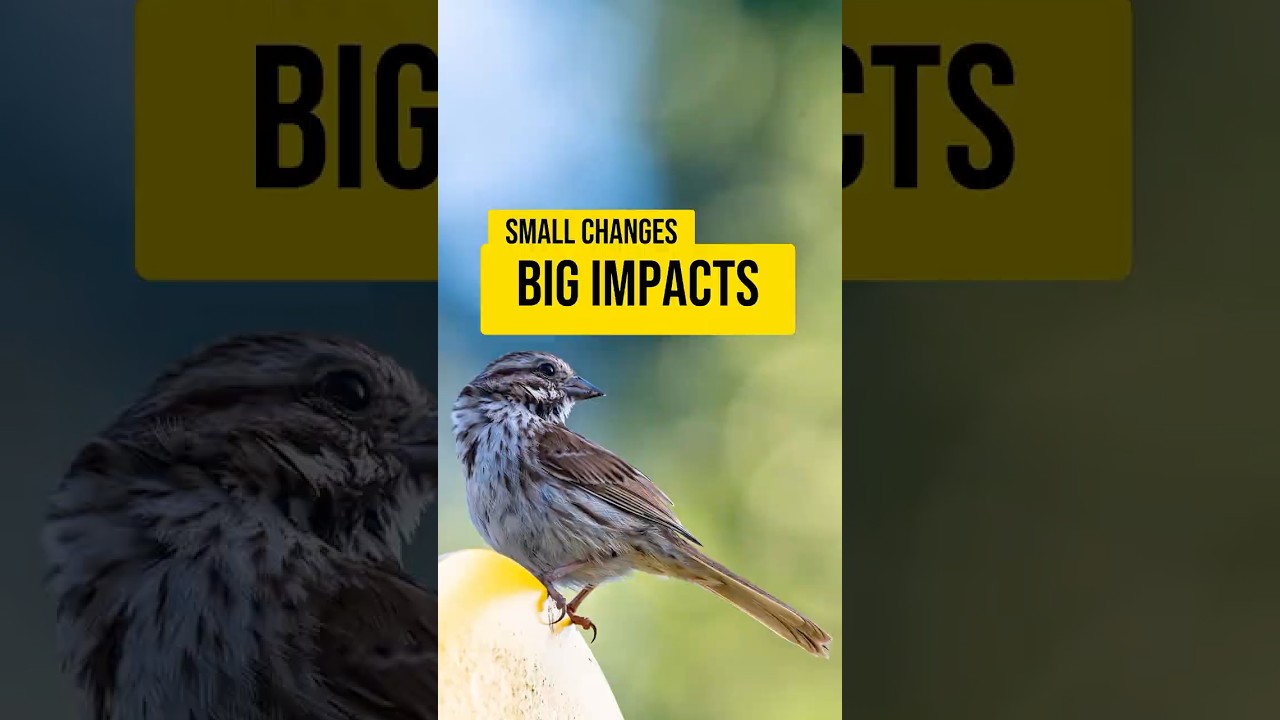
In this instructional video, Don Orkoskey examines the common belief that a 600mm lens is essential for bird photography. He explains the primary advantage of a 600mm lens—its reach—and when that reach is truly valuable, such as for small, skittish songbirds or distant subjects like herons. He then outlines the significant downsides of a 600mm lens, including high cost, heavy weight, and the need for monopods or tripods, which can limit mobility and cause fatigue. Don explores viable alternatives, showing how 300‑500mm lenses can suffice depending on camera sensor size (crop factor) and megapixel count, and discusses the role of cropping and lens “sweet spots.” The core of the tutorial emphasizes that mastering bird behavior, positioning, and timing—getting close to feeding or watering sites, understanding atmospheric distortion, and using light effectively—often outweighs sheer focal length. He advises viewers to test shorter lenses, consider renting a 600mm before purchasing, and to view his other videos on behavior, distance‑closing techniques, and lighting. The overall conclusion is that a 600mm lens is not a mandatory tool; a 300mm (crop sensor) or 400mm (full‑frame) lens combined with good technique can produce excellent bird photos.
Chapters
If you're getting into bird photography, then you've probably heard the same advice. You need to have a 600mm lens in order to properly photograph birds. And look, I can understand why people say that. Birds are small, they're often far away, and so filling the frame with those birds does require a longer lens. Or does it? Do you actually need a 600mm lens? in order to photograph birds. In this video, we're gonna talk about when you actually do need a 600mm lens, when you don't, and alternative ways to get amazing photos of birds without one. So let's start with why it makes sense to own a 600mm lens. The key advantage of owning a 600mm lens is reach. Reach. It's going to help you if you've got a heron that's on the other side of a lake or pond. It's going to help you if you have a small songbird up in a tree. It really does help you get the bird larger in your frame, and therefore you don't have to crop as much, and the bird can appear sharper because you haven't cropped down. But does that make it worth the thousands of dollars that a 600mm lens often costs, plus the weight of carrying a huge lens like this wherever you're going, and the issues of either needing a monopod or a tripod or hand-holding a big heavy beast like this. That really depends on you, your physique, your age, and how far you're going to hike while out looking to photograph birds. There are times when that reach is very important. If you are photographing small songbirds and/or skittish birds that won't let you get very close, and every time you take a step closer to them, they get further away, then having the reach of a 600mm lens probably does make sense. But you don't always need that reach. Therefore, let's talk about why you may be able to use a 300, 400, or 500mm lens instead of spending the money and having the backache and arm ache that you get from carrying around a 600mm lens. And that brings me to this very important point. Not every bird is a tiny little songbird. In fact, so many bird photographers are photographing ducks or other wading and larger birds— osprey, eagles, hawks— that you don't necessarily need that added reach. Many of those birds are a little more comfortable being a little bit closer to people. You can find places that allow you to close that distance and get incredible photos. And that is probably the most important thing when it comes to bird photography. After all, a 600mm lens might give you that reach for a heron that's across the pond. However, if it's a hot, humid day and the atmosphere has all sorts of moisture in it, you're going to end up with atmospheric distortion, which is going to ruin the sharpness of your photo anyways. Closing that distance makes a much bigger difference. So you might say to me, okay, Don, well, that's fine, but I really want to photograph little songbirds. Those are what I'm interested in. Those are what I see mostly. Well, there's ways that you can also overcome The distance problem when it comes to songbirds. By paying attention to bird behavior, which I've talked about in my other videos, and by placing yourself close to places where birds eat, drink, etc., you can often get much closer and get much better photos because of that shorter distance. Check out my channel for videos on how to close that distance, why atmospheric distortion will ruin your photos, and more tips that will really help you to get better photos even if you don't have a giant long lens like a 600mm. There are so many other factors in addition to closing that distance that will help you to improve your wildlife and bird photos. Paying attention to the light, which I've also talked about recently and in the past. Paying attention to your background, which I just posted a short video about how to adjust that background just with micro movements. All of those things are going to dramatically impact the quality of the photos that you get. Equipment is a tool. It's only there to do so much. It's only going to accomplish so much. You have to understand behavior, and you have to understand positioning yourself, and you have to be patient because sometimes it takes a long time for the bird to relax around you and to get closer to you. But knowing this is where the good stuff is in terms of food or water, etc., is going to get you positioned better and have a shorter distance Where you can capture those photos without having to buy a 600mm lens. Now, that doesn't mean you can get away with a 105 or even a 70-200. You might need something a little bit bigger, but that's also going to depend on the following: your crop factor. If you're using a full-frame camera, having a 400mm is probably your minimum. But if you're using a cropped sensor camera, You can easily get away with a, with a 300. It probably makes a lot of sense here to talk about cropping. With a big megapixel camera, something above 40 megapixels, 36 megapixels and above, sure, you can crop down quite a bit. That's going to change or be impacted by the camera that you have. If you're considering buying a new lens, a longer lens, then you need to not only understand the amount of crop that your camera can deal with, but you're going to have to understand how to get close enough so that that atmospheric distortion isn't an issue. You're going to have to understand where the sweet spot in your lens is. Which may not be fully extended at 600mm. It may be much closer to 500mm. That is just how optics works. It's how the fact that these are tools and they are machined to a certain tolerance, it's how that stuff works. And if those tolerances are slightly off, then you have to kind of adjust and live with that. Next time you're out, if you have something like a 400mm lens already, see if you can close that distance better. See if you can come out at a time when those birds are occupied doing something else, like eating or feeding their young. And if you can get closer without scaring the bird off, then try to do so. There are a lot of videos out there on YouTube, and you can talk to a lot of wildlife photographers that will tell you all of the benefits of having a 600mm lens. But what are the downsides? Those don't get talked about too often. I already mentioned the bulkiness and the weight, and those are important factors. If you are hiking a long distance, as I already mentioned, in order to photograph those birds, or if you're going to want to spend a long time, hours and hours out there, and you don't have a monopod or a tripod, then it's going to be difficult on your back, on your shoulders, on your arms. These are all things that you really need to consider when it comes to the question of should you buy a 600mm lens? Because it's not just about reach. Again, understanding behavior, positioning ourselves, those things are so much more important than how long our lens is. So let's return to our question. Do you need a 600mm lens to do bird photography? My answer is actually probably not. As much as I love my 600mm and I use it whenever I photograph birds, it's not a must-have item. If you have the money and honestly, if you are not that experienced at getting close enough to the birds and you don't understand their behavior, it can be a very powerful tool. But again, it's going to be something that weighs a lot, that's going to be hard to fit into a camera bag, that is going to tire you out faster if you're hand-holding it. It's going to be bulky and hard to move around and maneuver, and that might be too much for you. So do you have to have a 600mm lens to photograph birds? Absolutely not. My minimum, like I said, is 300 if you have a crop sensor and 400 if you have a full-frame sensor. What I would do before buying one is really test the limits of those other things— your Ability to position yourself closer to the birds. The specific subject that you're photographing, if it's small songbirds, you can't really get them big enough in your lens, then sure, maybe you need to step up to the 600. But try those things first. Try to close that gap. Try to position yourself well. Try to be patient and stay in spots that you know those birds are going to come to because you understand their behavior. Those things, if they are a winning combination for you and they achieve what you're looking to achieve, then no, you don't need the 600mm lens. And again, I would invite you to check out my channel, look at the videos that I have on bird behavior, watch for future videos on how to close that distance safely, watch the videos that I have about how light has a massive impact on the quality and look of your wildlife photos. And be sure to subscribe because I'm going to put out a lot more information on bird photography, other wildlife to photograph, and the equipment that is helpful for doing so, and whether you truly honestly need that. Now again, if you've tried those other things and they're not producing the results that you want, then maybe rent a 600mm lens and see if it does accomplish the things you're looking to accomplish before you go out and spend your money buying that lens. Thank you so much for watching. I really appreciate you watching all the way through the end. And like I said, please subscribe and like this video so that YouTube understands that more people will like it And we'll show it to more people. Thanks so much. I appreciate you, and I'll see you next time. Bye-bye. Bye.