5 Shifts That Melt Visceral Fat and Reverse Insulin Resistance FAST
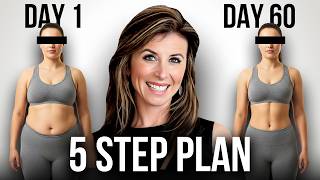
Dr. Ashley Lucas (Ph.D., RD) explains five practical lifestyle changes to reduce visceral (deep belly) fat and reverse insulin resistance without extreme dieting or medications: 1) stop grazing—eat about three full meals/day with ~4–5 hour spacing to allow insulin to drop; 2) stop eating 3 hours before bed to protect insulin sensitivity and growth hormone at night; 3) walk 10–20 minutes after meals to lower post-meal glucose (up to ~30%); 4) consider a weekly 24-hour fast (dinner-to-dinner or breakfast-to-breakfast) once fat-adapted to improve insulin sensitivity and mitochondrial repair; 5) add very short high-intensity bursts (10–20s all-out sprints with ~90s rest, repeat sets, twice weekly) to stimulate mitochondrial biogenesis. Additional tips: increase protein, strength train ≥2x/week, keep daily carbs <100g, and prioritize electrolytes. Video includes product promotion for Dr. Ashley's Electrolyte Plus mix and links to PhD Weight Loss program.
Chapters
Insulin resistance is one of the quietest ways that visceral fat, the deep belly fat, builds up around your liver and your pancreas and all your organs in your belly. And the truth is that most people never hear that you can correct it faster than most doctors believe without extreme dieting, without medications like the speed at which you can reverse this deep belly fat and the negative impact it has on your health is so fast now, if you feel foggy after meals, if you crash in the afternoon, if you carry the stubborn fat that refuses to move specifically in the belly area, these five shifts can change everything for you. They transform thousands of my clients inside PhD weight loss. And these shifts could be the missing piece for you. By the way, I'm Dr. Ashley. I'm a Ph.D. nutritionist and registered dietitian. I'm a. I'm the owner and founder of PhD Weight Loss and Dr. Ashley Wellness. And my goals for you here on this channel are to give you the informational pieces you need to create good, positive change in your own life.
Hey, really quickly, if you're interested in hydrating yourself optimally and want to do it in an efficient and effective way, I created an electrolyte plus mix just for that. It's called Dr. Ashley's Electrolyte Plus Creative. I know. And it's crafted with essential electrolytes, vitamins and minerals for maximum absorption. With patented forms of zinc and vitamin C, it supports immune and adrenal function. Plus chromium picolinate regulates healthy blood sugar levels while helping to curb those cravings. Say goodbye to headaches and fatigue. Visit DrAshley wellness.com and use code Ashley10 for 10% off your first purchase or 20% off your first subscription order with free free shipping plus enjoy 30 day money back guarantee. Now back to the episode.
So let's dive into these five shifts that melt the visceral fat, that melt the deep belly fat, and reverse your insulin resistance faster than you ever could think imaginable. So shift number one is to stop grazing and give insulin a chance to drop. So most people think that snacking keeps the metabolism running. We've been given this myth or told this myth that we need to eat every two to three hours, at least every three to four hours to keep our metabolism going. And if we don't, gosh darn it, we are doing our body a disservice and we are shutting down our metabolism. This is so far from the truth. In reality, every bite that you take that most of us take, following the standard American diet and even Eating a quote unquote healthy diet requires insulin. Even these healthy foods, like sweet potato or a salad, or eating steak. Whenever we consume these foods, insulin is required to metabolize it. And if insulin never drops, insulin, by the way, is also our fat storage hormone. When it's elevated, it flips off the switch to burning fat for fuel. So if it's always elevated and it never drops, fat around the belly cannot be released. You just can't. So visceral fat, this belly fat, responds not to calorie cutting, but to insulin relief. I want you to take a different viewpoint here. It's not about eating less. It's not about taking medications to shut off your hunger hormones. It's about getting insulin to reduce so that the body can have time to burn this fat fat. Now, spacing your meals allows your body to switch out of sugar burning mode and back into fat mobilizing mode. That's what you want. You want to mobilize your fat so you can burn it for fuel. Now, how to apply this is to eat about three full meals a day, no snacking in between. Build your meals around protein, non starchy veggies and healthy fats so that you stay satisfied longer. The goal would be 30 minutes, 45 minutes before a meal, you start to experience a little bit of hunger, and then you're hungry right before the meal, and that meal keeps you satisfied. You want to try to wait the four to five hours between meals because this small window of hormonal rest can improve your blood glucose stability within days. Now, if the thought of not eating every two to three hours scares you, like if you say, oh my gosh, I've got hypoglycemia, or like, there's just no way in the world that I could be satisfied and feel good with three full meals a day. I've got to graze. It's just my metabolism. Then I feel you because I was right there. When I was a professional ballet dancer, I would eat every two to three hours. Not because I was exercising like crazy and needed the fuel, but because I had a metabolism that was a true like sugar burning carbohydrate metabolism. And that's what happens. I was not fat adapted. I was not metabolically flexible. I was pre diabetic. I was in my 20s. I was struggling with body fat percentage where I didn't want it to be and where it couldn't be for the sport. So I feel you. And it means you have the biggest transformation waiting on the other side. It is actually very, very exciting. So take that as a positive and I encourage you to check out PhD weight loss to learn how. Because this is exactly why I created this program. It was through my own trials and tribulations with struggles around my body composition and doing every single thing right, but it just did not. So I earned my PhD in sports nutrition and chronic disease. I became a registered dietitian. And everything that I learned around conventional dietary wisdom I flipped upside down. And what you will learn during this program will blow your mind and totally change your life and your body. So if you are listening to this on a podcast platform, go check out myphdweightloss.com to learn more. And if you are watching this on YouTube, head on into the description and click the link for myphdweightloss.com okay, shift number two, close the kitchen three hours before bed. Nighttime eating is one of the strongest predictors for this belly fat storage. After sunset, insulin sensitivity drops significantly and this means that the same meal will lead to a larger blood sugar spike. Now, I understand that some people say it doesn't matter when you eat your calories, the total calories is all that matters. The body is much more complicated than that. And there's actually certain genetic SNPs that increase your susceptibility to developing pre diabetes and type 2 diabetes if you eat close to bedtime. That is me personally, if I eat close to bedtime, I'm increasing my susceptibility, my risk to develop type 2 diabetes. We also know that when we have eaten really close to bedtime, it reduces the deep sleep, our REM sleep. And so we're not getting really good sleep cycles. And when we don't get that, we know the next day we're going to have more hunger and cravings. Our ghrelin hunger hormone will be elevated, our leptin full hormone will be reduced. And it is a secret for failure. So really we want to focus on three hours before bed, no more eating. When insulin rises at night, growth hormone also drops. And growth hormone is the hormone that helps burn the visceral fat, that belly fat while you sleep. Clients will notice better sleep, less bloating, decreased morning hunger, and a visibly flatter stomach by doing this. Now, if you have late night cravings, drink warm herbal tea. And it's really interesting, but if you put a little bit of salt in your tea, it'll make it taste sweeter. You could also add electrolytes like Dr. Ashley Wellness electrolytes. Specifically, lemon is delicious in like a raspberry herbal tea to support hydration and to reduce cortisol driven hunger. You could have some bone broth or regular chicken broth. Let's see, you could have a bubbly water. You, if you're really truly hungry at night, I always say, okay, true hunger will eat a hard boiled egg. If that doesn't sound good to you, you're really not that hungry. And you really don't need to fuel your sleep with food. So kitchen closes. 3 hours before bed is a really good goal. Shift number three is to walk after meals to reduce glucose by up to 30%. It's pretty w of the simplest, most effective tools that we teach within PhD. Weight loss is a 10 to 20 minute walk after meals to help your muscles absorb glucose without using insulin. You will see better energy, fewer cravings, better digestion. And if you were to wear a continuous glucose monitor, a cgm, you would see a measurable reduction in post meal glucose spikes. This is why it targets visceral fat, right? Less spikes in insulin means less emergency storage around the liver and pancreas. Over time this shifts your entire metabolic pattern. It's such a big deal. So now if walking outdoors isn't possible, you could try marching in place. If you have the budget for it, you could get a treadmill that you put under your desk. This is what I do and it's very helpful. You could walk your stairs or you could get on a stationary bike and just do a slow paced cycling session. All different options here. Now if you are watching this on YouTube, I want to hear from you, from this community as to how you get up and move your body after consuming meals. Because there might be some ideas that I haven't thought of. Shift number four is you could consider a weekly 24 hour fast to reset metabolic flexibility. Now I wouldn't encourage you to do this until you are fat adapted. And what I mean by that is that your body is able to burn fat for fuel. If you reduced carbohydrates, you would still thrive and could focus and think and not be hungry. If you are not there yet, then I would not encourage you to start with a weekly 24 hour fast. Also, I have a video where I dive into the topic of intermittent fasting and how to start this safely and when it might be right and when it might be wrong for you. So. So if intermittent fasting is something that piques your interest and you want to learn more about, go on over in YouTube, check out the description and click the link on that video to learn more. But basically, if you feel like you are in the place where you want to start to dabble in fasting or you feel like you want to learn more about it. It's important to go into fasting with the right mindset that is not about deprivation. Right. It's more of a structured metabolic reset that improves how your mitochondria use F fat. It's a 24 hour break from digestion that gives your cells space to repair and restore and replace damaged mitochondria and to enhance fat burn. Research shows that a 24 hour fast can increase growth hormone dramatically, can improve insulin sensitivity, can reduce inflammation and can support liver fat reduction, which is key to optimal health. How you would apply this is to choose a meal to meal window. So like dinner to dinner or breakfast to breakfast and would consume water, tea, electrolytes and salt only. If you feel like 24 hours is intimidating or your body's not responding well. I want you to listen to your body primarily first off and then you could start slower. So you could start with just a 12 hour window of not eating between dinner and breakfast the next day. That means, for example, you could finish eating at 7pm and then you wouldn't eat again until 7am and then you could build up and add more time to it. But if you want to play with this tool, definitely check out the video because I dive into when it is working for you and when fasting might not be working for you and actually hindering your health because it is really dependent upon the individual shift. Number five is to add short high intensity bursts to build new mitochondria. You do not need to work out long periods of time for sure. You do not need to get on the elliptical machine for 30, 45, 60 minutes a day or even like a few times a week. It's not about burning calories. What you need is targeted intensity. A single 10 second, 15 second, maybe 22nd max all out effort can improve insulin sensitivity for hours afterwards. Hiit, which stands for high intensity interval training, increases mitochondrial biogenesis, which means you're gonna create more mitochondria. More mitochondria means that your body can burn more at rest, especially from the belly area, especially from that visceral fat storage. So how you can apply this is think of a 10 to 20 second sprint and then a 90 second rest and repeat that three times and do it twice a week. So this could be a 10 to 20 second sprint on a bike, on a rowing machine, in the pool, sprinting on the elliptical. But again, so think of this Instead of that 45 minute or 30 minute, moderate intensity elliptical workout you're on there. I think it's hardest to do on the elliptical. For me. It hurts my hip flexors trying to go that fast. So I prefer a stationary bike. You could also use your feet and do it outside. My knees would explode. So if you're like me, I really would encourage the bike. You get on there and that 10 to 20 seconds is all out, like as hard as you can go. And then you take time to rest and recover. All right. And then just some quick additional steps on how to burn the visceral belly fat. One, increase your protein intake. Higher protein meals stabilize blood sugar. You know this. They reduce crashes that lead to snacking. Number two is strength train twice a week at minimum. More muscle means better glucose disposal, less organ fat, less belly fat accumulation. Number three is keep daily carbs under a hundred grams. This will speed your results, especially when you are struggling with fat around the belly. And then number four, prioritize electrolytes. Balanced minerals will help to reduce the biological stress load on your body, which will help to reduce hunger and will stabilize energy and support metabolic repair. Good hydration with electrolytes is key in this. Now if you feel like you don't know what electrolytes to use or you are just a little bit lost because there are so many out there, I encourage you to check out my Electrolyte plus mix that I made specifically for folks struggling with blood sugar issues who are on a journey dropping weight or maintaining their weight loss. Just go to drashleywellness.com actually we should have a link in the description. So head on into the description, click the link and you will find a special discount code there for Dr. Ashley Wellness and the electrolyte plus mix is what you're looking for. Specifically. We've got two great flavors, lemonade and Strawberry paradise, which has a little bit of a watermelon flair to it. So I really hope you enjoy. Okay you guys, these shifts aren't that difficult. They're pretty darn simple. But you have to take action. You got to take action and remain consistent in that action. Consistency always wins. Remember that you don't have to lose weight to get healthy. You get healthy by doing and taking these steps and then the weight and the belly fat just melts away. At PhD weight loss, I always tell our clients that the goal is not weight loss. The goal is reducing inflammation and increasing energy and weight loss is just a really fun byproduct of that. Please drop your thoughts about belly fat. This visceral fat. Any concerns you have any questions that you might have in the comments below, make sure that you subscribe so you do not miss another video. If you found this helpful, which I hope that you did, make sure to subscribe and check out my next video right here.
More from Dr.





If I Was Over 50 & 30 Pounds Overweight, This Is Exactly What I'd Do to Burn Belly Fat


