7 Foods That Naturally Trigger Your GLP-1 (Your Body's Own Ozempic)
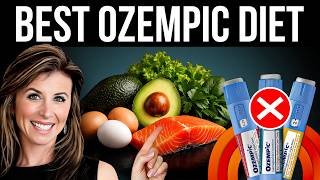
Dr. Ashley Lucas explains how seven food categories naturally trigger your body's GLP-1 hormone: animal protein, fermented foods, fiber-rich vegetables, healthy fats, bitter greens, herbs like cinnamon and ginger, and cruciferous vegetables. She outlines a meal-stacking protocol starting with protein, adding vegetables and fat, to build what she calls metabolic muscle that sustains weight loss without relying on medications like Ozempic.
Chapters
Everyone is talking about GLP-1 medications right now, and I get it. The idea that one injection could quiet your hunger and start moving the scale again is incredibly appealing, especially if you have been at this for years. But here's what not many people are talking about: your gut already makes GLP-1 every single day, and there are specific foods, 7 of them, that act like a natural switch for that specific hormone. No prescription needed, no side effects, no muscle loss. I'm going to walk you through all 7. I'm going to explain exactly why they work and then show you how to stack them for the most powerful effect. Stay through the end because the combination protocol is where things get really, really interesting. I'm Dr. Ashley Lucas. I have a PhD in sports nutrition and chronic disease. I'm also a licensed registered dietitian, and I'm the founder of PhD Weight Loss, where to date we've helped over 12,600 people lose more than 480,000 pounds collectively. Before we go any further, I wanna be clear, I'm not anti-medication. At PhD, we believe medication can be a legitimate tool for the right person at the right time for a specific period of time. What I'm here to tell you is that most people have no idea their body already has the machinery to produce this hormone naturally. And building that foundation changes everything, whether you're using medication or not. And this is what today is all about. Let's talk about what GLP-1 actually is and why this matters. So, GLP-1 stands for glucagon-like peptide 1. It's a hormone your gut releases naturally when you eat. Its job is to signal your pancreas to release the right amount of insulin, slow how quickly food leaves your stomach, and to tell your brain when you're full. It stabilizes blood sugar so you're not riding that spike-and-crash roller coaster all day long. The medications—Ozempic, Wegovy, all of these guys—mimic this hormone. For certain people whose biology genuinely needs the extra support, they can really be a meaningful tool. Now, here's the problem drug clinics aren't solving: Medication amplifies the GLP-1 signal, but it doesn't repair the metabolic foundation underneath it. When you stop, and most people eventually do, most people only stay on the drug for about 1 to 2 years. When they get off, hunger comes back, and usually more intensely than they had it before because the body never learned to regulate itself. Studies show roughly 70% of people regain the weight they lost on these medications, and they do so quickly, not because the medication failed, but because the metabolism underneath it was never restored. That's the gap, you guys, and that's exactly what this video and what we do at PhD Weight Loss is designed to close. When you use food to stimulate GLP-1 naturally, you're not just triggering a hormone, you're actually training your system, like your gut, your brain, your metabolism, to do this work all on its own. You're building what I call a metabolic muscle, and that's what makes weight loss stick with medication or without it. Food number 1 is high-quality animal protein. Protein is the single most powerful GLP-1 stimulator of any macronutrient. When you eat protein, especially animal protein like eggs, chicken, salmon, beef, or full-fat Greek yogurt, your gut releases GLP-1 almost immediately. It raises other satiety hormones, and by satiety I mean full hormones, at the same time. Which means that you're gonna feel full sooner and you're gonna stay full longer. This is why breakfast built around eggs keeps you satisfied for hours while a bowl of cereal and even oatmeal has you looking for snacks by about 10:00 AM. At PhD Weight Loss, protein is always the foundation, not just for GLP-1, but because it protects your muscle while you lose fat. And muscle, you guys, is your metabolic engine. You cannot afford to lose it. If you are over the age of 40, you want to focus so heavily on preserving and building, if you can, more muscle. You also wanna make sure you're building every meal around a protein anchor. Think of eggs, salmon, chicken, turkey, sardines, beef, cottage cheese, Greek yogurt. These are all key. Food number 2 is fermented foods. GLP-1 is made in your gut. So the health of your microbiome directly shapes how well your body signals fullness and how well it regulates your appetite. Fermented foods like sauerkraut, kimchi, plain kefir, miso, fermented pickles— I like the brand Bubbies— it feeds the beneficial bacteria that support your GLP-1 secretions. They create an internal environment your gut needs to do this work well. So what you can do is pretty simple. You just add a small amount to 1 or 2 meals a day. Fermented salsa on your eggs, kimchi alongside your protein bowl. This weekend I made some Korean beef with kimchi on it. It was delicious. That's what I'm talking about. Maybe some sauerkraut with your dinner. You don't need a lot, but consistency really matters here. Food number 3 are your high fiber veggies if your gut tolerates it. Fiber does 2 things for GLP-1. First, it slows digestion, which extends the GLP-1 release you get from protein. You want to think of it as an amplifier. Second, when gut bacteria ferment that fiber, they produce short-chain fatty acids that directly stimulate more GLP-1 secretion. The best sources include leafy greens. You can think of romaine lettuce, kale, collard greens, spinach if you like that, broccoli, cauliflower, Brussels sprouts, bell peppers, zucchini, cucumbers. All of these veggies are low glycemic. When insulin is high, fat burning goes down. So keeping your blood sugar stable here is not a side benefit, it's the whole entire point. Protein plus fiber is not just a, a nutrition habit, it's actually a GLP-1 strategy. Number 4 are healthy fats. Healthy fats slow gastric emptying. Food stays in your stomach longer, which prolongs GLP-1 signaling and keeps you fuller between meals. But omega-3 fatty acids specifically, like those found in salmon, sardines, mackerel, and the monounsaturated fats from things like avocado and olive oil, have been shown to enhance GLP-1 levels, not just extend them. So these are really important to include in your diet. You can put avocado on your eggs in the morning, olive oil and apple cider vinegar on your salad, fatty fish at least twice a week. I personally, I try to consume it right now 4 to 5 times a week because my brain is just really wanting those omega-3s. You guys do not want to fear fat. I used to do this all the time. Your body actually needs fat to burn fat. That's just biology. It's so important, and we have feared fat for so long. You no longer need to fear dietary fat. Food number 5 are bitter foods, and this one surprises people. Bitter compounds found in arugula, dandelion greens, kale, mustard greens, radicchio— they activate specific receptors in your gut wall that trigger GLP-1 release. Traditional medicine has used bitter foods for digestion for centuries, and now we can actually understand the mechanism. Your gut has taste receptors, not just your mouth, and bitter compounds speak directly to them. The key here is to start small, maybe a handful of arugula in your salad. If you like kale and you tolerate it okay, add some kale into your protein bowl. You could do some dandelion tea. I actually, I like the company and I have no affiliation with it. I think it's iHerb and they have dandelion extract, and I use that throughout the day, and I'll put some in my water. A little goes a long way here. Food number 6: herbs and spices. This is the easiest upgrade on the list, and it is usually the most overlooked. Cinnamon is one of the most well-studied. It enhances GLP-1 secretion and directly improves insulin sensitivity. I add it to my morning coffee every single day. Ginger, turmeric, fenugreek, black pepper, They're all shown to support your GLP-1 signaling, either by slowing stomach emptying or improving gut hormone response. Again, here, small but consistent inputs create this really significant metabolic shift over time. So you could put cinnamon in your coffee or your tea, turmeric in your dinner protein bowl, maybe some ginger in your afternoon tea. These things really do compound. Food number 7: cruciferous veggies. Cruciferous veggies like broccoli, cauliflower, Brussels sprouts, Cabbage. These contain a compound called sulforaphane. This is a compound that supports a healthy inflammatory response in your gut. When you have chronic low-grade inflammation, it's one of the biggest suppressors of GLP-1 signaling I see in clients. When inflammation is high, the gut can't communicate clearly. When you reduce it, you restore that signaling. Cauliflower rice instead of regular rice. Broccoli as a side. Brussels sprouts roasted in olive oil with garlic is so delicious. And these are just some examples of practical swaps with real downstream effects. Now here's the part that a lot of people miss, and this is what I really urge you to write down. These foods are powerfully individually, but the real results come from stacking them correctly. So the first step Start with protein at every meal. This is your primary GLP-1 stimulus. Step 2: Pair it with fiber from veggies, especially bitter or cruciferous greens. These extend the release. Step 3: Add a healthy fat. This slows gastric emptying and deepens fullness. Step 4: Include a small bit of fermented food because, as you remember, this supports the gut environment that makes all of it possible. Step 5: Season everything. You could put cinnamon in your coffee or in your yogurt, turmeric and ginger in your cooking, black pepper on everything if you tolerate it well. The deal is when you stack these together consistently, you're not triggering GLP-1, you're building a gut that produces it reliably meal after meal. Your body's going to learn how to regulate itself, and that's a completely different game than just white-knuckling through hunger every single day. Now, if you want additional support while you're building these habits, I formulated a really amazing supplement. It's called GLP-1 Gut Longevity Plus, and I designed it specifically for this. It contains Akkermansia. This is a next-generation probiotic that directly supports the gut lining where GLP-1 is produced. I also included Eriomen. Eriomen is this clinically studied compound that increases natural GLP-1 secretions, and it's a citrus bioflavon. So basically from the peel of lemon. I also added grapeseed extract and resveratrol for metabolic support. Now, you guys, the food work comes first. This is what you layer on top of it, and you can find it at drashleywellness.com. There's also a link in the description. You can use ASHLEY10 to get a special discount just for listening to this episode. Now, here's what I want you to carry with you: your body is not working against you. It never was. It's been doing exactly what a body does when it hasn't had what it needs. GLP-1 medications work because GLP-1 is a real and powerful hormone. Your gut already knows how to make it. You give it quality protein, fiber, healthy fats, some fermented foods, maybe some bitter plants once in a while, healing spices, and some anti-inflammatory veggies, and you're not fighting your body anymore. You're finally working with it. Now, if this was helpful, please subscribe. There's a lot more coming your way. And remember, you've got to step up to make the change. Lead with your heart, train your mind, and do not negotiate with your body. I'll see you next time.
More from Dr.





If I Was Over 50 & 30 Pounds Overweight, This Is Exactly What I'd Do to Burn Belly Fat


