99% of People Lose Weight FASTER With This GLP-1 Trick
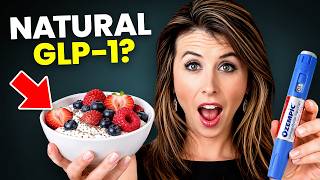
In this 20‑minute YouTube presentation Dr. Ashley Lucas, a PhD‑trained nutritionist and founder of PhD Weight Loss, explains why GLP‑1‑based drugs such as Ozempic and Wegovy often lead to rapid weight loss followed by regain once the medication is stopped. She argues that the underlying problem is insufficient natural GLP‑1 production, which can be restored without injections by optimizing diet, gut health, and lifestyle. Lucas outlines ten evidence‑based, non‑pharmaceutical strategies to boost the body’s own GLP‑1: (1) high‑quality animal protein, (2) prebiotic fiber, (3) fermented foods (and a proprietary probiotic supplement containing Akkermansia, eriomin, grape‑seed extract and resveratrol), (4) healthy fats and proper cooking oils, (5) resistant starch (including cooled potatoes), (6) apple cider vinegar, (7) omega‑3 fatty acids, (8) bitter foods and herbs, (9) polyphenol‑rich foods and drinks (green tea, extra‑virgin olive oil), and (10) adequate sleep and stress management. Throughout she emphasizes that the body is not “broken” but protecting itself, and that restoring GLP‑1 makes weight loss sustainable. The talk also promotes her PhD Weight Loss program, an electrolyte supplement, and the proprietary GLP‑1‑support supplement, providing discount codes and links.
Chapters
Ozempic works. Wegovy works. For a lot of people, the weight comes off sometimes really fast, and then they stop and the weight comes back. Guys, one study after another, research after research shows that when people stop the drugs, the weight comes back on average within 1.7 years of stopping the medication. Because here's what those medications actually do. They suppress appetite. They override your hunger signals. What they don't do, what they were never designed to do, is fix the reason your metabolism stopped working in the first place. This is why you gain all the weight back when you stop the medication. You know, your body already produces GLP-1. It's a hormone your gut makes naturally. Its job is to tell your brain you're full. To stabilize your blood sugar and to signal your body that it's safe to burn fat instead of store more of it. Most of the people I work with aren't making enough of GLP-1, not because their bodies are broken, but because the conditions for making it have been disrupted for a really long time, like 4 years. When you fix those conditions, you do not need an injection. I'm Dr. Ashley Lucas. I'm a PhD-trained nutritionist and a registered dietitian. I'm the founder of PhD Weight Loss, where we've helped over 12,800 people drop more than 480,000 pounds nationwide. Someone just told me that is the weight of the Statue of Liberty. We've helped people drop the Statue of Liberty worth of weight without drugs, without surgery, and without fighting their bodies. So today I'm going to walk you through the 10 most powerful ways to restore your body's own GLP-1 production naturally. I'm a huge fan of the natural way because your body was built for this. You have been given the power to do this. Your body just needs the right signals. If any of this sounds familiar to you, if you've been eating right and you just cannot see movement on the scale, I want you to know that's exactly who we built PhD Weight Loss for. You can learn more about working with us directly at myphdweightloss.com. The link is in the description. Now, before we get into the list, I want to talk about why this matters so much, especially if you have been dieting for years. When most people struggle to lose weight, they blame willpower, they blame discipline, They really blame themselves and they say they know what to do. They just need to eat everything in moderation. Oh my gosh, I really dislike the phrase eating everything in moderation. Here's what I want you to understand. Your body is not broken. It's not lazy. You're not lazy. It's not working against you, even though it feels like that. Your body is doing exactly what it was designed to do. It's protecting you. And one of the most powerful protection systems it has is GLP-1. If weight loss has left you with headaches, fatigue, dizziness, or muscle cramps, this might surprise you. I'm Dr. Ashley Lucas, and one of the most common issues I see during weight loss is underhydration at the cellular level. When carbs drop, your body loses electrolytes, and water alone doesn't fix that. That's why I created Electrolyte Plus to support hydration, energy, your adrenal function, and blood sugar stability during weight loss and maintenance. This is hydration designed for real life, not just workouts. Visit DrAshleyLucas.com, use code YouTube10 for 10% off your first purchase or 20% off your first subscription order with free shipping. Plus, enjoy a 30-day money-back guarantee. Back to the show. A little bit about this hormone. GLP-1 stands for glucagon-like peptide 1. It's a hormone that your gut naturally produces when you eat. Its job— I want you to think of its job, um, is to tell your brain that you're full. It says, okay brain, we're full, stop eating, it's safe to burn fat now. GLP-1 also slows your digestion, so I want you to think of it as helping to stabilize your blood sugar. It also, when it does that, it's going to curb cravings and it helps your body decide if it's going to store energy or if it's going to burn energy. The GLP medications that you've been hearing about— Ozempic, Wegovy, retatrutide, tirzepatide— they simply work to mimic this hormone. They send the signal artificially. Uh, but here's the thing to recognize, is that your body knows how to make this hormone. You just need to know how to turn it on. And when you do it naturally, what you can do through, uh, what you eat and how you live your life— so your habits and behaviors, your body's other systems stay intact, right? Your digestion stays healthy, your muscle mass is protected, your metabolism keeps working with you, not against you, which these things can kind of go awry when you're just depending on the outside exogenous injections. All right, so, so let's get into it. Let's talk about the 10 best natural ways to boost your own GLP-1., and you can do it starting today. Number 1, high-quality protein. Protein is the single most powerful dietary trigger of GLP-1 secretion. When you eat protein, and when I'm talking about protein, I prefer, and so does the science when it's talking about this, high-quality animal protein, eggs, the whole egg by the way, chicken, fish, beef, Greek yogurt, cottage cheese if you like that. Your gut releases GLP-1 almost immediately. This is why I always tell PhD weight loss clients that protein is the foundation— every meal, every time. Now, the amount of protein to consume in a day depends upon your goals, your health history, your body size, your gender. But I'm just going to provide you some generalized ranges, and then if you are a PhD weight loss client, you will know exactly how much protein to eat and when to eat it based on what your coach tells you to do. So So here, for these generalized recommendations, I'd say aim for 35 to 55 grams of protein at your first and last meal of the day. Again, 55 grams would be like for a larger man. Now, your cravings— when you do this, your cravings are going to quiet down. Your fullness will last, like you're going to be full for a few hours, 3 hours, 3 to 4 hours. Your body will finally get the signal that it's been waiting for when you consume protein first. Number 2 can be helpful is prebiotic fiber, right? So now a note, a little disclaimer about fiber is that not all people tolerate fiber in the same way. I'm gonna come and talk about some suggestions, but if you tell me, okay, Dr. Ashley Lucas Lucas, when I eat broccoli, it does terrible things to my gut, then do not eat broccoli. I've shared this before. My husband is not allowed to eat broccoli in this house. It does not do good things, especially raw broccoli. By the way, if you are starting a quote unquote diet and you increase your raw broccoli or raw cauliflower and you're dealing with some gut issues, heartburn, it could be from that. I know most people don't think so because it's so quote unquote healthy, but if you're experiencing this, pull out the broccoli and the cauliflower for a minute, like 4 days, 7 days. Give your gut a chance to calm down. See what happens. Let me know in the comments below if this is for you. Okay, fiber. Fiber is one of GLP-1's best friends, specifically prebiotic fiber. This is found in foods like asparagus, leeks, onions, garlic, artichokes. These specific foods actually help to feed the beneficial bacteria in your gut. Also, um, green plantains, chia seeds, zen basil seeds. These are good. The bacteria that they feed in turn produce what's called short-chain fatty acids, and these guys directly stimulate GLP-1 release. If you are eating low fiber with highly processed foods— and I don't care if it's like healthy processed foods, like Kashi cereal is not healthy, you guys, it's a processed food— and anything, by the way, that has a heart-healthy stamp on it Don't want to eat it. It's not actually good for your heart, unfortunately. When you eat these foods, your GLP-1 levels are going to be very likely chronically low. So you can see how this isn't failure of your system, it's just your biology responding to what you're feeding it. Number 3, fermented foods. A healthy gut is essential for robust GLP-1 signaling. Fermented foods— kefir, kimchi, sauerkraut, plain Greek yogurt— directly supports the gut microbiome that drives the signaling. Now, I often suggest to add a small side of— you could do fermented salsa, pickles. I like Bubbies brand. You could add some Greek yogurt, some sauerkraut. Give me your thoughts in the comments below as to how you add fermented foods to your diet. And I know it sounds simple because it is simple, you guys, is what works long term. Now I am not a huge fan of taking a ton of supplements. I did recently create a specific supplement to support the body and its gut microbiome to encourage the natural release of GLP-1 as much as possible. So if you feel like supplementation is fine for your body, you tolerate supplements pretty well, and you think that your gut could be a component as to why you are struggling— and by the way, for 99.99% of people it is— then you should check out this supplement. I'll make sure to include a link in the description and give you a special discount code, probably Ashley10. Look for it in the description. This supplement is amazing. I included Akkermansia in it, which is a probiotic specifically found to support GLP-1 secretion. I added eriomin into it, which is a, a bioflavonoid that helps to increase GLP-1 secretions by upwards of 37%. And then I added grapeseed extract and resveratrol, which are two very potent antioxidants to support that gut lining and the acromancia, to building a healthy foundation, and very, very beneficial for longevity if that interests you. So check that out. Number 4, healthy fats. Fat slows glucose absorption. It keeps food in your gut longer, and that extended digestion is exactly what triggers sustained GLP-1 release throughout the day. You want food to stay in your gut longer. Good sources of healthy fats: avocado, extra virgin olive oil. Use extra virgin olive oil only for cold use. Do not cook with it. If you're cooking, cook with avocado oil or tallow. You know, I have a really great guide that tells you when to cook with what types of fat, you know, like what temperature to use, what types of fat. Because if you cook with the wrong fat, then it will oxidize, go rancid. You're not getting the benefits of it. For example, if you cook with olive oil, not going to do you good. But if you cook with avocado oil, it's going to be better. So if that interests you, I'll make sure to include that in the description for you as well. Now, you don't want to fear fats. Grass-fed butter, tallow, full-fat dairy. Your body needs dietary fat to burn fat. It's physiology, and we have not been given the right information when it comes to dietary fat. But I am so encouraged and so excited to see the new food pyramid where we talk and support healthy fats, animal proteins. So excited to see that. All right, number 5, resistant starch. There are specific foods that support the probiotics in your gut, the bacteria in your gut. I want you to think of resistant starch almost like a type of prebiotic fiber. So these are the chia seeds, the Zen Basil seeds, raw grated— they don't have to be grated carrots, but I like to do raw grated carrots in a salad, maybe raw grated beets in a salad, green plantains, and I'm not a huge fan of potatoes, but interestingly enough, little, like a little hack here. If you love potatoes, cook the potato, cool it overnight, and then eat it in the morning. You can reheat it and it will have more resistant starch in it than it contained when you had just heated and cooked it. So cook it, cool it, heat it back up, eat it. You'll have more resistant starch and it won't spike your blood sugar. As much. Really interesting, right? Number 6, apple cider vinegar. Apple cider vinegar slows gastric emptying, meaning that again, the food stays in your stomach longer. The theme here is that the foods that stay in your gut for a longer period of time are going to increase GLP-1 secretion. Same thing with apple cider vinegar. It also helps to improve insulin sensitivity, which keeps blood sugar more stable throughout the day. I have a video on like all things apple cider vinegar. So if this topic intrigues you, go into the description and click the link to watch that video. Now you can add a tablespoon of apple cider vinegar to your salad dressing. You could put a tablespoon of it in a glass of water before your meals. These are two, I think, of the most simplest swaps that you can make right now, right? Just add some ACV into your water or into a salad dressing. Number 7: omega-3 fatty acids. Omega-3 fatty acids, which you can find in wild-caught salmon, sardines, mackerel, in fish oil if you can't stand fish, but I'd prefer if you consume it through the whole food— they have been shown in research to enhance GLP-1 secretion and reduce systemic inflammation. Chronic inflammation suppresses GLP-1 activity. Omega-3s help to fight that. So what you want to do is aim for fatty fish at least 2 to 3 times per week. Get some mackerel, some canned mackerel, canned sardines. One thing that I just learned actually, so bear with me, we are all learning, that fish in the can, in the tin, is actually cooked in the tin. I did not know that. I thought we cooked the fish and then stuck it in the tin. Same with tuna. It's cooked in the tin. So if you don't get a tin that's like BPA-free, I don't know. I don't like the thought of it. So if you can, if you can, this is like top tier effort here. Find sardines or tuna in a glass container. Could uplevel your health, especially if you've ever done any kind of heavy metal testing. You got more metals in the body. It's just something to consider. Add fish in there though, 2 to 3 times a week. Your gut, your brain, your metabolism will all respond and will love you. They'll love you. 8, bitter foods, herbs. Bitter compounds found in dark leafy greens like arugula, dandelion greens. I'm gonna say dark chocolate, but you guys don't be like, hey, I'm gonna eat dark chocolate because Dr. Ashley said it's bitter. And then we go crazy with chocolate. I mean dark chocolate, like the really bitter stuff that you can barely handle, 85, 90% cacao. These compounds activate specific receptors in the gut lining that trigger GLP-1 release. This is one of the reasons why I am a huge fan of adding bitter greens to salads. I'll do dandelion root tea, right? Not just for the micronutrients, but for the metabolic activation that they create. Number 9: green tea and polyphenols. The EGCG in green tea and polyphenols found in blueberries, pomegranates, grapeseed extract, like that supplement I created, have been shown to enhance GLP-1 activity, support healthy metabolic function. I really like to get a high-quality first cold-pressed extra virgin olive oil. I'll give you a second to write this down. First cold-pressed extra virgin olive oil. I take like a tablespoon of that at night. It's filled with all of these polyphenols, so great for your body. These plant compounds work at a cellular level and they support the gut-brain communication that makes GLP-1 signaling so powerful. And it tastes so good. Last but not least, quality sleep and stress reduction. Remember at the beginning of this I told you how you eat and how you live your life really impacts GLP-1 secretion? And this one surprises a lot of people. When you are sleep deprived, or, and, or, usually they go together, Chronically stressed, cortisol rises. When you have elevated cortisol, it directly suppresses GLP-1 production and impairs the gut signaling, right? So your brain is not going to get the right signals from your gut. Now, no supplement or food can fully compensate for poor sleep. It's one of the most significant components associated with actually dropping weight in a pretty quick efficient way. You know, most of our clients at PhD Weight Loss, most of our women drop about 2 to 3 pounds of fat per week, and most men about 3, sometimes 4 pounds per week. And if they're not sleeping, if our clients are not sleeping or they're highly stressed, that rate of loss will slow. I ask every single client at PhD about their sleep because it's that important to metabolic health. Now here's what I want you to understand about all of this. Most people I meet have been dieting for years. They've tried cutting calories, they've tried more cardio, they've tried medication, and for a while, for some of them it worked, for some of them it never worked. And then at some point it all stopped working because the truth is that the goal isn't to override your body. When you want to lose weight, you can't work harder. You can't force it. The goal is to restore your body, to teach your body that it is safe. It's safe to let go of the stored fat. It's safe to regulate hunger. Finally, it's safe to trust the signals it's been sending you all along. I mean, how many of you do not trust the signals your body is giving you? I would love for you to drop in the comments below if you feel like you cannot trust your hunger or full signals. You're not alone, right? This is so common. Now, this is what GLP-1 does when it's working properly, when you can restore it naturally. And that's what we focus on at PhD Weight Loss every single day, right? We don't push harder, we don't restrict more. We have to repair the metabolism so fat loss becomes this, this natural outcome of a body that finally feels safe. So here's what I want you to take away with you today: your body is not broken. You're not lazy. Your body is not failing you. It's protecting you. The moment you start working with it, when you feed it the right protein, fiber, healthy fats, and gut-supporting foods, it will respond. You know, I was, I was talking to my daughter Yesterday, and she's only 7, and she's, she's a very tall girl for 7 years old. She's like, I'm the biggest one in my ballet class, and I don't like it, and I don't like the way that my body looks. And I was like, oh my gosh, at 7 already? And I was like, don't you dare talk to your body like that. Like, if you had a best friend and you talked to your best friend like how you talk to your body, like how you talk to yourself, if you talk to someone else like that, would they be your friend anymore? Would they work for you? Would they do whatever they could to benefit you? Probably not. And I don't think we realize how important our own words are because your body will start working for you and be your biggest ally when it feels safe enough to do so. So you've gotta feed it right and you've gotta treat it right and you've gotta do something for it that benefits it. That's how you bring about self-love, right? Is by doing something for your body that benefits it. You don't need a prescription to experience this. You just need the right information. First of all, you need the right structure, and you need someone in your corner who understands your body on a deeper level to help you start to understand it. Start with one or two of those things today from this list. Let your body adjust. Give it some love, be patient, and pay attention, because when you give your gut what it needs, the food noise slows naturally. The cravings actually start to calm down, and that steady, sustainable weight loss you've been waiting for starts to feel possible again. If you're ready to stop battling your body, if you have interest in starting to repair it, We'd love to support you inside PhD Weight Loss. You can head over to myphdweightloss.com or go on over into the description, click the link to learn more about how we can create a personalized plan just for you. If you are listening to this on a podcast platform, please leave a review. It helps us reach more people and give them hopefully helpful information along their own transformational journey. If you're watching this on YouTube, please subscribe so you don't miss what's coming next. And I'll link a video right here, uh, on the topic of morning habits that set your blood sugar up for success all day long. It pairs perfectly with everything we covered today. Remember, you guys, you have to step up to make the change. Lead with your heart, train your mind, and do not negotiate with your body. I'll see you next time.
More from Dr.





If I Was Over 50 & 30 Pounds Overweight, This Is Exactly What I'd Do to Burn Belly Fat


