Beginner vs Pro: How to Eat Protein for Weight Loss
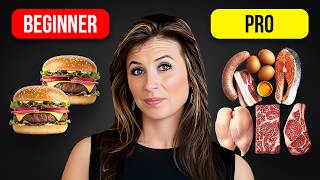
Dr. Ashley Lucas contrasts beginner and pro approaches to protein and weight loss, highlighting five common mistakes like timing protein poorly and skipping afternoon snacks. She outlines a 30-day protocol with specific protein targets per meal and strength training over cardio, supported by a client success story.
Chapters
There's a huge difference between how beginners eat protein for weight loss versus how the pros do it. I'm not talking about fitness bros or bodybuilders. I'm talking about people who've successfully lost weight and kept it off for years. You know, most people think they're eating enough protein, but the way they're doing it is actually sabotaging their metabolism. Today, I'm going to show you exactly what beginners get wrong, what pros do differently, and how to make the shift. Starting right now. Now, if you've been trying to lose weight by eating less, by moving more, and you're still struggling with hunger and cravings and stubborn belly fat that just will not budge no matter what you do, I want you to know that you are not alone. Here's what's happening. You've been taught to think like a beginner. And I do not mean this in a negative way. I just mean that the information you've been given from diet culture, from your doctor, from the fitness industry has been beginner level advice that doesn't actually work long term. At least the result is you lose some weight, you feel miserable the entire time, and then you gain it back. The moment you stop now, you're not broken. You've just been using beginner strategies when you need pro level knowledge. The truth is that your body isn't resisting weight loss. It's responding exactly as it was designed to. You know, I believe that the body never makes a mistake. Now, when you eat like a beginner, when you cut calories, when you avoid quote, unquote heavy foods, when you rely on salads and rabbit food and smoothies, your body goes into a conservation mode. It slows your metabolism, it holds onto fat, it breaks down muscle for energy. This is exactly what I was doing when I was a professional ballet dancer. I was not eating very much. I was moving all the time. I was eating vegg, vegetarian salads, low fat, and my body just held on to the fat rather than releasing it. Now, when you eat like a pro, when you prioritize protein, when you time your meals strategically, and when you work with your biology, your body starts to feel safe. And when it feels safe, it lets go of the unwanted fat weight. By the way, My name is Dr. Ashley Lucas. I'm a PhD nutritionist, a registered dietitian, and the founder of PhD Weight Loss and Nutrition. To date, we've helped over 11, 600 people. People collectively drop more than 480,000 pounds by teaching them how to eat like pros. And not like beginners. So today I'm going to show you exactly what I mean by that. So beginner Mistake number one. They focus on calories, not quality. They'll eat 300 calories, say, coming from bananas, and think that it's the same as 300 calories coming from lean chicken breasts. They focus on eating less instead of eating better. Whereas pros understand that not all calories are equal. 300 calories from a banana is totally different than 300 calories from chicken breast. The banana calories spikes your blood sugar, triggers insulin and leaves you hungry. About an hour later, 300 calories from a chicken breast stabilizes your blood sugar, keeps you full for hours, and protects your muscle mass. So they're 300 calories, but not the same. The hormonal response is completely different. Pros prioritize nutrient density over calorie counting. They know that when you eat the right foods, your body naturally regulates how much you eat. So they understand that 300 calories are not equal. It depends where you source those calories from. At PhD weight loss, I have no idea how many calories my clients consume and I really don't care. I never count them. Because when my clients at PhD weight loss eat high quality protein, nutrient dense foods, whole, whole foods, their appetite naturally normalizes. I mean, it's unbelievable. They'll come in with food noise and such strong cravings and within two, three weeks, gone, completely gone naturally, no medications. Now if you are listening to this and you're realizing, oh my gosh, I've been eating like a beginner this whole time, do not worry, you are in the right place. This is exactly why I created PhD weight loss. I created this company and the dietary protocol, the behavioral protocol to help people shift from beginner thinking to pro level nutrition without the confusion, without the overwhelm. So check out this video right here to see how we create this custom weight loss game plan just for you and your body. Beginner mistake number two, they eat protein whenever, without strategy. What beginners do is that they'll have a piece of toast for breakfast, salad with a little chicken for lunch, and then eat a big dinner that actually has protein in it. They think that as long as they hit their protein goal or close to it by the end of the day, it doesn't matter when they eat it. It pros know that timing matters just as much as quantity. They eat 30 to 45 grams of protein with their first meal. Whether that's 8am or whether that's noon doesn't really matter. But the first meal has a good bolus of protein. This sets the tone for the entire day for their metabolism. It stabilizes blood sugar, reduces cravings and tells your body that you've been fed and you can actually burn fat. Now the pros, they also eat about 30 to 45 grams of protein with their last meal to support muscle synthesis overnight. And here's the main pro move. They eat protein first on the plate. Research shows that eating protein before carbs further stabilizes blood sugar throughout the meal. Beginner mistake number three, they skip the mid afternoon snack. They try to save calories by skipping snacks. They'll eat breakfast, maybe then potentially a lunch. If they've skipped breakfast, then usually they'll eat lunch and then nothing until dinner, thinking that they're saving calories by skipping the mid afternoon snack. Now the the problem is by the time they sit down for dinner, they're ravenous, they overeat and their body can't process all that food at once. So a lot of it gets stored as fat. Now what the pros do is the pros eat a protein based snack between 3 to 4pm this could be some hard boiled eggs with salt beef jerky, leftover chicken with some avocado, a whey protein smoothie, some plain full fat or low fat Greek yogurt with a sprinkling of berries. Now this snack is important for most people because it helps to keep your blood sugar stable, it prevents that evening binge, and it ensures that your body can actually use the protein you eat at dinner instead of just storing excess as additional fat. Now I had a client, Christine, who came to PhD weight loss after trying a lot of different diets. She did Weight Watchers, Atkins, Ozempic, and with all of them equally, she'd lose 25 pounds, then gain it back. When we added the mid afternoon protein snack and made sure that she was eating throughout the day and getting adequate protein in there and eating protein first, everything changed. No more evening binges, no more food noise. She's now down 45 pounds and she says it's the first time in her life that she's not hungry while losing weight. That's the difference between a beginner and a pro. It doesn't matter what method you're using, you need to make sure that you think about the protein balance throughout the day. Beginner mistake number four is that they choose lean protein only. They think that fat is the enemy, so they eat only chicken breast or egg whites or fat free yogurt. They avoid the delicious and my favorite, ribeye or salmon or full fat dairy. Anything that seems too rich. They avoid. What the pros do. The pros know that dietary fat does not make you fat. In fact, you need dietary fat to burn fat. Healthy fats help you slow digestion, keeping you full longer, helping your body absorb vitamins. Specifically vitamin A, D, E and K support hormone production, including the hormones that regulate your hunger and your metabolism. So the pros eat rib eye steak with the marbling, if you like that. Salmon with the skin, full fat, Greek yogurt, not non fat, fat free. They eat eggs with the yolk. Salad dressings made with olive oil. Not light dressings, nothing fat free, nothing diet. When you combine protein and healthy fats, it is just the perfect combination for your body to get the ultimate satiety sign. By satiety, I mean you have this full signal. Your body feels nourished, not deprived. Beginner mistake number five. They rely on cardio instead of strength. They think that weight loss happens on the treadmill or on the elliptical machine. They'll do 60 to 90 minutes of cardio every day, hoping to burn off the weight and looking at their calorie tracker. What the pros do. The pros prioritize strength training over excessive cardio. Why? Well, because muscle is metabolically active. The more muscle that you have, the more calories you burn at rest, which means you can eat more throughout the day. And who doesn't want that? When beginners do excessive cardio without adequate protein, they lose muscle and fat. And when they stop exercising, their metabolism is slower than it was before. Instead, what the pros do is they walk 30 minutes every day for metabolic health, not for calorie burn. I tell our clients at PhD weight loss a 30 minute brisk walk every single day. Non negotiable for the metabolic support, not for burning calories. The pros lift weights two to four times per week. They focus on progressive overload to build and maintain muscle. You know, at PhD weight loss, most of our clients do really walk 30 minutes a day. And that's it. They don't do any kind of other training besides maybe some resistance training. And they still lose weight consistently because they're eating like pros. Now, I'd love to give you the exact protocol so you can start making this shift today. And I'm going to call it here the pro protocol. So here's your 30 day action plan to eat protein like a pro. Step one, start every day with about 30 to 45 grams of protein. So this could be two to three eggs with veggies and avocado, full fat. Or if you don't like full fat, I'll give you low fat. But just promise me not fat free, not non fat. So full fat or maybe low fat Greek yogurt, plain with berries and maybe a sprinkling of nuts or seeds if you like that breakfast scramble with sausage or bacon. Make this non negotiable. This one thing will change your entire day, I promise you. Step number two, Eat protein at every meal. Lunch. Have chicken, beef or fish over veggies with a full fat dressing. A snack could be something that's protein based. I talked about it earlier and the timing for most people for snack is around 3 to 4pm Dinner. Another 30 to 45 grams of protein depending on your goals and your body size and your gender. That will help to dictate exactly where your protein consumption should be. Which with each meal and snack, by the way, but in general about 30 to 45 grams of protein with veggies and healthy fats. Step three, stop counting calories right now. No more calorie counting. Instead focus on food quality, high quality animal protein, non starchy veggies for your fiber and micronutrients. Healthy fats like avocado, olive oil, butter, lower glycemic carbs if you want them. Like sweet potato, butternut squash, maybe some rice if you really need some carbs in there. When you eat this way, your body tells you when to stop. And you don't need an app, you don't need a tracker. You can start to come back to your body and your body signals and trust what they're telling you to do. If they're telling you to eat, if they're telling you to, these signals will become much more clear naturally when you eat this way. Step number four, Add strength training. Even if it's just your body weight, you don't have to go to the gym and lift heavy weights. You don't need a gym. Just do some squats, some pushups, some lunges, some planks. Something that moves your whole body about two to three times per week. That's enough really, to preserve and build muscle while you drop the unwanted fat weight. And step number five, track how you feel. It's not just about the scale now. After 30, 30 days, ask yourself, is my hunger gone? Do I have steadier energy? Am I sleeping better? Do I feel stronger in my body? If you answer yes to any of these questions, this is how you know that you have started eating like a pro. All right, here's the thing. Even when you are Eating enough protein if you've been dieting for years, your body may need some extra support to help you stabilize blood sugar, to help reduce cravings, to preserve muscle during fat loss. And that's why I created Glucocut Plus. Glucocut plus is specifically formulated to support your body's natural GLP1 production, the I'm full hormone, healthy blood sugar metabolism so that your body burns fat instead of storing it. And I think most importantly helps to preserve your muscle mass even when you're in this calorie deficit and dropping this fat weight. It also helps with appetite regulation so you're not constantly thinking about food. Now this isn't a magic pill. This is a pro level tool that works with the protein forward approach that I just shared with you. So I want you to think of it this way. Beginners rely on willpower alone. Willpower does not work. Motivation does not work long term. Pros use strategy, they use discipline. Plus they have the right tools that work for their specific body. Now if you are ready to upgrade from beginner to pro, you could consider checking out Glucocut plus, seeing if it works for your body. It does for a lot of people. Just check us out@drashley wellness.com you could head into the description and click the link and use code ASHLEY10 for 10% off your first order. Listen, you've been doing the best with the information you had, but if that information was beginner level, we're always going to struggle and you continue to struggle. The good news is that you do not need to work harder, you just need to work smarter. Eating like a pro isn't about perfection. It's about understanding how your body actually works and giving it what it needs to feel safe and satisfied and strong. Once you do this, your body will start talking to you and you can trust what it's telling you. My challenge for you is to pick one, just one pro habit from today's video and implement it for the next 30 days. Maybe it's starting your day with 30 to 40 grams of protein. Maybe it's adding that mid afternoon snack into your routine. Maybe it's lifting weights, doing some kind of body weight movement twice a week. I'm talking about just one shift, not doing it all. When you do it all it becomes overwhelming and you're going to give up and give in and not make change. Just one shift and watch how your body responds. And I would love for you to drop in the comments what the one shift is that you're going to implement. And if over time you notice a change, drop it in the comments as well. I'd love to read that now. If you have found this helpful, and I hope that you have, make sure to subscribe so you don't miss the next video. And if you're ready to stop struggling like a beginner and start eating like a pro, just click the link in the description to learn more about PhD weight loss. Remember, you've got to step up to make the change. Lead with your heart, train your mind, and do not negotiate with your body. I'll see you next time.
More from Dr.





If I Was Over 50 & 30 Pounds Overweight, This Is Exactly What I'd Do to Burn Belly Fat


