Every Popular Weight Loss Method…Honestly Ranked
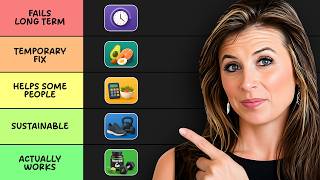
Dr. Ashley Lucas, a registered dietitian, breaks down five popular weight-loss methods: low-carb, calorie counting, exercise, intermittent fasting, and bariatric surgery. She explains why each works initially and why people usually regain the weight, pointing to issues like unsustainable restriction and ignoring stress and sleep. Lasting results require personalized nutrition that addresses protein, gut health, and mindset, not just calories.
Chapters
Here's something I think about a lot. By the time most people find me, they have already tried at least 3 to 4 of the things I'm about to talk about today. They've tried cutting carbs, counting calories, intermittent fasting, probably some version of exercise they eventually gave up on. And they don't come to me because nothing worked, you guys. They come because something worked until it didn't. And nobody ever explained why it stopped. That's what today is about. I want to give you the clearest, most honest clinical breakdown of every major weight loss method that people try, what it actually does inside your body, why it sometimes works, why it eventually fails, and where it fits in the bigger picture. Now, I don't want to talk about the version shaped by whoever's trending on Instagram. The version I'd like to give you today, if you were sitting across from me in my office. Now, I'm Dr. Ashley Lucas. I'm a PhD-trained nutritionist. I'm a registered dietitian, and I'm the founder of PhD Weight Loss, where we've helped over 12,800 people collectively drop more than 480,000 pounds nationwide. I built PhD because I kept seeing the same thing over and over. Intelligent, disciplined people following conventional advice and still not getting results. Not because they were doing it wrong, because the advice itself was incomplete. So today I want to help you fix that. Here's my honest verdict on every method, starting with the one almost everyone tries first. At least I did.
Here's something most people don't hear. Your body is not broken. I'm Dr. Ashley Lucas, PhD and registered dietitian, and after helping thousands lose weight, I realized something important. When people diet without proper support, the body pays the price—metabolism, hormones, energy, and even muscle mass. At Dr. Ashley Wellness, everything we create is designed to work with your body, not fight it. Clinically studied ingredients, high absorption rates, no fluff, because we Weight loss should feel empowering, not depleting. Visit drashleylucas.com, use code YOUTUBE10 for 10% off your first purchase or 20% off your first subscription order with free shipping. Plus, enjoy a 30-day money-back guarantee. Back to the show. Method 1: Cutting carbs.
Cutting carbs is usually the first thing people try, and I understand why. It's what I did. You cut carbs and the scale drops fast, and it feels like it's finally working. I mean, you feel that immediate sense of inspiration and motivation because the scale finally drops. Now, here's what's actually happening. Your muscles store carbs as glycogen, and every gram of glycogen holds about 3 to 4 grams of water alongside it. When you abruptly stop eating carbs, your body burns through those glycogen stores and all that water leaves with them. A 10-pound drop in the first week, most of that is going to be water and inflammation with it, which is a great thing. Maybe 1 pound of it is body fat, and that's okay. That doesn't mean lower-carb eating is without merit. It absolutely has a place. At PhD, we use reduced carbohydrate approaches because they are the most profound way to help you stabilize blood sugar and insulin, which directly supports fat loss. For people dealing with type 2 diabetes, with insulin resistance, with prediabetes, with PCOS, and any other kind of significant metabolic disruption, this can be a huge, powerful tool. But the version that the internet sells, that the Instagram influencers sell, where carbs are the enemy and you eliminate them forever, is unsustainable and unnecessary for most people. Now, Some people, and probably some of you guys who are listening or watching this, are carnivore, where you just eat meat. That is fine. And actually, I think if you are dealing with an autoimmune condition or something that you just feel like you can't get a handle on, maybe you've got food insensitivities, food intolerances, then a carnivore diet or a really low-carb diet can be a really great way to pursue an elimination diet. Elimination diet is where you remove a lot of different foods from the diet and eat very simply. Specifically, if you follow a carnivore diet, just meat. I think it's a really great way to reset the body, and for a lot of people, doing this for 3 to 4 months can be a really powerful tool. But again, for most people, for the long term, it's just not sustainable. And in order to maintain optimal health, we need to have something that's sustainable because like I usually say, consistency is the key. Now when you're reducing carbohydrates in general, the goal is to understand which carbs serve your body more than others and again which ones are working against your body. There is a huge difference between a piece of a sweet potato or some berries and a cup of roasted broccoli versus some regular bread, even say gluten-free bread or some cereal or a muffin. Right? Treating them as the same thing is where a lot of people go wrong. All right. Method 2: Calorie counting. Calorie counting is another one that I participated in a lot, especially when I was a professional ballet dancer. I was an expert at cutting calories. Calorie counting is what the medical establishment just loves the most. Eat less, burn more. Simple math. I mean, please, if you are watching this on YouTube, I would love for you to drop a comment below if you have counted calories before. Right now, when we talk about calories, I'm not saying that we defy the laws of thermodynamics. They definitely apply to the human body. Of course, overall energy balance plays a role, but here is my honest clinical take: calorie counting alone is one of the least effective long-term strategies for you that I've ever seen. And the reason why is because it treats all calories as equal. You guys, calories are not equal. 1,000 calories— now I'm exaggerating here to prove a point, but 1,000 calories from eggs and 1,000 calories from bananas will produce completely different responses in in your body. The eggs will help to stabilize your blood sugar. It'll help preserve your muscle, and it won't impact insulin. We don't want to have chronically elevated levels of insulin, so eggs are beautiful when it comes to this. Now, the banana instead— 1,000 calories of banana is going to spike your glucose. Even 100 calories of banana is going to do that. It's going to drive an insulin surge, it's going to trigger a compensatory crash, and it's going to leave you hungry again in an hour. Same number, completely different metabolic outcome. Beyond that, calorie counting does not address your hunger hormones. It doesn't account for metabolic adaptation, which is the way that your body downregulates its calorie burn in response to restriction. So for example, when you eat less calories for a longer period of time, your metabolism is going to slow. All of my research, uh, during my PhD looked at energy metabolism, and I found that even athletes who were spending a ton of calories every day, their metabolism downregulated like this. It basically shut down because it was in survival mode, right? It's like, oh my gosh, I'm not getting that many calories in a day. I'm gonna have to slow the speed of my metabolic rate. I'm going to have to not have a menstrual cycle for women. I'm going to not be able to build healthy bone. So this is a big deal, and for a lot of people it creates this anxious and obsessive relationship with food that causes real harm over time. You know, in over a decade of practice, I have never counted the calories of a single PhD weight loss client. I mean, I have no idea how many calories they're consuming and either do they. And you guys, it is liberating. Instead, we focus on food quality, what time you eat throughout the day, and the types of food that you're consuming throughout the day. When you get those 3 things right, the calories just take care of themselves. If you've been stuck in the calorie counting cycle and you just keep hitting the same wall, that's the pattern we untangle at PhD. We build a customized plan based on your body, your history, your metabolism, not a generic number. So if something like this would interest you, visit myphdweightloss.com if you're listening to this on a podcast platform, or head on over into the description and click the link for my PhD weight loss to learn more. All right, method 3, exercise. Now I want to be very careful here because exercise is one of the most misunderstood topics in the weight loss conversation. Exercise is not a primary weight loss tool. I'm going to say that again because I know it's going to be really hard to land for some of you. Exercise is more of a wellness tool. It's important. I'm not saying that we be sedentary at all, but it's not a huge weight loss tool. 85 to 95% of fat loss comes from what you eat, not from how much you move. If you have been grinding at the gym and maybe you're wondering why this scale just does not respond in the way that you want it to, this could be the exact reason why, and I see it with clients at PhD Weight Loss all the time. Now, here's what excessive exercise actually does to a body that's already under stress. It raises cortisol, and when cortisol is chronically elevated, your body is going to hold on to fat, especially in your belly area. If you have high stress levels and you are working out hard, and you still have belly fat, this is probably what's happening to you, right? Your body cortisol increases and you're going to have higher risk of storing the fat in the belly because this acts as a protective reserve. I've worked with clients training for marathons who gain weight during their training cycle and not just muscle weight, by the way, it truly fat weight. I've had that for myself. I was training for this 50-mile really intense, uh, bike ride called the Iron Horse in Durango, Colorado. You guys, I was training so hard, eating a very similar amount to what I was doing when I wasn't riding and training like this, and I gained about 10 pounds of excess fat weight. I have had clients exercising 2 hours a day that have completely plateaued. Your body, like I said earlier, interprets excessive exercise as a threat, and when your body senses a threat, it just holds on. So then what actually works? Well, a brisk 30-minute walk every single day. That's what I recommend to every PhD weight loss client. Walking improves insulin sensitivity, it helps to lower cortisol. Plus, most of the time you're going to be outside, and when we're out in nature, it increases our feel-good neurotransmitters like dopamine and serotonin. It increases fat oxidation without triggering the stress response that hard cardio creates. You pair that with 2 to 3, you guys, 2 to 3 days of real strength training. Now, strength training doesn't have to be intimidating. You don't have to go to the gym and lift heavy weights, but you do have to do something that's heavy enough to challenge your muscles. You need to overload your muscles, especially if you are over the age of 40. And that way you're going to support the body and build this optimal metabolic environment for fat loss. So you guys, exercise I want you to view more as a wellness tool. It strengthens your heart, it improves your mood, it supports sleep, and it builds the muscle that really helps to keep your metabolism running well as you age. That's why I said if you're over the age of 40, really focus on getting out there and walking— not 5 days a week, 7 days a week— and lifting something heavy. These are the reasons why you want to move your body, right? Primary fat loss is just not the mechanism, but all of these other areas are helpful. So get off the elliptical machine. Don't just focus on burning calories and looking at the Fitbit to see how many calories you've burned. It's much more important to focus on getting your body out there to reduce stress, reduce cortisol, get your lymph moving. The only way we can move our lymph is through exercise, and then help to support your muscle mass. All right, method number 4 is intermittent fasting. I'm always asked about intermittent fasting. It has become really popular, and I can see the appeal is real. Intermittent fasting is a tool that we have in our toolbox at PhD Weight Loss. I think the appeal around intermittent fasting is that you don't have to track anything, you don't have to weigh your food, you're really just watching the clock. I think for a lot of people who are really strong into kind of the black or white mindset benefit from intermittent fasting because there's a period of time where you just do not eat, right? You don't have to worry about what you're eating, how much, you're just not eating. And for some people, that simplicity is exactly what they need. Now here's what happens with the physiology. When you eat, especially carbs, insulin rises. When insulin is high, fat burning is essentially switched off. Your body can't burn fat effectively efficiently when insulin is elevated. When you fast and insulin drops, your body can finally access stored fat for fuel. That mechanism is real and it matters. There are also other legitimate effects. Growth hormone tends to increase during fasting, which supports muscle preservation. Super important. We just talked about the impact of muscle. There's a cellular cleanup process called autophagy, and that activates Some people experience real mental clarity in a fasted state, specifically men. So then, if there are all of these benefits, why isn't fasting my universal recommendation? Few reasons. First, it doesn't work well for people who are already under metabolic stress, which describes a lot of the people I see. Skipping meals when your cortisol is already elevated can make things worse, not better. For me, my lifestyle is a little bit stressful. I'm a wife, I'm a mother of 3 kids, I own multiple companies, I am leading, you know, 60+ people. There's a lot going on. And when I fast, I can see that my metabolism slows. I start to pack on fat in the belly, I get sick more often. So if you've got a lot of stress, fasting might not be for you. It doesn't mean that it can never be, but in this moment, in your situation, your current life stage, intermittent fasting probably not the best tool. Second, many people who do strict fasting end up ravenous by dinner and significantly overeat in their eating window, which cancels out the benefit entirely. If you find yourself overcompensating, binging later in the day, fasting's not for you at this moment in time. Third, and this one I want you to hear most clearly, The time that you fast does not override what you eat when you are not fasting. What I mean by this is that food quality still has to be there. You don't want to just fast and then go to McDonald's and eat whatever you want, right? Fasting around a poor diet like that is still a poor diet. Fourth thing that happens with fasting a lot is that most people can't hit their protein targets. Eating protein, getting adequate protein in there is key, especially when you're dropping weight to help you maintain your muscle. You want to make sure When you are dropping fat, you're dropping the majority of fat and as little of muscle as possible. So my verdict around intermittent fasting is that it's a real physiological tool. It's useful for the right person in the right moment, but it is not a shortcut around food quality. Method number 5 is weight loss surgery. Now, I want to approach surgery with the nuance it deserves because this is a topic that affects real people making really big, serious decisions. Weight loss surgery, whether it's going to be gastric bypass or a sleeve gastrectomy, can be life-changing for people who qualify. These procedures work through a combination of restriction and hormonal changes. A sleeve gastrectomy removes a portion of the stomach that produces ghrelin. Ghrelin is your primary hunger hormone, so you're not just eating less, but research has shown that you also produce significantly less of the signal that drives you to eat. So for some people, it is a helpful intervention. Now, I know that I'm a little bit biased because I have seen people who are wavering between working with us at PhD Weight Loss and weight loss surgery, and they go through the program and have amazing success. I also see a lot of people who come to PhD Weight Loss who have had surgery, who have gained all the weight back. You guys, there are serious risk complications associated with surgery that I have seen over and over again. But for some people, again, it has been a helpful tool. Now, here is what I want you to understand and what I say to every single person who comes to me, either considering surgery or post-surgery, is that The procedure changes the stomach. It does not change the metabolism. It does not change the psychology. It does not resolve the underlying hormonal or the emotional patterns that contributed to the weight gain in the first place. And you guys know in your heart of hearts that if those things are not addressed, the weight comes back. It is just a matter of time. I have worked with clients who regained significant weight after gastric bypass, not because the surgery failed, But because the root causes that we talk a lot about here were just never touched. You guys, like I said, surgery is a major serious tool. I understand for the right candidate in the right clinical context, it can be a helpful intervention. I find that it's not necessary the majority of the time. It's also not a finish line. It is just an entry point into the metabolic and behavioral work that has to happen regardless. So then let's talk about for a minute what actually works. I want to share with you what 15 years of education and a decade of clinical practice has taught me. There's no single method that works for everyone. There are principles that work for almost everybody, and they all point in the same direction: getting adequate protein at every meal, lower glycemic carbs from whole food sources, healthy fats that support satiety, which is fullness and good hormonal health, a gut microbiome that's healthy enough to regulate hunger and metabolism properly, blood sugar stability throughout the day— super important, helps to increase your own GLP-1 secretions naturally— cortisol managed through sleep, stress practices, and appropriately dosed movement that we've talked about, And you guys, 80% of any change comes from the mind. There is no way out but through. You have to do the work and figure out why you've struggled with weight gain in the first place, what your sabotaging thoughts and triggers are, what your relationship is with food, right? This is the biggest component, and I think why, from my clinical experience, why Most people will go through so many different programs, even surgery, and gain the weight back because they haven't focused on the mental, emotional, habit, behavior, and the reason why they're struggling with weight in the first place. Okay, so you need to make sure you focus on yourself as a whole body. Now, a plan that's customized to you with your history, your biology, your life is very helpful, but no matter what you do, you have to do the work. Every method we talked about today works to the degree that it moves these levers in the right direction. Every method fails when it treats your body as a simple math equation rather than this adaptive, intelligent system that it really is. I want you to understand, and I hope that this is a takeaway from our time together, your body is not the enemy. It has never been the enemy. Your body never makes a mistake. Actually, it has simply been responding to the signals it has been given. When you change the signals, the body, your body, is going to change with them. Now, I hope that this gave you real clarity today. I'm not wanting to give you more rules, not more noise. My goal is to give you a clear picture of what your body is actually doing and why, so you can make smarter decisions moving forward. If you have tried all of these and you still have not found what works for you, You are not allowed to give up. That is not a sign that you're unfixable. It's a sign that you need a more personalized approach. Now, if you're listening to this on a podcast platform, please leave a review. It helps more people find this content when they're searching for answers. And if you are on YouTube, please subscribe so you don't miss what's coming and drop your thoughts, feedback in the comments below. Remember, you've got to step up to make the change. Lead with your heart, train your mind, and do not negotiate with your body. I'll see you next time.
More from Dr.





If I Was Over 50 & 30 Pounds Overweight, This Is Exactly What I'd Do to Burn Belly Fat


