How Menopause Wrecks Your Metabolism — And What You Can Actually Do About It
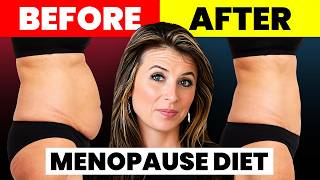
In this episode Dr. Ashley Lucas explains why women entering perimenopause and menopause experience sudden, puzzling changes in weight, energy, and cravings despite maintaining the same diet and exercise habits. She attributes these shifts to a decline in estrogen, which disrupts insulin sensitivity, redirects fat storage from hips and thighs to the belly, compromises gut barrier integrity, and deregulates cortisol. The episode debunks common weight‑loss tactics that become counter‑productive in this hormonal environment—especially aggressive calorie restriction, intermittent fasting, and high‑volume cardio—by showing how they exacerbate insulin resistance, cortisol spikes, and survival‑mode physiology. Dr. Lucas then outlines a three‑tool exercise framework tailored for the menopausal body: heavy resistance training to preserve muscle and insulin‑sensitive tissue, short high‑intensity sprint intervals to boost glucose uptake and reduce inflammation, and brief plyometric/jump work to stimulate bone density. She also stresses the importance of walking as a low‑stress starter, aligning workouts with the nervous system’s capacity, and avoiding “survival mode” stressors. Nutrition advice focuses on higher protein intake (≈0.8 g per pound of target body weight), timed protein distribution, and gut‑supportive foods (prebiotic fiber, resistant starch, probiotics). Dr. Lucas promotes two proprietary supplements—Electrolyte Plus for cellular hydration and GLP‑1 Gut Longevity Plus for microbiome health—within the broader strategy of restoring metabolic balance. Throughout, she frames the transition as a measurable, reversible set of rules rather than a personal failure, urging women to adopt the new metabolic playbook to protect muscle, gut, brain, and heart health.
Chapters
Something has shifted, and I don't mean a little. I mean the rules of your body have completely changed. You haven't changed what you eat. You haven't changed how hard you work. You're doing the same things you've always done, and your body is doing something completely different in return. The belly fat that wasn't there before, the energy that used to show up reliably, and now it's just gone, the cravings that feel sharper, more urgent, more confusing, the scale that used to respond to your effort and now seems indifferent to whatever you do. And to make it even worse, if you've tried to fight your way out of it the way you used to, like me, like eating less, working out harder, restricting more, and found that it didn't work, or worse, that it made things worse, I want you to understand why. Because what I'm going to tell you in this episode isn't what most doctors are telling their patients. It isn't what most fitness programs are built around, and it's almost certainly not what the weight loss industry wants you to believe. The truth is the metabolic rules have changed, and nobody gave you the manual until now. I'm Dr. Ashley Lucas. I hold a PhD in sports nutrition and chronic disease. I'm a registered dietitian. I'm the founder of PhD Weight Loss, where we've helped over 13,000 people collectively drop more than 480,000 pounds. A significant number of those people are women who came to us in exactly the situation you might be in right now, doing everything they thought was right and getting results that just made no sense. And what I've learned from over a decade of working with these women clinically is that what's happening in their bodies is not mysterious. It's not a failure for sure. It is a specific, measurable, and absolutely workable set of changes. Once you understand what's actually happening, the confusion lifts. And once the confusion lifts, you can actually move forward. Now, if you've been feeling like your body stopped responding and you do not know what to change, that's exactly the conversation we have at PhD Weight Loss. Just go to myphdweightloss.com or click the link in the description if you're watching this on YouTube. We work with women across the country, both in our locations and nationwide through telehealth. The consultation is absolutely free for you and the clarity is real. So go check us out, give us a call. Now, before we get into the science, I need to say something clearly because I see women carrying this weight in a way that just breaks my heart and I feel for you because I have been there. What is happening in your body right now is not a failure of discipline. It is not a character flaw. It is not you being lazy or weak or less committed than you used to be. It is a change in your hormonal environment. And when the hormonal environment changes, the same strategies you used before not only stop working, but they can actively make things worse. The women I work with who are in perimenopause and menopause are often the most disciplined. They've got everything else in their life figured out. They're like the most committed people in the room. They've been working hard their entire lives at everything, and including their body. However, suddenly their body just seems to be working against them. The really most important thing to understand is that it's not working against you.
If weight loss has left you with headaches, fatigue, dizziness, or muscle cramps, this might surprise you. I'm Dr. Ashley Lucas, and one of the most common issues I see during weight loss is underhydration at the cellular level. When carbs drop, your body loses electrolytes, and water alone doesn't fix that. That's why I created Electrolyte Plus to support hydration, energy, your adrenal function, and blood sugar stability during weight loss and maintenance. This is hydration designed for real life, not just workouts. Visit drashleywellness.com, use code YouTube10 for 10% off your first purchase or 20% off your first subscription order with free shipping. Plus enjoy a 30-day money-back guarantee. Back to the show.
It is adapting and it's very intelligent. It's adapting to this new biological reality and it's a reality we just don't—
do not like.
The question is whether you are going to keep fighting that adaptation with tools built for a different hormonal environment, or whether you're going to understand the new rules and work with your body instead of against it. This shift from fighting to working with is everything. It is the difference between spinning your wheels and actually getting to move forward. Most women don't know how much metabolic work estrogen was doing quietly in the background for most of their lives, right? Like you didn't know it was happening because it just worked the way that it was supposed to. Now that estrogen is declining, the efforts become really visible. So what I wanna do is I wanna walk you through what estrogen was actually doing, because this is the foundation of everything else I'm gonna tell you. Now, insulin sensitivity, let's talk about it for a minute. Estrogen, specifically estradiol, plays a direct and very significant role in how your cells respond to insulin. When estrogen is present in healthy amounts, your cells are insulin sensitive. Okay. So this means that when insulin signals a cell to accept glucose or sugar, same thing for energy, the cell responds, right? Your, your body listens. I want you to imagine your cell hanging out. The door opens when insulin is around. Insulin's kind of like a key traveling around the bloodstream when necessary, opens up the cell, the system works, the blood sugar flows in from the bloodstream into the cell. Now you have energy, the blood sugar in your bloodstream stays stable, fat burning stays accessible, the energy stays consistent. Like, it's just very lovely. It feels good. Now, as estrogen declines, that sensitivity declines with it. Cells become progressively more resistant to insulin signal. So now you've got the insulin, key traveling around, but the cell doesn't open up as easily. Glucose, the sugar in your bloodstream, has a harder time getting in where it needs to go. Your pancreas thinks, okay, what the heck is going on? And it starts to respond by producing more insulin to compensate, right? There's more keys of insulin traveling around the bloodstream. An elevated insulin level is a fat storage signal. It is the biological lock on your fat cells that prevents them from releasing the stored energy, that stored fat. This is why women who are eating well, doing all the right things, can still feel completely metabolically stuck, right? The hormonal shift created insulin resistance, and most of them were never told that that's the case. Now, here's something I want you to understand, because it's one of the most frustrating and I think least explained experiences of this transition. Here we are. The weight moved. Even if the number on the scale hasn't dramatically changed, the distribution of the weight has moved. It has changed. The hips and the thighs that used to carry extra weight now seem smaller. And you're thinking, wait, my pants are fitting differently. But the midsection, the belly area, instead has expanded in a way that feels completely disconnected from anything that you've been eating. So now your thighs and your hips might be smaller, but it's all just relocated up into the belly. And most of us do not enjoy the feeling of fat being around the belly. So the question is like, why has this happened? Well, here is exactly why. Estrogen has a preference for directing fat storage to the hips, the thighs, and the— Belly. The butt. So you think of estrogen like as the choreographer, the director. It tells the fat where to go and it likes to send it to the hips, the thighs, and the butts. This is where we like, probably most of us women prefer for it to hang out. It's also metabolically safer to hang out in those areas. Testosterone, which we all carry as women, it declines as well as we age, but it declines more slowly than estrogen. Testosterone prefers to direct fat storage to the belly area. So estrogen falls and that estrogen to testosterone ratio shifts. As a result, your body's fat distribution pattern shifts with it as well. You have less estrogen directing fat to the lower areas, more testosterone's in charge, and it's pushing more fat into the central belly area. more of it also becomes visceral fat. And I talk a lot about visceral fat. If you wanna learn more about visceral fat, it's the deep belly fat that wraps around the organs. You should check out my other videos. If you are watching this on YouTube, I'll make sure to include a link where I do a deep dive on the topic of visceral fat in there, because it will blow your mind if you haven't heard this. You need to check it out.
Mm-hmm.
Visceral fat, remember, it's not a passive tissue. It is metabolically active. It is like kryptonite. It works in ways that directly work against you. It produces inflammatory compounds. It worsens insulin resistance. It elevates cortisol on its own. It creates a feedback loop that makes everything harder. It increases your risk of heart disease, type 2 diabetes, cancer. Now, this is not something that you caused. This is a hormonal redistribution and it responds to very specific inputs. It does not respond to just general effort and restriction and working harder. It actually responds negatively if you're just trying to force it off. Now, one thing that I would say the majority of people do not focus on is gut health when we hit perimenopause and menopause. So estrogen, estrogen was also protecting your gut. The lining of your intestinal wall is maintained in part by estrogen. So when estrogen declines, the tight junctions that keep the gut wall sealed, keep everything tight in there, uh, that prevents undigested particles and bacteria from crossing out through the gut barrier into the bloodstream, it can become compromised. You've probably heard of leaky gut. So our risk of dealing with leaky gut increases as we go through perimenopause and menopause. The result is increased gut permeability, increased systemic inflammation, and a microbiome that is less capable of producing the metabolic signals your body actually needs and depends on for appetite regulation, for blood sugar stability, for fat burning. Women in perimenopause frequently notice this as like, I don't know, new bloating, gas, new food sensitivities where you're like, what the heck? I used to be able to eat that food, no problem. Maybe digestive changes or just like this general sensation of, of being inflamed. That's really hard to name, but it's really like impossible to ignore. These are all symptoms of estrogen decline. It's not random. Right. This is the gut responding to a changed environment, and supporting that environment is one of the most important things that you can do right now. All right. Now there is the connection around cortisol. I talk about cortisol probably in almost every episode because it's such a big deal. It is your primary stress hormone. Estrogen modulates the stress response. It acts as a buffer. As estrogen declines, cortisol becomes less regulated. It kind of just can do whatever it wants. As a result, you can become more reactive to the same stressors you used to handle without thinking. Maybe it feels like things that used to bounce off you now, like, knock you flat on the ground. Cortisol, when it is chronically elevated— Well, just like insulin and blood glucose, it's good, healthy to have little highs and lows, a little flux. Same with cortisol. The deal is when these things are elevated chronically, this is when we get into issues. When cortisol is elevated chronically, it raises blood glucose levels, it increases insulin, it promotes central fat storage in the belly area, it disrupts sleep, it suppresses your thyroid function. It's not a side issue, right? It's central to everything. And I'm gonna come back to this because it is actually one of the places where the conventional advice for this life stage can actually make things worse. Now I want to dive into what to do about this, what works, and I've got some very specific great advice for you. But before we do, I want to address something that a significant percentage of women I see are currently doing because they've been told that it's good for them. This life stage, for most women, is making things harder, and this is intermittent fasting, right? So I talk about intermittent fasting as a tool, and Most of the research done on fasting is done in men. For women who are in a perimenopause state, who are already super stressed, intermittent fasting can make things worse for you. So if you are skipping breakfast all the time, maybe you're delaying your eating window until noon or later, maybe you're doing really intense workouts, going to Orange Theory, doing all the things in a fasted oxidated state. For women in perimenopause and menopause, this approach is, for most people, not everyone, but for most people, especially again if you are stressed, it's counterproductive. The reason why is because women physiologically have more oxidative muscle fibers than men. That makes you more metabolically flexible. This is a good thing. You can burn fuel more efficiently. But that metabolic flexibility requires fuel to function. So when you're always training fasted, or you're restricting your eating window aggressively all the time, you don't actually increase your metabolic flexibility, if that makes sense. Instead, you're just increasing your already elevated stress load. You're keeping cortisol high chronically, which we talked about isn't great. And for a woman whose hormonal environment is already producing elevated cortisol, that's the last thing that your body needs. There's also something called kisspeptin. This is a hormone that regulates the entire reproductive and metabolic signaling cascade. Women need adequate calories to support healthy kisspeptin function. When you restrict calories too aggressively and chronically, especially early in the day, this compound—
Uh-huh.
It, it, the signaling of it goes off. Hormonal dysregulation is going to continue and to follow along with this. And the metabolic downstream effects compound the very symptoms that you are trying to address. Now I want to be super clear. Eating according to your circadian rhythm is extremely valuable. We talk about this a lot in the other episodes, giving your body 12 to 14 hours between dinner and breakfast the next day, this is really great. But starting your eating window way later in the day or training really hard constantly in a fasted state is a very different thing. One is gonna work with your biology and the other stresses it. And I hope that you can see the difference. If you have been skipping breakfast, if you've been training fasted and, and you wonder why you are feeling worse, this could be the reason. So I just wanted to share this with you. Consider it for your situation. Because gut health and blood sugar regulation are both so central to what's happening metabolically during this transition, I wanna mention two products I created specifically with this in mind. I call it the Belly Fat Reset Bundle. It is amazing. It includes GlucoCup Plus for blood sugar stability and for appetite regulation. And I include with it GLP-1 Gut Longevity Plus, which supports the gut microbiome and natural GLP-1 activity using the probiotic Akkermansia that has a ton of literature research supporting the benefit to GLP-1 levels. Now, together, both of these supplements, they address two of the biggest metabolic root causes for women in this life stage. You can find them at DrAshleyLucas.com. If you are watching this on YouTube, head on into the description to find the link. Use code ASHLEY10 to get a special discount. Now, this is the section I want you to pay close attention to. This is where I talk about exercise. What is going to help you and what is going to make things worse? This is where the advice gets both more specific it gets more nuanced than what you are probably hearing. Now, the standard advice for women in this life stage is still in most places, some version of just eat less, move more, do your cardio. Now we talk more about protein, more, you know, more resistance training, which is great. We say be consistent. Now, for a woman whose nervous system is already under significant stress, whose cortisol is already chronically elevated, whose body is already in a low-grade survival state, that advice is not just unhelpful, it is physiologically working against her. Let's talk about the survival mode problem for a second. Here's something I really hope that you understand about your body right now. If you are experiencing significant fatigue, persistent belly fat despite your efforts, and your efforts are good, poor sleep, heightened, like hypervigilance, anxiety, maybe more emotional reactivity. Let's say stronger cravings, maybe a sense that nothing is working. And there's a real possibility then that your body is in something that I call survival mode. This is when your nervous system is reading the environment as threatening. And you guys, a body that believes it is under threat does not release fat. If your body believes that it's under threat, it's going to hold on to fat. Fat is protection. Your body's doing exactly what it was designed to do. And when you respond to that state by just adding more intense cardio, you're just going to restrict more. You're going to increase the intensity of your workouts, more volume, two a days maybe. Maybe you just think you're going to become vegan and vegetarian. That's more restriction. You're just adding more stress to a system that is already stress saturated. The result is more cortisol, more insulin resistance, more central fat storage in the belly. You're just like pressing harder on a gas pedal that isn't connected to the engine you think that it is. The engine has changed. So before we talk about the specific exercise protocols that research supports for for this life stage, I just need to say something clearly, and that is that the right exercise is the exercise your nervous system can currently handle. No matter what I say here, you have to think about your unique body, your unique state. So for some women, especially those who are already significantly stressed, if you're sleep deprived, if you're running on empty, the first step is not a harder workout. It's usually a calmer one. Okay, so let's talk about moderate intensity cardio for a minute. Let's talk about what moderate intensity cardio is doing to you. This runs against almost everything the fitness culture has told women for 30 years, but here it is. You guys, moderate intensity, steady state cardio, the kind most women default to. Whenever I go into the gym, I see so many women on the elliptical machines, the treadmills, filling Orange Theory, filling the cycling classes, right? These are the 30 to 60 minute runs, cycling sessions done at a sustained moderate pace. I remember taking, I used to ride bikes like crazy. Like I am, I'm sharing all of this to you from personal experience. I used to ride my bike every single day, 250 miles a week. And then I would go in and like take a cycling class. It was crazy. And I had this teacher who who was like, would always do intervals, but no break in between them. So we were sprinting literally the, the entire time. I was a high cortisol disaster. Now here's what actually works. I want you to think of this as a 3-tool approach. This comes from a lot of research, including the work of one of my favorite exercise physiologists, Dr. Stacy Sims. She spent her career studying female-specific physiology and points to a very specific combination of training modes for women in this life stage. And I also have done a lot of work with our clients at PhD Weight Loss and what seems to help women the most. There are 3 tools. Each one does something that the others don't. So that's why it's this 3-tool approach, right? All right. Tool number 1 is heavy resistance training. You guys, when estrogen declines, muscle stem cell regeneration can drop by 30 to 60%. That's massive, right? Like, that's a, that's a huge number. Muscle is not just about how you look. Muscle is insulin-sensitive tissue. It is where glucose goes when it can't be used immediately. The more metabolically active muscle mass that you have, the more insulin-sensitive you will be, and the more efficiently your body handles blood sugar, and the more accessible fat burning becomes. It's like this beautiful win-win. The stimulus needed to maintain and build muscle in this hormonal environment is heavier than a lot of women think. This means we need to just drop the bands and drop the pink weights and, and do something more, right? We're talking about compound movements like squats, deadlifts, presses, rows, done with a weight that actually challenges you. Not something that's easy, right? Not all these light dumbbells for high reps. Now, sometimes that's fun to do, and I enjoy it once in a while, but I'm not telling you to lift heavy where you get injured, but it's gotta be something heavy, you guys. This is weight where you have about 2 to 3 reps left in the tank before you reach failure, and something you can't like keep doing for a minute. Like Pure Barre. I'm not saying that's bad, but this is just an example. If you're familiar with Pure Barre, that type of workout where you do the same thing over and over and over again, low weight— really, at this life stage, we need heavy weight. 3 to 4 sessions per week with sessions that can be as short as 20 to 25 minutes when done with the focused and compound movements. Okay, I want to address fear directly, 'cause that might be coming up for you. I think a lot of women believe that if we lift heavy, we're gonna become bulky. That's not the case at all. The hormonal environment of perimenopause and menopause actually makes significant muscle gain, like big muscles, much harder to achieve. It doesn't make it easier. So you're gonna have to like take a ton of some kind of peptide And even then, creatine, hormones, whatever, it's gonna be really, really hard to get bulky. Now, what heavy lifting will do is it will protect your muscle that you do have. It's gonna support your metabolism. It's gonna improve insulin sensitivity and create the kind of structural strength that protects your joints and your long-term quality of life. Ready for tool number 2? Sprint intervals. Short, high-intensity sprint intervals done at a really high effort, but then making sure you come down and rest in between. These are one of the most powerful metabolic tools available to women in this life stage, right? The key word here though is short, not 250 miles a week like I was doing. We're not talking about long, high-intensity sessions. We're talking about 30-second sprints at 80 to 90% of your max effort, followed by 2 to 3 minutes of full recovery, right? 5 to 6 rounds done. It's short. When you do this correctly, the sprint intervals promote glucose uptake directly into your muscle, reduces the belly fat, supports the production of, of anabolic hormones that help to build muscle and helps to reduce inflammation. When you do this incorrectly, and what I mean by incorrectly is if it's too long, if you're doing it too frequently, if you don't have adequate recovery, this will spike cortisol and compound the very metabolic dysfunction that you're trying to resolve. The prescription really does matter, you guys. Twice a week, maybe, maybe let's start with once a week, and then attached to or following a resistance training session. That is the framework. Tool number 3, jump and plyometric training. Now this is the one most women don't often hear about, right? Women lose approximately 1/3 of bone density at the onset of menopause. This is crazy. And it's a serious consequence of estrogen loss. It has long-term implication for fracture risk and quality of life. But what the research shows is that bone responds to impact. Specifically to the mechanical loading that happens with jumping and all of these various plyometric movements. 10 minutes of jump training, like, I don't know, jumping rope, getting on a rebounder. My husband, by the way, is an expert when it comes to bone health. So if you have any questions or thoughts around bone health, you should definitely check him out. His name's— I'm giving him a shout out here— Dr. Doug, Doug Lucas. And he's got a really, really great YouTube channel called The Dr. Doug Show. So check that out because he will give you all of the best advice. And I know from everything that I hear him talking about, doing some kind of safe, high-impact load is really important. And if you're like, oh my gosh, I can't jump, and I honestly don't love jumping either, I've had 3 kids, then you can just try heel drops or follow—
Dr. Ashley Lucas.
Dr. Duggan, he'll help you out with bone density stuff. All right, so where to start if you're like, oh my gosh, this is me, I'm in survival mode. If everything I just described sounds totally overwhelming, or if your body is currently so depleted that the idea of doing some kind of high interval training sounds impossible, this is where you want to start. Walking. Walking is not nothing. Walking is really, really great. 30 minutes a day of walking is huge. Walking at a pace that keeps your heart rate moderate, it supports fat oxidation without spiking cortisol. It regulates the nervous system. It's beautiful if you're outside, if you're talking with a friend. Like, research shows that walking with a friend outside is really beneficial for the overall health of our body. So you start there, then add resistance training. Start with body weight if you need to. Machines are completely appropriate if that's what makes you feel comfortable. Now the goal in the first week is form, movement patterns, starting to build the neuromuscular connection. And then after that, once you start feeling comfortable, we can focus on intensity. But you do not wanna stay in the foundation phase 4 months, right? 2 to 4 weeks to get the form down, and then you start adding load. Load is so important. Your body needs the challenge to adapt. All right, you guys. So before we close out this episode, I want to talk briefly about nutrition because nutrition and fueling is just as important as how we're moving our body, especially during this life stage. Now, as estrogen declines, women become more anabolically resistant. What I mean by this is that your muscles need a stronger protein signal to respond and maintain themselves than they did when you were younger. That means the same amount of protein that worked at 30 will not produce the same result at 50. You have to eat more protein. You have to eat more protein and you have to be more intentional about when. I feel you there. Like, I am, I'm right there with you. And for me to get, personally, to get enough protein in my diet, it's like all that I eat. If I eat anything else, it's taking the calories that my body needs for protein. I mean, it is, Work, I feel you, and there are different ways that you can go about it. And I hope that this channel gives you motivation, inspiration, 'cause we need those too, and tactical tips on what to do. Now, for women in this life stage whose primary goal is fat loss, the practical range of protein is, that I found clinically, is 0.8 grams of protein per pound. Optimal body weight. So here's what you do. Let's say you're 170 pounds right now. You know that your ideal healthy body weight for your body, let's say, is 130 pounds. Then you're gonna take that 130, you're gonna multiply it times 0.8, and that will tell you how many grams of protein to consume in a day. Now that's likely significantly more than what you're used to eating, and it needs to be distributed across meals, not loaded into one or two meals. The post-workout window is particularly important. So after resistance training, your muscle tissue's primed to receive protein and to rebuild. So the goal is to consume out of that amount that you found of protein you need to consume in a day, take 35 to 45 grams of that protein and eat it within 45 minutes after completing your exercise. Routine. Really guys, this is like, it's a non-negotiable. It's the difference between a session that contributes to preserving muscle and one that contributes to muscle loss. You want to lead every meal with protein. Protein first, before your veggies, before anything else, because anything else is just going to start to fill you up and it's going to be really hard to get the protein in. Fiber for a lot of people is important as well. Some people don't need as much protein. So I really urge you to listen to your body. If you feel like, gosh, fiber is great, then add some more into your diet. I know that this sounds silly, but it is that simple. Prebiotic fiber, this is the kind found in whole food sources in your veggies. It is found in resistant starch, green bananas, plantains, chia seeds, and basil seeds, raw beets, raw carrots. Oddly enough, if you heat a potato, you cook a potato, a white potato, and then you cool it and you reheat it the next day, increases in resistant starch. Interesting, right? It feeds the gut microbiome that estrogen used to protect. So you wanna make sure you're including some of this in every meal. Probiotics, I've been really into probiotics lately, but getting it from whole food sources. So get some sauerkraut, some kimchi, some kefir, and add even just a tablespoon into each meal. All right, you guys, I know that we went into a lot in this episode, and I just keep going and going, and I hope that I answered a lot of your questions, gave you a lot of great tactical advice that you can walk away with and actually implement, and it probably brought up more questions for you. So if you are watching this on YouTube, Please drop your questions that this has brought up in the comments below, and I will do a follow-up episode on this topic and answer those. If you are listening to this on a podcast platform, come on over to YouTube, drop the comments down below so that I can help you. Now, here's what I really want you to leave this episode knowing: the metabolic changes of perimenopause and menopause, they are real, they are measurable. It's not just— Like something you're imagining in your brain. It's not a sign that your body has given up on you. It's actually the opposite. It's just a sign that the hormonal environment has shifted and that the strategies that worked for you in the past no longer work and we just need to shift them. And I see women who thrive through this transition all the time. And the ones who do aren't the ones who restrict harder or push their bodies to their limit. They are the ones who learn the new rules and operate inside these rules. And with that, they're able to protect their muscle, their gut, their brain, and they stop adding stress to a system that's already carrying enough stress. They stop punishing themselves for adapting because the body, as always, is doing exactly what it was designed to do. So what we're doing is we're giving it what it actually needs in this season of life, and it responds in kind. It gives back to you, right? So this is what we're focusing on. Now remember, you guys, you've gotta step up to make the change. Lead with your heart, train your mind, and listen to what your body already knows. I'll see you next time.
More from Dr.





If I Was Over 50 & 30 Pounds Overweight, This Is Exactly What I'd Do to Burn Belly Fat


