How to Lose Belly Fat So Fast It Feels Illegal
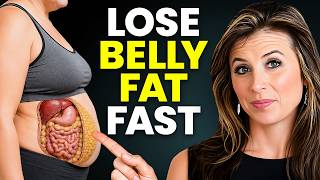
In this YouTube episode Dr. Ashley Lucas, a PhD‑level nutritionist and founder of PhD Weight Loss, presents five evidence‑informed strategies to rapidly reduce stubborn belly fat. She first reframes belly fat as a hormonal symptom rather than a will‑power failure, then outlines concrete lifestyle shifts: (1) consume 30‑55 g of high‑quality protein at breakfast to blunt insulin spikes; (2) stop fearing dietary fat and eliminate added sugars, using a simple carb‑to‑teaspoon‑of‑sugar conversion to guide label reading; (3) replace chronic high‑intensity cardio with daily 30‑minute brisk walks and 2‑3 weekly strength‑training sessions to lower cortisol and improve insulin sensitivity; (4) manage cortisol by ensuring 7‑9 h sleep, adequate protein, stress‑reduction practices, and avoiding over‑training; (5) repair the gut microbiome with fermented foods, prebiotic fibers, and omega‑3s, which restores GLP‑1 signaling and reduces inflammation. Throughout, she emphasizes that these shifts work with the body’s physiology, leading to rapid improvements in sleep, focus, joint pain, hunger, and, for many clients, medication reduction by about week 16. The video also includes brief promotions for an electrolyte supplement (Electrolyte Plus) and a “Belly Fat Reset Bundle” (GlucoCut Plus and GLP‑1 Gut Longevity Plus).
Chapters
You want to hear something that still blows my mind? I have watched people lose 10, 20, 40, 60, even 100+ pounds. Stubborn, stuck-on belly fat that had been there for years without starving themselves, without living at the gym, without a single weight loss drug. I'm not talking about people with perfect genetics or perfect willpower. I'm talking about people who tried everything. Every diet, every cleanse, every just eat less and move more lecture from their doctor. You know what those feel like, I'm sure. People who had completely given up on their belly, who told me in our first call that they were convinced their body was just broken, like it had to be. Now, I'm Dr. Ashley Lucas. I'm a PhD nutritionist, a registered dietitian. I'm the founder of PhD Weight Loss, where we have now helped over 12,800 people collectively drop more than 480,000 pounds nationwide. And what I'm about to share with you today are the 5 most powerful shifts I've seen collapse belly fat in my clients faster than they ever, ever thought possible. Not because they're extreme, but because they're finally working with the body instead of against it. If you can stay with me for the next few minutes, I promise you're going to walk away seeing your belly and your body completely differently. Now, before I get into the tips, I need to tell you something very important, something the diet industry likely has never told you. Belly fat, you guys, is not a character flaw. It is not proof that you're lazy or undisciplined or that you just don't want it badly enough. I want you to look at belly fat as a symptom. It is your body's response to specific hormonal and metabolic signals that have been running in the wrong direction and often for like a really long time, for years. When we correct those signals, the belly fat doesn't just slow down. I like to use the word that it collapses, and that's the word I actually use with my PhD weight loss clients because that's exactly what it feels like when it finally goes. So here's how we do it.
If weight loss has left you with headaches, fatigue, dizziness, or muscle cramps, this might surprise you. I'm Dr. Ashley Lucas, and one of the most common issues I see during weight loss is underhydration at the cellular level. When carbs drop, your body loses electrolytes, and water alone doesn't fix that. That's why I created Electrolyte Plus to support hydration, energy, your adrenal function, and blood sugar stability during weight loss and maintenance. This is hydration designed for real life, not just workouts. Visit DrAshleyLucas.com, use code YouTube10 for 10% off your first purchase or 20% off your first subscription order with free shipping. Plus, enjoy a 30-day money-back guarantee.
Back to the show. Tip number 1: Eat more protein at breakfast, not less food. I know you're probably expecting me to tell you to cut something, but here's the thing. Most of the people I see especially those who can't lose the belly fat, are not eating too much. They're eating too little. And what little they are eating is almost entirely carbs. When you start your day with toast, even like avocado toast or toast with a little almond butter on it, a banana, oatmeal, or a smoothie, even if it's a quote-unquote healthy one, you spike your blood sugar. Insulin rises, and you know when insulin is high, your body is in fat storage mode. It does not matter how clean, how organic that food was. Insulin— I want you to think of insulin as the switch. Most people have the switch turned on to store mode all day long. They're storing fat all day long. Now, the fix, it depends on your gender, your body size, But I'm going to give you a generalized range, is about 30 to 55 grams of protein at your first meal. I would like for that to come from eggs or Greek yogurt or some kind of a high-quality animal protein, like it could be smoked salmon, leftover chicken, leftover steak, like whatever works for you. Protein, you guys, it's really important to understand that protein barely moves insulin, and actually dietary fat doesn't move insulin at all. These two macronutrients, protein and fat, help to keep you full for hours. It's going to tell your brain that resources are available and that your body doesn't need to hold on to stored fat for survival. This single shift, this one thing, just changing breakfast around this focus has been one of the most powerful interventions I've seen. Not because it's magic— it might feel like magic— but because it corrects the hormonal pattern that was keeping the belly fat locked in place from the very first hour of your day. Tip number 2, and I alluded to this one earlier: stop fearing fat and stop eating sugar. For decades, we were told fat was the enemy. Right? That's why all of this fat-free, low-fat junk foods in all of its varied forms came onto market in the way that it did. Like low-fat yogurt, fat-free dressing, diet everything. And what happened? We got fatter as a result. Specifically belly fat. Like we just, we just exploded in our bellies. And the reason why is because when food companies remove the fat, They've gotta replace it with something to make it taste not like cardboard, and they replace it with sugar to make it taste like something. Sugar is the single fastest way to spike insulin, to trigger fat storage, to keep your body permanently locked out of fat burning mode. Dietary fat, you guys, does not do this. Dietary fat actually slows your digestion. It keeps you full. It stabilizes blood sugar. It actually helps your body access and burn stored fat for energy. Healthy fats I'm talking about are avocado, olive oil, grass-fed butter, full-fat dairy, fatty fish, tallow. These are not your enemy anymore. They are some of your most powerful allies. So the shift is this. Number 1, read your labels. Drop the sugar from dressings, sauces, even like spaghetti sauce. From smoothies, from the things you've been told are healthy, and add the fat back in. Your metabolism will respond, I promise you. Your hunger will quiet down. Your belly will start to move in the direction that you haven't seen in years. Now, a little equation that I like to do if you're a visual person like me: look at the label and look at the total grams of carbohydrates. And I'm just going to keep this really simple. There's more we could put into it, but I'm just going to keep this simple. Look at total grams of carbohydrates on the food label and take that total and divide it by 4. So let's say something has 40 grams of carbohydrate in it, divide it by 4, and that's gonna tell you how many teaspoons of sugar. So let's say you're consuming cereal, Raisin Bran, 40 grams of carbs in a serving divided by 4, 10 teaspoons of sugar in that. Crazy. So think about that. Whenever you're at the grocery store, do this equation, and if it blows your mind, put it back on the shelf. Now, if you're listening to this and you're thinking, "I've tried this and it still didn't work," I want you to know that's exactly why we exist, because the details matter. The meal timing, the protein ratios, your specific body and how it tolerates foods, your history. That's why we customize for every single client at PhD Weight Loss. Head to myphdweightloss.com to learn more. I'm also going to put the link in the description for you. Tip number 3: walk every single day, but stop killing yourself at the gym. I was at Disneyland with my family a while back, and my husband and I snuck into the hotel gym before we took the kids into the park, and I took a picture of it because it was just so funny. Every man in the gym was lifting weights. Every woman, every single woman was on the elliptical machine. And I see this pattern everywhere I go. If you're listening to this, put your thoughts in the comments. Like, if you're a woman, do you go and just try to do more cardio? It's okay if you do. That's— I don't know. That's how we've been conditioned. You know, I see this pattern all the time. Now, what the research actually shows is that chronic cardio, hour-long elliptical sessions, daily runs, two-a-day workouts, all of these things actually increase cortisol. This will ultimately slow metabolism. It's going to make belly fat harder to lose. Your body interprets excessive exercise as a threat, and when it senses a threat, it holds on to the central fat, that belly fat, as an emergency fuel reserve. Now what works instead is get your butt off the elliptical machine. If you want to do cardio, a brisk 30-minute walk every single day, not 5 days a week, 7 days a week. Get out there outside. It's going to make you feel good. It's going to reduce cortisol, increase dopamine and serotonin, which are your feel-good neurotransmitters. That's what I recommend to every client at PhD Weight Loss. Walking improves insulin sensitivity, it lowers cortisol, it increases fat burn without triggering the stress response. That the hard cardio can create, or just getting on that boring elliptical machine. You now have— understand my feelings around the elliptical machine. You know, instead, you're not going to do the elliptical, you're not going to do the treadmill, you're not going to do the stair stepper forever. You can do it for short bursts, but instead you're going to add in 2 to 3 days of strength training per week. Lift heavy enough to challenge your muscles and then you're going to have created the optimal environment to drop the belly fat. Now, when we think about exercise, we're not going to think of it as punishment. We're not going to work toward exhaustion. All we want here, all we want here, you guys, is consistent and strategic movement that works with your physiology. Tip number 4: fix your cortisol, not your calorie. This is the one most people completely overlook, and it might be actually like One of the most important tips on this list. Cortisol is your primary stress hormone. I talk about cortisol a lot because it has such significant impact. If you want to dive into the topic of cortisol, just go on into the description. I'll make sure to include a link on, uh, one that I focus on cortisol primarily. Now, in small rhythmic doses, cortisol is healthy. It's fine. It wakes you up in the morning. It helps you respond to challenges. But when cortisol is chronically elevated from overtraining, like we just talked about, you're on the elliptical machine all the time, taking spin classes, running all the time, or if you're undereating, especially if you're doing the two together, poor sleep, emotional stress, maybe just living at a pace your nervous system can't sustain. That would be me if I were to fit within any of these categories. Your body specifically stores fat in the belly and it does it on purpose as a survival mechanism. I want you to think about it this way. Your body stores belly fat as a quick access fuel source for emergencies. When it senses chronic stress, it thinks an emergency is coming, so it protects that fuel in the belly. It holds on to it. No amount of calorie restriction is going to override that protection signal because this isn't about food. Everything is about safety. So we want to think about what brings cortisol back into balance. Consistent sleep, about 7 to 9 hours. I know it's a lot, but that's what the body requires. Eating enough protein throughout the day so your body doesn't interpret restriction as starvation. Managing stress through movement, breathwork, meditation, like whatever tools work for you. If breathwork— I was just looking at an app called Othership. Interesting. Could check that out. You know, importantly, like we talked about earlier, not overtraining. I have had clients who cleaned up their diet completely and still could not move the belly, and then they improved their sleep and they reduced their training intensity. One lady had to like injure her knee to get to that standpoint, and the scale finally started shifting because the problem was never food. The, the problem for these people and for you potentially was cortisol. All right, tip number 5: repair your gut because belly fat starts there. The final tip is one most people have never heard, and it could be, it could be the missing piece for you. Your gut microbiome, the trillions of bacteria living in your digestive system, directly regulates your metabolism, your hunger hormones, your inflammation levels, your body's ability to burn fat. You guys, when your gut microbiome is damaged, maybe from antibiotics, if it's imbalanced— and you guys, this is incredibly common after years of processed food, chronic stress, like I said, antibiotic use— the body's fat-burning signals break down. Specifically, and we've talked about this a lot in other episodes, a disrupted gut microbiome suppresses GLP-1, And you know, this is the hormone that tells your brain you're full. It signals your body to burn fat instead of storing it. It increases systemic inflammation. We know that inflammation is the root of all disease, and it pushes your body toward insulin resistance. You do not want insulin resistance because this is the exact state that makes belly fat so stubborn. Now, the foods that repair this are fermented foods like kimchi, sauerkraut, kefir, some specific fermented pickles. I always mention the brand Bubbies because I like them. Plain Greek yogurt. You could focus on prebiotic fiber, which feeds the bacteria, like asparagus, leeks, garlic, um, raw beets, raw carrots, omega-3 rich fish. And like we started at the top, this is a full circle here on what we're discussing today— reducing the sugar and the ultra-processed foods that feed the harmful bacteria. When your gut heals, your metabolism will heal. The two go together. When this happens, the hunger quiets down, the cravings ease, and the belly fat, it finally starts to respond. Now, if you want extra support repairing your gut and metabolic signals like we talked about, I created two products specifically for this. If you find that supplementation helps your body— I know everybody's different So together, these supplements make up what I call the Belly Fat Reset Bundle. It includes GlucoCut Plus, which helps to stabilize your blood sugar, supports natural GLP-1 activity, and reduces cravings. It's amazing. And then my GLP-1 Gut Longevity Plus supplement. It targets the gut microbiome directly with Akkermansia, which is the specific bacteria strain that supports GLP-1. It's pretty cool. It also includes eriomin for natural GLP-1 activation, which is a citrus bioflavonoid, grapeseed extract, resveratrol. Together they work on the two biggest drivers of stubborn belly fat from the inside out. You'll want to head to DrAshleyLucas.com, and also the link is in the description. Use code ASHLEY10 for 10% off your first order. If you think something like this could be helpful to you. Now, here's what I want you to walk away with today. Belly fat is not a willpower problem. It is a physiology problem, and physiology can be changed, and it can be changed like really quickly. I want you to have hope. When you eat enough protein to stabilize your hormones, when you drop the sugar that's been triggering fat storage, when you move your body in a way that works with your stress response instead of against it, when you sleep enough to let the cortisol reset, and lastly, when you repair the gut that drives your metabolism, you are not just losing weight, you are restoring the conditions your body actually needs to feel safe enough to let it go. Now, that's what we do every day at PhD Weight Loss. We don't fight the body, we don't force the body, we restore it. And when the body feels safe it releases every single time. So what I urge you to do is to start with one tip, just one, and I want you to pay attention to what changes. Because once you see your body respond to being worked with instead of fought against, you will never go back to the old way. And like I said, it can happen pretty quickly. I— you should notice, I'd say, some positive changes within the first week. And then within 3 to 6 weeks, big changes. Like, you'll have better sleep quality, more focus, less joint pain because we've reduced the inflammation in the body. And I would say that hunger should really be subsided. If not, then something's off and, and something needs to be tweaked. Also, from my clinical experience, I've found that something magical happens at week 16. For the majority of PhD weight loss clients— now it can happen before, but for most people who come in having been on medications or currently on medications or having some kind of metabolic resistance situation like prediabetes, type 2 diabetes, even type 1 diabetes, insulin resistance, PCOS— something amazing happens at week 16. It's been long enough for the body to actually heal, and this is when They are for sure able to reduce medications at a minimum, right? Most people get off medications, no longer diabetic, no more joint pain, don't need to get that knee surgery they thought that they needed to get. So hold the course. That's why I'm sharing this with you. Hold the line. Give your body time. It's like healing a sprained ankle or healing a broken bone. You've had a slowed metabolism for much longer than you've had a broken bone. Let's say you broke your foot, right? You break your foot in an instant and it takes 8 weeks, 3 months to heal. Give your body time. This is no different. Be kind to your body. Give it time. You will notice such amazing transformations. Now, if you're watching this on YouTube, subscribe so you don't miss the next one. If you're listening to this on a podcast platform, please leave a review. It helps more people find this information when they need it most. And remember, You've got to step up to make the change. Lead with your heart, train your mind, and do not negotiate with your body. I'll see you next time.
More from Dr.





If I Was Over 50 & 30 Pounds Overweight, This Is Exactly What I'd Do to Burn Belly Fat


