I Ranked 10 "Healthy" Foods by How Much They Sabotage Fat Loss
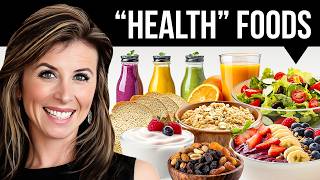
In this solo video, Dr. Ashley Lucas, founder of PhD Weight Loss and Nutrition, explains why many foods marketed as healthy actually impede fat loss. She ranks ten common “healthy” foods—fruit juice, low‑fat yogurt, whole‑wheat bread, granola, dried fruit, sports drinks, smoothies, instant/flavored oatmeal, fat‑free salad dressing, and fruit‑smoothie/acai bowls—detailing how each spikes blood glucose and insulin, reduces satiety, and promotes fat storage. Throughout, she cites metabolic mechanisms (glucose‑insulin spikes, hormone suppression, inflammation) and shares a client case (Jim) who lost 80 lb after eliminating low‑fat/low‑fat foods. She concludes with practical swaps (eat whole fruit, include dietary fat, choose unprocessed carbs) and promotes her GlucoCut+ supplement and personalized PhD Weight Loss program. The video’s purpose is to re‑educate viewers on hidden sugar sources, shift the focus from calorie counting to insulin management, and drive engagement with her services.
Chapters
Not all healthy foods are created equal. In fact, some of the foods you think are helping you lose weight are actively sabotaging your metabolism, spiking insulin, triggering cravings, and keeping you stuck in fat storage mode. Today I'm ranking the 10 worst offenders, the healthy foods that are secretly making you gain weight. I'm Dr. Ashley Lucas, the founder of PhD Weight Loss and Nutrition, where we've helped over 12,500 people collectively drop more than 500,000 pounds to date. One of the most common things I I hear from new clients is, Dr. Ashley, I'm eating healthy. Why am I gaining weight? And when I look at their food journals, I see the same foods over and over again. Foods that are marketed as healthy, foods that their doctors recommend, foods that seem like they should work, but they don't because they all create the same metabolic pattern. Glucose spikes, insulin spikes, fat storage turns on, hunger comes roaring back. Number 10, fruit juice. Orange juice, apple juice, even the no sugar added kind, it's all just liquid sugar. When you juice fruit, you remove the fiber, and fiber, you know, is what slows down the sugar absorption. Without it, you're just drinking a glucose bomb, even if it comes from the healthiest of fruit. Your blood sugar spikes, insulin floods in, and within 30 minutes, you're hungry again. Even fresh-squeezed juice isn't doing you any favors. If you want fruit, eat the whole fruit. Eat the whole apple, eat the whole orange. At least you're getting the fiber. But the juice, that's ranked number 10 because it's sabotaging your fat loss every single morning. Now real quick, if you are someone who has been eating what feels like all the right things and still cannot get the scale to move in the direction that you want it to, that is not a willpower problem. This is a metabolic pattern, and it's exactly what we help people identify and fix inside PhD Weight Loss. If you want a fully personalized plan built around your body and your history, head to myphdweightloss.com. The link is right in the description, or check out this video right here. Number 9: low-fat yogurt. This one surprises people because yogurt is supposed to be super healthy, right? The problem is when they remove the fat from the yogurt, they have to add sugar to make it taste good. A single serving of low-fat yogurt can have upwards of 15 to 20 grams of sugar, sometimes more than a candy 20 grams of sugar is about 5 teaspoons of sugar. Go into your kitchen and measure out 5 teaspoons of sugar and look at what that looks like. It will blow your mind. That sugar, it spikes your blood glucose, it triggers an insulin response, and leaves you hungry an hour later. Now, it is okay to eat foods that cause a rise in blood glucose and insulin. This is normal. The body's always going to do that. But when we eat these foods consistently throughout the day, then we have chronically elevated blood glucose and insulin. And when we eat foods like this, it causes a massive spike and then a compensatory low. So I just wanted to share that with you. When we go back to these low-fat or fat-free yogurts, without the fat, your body doesn't absorb the nutrients as well. Fat is important. It's what helps you absorb vitamins, and it's what helps you stay full. So if you're eating low-fat yogurt thinking it's healthy, you're actually sabotaging yourself twice— high sugar and no satiety. I remember meeting with a fellow, and his name was Jim. He had about 80 pounds to drop. He could barely sit down in the chair because he had so much pain in his knees, and struggled standing up. And I was asking what he was eating, and he had come from another weight loss program where they restricted his calories significantly. He had tried HCG shots. He dropped a little bit of weight. He said he was still eating the diet they put him on, but he's putting the weight back on. He would eat low-fat or fat-free yogurt. He would eat a sandwich with whole wheat bread and put a piece of ham on there and some low-fat cheese. He would have a string cheese and an apple and basically like repeat those meals. We totally changed the way that he ate, added significantly more food, and took out all the fat-free, low-fat things, and he's down 80 pounds. We also helped him cut out beer. Beer was in there causing a lot of inflammation as well. We think we're eating these healthy foods and they're just contributing to more inflammation. Number 8, speaking of whole wheat bread, is whole wheat bread. Whole wheat bread is marketed as the healthy alternative to white bread, but the truth is your body doesn't care that it's whole wheat. It's still not good for the body. Both white bread and whole wheat bread break down into glucose, and both spike your blood sugar almost identically. In fact, studies show that whole wheat bread has a glycemic index of around 71, which is almost as high as white bread at 75. So when you eat that whole wheat toast for breakfast, your blood sugar spikes, insulin goes up, and you're hungry again by 10:00 a.m. Also, a lot of whole wheat bread— you want to make sure you look at the ingredient list because companies will add molasses to turn it brown, which makes it even worse. Whole wheat bread is not the hero that you think it is. It's ranked at number 8 because it's one of the most common healthy foods keeping people stuck. Number 7 is granola. I do love granola, so if this one makes you upset, I understand and I'm right there with you. Granola gets a healthy halo because it's got oats and nuts and sometimes dried fruit. It's all natural, but most people don't realize that granola is loaded with sugar and processed oils. A typical serving has about 15 to 20 grams of sugar, which is around 4 teaspoons of sugar, and most people eat way more than one serving because one serving is like a fourth of a cup. It's super calorie dense. You can eat 400 to 500 calories of granola and still feel hungry because it doesn't have much protein or fat to keep you full. So you spike your blood sugar, it crashes, you crave more, and the cycle continues. Granola is ranked number 7 because people eat it thinking it's healthy, but it's basically dessert, and it's so full of calories and not satiating. Number 6, dried fruit. Dried fruit sounds super healthy, like it's just fruit, right? Natural sugars. Wrong. When you dry fruit, you remove the water. The water is what gives fruit volume and helps you stay full. So now you're eating concentrated sugar with no water, no volume, and very little fiber per calorie. You can eat 10 dried apricots in a minute, but you'd never eat 10 fresh apricots in one sitting. Your blood sugar spikes, insulin spikes. Now you're seeing this pattern, right? And you're still hungry. Dried fruit is ranked number 6 because it's just a sneaky source of sugar that people think is all natural and therefore fine, but it's not. You just need to be aware of these things. Number 5 is sports drinks like Gatorade or Powerade. Guys, unless you are running a marathon, you do not need a sports drink. I did a 50-mile bike ride from— it was called the Iron Horse, and it started in Durango, Colorado, and went up to Silverton, Colorado. I don't even know the amount of elevation gain, but it was significant. And did that, didn't even need sports drinks for that. They are really overrated. Gatorade, Powerade, all of these drinks are designed to replace electrolytes during really intense, prolonged exercise. And again, a lot of us, we don't even need them then. There are other ways to fuel and support the body. But you know, most people are drinking these sitting at their desk after a 30-minute walk. What's in them? Sugar. A lot of it. A 20-ounce Gatorade has 34 grams of sugar. That's more than a can of Coke. Especially if you just consume it alone as a drink, you're going to spike your blood sugar, trigger insulin, and store fat. Sports drinks are ranked number 5 because people drinking them think that they're hydrating when really they're just drinking liquid sugar. Number 4 are smoothies, specifically store-bought ones or homemade ones made with a lot of fruit and fruit juice as the base. You know, smoothies are tricky because they feel healthy. You're blending orange juice and bananas and berries, maybe some vanilla yogurt. Like, what could be wrong? The problem is, is when you blend fruit, you're breaking down the fiber. Your body absorbs the sugar faster than if you ate the whole fruit. But that's not the main issue. Most smoothies have 2 to 3 servings of fruit plus the juice plus honey or agave or something like that. And then we add vanilla yogurt into it that has just as much sugar as ice cream. So it's basically like a fruit milkshake. By the time you're done, you've got about 40 to 60 grams of sugar in a glass. Again, blood sugar spikes, insulin spikes, and you're hungry again just an hour later. Smoothies are ranked number 4 because people drink them for breakfast thinking that they're being healthy, but they're really just starting their day with a sugar bomb. Number 3 is oatmeal, but I'm going to focus on instant oatmeal, like the flavored packets specifically. Oatmeal has a reputation as a healthy breakfast. Plain steel-cut oats might be okay for some people, but I'm not a huge fan even for that. Instant oatmeal though, especially the flavored packets, or if you take your oatmeal and you top it with raisins and even honey, it's a different story. First, instant oats are highly processed. They break down into glucose almost immediately. Second, the flavored packets are loaded with sugar. A single packet has about 15 grams of added sugar. That's 4 teaspoons. So you're getting a double hit with these, you know, fast-digesting carbs plus added sugar. If you put raisins on top, that's another high dose of sugar, and then maybe brown sugar or honey on it. Man, your blood sugar is going to spike, insulin's going to go up, and by 10 AM you're going to be starving. Instant oatmeal is ranked number 3 because it's one of the most common healthy breakfasts, but it's keeping people in fat storage mode all morning. Number 2 might surprise you. It's fat-free salad dressing. You're eating a salad that's healthy, so you grab the fat-free dressing to keep it light. But here's what happens when they remove the fat: they add sugar, corn syrup, and thickeners to make it taste like something. A single serving of fat-free dressing can have upwards of 5 to 10 grams of sugar, which is like 3 teaspoons of sugar, 2 to 3. Plus, without fat, your body can't absorb all the fat-soluble vitamins in your salad, like vitamins A, D, E, and K. So you're spiking your blood sugar, missing out on nutrients, and not even feeling full because you need fat to feel full. Fat-free dressing is ranked number 2 because it's the perfect example of a healthy swap that's actually sabotaging you. The number 1 healthy food that is sabotaging your fat loss: fruit smoothie bowls, acai bowls, all of these Instagram-worthy fruit bowls that look so healthy. I know they're colorful, they have lots of fruit in them, but here's what's actually in them. Number 1, blended fruit, which is going to be fast-absorbing sugar. Fruit juice or coconut water, more sugar for both of those. Granola on top, a ton of calories, sugar, and processed oils. Honey or agave drizzle, more sugar. More fresh fruit on top. By the time you're done, you've consumed 60 to 80 grams of sugar, sometimes more. That's equivalent to eating 3 to 4 candy bars or 20 teaspoons of sugar. That's wild, you guys. Your blood sugar is going to skyrocket. There's just no way around it. Insulin floods in and your body is in full fat storage mode. And the worst part is you thought you were being healthy. Smoothie bowls are ranked number 1 because they are the ultimate healthy food that's actually destroying your metabolism, and most people have no idea. So here's what all of these foods have in common. They spike blood glucose massively. Which spikes insulin. Insulin turns on fat storage, which turns off fat burn. And when insulin stays elevated all day from breakfast to lunch to snacks, your body never gets a chance to burn stored fat. Not because you're eating too many calories, but because insulin is calling the shots. When insulin is consistently high, fat-burning hormones stay quiet. That's the hidden pattern most people never get to address. Now, if blood sugar and cravings have felt like the biggest thing holding you back, Our GlucoCut+ supplement was designed specifically to support stable blood sugar and natural fullness signals while your metabolism is healing. It's not as a replacement for good nutrition, but as a tool to make that work easier. You can find it at DrAshleyLucas.com or in the link in the description. Just use code ASHLEY10 and get 10% off. You can count every calorie. You can exercise every day. But if insulin stays elevated, you're going to be stuck. Your body isn't broken. You've just been given the wrong map. And I hope that with this information, you'll be able to see the right one. Remember, you've got to step up to make the change. Lead with your heart, train your mind, and do not negotiate with your body. I'll see you in the next video.
More from Dr.





If I Was Over 50 & 30 Pounds Overweight, This Is Exactly What I'd Do to Burn Belly Fat


