I Ranked Every Popular Diet for Hormones & Metabolism — Here's the Truth
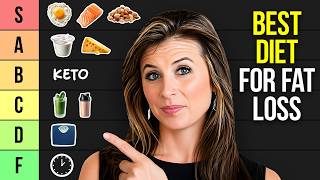
Dr. Ashley Lucas ranks popular diets by how well they stabilize insulin, preserve muscle, and last long-term. Ultra-low-calorie diets fail worst, triggering metabolic slowdown and muscle loss. Her PHD framework, which spreads 40-55g of protein across meals, ranks highest because it hits all three criteria.
Chapters
If you have ever started a diet and felt hopeful, like this time it was going to be different, and then watched it fall apart anyway, I want you to sit with something for just a moment. That experience is not evidence that you lack discipline. It is not proof that you are someone who just can't do it. What it is, almost always, is evidence that the approach you were using was just not designed for your body. It was designed to produce short-term results on a scale, and it did what it was designed to do. Your body, on the other hand, was designed for something far more sophisticated than that. Today I want to do something that I don't think gets done nearly enough in the weight loss space, which is to rank the most popular diets and weight loss approaches honestly. Not by how impressive the before and after photos are, not by how fast the weight drops, but by how well each approach actually supports your hormones, protects your lean muscle mass, and creates the kind of metabolic environment where the results hold long after the program actually ends. Because that's the part no one really talks about. Results that don't hold aren't really results. They're like a loan you'll eventually have to pay back with interest. I'm Dr. Ashley Lucas. I'm a PhD nutritionist, a registered dietitian, and I'm the founder of PhD Weight Loss, where we have helped over 12,800 people drop more than 480,000 pounds nationwide. And if you happen to be watching this on YouTube rather than listening to it on a podcast platform, welcome. I'm really glad you found this channel. My goal on both platforms is exactly the same. I want to give you the science-backed, shame-free information you actually need to make a change that lasts. So let me walk you through how I'm evaluating these approaches because the criteria does matter. All right, I'm looking at 3 specific things. First, how well does this approach stabilize insulin? Remember that insulin is your primary fat storage and fat burning switch. When it stays elevated, when insulin remains high, fat loss is gonna slow down, fat storage increases, and cravings stay really loud. Second thing I'm looking at: how well does this approach protect your lean muscle mass? Remember, muscle is your metabolic engine. Every pound of it that you lose during a diet is a reduction in your body's ability to burn fat efficiently for the rest of your life. Okay, third, how sustainable is this approach over years? Not just weeks, but over years, because a diet that works for 60 days and then collapses actually takes you with it. So let's start at the bottom. Ultra low calorie programs, the 500 to 800 calorie shake diets, and medically supervised starvation protocols. These guys are ranked last on my list, and I want to be gentle about this because I know many of the people listening have tried them. They felt like they were doing everything responsibly. I mean, they were medically supported. But here's what's happening in your body when you eat that little.
Here's something most people don't hear: your body is not broken. I'm Dr. Ashley Lucas, PhD and registered dietitian, and after helping thousands lose weight, I realized something important. When people diet without proper support, the body pays the price. Metabolism, hormones, energy, and even muscle mass. At Dr. Ashley Wellness, everything we create is designed to work with your body, not fight it. Clinically studied ingredients, high absorption rates, no fluff, because weight loss should feel empowering, not depleting. Visit drashleywellness.com, use code YouTube10 for 10% off your first purchase. Or 20% off your first subscription order with free shipping. Plus, enjoy a 30-day money-back guarantee. Back to the show.
Within days, your body senses a famine. It doesn't know that you're trying to lose weight. It only knows that incoming fuel has crashed and it activates every single survival mechanism it has. Metabolism slows sometimes by 20% or more to match your intake. Muscle tissue gets broken down for fuel because there just isn't enough dietary protein to protect it. Cortisol rises. Remember, cortisol is your stress hormone, which signals the body to hold on to fat, especially around your belly area. And when you eventually return to normal eating, you are now doing so with a slower metabolism and less muscle than you started with. The weight comes back. This is not a character flaw. This is predictable physiology. All right, let's move up slightly on the ranking list. Pure calorie counting approaches without any attention to food quality. Now, there is some merit here because a calorie deficit is a real and necessary part of fat loss. But when calories are the only variable being managed, blood sugar remains volatile, insulin keeps spiking with every carb that you consume, hunger and cravings stay persistent, and muscle loss continues. Many people can sustain this for a few weeks. Very few can sustain it for a year without significant struggle. And the metabolic damage from cycling in and out of this kind of restriction adds up over time. Now, if you are hearing this and thinking, oh my gosh, I have done both of those things more than once and I'm exhausted from it, I want you to know that there is a different way to approach this. That exhaustion is not weakness. It is your body telling you the tools weren't matched to the problem. At PhD Weight Loss, we work specifically with people who are done with the cycle and ready to understand what's actually happening in their metabolism. If you're listening to this on a podcast platform, come find us at myphdweightloss.com. And if you are watching this on YouTube, the link is in the description. Okay, let's move into the middle of the ranking. Intermittent fasting. This one is nuanced, and I want to give it a fair read. When intermittent fasting is done well, meaning the eating window contains adequate protein, which by the way is really hard to achieve, when the eating window contains quality fats, fiber-rich veggies, and the overall, uh, caloric intake supports rather than starves the metabolism, it can be a useful tool for some people. It can help regulate insulin, it can reduce overall blood sugar volatility, it can support metabolic flexibility, which we love, we know is really important. The problem is that most people who practice intermittent fasting do not structure their eating window to protect muscle. They break their fast with something light and usually carb-heavy, they under-eat protein throughout the rest of the day, and they end up losing lean mass along with fat. I also want to name something else I see frequently. People who are already stressed, who are sleep deprived, or are hormonally disrupted often find that fasting increases cortisol rather than reducing it. For those people, structured eating throughout the day and not skipping meals is a more supportive approach. In this way, intermittent fasting is like a good framework in the wrong hands. When it's done correctly for the right person, it earns a solid mid-table position. Done casually though, it can create the same muscle loss problem as every other approach that doesn't prioritize protein. If you are dabbling in intermittent fasting and you find that you binge or you overcompensate and eat more later in the day, or maybe you're really good and you're fasting for a few days and then over the weekend you're just eating whatever is in sight, then that is also a tip to you. Your body is telling you intermittent fasting is not right for you in the moment. Doesn't mean that it's gonna be a forever thing, doesn't mean that you don't get to play with it later on, but where your body is right now, how your metabolism is situated, it's just not serving you at the moment. Okay, higher on the list is ketogenic eating. You know, I have really seen some meaningful results with clients who approach keto thoughtfully. What I mean by this is getting adequate protein, high-quality fats. They limit processed keto foods. I mean, they're eating real whole food. They're getting in some non-starchy veggies. Their eating is nutrient-dense. They're going to find that insulin stabilization is significant. They'll find that there is a significant reduction in food noise and cravings. You know, it's often real and, and dramatic for many people who dive into a ketogenic diet. We can see metabolic flexibility improve when someone has severe insulin resistance or has significant belly fat. A ketogenic period— and notice I say a ketogenic period— can work as a powerful metabolic reset. Now, my hesitation is with long-term sustainability. My goal is to find a dietary approach where people aren't having to live a significantly restricted lifestyle because we find that's sustainable. We know that to optimize health, consistency wins every time. So we've got to find something where people can be consistent. A lot of folks find that eating a ketogenic diet is socially restrictive, and eventually they drift away from it. And the rebound when they do can be significant if they haven't addressed the behavioral and mindset components associated with successfully and sustainably dropping weight. In my clinical experience, I think that a ketogenic diet— dabbling with it, doing it for a specific period of time can be an excellent short to medium term tool. It requires a careful transition out of it. And at the top of my list, a protein-forward, whole food, lower glycemic approach that prioritizes meal timing, adequate dietary fat, gut health, and consistent fueling throughout the day. This is the PHD framework, and I rank it first not because it's mine, but because it addresses all three of my criteria simultaneously. It stabilizes insulin without eliminating any macronutrient group. It protects and supports your lean muscle with adequate protein distributed across the day. We're talking 40 to 55 grams of quality animal protein in your meals. Specifically, we want to focus on the majority of your protein in your first and last meal, and then consistent protein throughout everything in between. It supports your gut microbiome through fermented foods and fiber, which is where your hunger and fullness hormones, including the well-known GLP-1, your body's own natural fullness signal, are actually produced. And it is built around real food you can find at any grocery store, you can prepare in a reasonable amount of time, and you can eat for the rest of your life. My goal when I created PHD was for you to be totally self-sufficient after you've gone through the program. You could travel wherever you want to go and you understand exactly what to eat, when to eat it, and why, right? This is not a sprint. This is a, a true renovation, a transformation that is sustainable. I also want to say something that gets overlooked in every ranking list I've ever seen, which is this: context matters enormously. Someone who has been yo-yo dieting for 20 years, whose metabolism has been through multiple cycles of severe caloric restriction, whose cortisol is chronically elevated and whose gut health has been disrupted, that person needs a different starting point than someone who has 10 pounds to lose and has never dieted before. A truly effective approach, you guys, accounts for that type of history. It meets the body where it actually is, not where it theoretically should be. What I most want you to take away from this conversation today is that no diet is universally perfect and no diet failure is your fault. Every approach we discussed has a mechanism behind it. You can see that now. When it works, it works because the mechanism matched your biology at the specific moment. When it stops working, it's because the mechanism is incomplete, right? It addresses the number on the scale without addressing the systems underneath it. Your body has been working exactly as designed through every diet you have ever done. It stored fat when it sensed scarcity. It slowed metabolism when it sensed threat. It created cravings when blood sugar crashed. That's not betrayal. It might feel like it, but it's not. That's just your body being really sophisticated in self-preservation. And the moment you start working with these systems, fueling the body adequately, stabilizing blood sugar, protecting your muscle, supporting the gut, the whole relationship with your body shifts. Your hunger settles, your cravings quiet, the weight starts to move, and more importantly, it starts to stay moved. You know, one thing that can support this process, especially if you're in that kind of more transitional phase where your blood sugar has been all over the place and your cravings still feel pretty darn loud, it's GlucoCut Plus. Now, this is a supplement I formulated specifically to help stabilize blood sugar throughout the day. I also created it to support your body's natural GLP-1 activity and to help reduce that persistent hunger that just makes it harder to stay on track. Now, this is not a replacement for doing the work around food. It's something that works alongside it. So you can find it if you're interested in checking it out at DrAshleyLucas.com. If you are watching this on YouTube, the link is in the description. And if you are listening to this on a podcast platform and this episode was helpful, a review really does help more people find this content. I really appreciate you being here. Remember, you've got to step up to make the change. Lead with your heart, train your mind, and do not negotiate with your body. I'll see you next time.
More from Dr.





If I Was Over 50 & 30 Pounds Overweight, This Is Exactly What I'd Do to Burn Belly Fat


