I Survived the Diet Industry as a PhD Nutritionist (Here's What Actually Works)
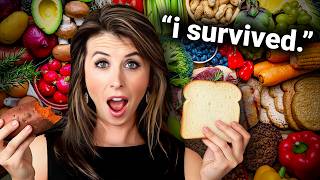
Dr. Ashley Lucas, a PhD nutritionist and former ballet dancer, explains why chronic calorie restriction and excessive cardio backfire for people over 40. Her research found that athletes who under-ate had slower metabolisms and bone density problems. She ditched processed foods, carbs, and fear of fat, then added strength training, sleep, and sun exposure to reset her metabolism.
Chapters
One of the most common things I hear from people, especially over the age of 40, is this deep sense of confusion and frustration. They're eating what they think is healthy. They're being mindful. They might even prioritize protein already. They might be tracking their food, hitting the gym regularly, like really feeling like they've got all of this nailed, but the scale is still stuck. Their midsection feels inflamed, their energy is terrible, and fat loss really feels harder instead of easier no matter what they do. I hear this all the time, and what breaks my heart is that they start to believe that it's their fault. They tell me that, well, I know I just need to eat everything in moderation. I'm just lacking discipline or I'm just not trying hard enough. Now what I want you to hear right from the start is this. The struggle is not a personal failure. It's not a lack of discipline. It's not even about willpower. It's not a flaw in personality. What you're experiencing is a metabolic signal mismatch. Your body's responding to the signals it's receiving from the foods you're eating and the behaviors you're practicing. But those signals are likely telling your body to do the wrong things. The signals are telling your body to store fat, to slow down your metabolism, and to hold on so tight. And I know this because I lived it for 25 years, even after earning my PhD in sports nutrition and chronic disease, even after becoming a registered dietitian, I was still getting it completely wrong. You know, the diet industry has taught us that eating healthy means fat free foods, crack, chronic cardio calorie restriction medications, and everything in moderation. We've been told that if we just try harder, if we move more, if we eat less, if we take meds, then the weight will come off. And it doesn't matter if we need to be on a crap ton of medications forever. Like that's just part of, part of it. But here's what I learned through my own research and my own body is that when you chronically undereat, when whatever the mechanism might be forcing you to undereat, if you chronically over exercise and avoid the very foods that your body needs, like healthy fats and nutrient dense proteins, your metabolism doesn't speed up, it slows down. Your body goes into this conservation mode and it holds on to specifically belly fat as a survival mechanism. And no amount of willpower, no amount of discipline can override the biology. So today I'm going to walk you through my own journey. What I survived and what I stopped doing and what I started doing instead, that completely transformed my health, my body composition, my mind, and my relationship with food. Really. It transformed my insanity to sanity. I could say that now. I'm Dr. Ashley. If this is the first time you've come across one of my videos or episodes. I'm the founder of PhD Weight Loss and Nutrition, where to date we've served over 11,600 people nationally. Collectively, we've helped people drop over £480,000. And my goal with this channel is to give you the information you need to actually create positive change in your own life. And if it has to do with fat loss, to. To keep it off long term. Hey, really quickly.
If you're interested in hydrating yourself optimally and want to do it in an efficient and effective way, I created an electrolyte plus mix just for that. It's called Dr. Ashley's Electrolyte Plus Creative.
I know.
And it's crafted with essential electrolytes, vitamins and minerals for maximum absorption. With patented forms of zinc and vitamin C, it supports immune and adrenal function. Plus chromium picolinate regulates healthy blood sugar levels while helping to curb those cravings. Say goodbye to headaches and fatigue. Visit Drashley wellness.com and use code Ashley10 for 10% off your first purchase or 20% off your first subscription order with free shipping plus enjoy 30 day money back guarantee. Now back to the episode.
Okay, but before I became an expert in metabolic health, I was a professional ballet dancer who became nearly destroyed my metabolism trying to do everything right, you know, Taipei perfectionist. Now, before I share my full story, I want you to know something. If you are feeling stuck right now, if you've been doing everything right and the weight still will not budge, you are not alone. And more importantly, I want you to know that there is a way forward. And it's not miserable and it's not super hard. It's actually fun and enjoyable. I've created a detailed video walking through exactly what I'd do if I needed to lose 20 pounds in the next 60 days, including the specific meal, timing, the exact portions and strategies we use with our clients at PhD weight loss. So if you're watching this on YouTube, I'm going to link that video in the description. If you're listening to this on a podcast platform, just go to myphdweightloss.com to learn more about the program if it interests you. All right. But first I want to tell you how I got here. Because my journey might sound a little bit different, but have a lot of similarities to yours. All right, so my story starts when I was pretty young. My mom put me in ballet. I was like five years old. I fell in love with it. I was super passionate. I was driven. But my body, this body did not conform easily to what was required for that specific sport. You know, as a ballet dancer, you're expected to be incredibly lean, but in really, really great physical shape. And my body just never wanted to get that lean. So what did I do? What every dancer, what every most people do. What every magazine and trainer and every expert told me to do. Because I did seek help. I counted calories. I had a tracker I severely restricted. I ate everything fat free, everything low fat. I avoided red meat entirely. I was often vegetarian, like for years, on and off. I exercised constantly. Like after my eight hour day of dancing, I would then go to the gym and get on the spin bike. I ate instant fat free pudding with fat free Cool Whip. If you're listening to this on YouTube, drop a comment below and let me know if you're there or were there. Like I was with me with the fat free pudding and the fat free Cool Whip. I would put the I can't believe it's not butter butter spray butter spray on deli turkey and call it a meal. I ate oatmeal, like the instant oatmeal with fat free Cool Whip on top, you guys. I thought I was being so healthy, but despite all of that, I still wasn't where I needed to be for the sport. I was injured all the time, if you can believe it. I had stress fractures in both feet, sometimes at the same time. I had high cholesterol and I was pre diabetic. Eating those foods and working out all the time and my life was movement, but I pushed through anyway. Super discipline. I performed in nearly 400 nutcrackers across the country. I was selected to perform in the opening ceremonies of the Olympics in Salt Lake City. If you watched it on tv, you could actually see me for three seconds. I was chosen to perform in New York City, which is every dancer's dream. But instead of finding myself in the spotlight in these really once in a lifetime shows, I. I ended up in the ER twice. Once I thought I was having a heart attack. After a bunch of tests. The doctor told me that I was underfed, I was over exercised and I had to quit. Like my body could not continue doing it. And that was devastating for me. It was my identity. My career was over and I had no idea what I was going to do next. So after some deep thinking and still not knowing who I was or what I wanted to do, I. I decided to go back to school yet again because I'm good at going back to school. I earned my PhD in sports nutrition and Chronic disease because I wanted to understand what had happened to my body. I was like, I don't know what I want to do, but I know I want to understand my body and help others not go through the pain that I experienced. During my doctoral work, I conducted a study that really changed the way I looked at metabolism. What I did was I pair matched professional athletes with recreationally active people. They were the same age, they had the same amount of muscle mass, and muscle mass is your main predictor of metabolic speed. So I needed to control for that. And then I measured how many calories the professional athletes consumed versus the recreationally active people. And they were the same age, remember, they had the same amount of muscle mass, the same gender. And then I measured their metabolic rates, which is how many calories they burned doing nothing during the day. Now, you would think that the athletes, since they were moving so much more all the time, they would eat more and have a faster metabolism, right? Wrong. The recreationally active people, the ones who just went to the gym for fun, they played basketball, they enjoyed movement, ate significantly more, and had a significantly faster metabolism. The professional athletes, on the other hand, had restricted their calories so much for so long that their metabolic speed had dropped significantly. They had done damage to their metabolism just like I had. They also had bone density issues, and a lot of the women had a female athlete triad, which also meant that they had menstrual irregularities. This was the moment that I realized everything I'd been taught was backward. After my PhD, I went back to school again, because we know I'm good at that, to become a registered dietitian, because I thought that's what I needed to be a true expert in this field of weight management. But there was a big problem. The problem was that all the information I was taught was the same stuff I did when I was dancing. Restrict their calories, tell them to eat everything in moderation. If they're diabetic, eat more carbs, or at least just be consistent in them. Exercise more, count every calorie, avoid fat, don't eat meat. And I kept questioning it. I was sitting in my MNT course, my medical nutrition therapy course, and I would raise my hand and they did not like me very much, but I would. I would Ask a question like, why does a type 2 diabetic need to eat so many carbs when carbohydrates are what's causing the issue? Their answers weren't clear. They didn't make sense. They said, well, it's easier to medicate someone when their carbs are consistent throughout the day. It's difficult if they drop their carbs to medicate them. So I went back to the research. I studied ancestral nutrition, what we ate as humans before processed food, before the diet industry. I read literature from the 1800s on obesity treatment. Then I read the Primal Blueprint by Mark Sisson. I absolutely love Mark Sisson. I had him on the podcast and YouTube channel earlier. So if you want to learn more, I definitely search that one and check out that video. If you haven't read this book, I highly encourage you to do so. It's an oldie but a goodie. And Mark Sisson is a great writer and the material is really life changing. It blew my mind. It's so simple. But it opened my eyes and I realized what I thought was healthy wasn't healthy for me at all. And what you think is healthy might not be healthy for you either. So here's what I stopped doing. These are the things I survived. And once I let them go, everything changed. So I want to share them with you so that you have the opportunity to do this for yourself as well. And they're really simple. Again, my stop number one, I stopped eating food from a box. My pantry used to be packed with frosted Mini Wheats with protein bars, Lara bars, Clif bars, Wheat Thins. I would eat Wheat Thins and Hummus for a snack. What is the problem with Wheat Thins and hummus? If you're watching this on YouTube, drop down in the comments below what the problem is with Wheat Thins and hummus as snack, I would have crackers. Oh my gosh, Fiber one bars were my favorite. I mean, duh, they're just sugar with some fiber in there. But I also was struggling with the worst heartburn. When I get heartburn, I get pain down my left arm. And what is that a signal of or a symptom of a heart attack? So I think one of the times I went to the er, it was really seriously, this is kind of embarrassing to share. It was probably heartburn from all of these foods that I was eating. Now all of a sudden, when I made this change, my pantry became empty and my fridge became much more full. Now it's plain, full, fat, Greek yogurt, veggies berries, lots of meats, some cheese. I love cheese. And my body tends to deal with it well, you know, real food that comes from the earth in its actual form, eggs, whole egg, not like egg beaters from a box. Number two, this was big for me and my body. I stopped eating grains. And I know this is a tough one. People love their pasta, their bread, their rice, their quinoa. But the truth is you don't need grains. You don't. You get all the vitamins and minerals you need from other food sources. And for me, when I let go of the grains, the heartburn completely disappeared. Another tma. I was often constipated. That went away completely. I was given the diagnosis of IBS at some point, gone. And the belly fat started to melt away. Now, I'm not saying this is you, I'm not saying that you have to completely eliminate grains, but this is something that I completely eliminated and my health has improved so dramatically. So if you want to see how good you can really feel, I'd let them go for at least a period of time. Give your body a washout period and then add them back in later very slowly and see what happens now. Stop. Number three, I stopped fearing fat. This was huge for me. It was hard for me, but I did it. And I embraced healthy oils. I embraced the idea that you've got to eat fat to burn fat. Your hair, your skin, your nails. Your body as a woman and as a man needs healthy fats to make testosterone and to have good reproductive function. As a man, you need fat for cholesterol production, brain function, testosterone. Same for women. I mean, we just all need fat. I started eating whole eggs inst of just egg whites. I started using heavy cream, which by the way, is my favorite food. And I have some tea right here with some heavy cream. Today. My husband even was like, you and your tea and your heavy cream. I just love it. If you've been using oat milk, by the way, or a low fat creamer, or unfortunately the powder creamers like coffee mate, which I know that was like one of the hardest things for me was to let go of the coffee mate. Guys, let it go. It's just crap. All of those aren't serving you. Do yourself a favor and switch to heavy cream. It is so good. Drop that in the comments below. If you're watching this on YouTube, switch to heavy cream and let me know how delicious your coffee or tea is. Stop. Number four. I stopped all sugary beverages. I wasn't a big soda drinker, but I Was drinking Gatorade during my long bike rides, which were a problem too, because I was like, obsessed with chronic cardio. Oh, man. I realized, like, all these things I did and how much I learned and how much I hope I can share with you so you don't have to go through the painful process and you can collapse time by my inefficiencies and errors. I hope this serves you so. Once I taught my body how to burn fat for fuel, I realized that I didn't need Gatorade. I just needed electrolytes with salts. I love my electrolyte, Dr. Ashley Wellness. I love LMNT. That has a lot of sodium in it. When I'm working out pretty hard or if I have a high stress day, I'll utilize that. If you're drinking sweet tea, soda, sugary coffee drinks, lots of sports drinks, alcohol loaded with sugar. Stop right now. It's not serving you. You are worth more than that sugary beverage. Stop. Number five. I stopped chronic cardio. This was hard for me because as I said earlier, I was cycling like 250 miles a week every day I was on that damn bike. I thought I needed to burn calories. And I was used to as a dancer just like pushing my body and it being exhausted. And I thought that's what I needed to do. I needed to work out more. I was so fearful that I was going to gain so much weight not dancing anymore, that I needed to replace the calorie burn with something. So I cycled like crazy. But after I made this shift, I embraced the ancestral philosophy that we need to lift heavy things and we need to walk a lot and we sprint. We need to sprint when we need to, right? Like way back in the day when we were cave people, we lifted heavy rocks, we walked a lot to forage for berries, and we sprinted away from the tiger. So I embraced that. Now, if you think back to the cave days, we likely did not run marathons for no reason. Like, movement was very functional. It had a purpose. So I took a risk and I stopped doing chronic cardio. I started doing high intensity interval training, maybe 20 to 25 minutes on a bike instead of six hours all the time. I got back too. Wow. All the belly fat started to drop away because my body wasn't inflamed. It wasn't scared anymore. It felt more safe. Stop. Number six. I stopped ignoring sleep and sun exposure. Sleep has always been a challenge for me, but I realized that it's so key in healing your adrenals and allowing your body to Drop weight. I used to go to bed every night around 11:30, getting up at 7, 6, 6:30. And I've pushed both of those ends of the spectrum. Going to bed a bit earlier, waking up a bit later. Unfortunately, my body is so inefficient and it requires so much sleep. I have to get like nine hours of sleep a night. But I will tell you, if I don't get that for me, my body tells me through migraines and that's a very clear signal and a very uncomfortable one. So I've learned to have to listen to that and get that darn sleep in. Getting out in the sun is really important, not just for vitamin D, but to set your circadian rhythm. And it helped me to make it easier to fall asleep at night. What I started, right, let's talk about that. Let me share with you what I started. These are the habits that transformed my health. Start number one is I started eating real whole foods. My fridge is now full, like I shared earlier of Greek yogurt and berry and vegetables and high quality meats. This is food that my body actually recognizes. And if I go back and I'm traveling and I see myself eat more processed food, still protein forward, but they might be like the protein chips or a protein bar, my gut will start not feeling great. Start number two is I started eating lots of animal meat, red meat specifically. I added some plants in there. I mean, I was always eating plants, but I really the biggest shift was adding red meat. It was a real game changer for me. It gave me so much more energy. My, my body composition improved, my health markers improved, I'm no longer diabetic, I don't have high cholesterol. I used to avoid it completely and now I eat it almost every day. And my labs are so much more improved. I started eating whole eggs and heavy cream. Start number three, I started eating whole eggs and heavy cream. Whole eggs specifically with the yolk are nature's multivitamin. Like it's packaged in such the perfect form. The yolk is where the fat is what you need. It's where all the vitamins and minerals are. And then the white is where you get the yolk. So you want to make sure you eat the whole thing together, like it comes together for a reason. Heavy cream, like I said, my favorite food. Give it a try, Let me know what you think. Start number four started lifting weights. Lifting weights became so powerful for me. It preserves muscle, it supports metabolism, it makes you feel strong. For me, like a lot of cardio, even Sometimes some high intensity interval training increases this. It's, it's a stressor, right? And for a lot of people it's good to have those stressors in there. But when my lifestyle is super stressful, sometimes it is. With two large companies and three kids and a husband, you know, there's lots going on, lots of things, family, mom and dad, lots of things moving. If I do more cardio and more hiit, it's just too stressful and I can feel it pull on my body. So I really focus on strength training over any type of cardio. For me personally, that's what's helped. Start number five is I started prioritizing sleep and I made sleep non negotiable because when you sleep, your body heals. Your hormones balance, your metabolism, repairs, your body will start talking to you positively. Start number six. I started getting more sun. Seeing the sun first thing in the morning, it sets your circadian rhythm. It's hard for me. I don't do it every day, but I try. It helps you fall asleep at night and it supports vitamin D production in a way that supplements just can't replicate. And what's amazing is I used to burn like crazy. Like I go out in the sun and five minutes later I would have a sunburn. But when I've shifted my diet in this way, and I'm not telling you to go out in the sun and like not wear sunscreen, but for me personally, I can go out for hours now and not get sunburned. I really believe that me shifting the way that I eat and the way that I sleep and manage stress has allowed my body to have a higher capacity to get out in the sun without a ton of sunscreen. I do, you know, I do wear sunscreen, but I can get out there and stay out there and actually get the benefit of the, the sun. You know, if you put an SPF of even like 15, an SPF 15 or above, it can block up to 99% of the production of vitamin D. So it's nice to get out there at least for a few minutes without sunscreen and then you can put it on if your body needs it. All right now, if you've got all of these steps in place and you want to take your health to the next level, here are some things that you could do. Cold exposure. You know, I was in a phase where I would do a cold plunge or cold shower every day. I hated it, but I loved it at the same time and I still do. Again, just watching kind of stress levels if my life is super stressful, I won't do the cold exposure. If it's not and it feels good, or if my joints are inflamed, I'll hop in there. And it does feel so good when you get out. Sauna. Whenever I have the opportunity, I do get in the sauna. It's great for blood vessels and blood flow, especially if you can alternate hot and cold meditation. I meditate 98% of the time. This is key for me and my life and I love it. And it's pretty much a non negotiable for me and it has totally transformed my life. Lemon water. Every morning I have lemon water just to get my body going. Make sure I'm hydrated before the day starts. Usually 16 ounces. Helps to detox the body. Now I want to share with you a quick story about a client of mine. Her name's Alice. She was a radiologist and she went through med school of course, to become. So, um, I'm sharing that with you because she has a lot of knowledge, right? She thought everything she was eating was healthy. Her day looked like breakfast was low fat yogurt with kashi cereal. Lunch was a Lean Cuisine or a chicken breast with a salad, sweet potato quinoa. Her snack was always a Larabar or a Clif Bar. Dinner was some kind of animal protein, a pasta, some kind of starch, and probably alcohol about four times a week. Now, you'd think she wouldn't be carrying 30 pounds of extra fat weight, right? She was on the peloton all the time. She was moving her body, so disciplined, so dedicated. But once we made little tweaks to her diet, real food, healthy fats, adequate protein, all of the weight came off. She was blown away. She couldn't believe it. She's like, I thought I was doing everything right. Everything seemed healthy. But for her body, it wasn't working. Now, the key point I want you to remember is that what you think is healthy might be healthy for your neighbor or your spouse or your partner, but it might not be healthy for you. Your body is not responding to generic advice. It's responding to the specific signals it's receiving from what you're eating, how you're moving, how you're sleeping, and how you're managing stress, we are all so different. When those signals tell your body it's safe, when insulin is stable, when cortisol is balanced, when you're nourished and you're rested, belly fat becomes accessible again. Your metabolism speeds up. Weight loss stops feeling like it's a fight. Now if you feel like you want to go one step further, pairing the right nutrition with targeted metabolic support can dramatically improve your results. And that's why I often recommend Glucocut plus from my website. My website's drashleywellness.com Glucocut plus is designed to support healthy blood sugar balance, to support appetite regulation and insulin sensitivity, which are the three biggest drivers of the stubborn belly fat. Especially if you're over the age of 40, when your blood sugar is steadier, when hunger is calmer, when insulin is working properly, fat becomes easier to access. I want you to think that the fat is like in this storage vault. You can open the padlocks and access the fats from the storage vault. Right now it's locked away. When those systems that I mentioned are supported together, weight loss stops feeling like a constant fight. Now, Glucocut plus is not a stimulant. It is not a thermogenic. It's not going to get your heart rate beating fast. It does not force your body to do anything. It just supports the pathways your body already uses to regulate appetite and metabolism. Metabolism naturally. Now, if stubborn belly fat has been one of your biggest frustrations, it could be one of the tools that can help to remove the brakes or unlock the padlock, so to speak. Just go to drashleywellness.com to learn more. Or if you're watching this here on YouTube, you can just click the link in the description and use the code Ashley10 to get 10% off your first order or 20% off your subscription and you'll get a 30 day money back guarantee. Your body is not broken. It is responding to the signals that it's receiving from what you're eating and from your environment and your lifestyle behaviors. When you change the signals, everything else changes as well. If you're listening to this on a podcast and you got value from this episode, I'd love for you to leave a review. It would mean a lot to me. If you're watching this on YouTube, leave a comment below. Tell me the different things you've stopped or started that have resulted in positive change for you. I really would love to hear and after listening to this episode, I'd love for you to share with me in the comments below what the things are that you might be able to start or stop to create massive impact in your own life. Take a minute, drop your comments below and let me help to hold you accountable. Alright? Thank you for being here. Thank you for taking care of yourself and Remember, you've got to step up to make the change. Lead with your heart, train your mind, and do not negotiate with your body. I'll see you on the next one.
More from Dr.





If I Was Over 50 & 30 Pounds Overweight, This Is Exactly What I'd Do to Burn Belly Fat


