She Lost 35 Pounds in Just 14 Weeks (without starving)
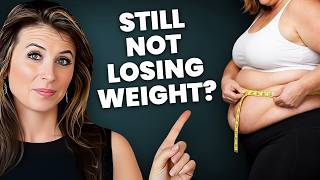
In this YouTube interview, Dr. Ashley Lucas (PhD, RD) talks with Ashley Niddish, founder and board president of the nonprofit Bags of Hope, about Ashley’s dramatic 34‑35 lb weight loss over 14 weeks using the PhD Weight Loss program. Ashley describes the metabolic slowdown she felt in her early 50s, low energy, and increasing belly fat that prompted her to seek change. She explains how the program’s science‑based nutrition education—learning about protein timing, the impact of certain vegetables, and why low‑fat diets can be counter‑productive—led her to eat more, include full‑fat foods (e.g., butter, heavy cream, bacon), and adopt a structured meal schedule with breakfast every day. These tweaks sparked a rapid “metabolism healing” feeling, dropped her cholesterol, and eliminated cravings. Ashley contrasts this natural approach with a friend’s year‑long GLP‑1 medication regimen, noting the program’s faster, sustainable results. She emphasizes the importance of mindset (viewing the plan as a lifestyle, not a diet), meticulous meal planning, and the ongoing support from coaches, family, and friends. The conversation also touches on how her personal transformation informs her work at Bags of Hope, highlighting the role of protein and whole foods for food‑insecure children. Finally, Ashley offers encouragement to listeners feeling stuck, stressing education, maintenance support, and the toolkit the program provides. The interview ends with a brief promotion of Bags of Hope and a call to action for viewers.
Chapters
Welcome to the Dr. Ashley Show. I'm Dr. Ashley, and today I'm so excited to have PhD client Ashley Niddish on the show. Ashley is the founder and board president of Bags of Hope, which is a nonprofit in Lake Norman, North Carolina, that provides weekend food for nearly 900 hungry children across 33 schools in the Charlotte region. She spends her days pouring into her community, and somewhere along the way, she forgot to pour into herself. 12 months into maintenance and she is not just keeping the weight off, she is thriving. Today we talk about why she made the change, how she did it, and she provides some really good, clear action steps that you can implement into your own life to create positive change right away. So let's dive in. Ashley, welcome to the show. I've really been looking forward to this. I would love for you to share a little bit about your journey. Um, tell us a little bit about yourself and What did it feel like before you decided to get started on a journey of, say, transformation?
Perfect. Transformation is the best word. So thank you for having me today. I have been so beyond pleased with my program at PhD Weight Loss. But I think for me, I had reached a point in my life where I just didn't like the way I looked anymore. To me personally, I didn't like the way I felt. I'm in my mid-50s now. Metabolism doesn't work like it used to. You can't work everything off in the gym. And I think over a couple of years, I had probably allowed myself to create some bad habits that at this stage of life, I just wasn't able to quickly turn back the scale or, you know, the fat gain that I had encountered.
What— when you say you didn't like the way that you felt, what was that? If weight loss feels harder than it should, it's usually not willpower. It's missing support. I'm Dr. Ashley Lucas, PhD and registered dietitian. After 17 years in weight loss clinics, I learned something really important. Your body needs different kinds of support during weight loss and during weight loss maintenance. At Dr. Ashley Wellness, we focus on 3 core pillars. Blood sugar and metabolism with GlucoCut Plus, hydration and energy with Electrolyte Plus, and gut health and natural GLP-1 signaling with GLP-1 Gut Longevity Plus. Together, they support how your body actually functions, so results feel more sustainable. Just visit DrAshleyLucas.com, use YouTube10 for 10% off your first purchase or 20% off your first subscription order with free shipping. Plus enjoy a 30-day money-back guarantee. Let's get back to the show.
I just think energy level was down, kind of achy, wasn't sleeping as well, you know, and everybody totes that too. Oh, well, you're middle-aged now, you're not going to sleep well. Well, I think there's a little more to it, and now I know a secret to it that I learned from all of you. Um, and so I think there's been some really great information that I've gained from your program. That helped me not only for the immediate weight loss goals, but moving forward into the rest of my life.
I love that. That's the whole point of it, really, right?
Absolutely.
Yeah. You know, we probably spoke to you about belly fat, right? Visceral fat, teaching you about your body, your metabolism. I think a lot of folks, when they get started on a weight loss journey, they just think that their body is broken, right? We've hit middle age and it's just not working anymore. Was there anything that we shared with you around your body, your metabolism that surprised you and helped you kind of understand what was going on? Or did you come in already understanding that?
I mean, I think I had a, a little idea about things, but I think what I gained the most from the program was truly, as you say, the science behind it. It was interesting to find out just because it was a vegetable. I'll use a sweet potato for instance. We've always heard it's the world's most perfect vegetable. You don't have to put anything on it. It tastes great, just, you know, freshly baked. But there's a little more to it than that. The way your body reacts to certain fruits and vegetables, even if they are healthy, it doesn't mean it's always the healthiest for you. And so I think just learning how protein fits in, how certain vegetables fit in, learning the science behind what to eat, when to eat, how to eat was super fascinating. And truly, I think the best part of the program because it works.
Mm-hmm. If you could pick two things out that just surprised you or even made the most impact on your body, What would those two things be?
Gosh, it's hard to pick just two. Honestly, I think going into the program, I felt like I probably wasn't eating enough during the day. And so I think it surprised me that when you hear weight loss, everybody thinks, I'm not going to eat, I'll be hungry. Nothing could be further from the truth. I eat way more now than I used to. I just know how and when to eat and being able to pick the best choices. And that doesn't mean eating things that I don't like or things that leave me feeling like, "Ugh, not that again," or, "I wish I could eat fill in the blank." It's good food. It's whole foods. And I never felt like I was depriving myself or hitting those peaks where, gosh, I really would love— M&M's are my vice. I really would love some M&M's. I didn't feel like I was really struggling to either have enough to eat or to eat foods that would satiate maybe what I was looking for at the time.
I think you're exactly right. When we go on a weight loss journey, we expect to be hungry, right? Uh, I, I hear from everyone, you know, I expect to eat rabbit food and just be hungry and everything diet and low fat. So people are really surprised when they come in and we're encouraging them to have full-fat salad dressing or full-fat yogurt or butter, heavy cream, light whipped cream. Funny you point that out.
That would be probably, now thinking back on it, of all the things I've learned, that may have been the biggest takeaway because just by nature, my family has a history of high cholesterol and I always have. Like, I joke that I could eat cardboard and water and still have high cholesterol. So coming into the program, When I remember I got the food sheet and Sydney explained it, she was like, nothing low fat, don't eat anything. And I'm like, wait, what? Eat, eat butter? Like, eat some of this every time I eat a meal. That was surprising.
Yeah. Has your cholesterol shifted at all?
It has dropped. Funny how that happens. Yes, it has.
More fat and your cholesterol has dropped.
Yes.
Yeah. Did you ever get upset with the conventional medical and dietary approaches that you have been taught, saying that you should eat low fat to drop your cholesterol and it not working when you were learning about kind of more of the truth around nutrition?
Right. I think so, yes, because I think there's a lot about how you're supposed to eat to stay healthy, that wasn't exactly adding up to what I was seeing with the results. Because for me personally, while I had put some weight on, it's not that I was eating, quote, that badly. It's not like I was eating fast food several times a week or 3 times a day. But I think some of the choices and trying to think, oh, well, I should have this low-fat salad dressing, or I should have this fill in the blank. That just wasn't the case. And I'm shocked by the results, pleasantly shocked by the results. More, not just the weight loss, but the fat loss. And I remember talking to my Consultant at the consultation, and when they asked me, "What do you want your weight goal to be? Like, what's your perfect weight?" I sort of sat there for a minute. I was like, I don't know that I could tell you a perfect weight because for me, it wasn't just about that magic number on the scale. I wanted to lose some fat that I had put on that I'd never had before in my entire life. The belly fat, as you mentioned earlier, was exactly it. I had not really struggled, fortunately, to that point in my life with weight gain or with added weight that I was like, oh, or with fat. And that was definitely something that I felt was more important maybe to get rid of than that magic number on the scale.
Yeah, that's exactly right. Would you be open to sharing with us when it started to be a struggle?
You mean as far as when I felt like I'm ready to do something about this?
Oh no, uh, when did you start to notice that you were putting on belly fat? When did— I always say that there's some kind trigger that changed the way we tolerate our food.
Right.
And so I would just, if you're open to sharing, it might be helpful to others listening thinking, oh, that could have been the trigger that changed my body a little bit.
Right. I really think it's when I hit 51, 52, just that stage of a woman's life where you start to transition, your hormones are definitely off. I really feel that was it. And it was kind of that slow creep. It's sort of like you notice certain things, but you're like, oh, Well, that's okay. But, you know, then it creeps up a little more, maybe a little faster, and then all of a sudden you're like, huh, I don't really like this.
So you hit your threshold. You just didn't feel good anymore. Energy was low. You were in a body that you weren't used to being in. So you decided to make a change. Is that right?
Absolutely. Absolutely.
And would you be open to sharing how much weight you dropped?
Yes. So I dropped 34 pounds, 35 pounds in an unbelievably short amount of time. Yeah, such a short amount of time, but in a healthy way.
That's right.
100% in a healthy way.
Not hungry. Didn't seem to have crazy cravings.
No. I would say the first time I really got hungry was once I started, it was maybe 2 or 3 weeks into the program where I was eating breakfast. You know, I was feeding my body on a regular schedule.
Yeah.
And I would reach the point, I remember it was maybe the second or third week where it was almost, I couldn't make it until 10:30 without me feeling that sensation of being hungry. And I don't, my stomach wouldn't normally growl because I was perfectly fine. Maybe eating breakfast or maybe not, and then just getting to lunch. And so that, that was sort of eye-opening as— and I felt like that was the point where the changes and the being more scheduled and the just knowing how to eat definitely kicked my body and my metabolism, I would say, maybe back into gear because clearly it wasn't functioning like it was meant to be prior to that.
Yeah, so you actually got to feel your metabolism healing and speeding back up?
Yes.
Would you be open to sharing an example of kind of what you ate before and then what you ate during the program? Um, I think that, you know, when I talk to a lot of folks who are coming into PhD, they're like, I really don't eat that much, or I eat very healthy, there's no way that you can help me make a change. Like, I'm very confident that we can tweak things, and it's not that you're not eating unhealthy. It's just that what you're eating isn't working for your body. And sometimes it is the smallest tweaks that we make that result in that 35, 50, 80+ pounds that folks can drop really quickly. So if you're open to it, I'd love for you to share kind of where you were and then a little bit closer to what you were doing in program and now what that looks like in maintenance.
Right. So I would say prior to being on the program, I would get up, I may or may not eat breakfast. Sometimes I would, sometimes I wouldn't. If I ate breakfast, it was maybe some eggs, um, maybe— I'm not really a cereal person, so it wouldn't have been anything. If I ate breakfast, it wasn't anything heavy or sugary, or I would say fast food-ish. It's just I would get up and I really wouldn't be hungry. And so I would probably just skip lunch and— or skip breakfast and then just start and eat lunch, maybe 11:30 or 12. And lunch for me would be maybe a sandwich. Again, I mentioned that I have high cholesterol and it's, you know, runs in my family. So I would eat turkey or I would eat chicken or I would eat— but it would be probably on a sandwich. If I made lunch at home, I would always do like a turkey roll. I'm not really a bread fanatic, definitely if it's like icky loaf bread. Um, if it's a sub roll, for whatever reason, that's a different story. But it's not like I was overeating. And let's just use an example. If I went and got a sub somewhere, it would be the smallest one they served. You know, if you're eating out, they're not putting a ton of meat on it. They're not putting a ton of cheese. So it's, it's not that I was overeating. Then I wouldn't have an afternoon snack and then I would eat dinner. And dinner, my husband and I normally eat 6:30-ish, 7-ish or so. But oftentimes maybe I would eat a small snack after dinner. And I'm not talking anything big. But, you know, a scoop of ice cream, maybe a handful of M&M's, just a little something. But that might linger closer to 8:30, 9:00. And it sort of was the end of the day. I just want to sit and chill for a minute and, gosh, that would taste good kind of thing. Once I started on the program, as I mentioned, breakfast became, became the everyday. And so I think it surprised me at first I didn't expect to have foods like your foods when we started the program. I really wanted a program for me that was actual food and not the process-y stuff. But I did take your oatmeals or take your blueberry pancakes or whatever, and I would use those in making different recipes. And what I liked about it, especially as I started on the program, And I know my coach pointed out, if you start using some of your foods for breakfast and for lunch, that allows you to only really have to plan that dinner meal, which it's a lot of information at once. It's good information and it's not necessarily overwhelming, but when you have to implement it all, it did take the pressure off to not have to worry about every little piece of the day and to be able to have some easy grab-and-gos between those days so that You're providing your vegetable at lunch and then you're providing your entire dinner, so to speak. But breakfast for me during the program would, as I mentioned, would either be maybe some of your oatmeal or taking those oatmeal and making it into muffins or taking the pancake mix and making those into muffins or making egg bites or scrambled eggs or hard-boiled eggs. And a slice of bacon. Wait, what? Yes, a slice of bacon. Or, you know, all the things that you think, oh, I'm on a diet, I can't eat that. I prefer to look at my time as PhD weight loss, though not as a diet, but as just a change in my food habits, because it's the changing of the mindset. I think there's a lot of derogatory thoughts that go into diet. Um, but for lunch, lunch was always either some roasted chicken or some turkey or a good protein and with a good side salad that I would make at home with some great dressing, full fat, of course. Um, and then the afternoon snack, that probably was crucial and something that I didn't really eat up to that time. So I did like the protein bars from your program, but also I think one of my favorite foods is just the Greek yogurt with fresh berries. Yeah. So those were the easy grab-and-goes and probably a quick filler and a protein shake. Those were always good to just sort of have around. And then dinners, it's funny because people ask, oh, well, I guess you can't eat red meat. Because again, people think diet, you always have to eat lean white meat. So, right, chicken, turkey, all of those. No. And it's, it's on the table. Like, everything is up for grabs. It's protein. It's how you prepare it. It's the sauce you prepare it in. It's the way in which you consume it. So it was so easy to plan dinners. I think the key part for every piece of PHD weight loss or any food program people go on is it is all about the planning. I noticed that even now in maintenance, if I have a week where I'm super busy and I don't plan, that's where you can get yourself back into bad habits or into trouble because then you're grabbing for things that aren't the best choices for you to make all the time. They're okay occasionally, but you shouldn't get into the habit of doing it frequently.
Yeah, well, that's so great, Ashley. That's why you've been so successful is because you've had that mindset. I think if we go into a weight loss experiencing— have it— if we go into a weight loss experience having the mindset that we're being deprived or restricted and we don't get to eat X, right, and we have to eat Y, um, then actually physiologically our body releases hormones that increase hunger. So when we go into, like you did, into this weight loss experience feeling like, okay, this is nourishing, this is exciting, I'm confident in my path here, then our body releases more full hormones and our cortisol drops down. So what you just shared around mindset really is the key to success. And then habitually planning is the biggest key, right? So you've really created this as your new identity. You said this is not a diet, this is a lifestyle, and these are the habits that I'm maintaining because they serve my body. This is a form of self-respect. I always say that saying no is actually a form of self-respect. It's okay to tell ourselves no. Uh, I don't think anyone, uh, who's in the body that they want to be in says yes to everything, and that's okay. That's a healthy thing. And I also really appreciate you sharing what you ate before and then what you eat now and during the program because they're very small tweaks. I mean, were you so surprised at the speed at which you were dropping weight with those tweaks and eating more and enjoying bacon?
It was shocking. It was shocking. The fact that I lost not only the weight that I wanted to, but the fat that I wanted to. In 14 weeks was amazing. And I remember one of my Coaches one week, I was maybe 3 or 4 weeks into the program and I've done a clean eating challenge before through my gym. So, you know, there are some foods on the PHD plan that are not don't ever eat, but just don't eat super frequently. That were kind of the green light on the clean eating plan. I'll use quinoa as an example. And so, you know, I remember sitting there one week and I'm like, okay, I just don't understand. Explain to me why I can't have the sweet potato. And my coach that week said, let me rephrase this for you. What if I told you that if you ate off of this list, which is very long, the list of foods you can eat is very long. But if you eat off of this list for 14 weeks, I will guarantee that you lose the fat and the weight that you want to lose. What would you say to me? And I said, I would say I'm all in. And his response was, that's what I'm telling you. And that was like the light switch moment where I'm like, okay, stop focusing on these handful of things, reach your goal. And then you can add some of these back. Now, for me though, I'm a perfectionist and I am very much a rule follower. So it wasn't hard for me to stay on track because of the list and because every piece of information I got in a handout form or on emails was so clearly written out for food choices, food suggestions, and it just made it really easy to have a handful of items like I keep snacks in my car. There's always a bag of snacks. It's like I have toddlers again because you've got to have something on hand just because sometimes, oops, you might think you're going to leave work and you don't, but you don't want to go too far past the time because you want to keep your body sort of on track. So it was super easy to be able to have those foods and know confidently that this was okay. And then of course you have the backup support that if there are questions, there's always someone you can call or email and you get pretty much an immediate response to your question. Yeah.
Well, I'm glad that it's helpful because I'm like you and I created this. So I was like, it has to be— everything has to be very specific, you know, no ambiguity there on what can I eat, what can't I eat. And then understanding the science as to like why the sweet potato at the beginning wasn't serving you. So you understand and you can make educated choices because we have our list of foods we're focusing on, foods of not focusing on, but ultimately it's your choice, right? You get to decide, but the journey is just not going to be as easy and it's going to be slower if you decide to incorporate more of the other foods that aren't serving you at the beginning while your metabolism is healing and speeding back up. What about, uh, family support? What was it like doing this with your family? I think questions around travel. Were you able to travel? I know you're very busy. Would you share a little bit how you navigated just your day-to-day busy life?
Absolutely. So before I started with PhD Weight Loss, I remembered I, I listened to a local sports talk radio every day, and the men on this program, there's 4 or 5 of them, you constantly hear the commercials. So I had heard PhD Weight Loss for probably 4 or 5 years. I had a really good friend who was using a GLP product. She maybe started that about a year before I started on PHD. And I remember right around Thanksgiving, I started my program in January of 2025, but Thanksgiving of 2024, I had seen her for the first time and it had been a couple of months. And I was like, "Wow, you really look great." And she said she was down 25 pounds, but she said, "You know, I still have that roll of fat. I still have fat places that I just wish I didn't." And that's when, in my mind, I could replay all of those commercials in my head and I was like, "Yep, I'm definitely going to go the food route." It's always a personal journey, and I never would want to judge or criticize anybody who is trying to make a lifestyle change. But I knew for me, I didn't want that quick fix that once I stopped, maybe everything comes back. I was looking for the permanent fix that would keep me healthy. And I remember having several conversations and saying to my dad, I'm definitely going to start, but I'm a little concerned about the cost. I know it's going to be expensive. And he stopped me and he said, You need to look at this as an investment in your health. And I remember thinking that really stuck with me. And so when I went in for my consultation, of course price mattered, but at some point it didn't matter because for me it was— that was an investment in my health. And it's one of the best investments that I have made for me, in me, and for my health, hands down. I had a lot of support with family and friends. And it was funny because when we would— I remember going out about a month in with a group of girlfriends and we were going out for dinner. It was maybe one of the first times I went out for dinner and they said, "Oh, you can't eat here." I'm like, "I can eat anywhere." And I remember I've had 3 coaches tell me, "You're not going to be perfect." You're just going to have to make the best choice with what you're given. And it's so right. You can eat at any restaurant because you're equipped and you have the toolkit that you know what are the best items for you to choose. And I think the support and just all of the information that I got through my program from my Coaches was you're still going to live life. And eating out and drinking and being at parties and being social with people, that is a really big part of life. It doesn't mean you don't ever do that again. It just means for a short period of time, you're much more limited if you want to get to your goal faster and reset everything faster. And then it's everything in moderation, just knowing, okay, I could eat this, but I'm not going to today because I know Friday night I'm going to go out with a group of friends and just making smarter choices so that you can enjoy the times when you're out with a group of people. And again, not that you're giving everything up, you're just giving certain things up at certain periods of time.
Did you inspire your friends? Were they motivated by your commitment?
I think so. Yes. I mean, my friends were very impressed with the fact, one, that I had the willpower to just say, we're good. And then it's funny because they would apologize. I'm sorry I got this. I'm like, I'm not sorry you got that. You should eat that and enjoy that. You know, I never wanted my being out with somebody else for them to feel like they couldn't make the food choice they wanted because I was in the middle of trying to lose the weight that I was hoping to. So for me, it was almost more positive motivation because I could sit there and feel very confident in my choice that I made and still not feel like, oh, I had to eat this and they got to eat that.
That's right.
I was looking at endgame and I hit the endgame and then some.
Yes, that's right. Yes, you did. You were focusing on what's right rather than what's wrong, right? It's that mindset piece again that allows us to have success. You know, you shared something that I hear a lot from folks is when they mention these GLP-1 medications, they say, this is the fast fix. I want something that is permanent. Would you say that PhD Weight Loss is slow comparatively to your friend who was on the GLP-1 medications?
100% no. I lost more weight and more fat in a healthy way, in a much faster amount of time than she lost in 1 year's time. While I lost my weight and my fat in 14 weeks— and 14 weeks sounds— I remember when they said, okay, it'll take you 14 weeks. And I said to Sydney, 14 weeks? Like, that's it? And she said yes. And she was 100% correct in that. 14 weeks. It took my friend almost a year on the GLP-1 to lose 25 pounds, and she still had fat that she did not want.
Still on the medication, do we know?
Still on the medication, yes.
Yeah, it's so interesting how we think about things, but when we look at the reality of what it is, going ahead and doing the, the natural approach is something that is permanent and can be just as fast. Again, everyone has their own route that they're going to go on. So I think it's just this kind of misconception that sometimes we have around, around that. You know, I would love for you to share a little bit about what you do. I know that you spend your days making sure that food insecure kids are fed. And I was wondering, as you went through PhD, did it change at all how you think about the connection between what we eat and how we actually feel, even for the families you serve? Yes.
So I think for me, Bags of Hope is, is the nonprofit that I run and we are providing weekend food to students experiencing food insecurity. So we're covering the critical gap from when students leave school Friday afternoon until they return Monday morning. Unfortunately for the students and the families we feed, most of our foods are shelf-stable. For a lot of reasons. Yeah. But it is very interesting to see the relationship with just— I will use protein as the main example, like seeing how important protein is in your well-being overall, your weight overall, and then just your cognitive function. It's so different and so important to make sure that you are getting protein, that you are getting vegetables, that you are getting fruits, the right ones to make your body work as a whole and in total. And I do remember, oddly enough, about this time last year, we were getting ready to send students home with food for spring break. But I remember Picking up one of the bags that we were getting ready to send home with one of our students. And I was like, gosh, this is so heavy. And I put it on the scale and it was 24.8 pounds. And my friend said to me, pick that back up again. And I picked it. I was like, I know it's really heavy. And she said, that's how much weight you've lost so far. And I thought, no wonder my knees feel better. No wonder I as a whole feel better because picking up what you had already dropped was pretty— it was humbling. I'll say that. It was humbling. Yes.
What would you say to someone who's on the fence or even more just feels so stuck potentially that they've lost hope? What would your words be to them?
I am such a believer in this program. And this entire journey, the support both on the front end and the back end, the education that you can receive. You can take as much in as you want, or you can take as little in as you want. But the support all along the way on the good days, the bad days, the people who cheer you on, the people who sort of talk you off the ledge if you feel like you've gone a little off the rails. I highly encourage people to at least give it a try. I think that they would be so impressed, um, with the level of education and support that they would get throughout the entire program. I think it's equally as important to get it on the maintenance in the back end. I love my maintenance. I still go in once a month. I think it just sort of keeps you on the guardrails. And I, like my conversation last week with Anna, you know, we were joking and having a good time and I made a comment and she said, "Yes, but this is life and maintenance." And so just that reality check of instead of feeling defeated and feeling like I went on vacation last week and I probably ate things or more things that I wouldn't normally eat, that's Okay, and that's part of life because I have the toolkit to get back on and I have the support if I need it to call and ask a question. I would say again, for me, I realize that weight loss journeys are very personal for everybody, but just going the more natural approach was, for me personally, more beneficial and easier than what I would have thought it would have been. It was really an attainable program. It was easy to follow and it was easy to make sure that I had the foods necessary to be successful throughout the program.
Thank you, Ashley, for sharing. I wanted to give you the opportunity to share a little bit about Bags of Hope, where people can learn more, how we could volunteer or give. Will you share a little bit about that?
Absolutely. Thank you so much. So people can find my organization Bags of Hope online. We're at bagsofhopelkn.com, like Lake Norman dot com. We're also on Instagram and Facebook. It takes a huge village to do what we do, both in terms of providing food or providing donations to help feed students. We are currently serving right at 900 students every weekend of the school year in 33 schools. Heavily located in the Lake Norman area, but we are throughout Greater Charlotte, some of Mooresville, some of Cabarrus County. So lots of ways that people can plug in and help and just give back to the community.
Thank you so much, Ashley. Thank you for sharing your story. I'm so grateful that you're here and huge congratulations to you. Super excited for you, proud of you, and can't wait to continue to hear about your story. So thank you so much. All right guys, I hope that you enjoyed this episode. I hope that it was motivating and inspiring. Please, if you are watching this on YouTube, drop some feedback, some comments, some congratulations to Ashley down below in the comment section. If you are listening to this on a podcast platform, please leave a review. It really matters. It helps us to impact more people in a positive way. Remember, you've got to step up to to make the change. Lead with your heart, train your mind, and do not negotiate with your body. I'll see you next time.
More from Dr.





If I Was Over 50 & 30 Pounds Overweight, This Is Exactly What I'd Do to Burn Belly Fat


