The Hidden Connection Between Vision, Your Brain, and Weight
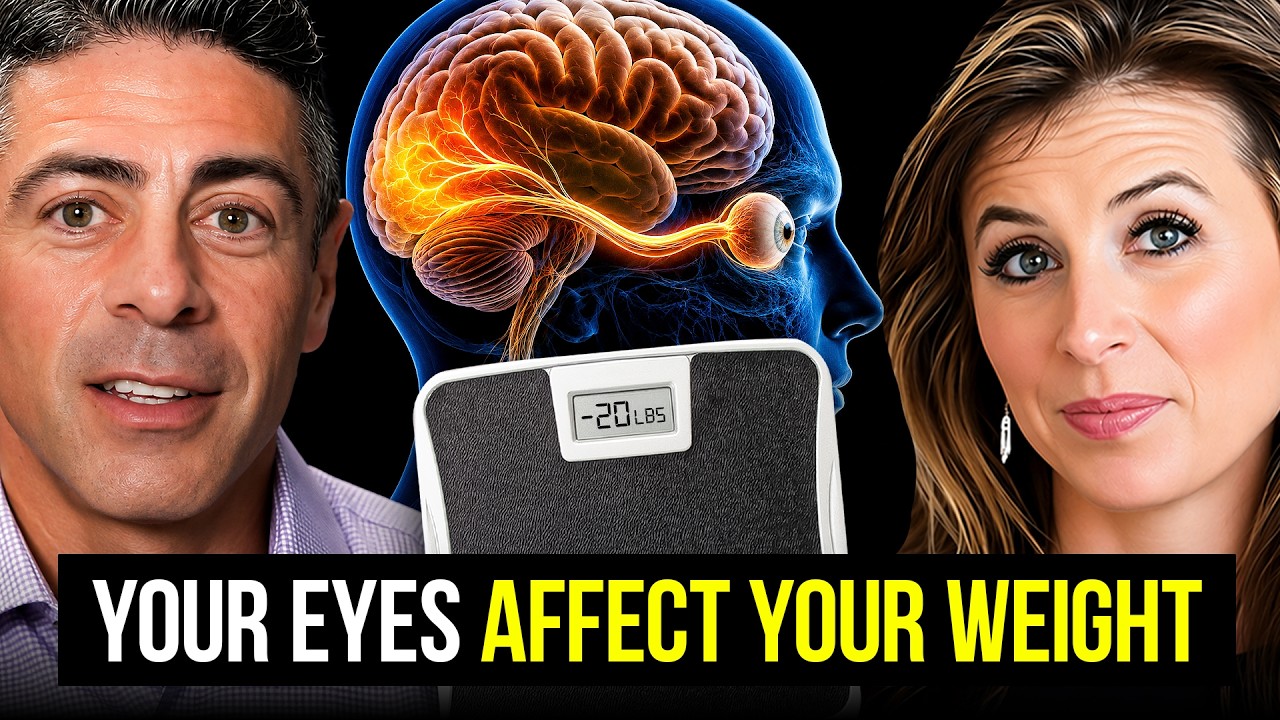
Dr. Ashley Lucas talks with vision expert Dr. Bryce Appelbaum about how visual processing affects your brain, metabolism, and weight. Her teenage sons did a vision intensive and saw improved focus and fewer tics. Appelbaum explains that chronic visual stress from screens and poor lighting can trigger fight-or-flight mode, disrupting sleep and metabolism, and shares exercises like eye push-ups and peripheral pointing to retrain your vision.
Chapters
Welcome to the Dr. Ashley Show. I'm Dr. Ashley, and today I am so excited to bring on one of my dearest friends and colleagues. If you've ever felt like there's something more going on in your body and no one is catching it, this episode is for you. I want to introduce you to Dr. Bryce Applebaum. He is one of my friends and dearest colleagues. He has helped my boys. I share a little bit about that story during the episode. He is one of the leading experts in the world on functional vision and the way that the eyes and the brain actually communicate. But that's not the only reason why I have been so excited to have him on. I have had him on because of a question I could not stop thinking about. You know, most of you right now are like me, uh, probably managing fatigue, brain fog, headaches, Probably a lot of you are dealing with a body that just won't release weight no matter what you try. You've been told that it's hormones or stress or just getting older. But what if part of it, part of what's going on, is happening behind your eyes in the way that your visual system is talking or not talking to your nervous system? And what if that conversation is the missing piece that nobody has been checking? Now, this is one of the most surprising conversations that I've ever recorded. Dr. Bryce talks about something most of us think we understand, and he completely reframes it. By the end, you are going to think differently about your eyes, your brain, and your body. So let's dive in. Dr. B, welcome to the show. I am so grateful that you're taking the time out of your busy day to be here with us. Thank you.
I am so excited to be here. Thank you for having me and so excited to connect.
So I just wanted to start by thanking you for all the work that you have done for my boys. If weight loss feels harder than it should, it's usually not willpower, it's missing support. I'm Dr. Ashley Lucas, PhD and registered dietitian. After 17 years in weight loss clinics, I learned something really important. Your body needs different kinds of support during weight loss and during weight loss maintenance. At Dr. Ashley Wellness, we focus on 3 core pillars: blood sugar and metabolism with GlucoCut Plus, hydration and energy with Electrolyte Plus, and gut health and natural GLP-1 signaling with GLP-1 Gut Longevity Plus. Together, they support how your body actually functions, so results feel more sustainable. Just visit drashleywellness.com, use YouTube10 for 10% off your first purchase or 20% off your first subscription order with free shipping. Plus enjoy a 30-day money-back guarantee. Let's get back to the show. So, uh, we brought both of our boys, they're 12 and 13-year-olds, um, up to you for a week for your vision intensive. And we wanted to come to you because we had, uh, one of our sons who struggles with, uh, some tics. And we also see him struggle with his eyesight. Like his eyesight's pretty not good. I don't know, you can share more if you want. And we were just concerned about that. And we wanted to reduce the stress that his nervous system was going through. And then my older son has always not loved reading, and I felt like there was probably another reason to why he didn't like reading, um, other than just not enjoying the activity. And he also is a big athlete, he loves to play football. So together we're like, okay, well, we're gonna come up and give this a shot. And I asked both boys yesterday because I knew I was going to talk to you, you know, how they have felt after the work with you. It was— what was it? It was probably about 2 months ago, I think, that we had them up. And they— I will say I'm very proud about them because they are very diligent in continuing to do their eye exercises, and they love the VR that you set them up with. So you made it fun.
Love that.
Good. Yeah. And so my younger son, the one who struggles with the, the tics and the, the lack of focus, he said that he feels his focus is significantly improved when he is doing his schoolwork. He is actually an avid reader and just said that it— he said it— the words land much easier in his brain. Like, those were the words that he used. And he feels that everything is just a bit easier. So So I am super grateful and I know it's going to continue to improve. And he said when he takes his glasses off, he can see things a little bit more clearly. Like before, it was completely blurred. So I think that that is very significant. For my older son, he— I did walk into his room the other day and he was reading The Hobbit. Now that would— I've never seen him sit down and read, so I'm going to take that as a huge win. And he said that he just feels like he's crushing it, were his words.
Oh, that's so good to hear.
Yeah, I wanted to share that with you.
Thank you so much. That warms my heart. Can I share a little bit of perspective on each of them? Sure. So for your older son, normal human nature is we avoid stuff that's hard for us, right? And if something's challenging and if you're not good at it, like you're going to find anything else to do but that. He had a really hard time aligning, pointing, and focusing his eyes. So his brain was on overdrive just to process the information. And a lot of the symptoms he's experiencing with losing his place reading, words moving around, not remembering what he's reading, he had this kind of delay in terms of vision development. He hadn't learned the functional skills and abilities the way that we are supposed to, and there's lots of reasons why. But we really closed the gap for him. He did all the work, but now he's taken something that was a weakness and honestly turned it into a strength. And I know when he left, I said to him, dude, you have absolutely everything in place right now to not only read, but to read well. And so great to hear that he read unprompted in his room. I know. Without you guys yelling at him. That's incredible. And I think for your younger son, I mean, we can absolutely regulate our nervous system through vision. And most people listening don't recognize that we're under this state of fight or flight all day long. Because of screen time, because of this digital world that we're in. And our visual system under screen engagement becomes really tunneled, really locked in. The inside muscles of the eyes, the outside muscles of the eyes start working in an opposing fashion. And then it can cause a lot of symptoms, a lot of behaviors, a lot of challenges that influence life in many ways. And so, with the opportunity to regulate your nervous system through vision, you can make it so that the autonomic nervous system is balanced and that even though we're not meant to be on screens and meant to be experiencing with up close work all day long, we can thrive in that work, in that world if we have the right tools in place. So that's amazing to hear that both of them are, are still crushing life and opportunities opening up for them in the future.
Yeah, for sure. I'm super grateful and I want to get into that. Uh, you know, a lot of people listening to this are interested in metabolic health, maybe in dropping weight, keeping the weight off for good. And so I want to go into the vision-specific here in a moment, but the two of us, we have a dear friend in common, and she mentioned that when she went and saw you for vision training, she was going for brain fog, for headaches, for memory. So I want— this is like a two-part question. Is one, how is— how are those symptoms associated with our vision? And then the second thing she said is, uh, after she went through your program, she dropped 15 pounds without even trying. So So, how can vision— and I know it's correlated with nervous system, but can you walk us through for those of us who are struggling with those symptoms of weight gain, of brain fog, memory issues, headaches, and how that ties into vision and how when we do the right work, we can actually see our body be able to release even potentially fat that we're holding on to?
I mean, I will say, hearing you say that you can lose 15 pounds by doing vision training, most people listening are probably like, "What are you talking about here?" You know, we hold a lot of stress within our body in many different ways. And just to kind of give a little bit of perspective here, vision, we want to look at very differently from eyesight. Eyesight's the ability to see. That's a symptom. Those are— that's what glasses or contacts are for. But vision is how the brain filters, organizes, processes everything coming in through the eyes to know how to make sense of it, derive meaning, and then direct the appropriate action. So vision problems and functional vision problems, they're brain problems. And if they're addressed on a brain basis, the outcomes are very different. Vision is something that is learned. We're not born with the ability to read or to use our eyes to converge, attract, to focus. It's all developed through our life experiences. And it's either learned appropriately through the right sequencing of milestones or learned poorly, and then it leads to these imbalances. And so in many cases, the symptoms that we're all experiencing in life the decreased productivity throughout the workday, the loss of focus, the fatigue, the performance, or even just how we're showing up to the world is often tied to the eye-brain connection. And when the visual system is under stress, which is really the root cause of so much dysfunction, our pupils widen and we get stuck in with this tunnel vision effect. And it really means that vision is driving this fight or flight response. And when you're going through life with a fight or flight response, you know better than anybody that your metabolism changes, your ability to sleep shifts, and your brain is on overdrive all day long. And so that means your ability to recover shifts, your ability to take in the world shifts, and there can be this compounded effect where everything just starts to function differently systemically. And we know that sleep is one of, if not the most important things for our health and for healthy weight balance or weight loss if we're on that path. And vision is influenced— excuse me, and sleep is influenced by vision dramatically. When our— when our brain is hyperstimulated, when we're on screens too late at night, when we're in that fight or flight response, we're not able to calm our brains down to get into that rest and digest and parasympathetic phase and then get to the place where we can get restful sleep. And so our friend that you're speaking of, I mean, she was so hyperfocused on things and had such poor eye-brain communication and had such difficulty navigating through space that when we opened up her world, when we taught her how to use her eyes to rewire her brain, to change how she was using vision, to change how she was taking in the world, she almost found the switch that she could flip to just kind of simply be and to take in things and process information more fluidly. And brain fog that she was experiencing and fatigue that she was experiencing was heavily driven by the brain using the visual system a different way than it's wired. And when we could then figure out how to allow the airplanes to take off and get the air traffic controller to get the planes to land in terms of visual skills and abilities, she was holding on to tension, holding on to so much in such a different way that really she found this equilibrium in this kind of homeostasis that allowed so much of her metabolism and other systems within her body to become regulated.
Where does the original dysfunction come from?
I would say it's being faced with visual demands that we don't have the tools in place to support or meet. And when we are chasing our kids around all day, when we're at work all day, when we're back-to-back Zoom calls, that puts us in that fight or flight response. And then we start using our eyes very differently than it's wired. And for many people, like your son with the nearsightedness, far away was getting blurrier and blurrier every year. As the symptom, but the problem was his focusing system up close being locked up. And when we developed better stamina and flexibility there, distance started to open up. He then started to be able to discriminate and engage with space more easily. And I would imagine his prescription stabilized. It actually reduced a little bit, and it's not going to be on the same path that he was on because he addressed the problem And then as a result, the symptom got better. And so I think if we were all living in the wilderness on a deserted island and just engaging with the distance, scanning the horizon for dinner and danger evolutionarily, like humans were supposed to, there's not vision problems then that emerge because we're not adapting to our environment. So it's really our environment that is causing so much of this unnecessary struggling.
You know what's interesting about my son, and again, he's only 12 years old, but he had such concern about his depreciating eyesight. I mean, And we didn't instill that. He was just like, oh my gosh, it's just— and because it was happening quickly, that I think one of the biggest things he actually took away is that he feels empowered that he can do something about it. And he really felt, I think, less anxiety just around that, seeing that he can actually improve it or maintain it because he felt totally powerless before.
When without sharing too much personal information, he was perceiving the world in a different place than where it was. And as a complete exaggeration, it was like he was looking through paper towel holders. He was really focal, really central in his visual processing. So when a ball was coming at him, he had this mismatch of perceiving the ball farther away than where it was. So he had to put in all this extra effort just to eliminate that mismatch to prepare himself. So that ability to kind of feel safe navigating through space and within his own skin, you know, we're allowing the dominant sense of vision to start to guide and lead now rather than interfere and drive a lot of those challenges.
What about people who are like, you know what, I'm fine. I scored 20/20 on my test when I went to the doctor. Can you still have bad vision and have good eyesight, I guess, if I'm using the right terms?
Absolutely. Well, so eyesight again is just a symptom. So there's so much more to vision than just 20/20 eyesight. And eyesight just looks at one skill, the ability to discriminate or focus light far away on this far away letter chart. But what about how the brain uses the eyes as a team and how the brain tells the eyes how to track and focus and converge? And so many of the patients we work with actually have great eyesight and they're here for depth perception or peripheral awareness or reaction time or to be able to read more efficiently for longer or start trusting what they're seeing so they're not afraid of heights, so they're not hesitant on stairs or escalators or tripping over changes in elevation or knocking things over or bumping into walls. So, so many of these normal challenges that many people listening are probably like, oh yeah, I experienced that. Those aren't normal. Those are just common. And I would say in today's world where screen time has become this new pandemic, eyesight is starting to compromise at a rapid rate for many different ages and populations. And we can go over statistics if that would be helpful. But eyesight and vision, they're different things. And so anyone who goes to the eye doctor and they say, "Oh, you're 20/20 or 20-whatever and the eyes are healthy." Great. What about my vision? What about how my brain is using my eyes and how I'm able to engage with the world. Because if you don't test, as you know, you guess. And you can't say that vision is fine unless you're doing the testing to uncover whether that's actually the case or not. And that's where eye exams matter so much more than what you can see. We need to be doing functional vision evaluations that look at all the skills that are required for life.
Does anyone do those?
I do those now. Some people do those. I mean— As eye doctors, we're trained how to manage vision decline. So we're already of the mindset of stuff goes bad, things go wrong, and we just have to mitigate those. But taking a proactive approach and looking at function on top of structure, absolutely, you know, that allows for a very different runway into the future. And there are many doctors who look at vision development and practice vision rehabilitation and vision training and vision therapy. But there are so few out there. And even if you're board certified, which there are some who are beyond just me, it doesn't necessarily mean you know how to train the brain for treatment and put the pieces together. It just means you have an understanding of vision that's different. But what we do with vision performance training or vision therapy, it's not like physical therapy where for a sprained MCL you're getting a dozen sessions for grade 1 and 2 dozen for grade 2 and you can go to any PT around town. That's kind of the same work. There is no consistency yet on what vision training looks like. And so we're doing a lot to help change that, but the need right now could not be greater. And it's— these problems are everywhere when you know what to look for.
Will you talk about readers? Because I'm hitting the stage where sometimes I feel like maybe I could use them, but I've refrained. And I've heard from some people that if you start to use readers, you're going to make your eyes dependent on it and it's just going to continue to depreciate. Is Is that true? Uh, if not, what's going on? Will you speak to that? And if we do feel like we need readers or we're starting to use them, what should we be doing, looking out for?
This— and this is one of the sexiest topics because for pretty much everyone in our 40s, there are anatomical changes that occur. The lens inside of our eye becomes hardened, the fibers and muscles controlling the lens start to become more rigid and less flexible. You start holding things far away till your arms aren't long enough, and then you know the drill, you go grab the over-the-counter drugstore readers. But just like if you sprained your knee, you don't just throw yourself into a wheelchair and stop using it. You figure out what happened and you work way back to functionality. The same goes with the eyes. And especially at that period exactly where you are now where you're starting to see things change, that is the critical time to take action and be more proactive because with the right work, right motivation, and right compliance, you can train the focusing system to hold clarity at close distance for longer. And then with work that compounds, it becomes longer and longer. And at a minimum, you can kick the can way down the road. But if you keep up the work, I mean, I have patients in their 70s and 80s who do not wear readers, but they do work every day. And just to give you a little scenario, my wife at 42, literally on her birthday, blew out the candles and was like, "Brice, I can't read the back of the medicine bottle. Do something here." And luckily, she knew the Functional Eye Guy with the secret recipe, but we put her through a specific sequence and protocol, and she reversed her age-related changes. She now has the focusing system of somebody half her age. But just like she exercises and trains her body daily, she does the same with her focusing system to keep and maintain her HDI sight. So it's very— and I think there's an amazing parallel here with weight loss. You know, for somebody who says, I want to or need to lose 20 pounds, let's say.
Mm-hmm.
If there's a massive shift at the beginning, it's a lot easier to stay motivated and continue on the habits. But if you're losing a pound every 2 weeks, you play the long game, you're solid. But most people want immediate return and immediate gratification.. And so that's where with the near eyesight changes that do occur because of age, if we can do a reboot, it's a lot easier then to keep and maintain versus doing those small daily incremental steps that do add up.
Yeah.
And I mean, there's a specific eye exercise called eye push-ups. We can even talk about it today.
I remember that. I've done them.
But literally, Ashley, you do those every day, you will not need reading glasses.
Really? Just those?
Just those. But you have to do it every day and it's not fun and it's boring. And let's say you could get your, your thumb to get a millimeter closer in a week. Millimeters add up to centimeters, centimeters add up to inches, inches add up to more. And it's one of those things that because the world is so visually dependent, it's a lot easier to just grab the readers. Yeah, this is important to you. And if we can recognize the repercussions of this, if we don't address this, mm-hmm. I mean, you can keep what you have for longer at a minimum. And in many cases you can actually reverse things. Mm-hmm. I will tell you though, pre-COVID, I would've said that's impossible. These are age-related changes and that's what we're taught in school. Nothing can be done about that. We started learning from our patients, setting up protocols, and we now with very, very high accuracy and consistency can slow down and reverse and slow down and stop the age-related changes for pretty much anybody in office.
Wow.
And in many cases reverse it, but you got to do the work.
Can we talk about eye push-ups and what that is? Like, are there top 3 exercises we should be doing?
Definitely. So eye push-ups is number 1. It's not even close. So let's all do this together. So you're going to cover up your eye with your hand, and then with the other hand, give a thumbs up with your arm all the way straight. And you're going to look at the nail of your finger. Mm-hmm. And then slowly bring your finger towards you down your midline until it gets a little blurry. And then when it gets a little blurry, stop, hold it, and then try and make it clear. So you're going to think about looking hard, locking in on the focus, stimulating the focusing system. If anybody's watching you, they'll see that your pupil's getting really small because the muscle's constricting. You're going to hold that for 5 seconds. Then you're going to look out into the distance for 5 seconds and relax focus and look soft and kind of have panoramic vision. Then back at your thumb for 5 seconds, back in the distance for 5. So this is a turn on, turn off, turn on, turn off, or stimulate, relax. And you want to do it the same amount of time right eye as you do with left eye. Most people listening will recognize that one of the eyes can hold the thumb a little bit closer than the other, which means under two-eye conditions, we're actually focusing our eyes at slightly different planes, likely because it's too hard to focus them at the same plane. And so that's the scenario where a little bit of movement with time builds and compounds. And even if you did a minute a day each eye, do it for 2 weeks, do it for a week. I can promise you you'll see a difference. And that's enough to hopefully say, okay, there's something to this and there is clear science behind this. But I will say the people that say vision exercises don't work are the same people that say normal exercise doesn't work. Like exercise works, vision exercises work, but you gotta do the right stuff for the right reasons and you gotta know what to do.
Yeah. You know, when I do that exercise, I've been doing your ScreenFit program, which we can talk about.
Awesome.
I get a little dizzy.
Mm. So can we talk about that for a little bit?
Yeah, let's, let's do it.
Do you get motion sick in general?
Yeah, so bad. I can't even look at my daughter go on a merry-go-round. Can't even look. Yeah. And I don't know if this has anything to do with it, but I, definitely can't jump on a trampoline.
Okay, so I say this with love, but this is telling you that your visual system and your vestibular system— and the vestibular system is the internal GPS system and the roadmap of life that lets us know which way is up and down and left and right.
I have no roadmap.
They're sending conflicting signals that's hard for your brain to interpret. And if doing a vision exercise when your body is not moving and you're safe elicits that motion sensitivity, To me, that's diagnostic that vision is contributing to the motion sickness, probably the main reason for it. Because motion sickness, especially as a passenger or in the back seat, but when it's better when you're driving.
Yeah, I don't get sick when I'm driving.
Yeah, that's because when you're driving, you're able to access your peripheral processing with your visual processing and able to plan what's coming. When you're a passenger in the back seat, You're getting all of these signals that things in front of you are not moving, but then your vestibular system's activated and saying, oh no, we are in dynamic motion. And then there's this seesaw that's going back and forth between central and peripheral processing, which are two different pathways neurologically in our brain. So when we can learn how to regulate those systems and get them to start speaking the same language, motion sickness is always better, in most cases completely eliminated.
Wow.
And I think that tells you that because of all of this virtual work that you're doing and screen time you're doing, your visual system is, is kind of locked up, which is the normal response. And when systems— when muscle systems are under tension over time, that's how you can get buff if you're training those in the gym. But when your visual system is under tension over time, that's what contributes to the headaches, the eye strain, the brain fog, and a lot of that motion sensitivity. Interesting. So I think let's— you mentioned top 3. So eye push-ups would be number 1. But number 2 here is specifically for motion sickness. And I like to call these selfie eye movements.
OK.
So you can do this in a mirror. But if you don't have a mirror, pull your phone up and click on the camera so you can see your face. OK. And then what you're going to do is cover up an eye.
Mm-hmm.
You're going to look at your eye in the camera. And then without looking away from the camera, you're going to slowly turn your head to the left, slowly turn it to the right, and you're watching your eye the whole time. And this is activating what's called the vestibular ocular reflex. So you're going side to side, you can go up and down, go in small circles, clockwise and counterclockwise. Again, do it same amount of time, right eye as left eye. But this is starting to raise awareness of these two systems communicating together. And a lot of vestibular PTs will say, do something like that, but look at your thumb and just shake your head side to side. I think the key here is if learning takes place from the exercise, it allows for new firing and wiring in the brain. If you're just doing it to do it though and learning is not taking place, it's probably not gonna help that much. But those selfie eye movements really help those two systems talk to each other. And then I would say the third one that would be really solid for anybody who experiences any type of fear or mental health challenges when they're driving is called peripheral pointing. And so with peripheral pointing, what you're going to do is this can be done with both eyes or one eye at a time. You're going to look at something far away across the room. So I'm going to look at this light switch across the room here. I'm not going to look away from the light switch, but then I'm going to notice with my side vision, the doorknob all the way off to the side. And I'm going to point to where I think that doorknob is without moving my eye there. And then when I think I'm right, I got it, I'm going to make the eye movement over and see, am I right on the money or do I need to refixate? So if I'm off, bring it back down, try it again. And then if you're getting it right where it's supposed to be, then make a broader image into your awareness. But the key here is finding the light switch to activate periphery. Periphery is what grounds vision and grounds us in space. And so, when you are driving over a bridge or into a tunnel and all of a sudden you're aware of what you're not aware of and the world starts to crowd in and close in, being able to open up our periphery is something that will literally pull us out of that fight or flight response. And when we talked about pupils widening and tunnel vision occurring when we're in that fight or flight response, evolutionarily, that's to protect us from the saber-toothed tiger coming at us where we have to decide, block out the noise, either run or turn that tiger into dinner. But that same reaction is what's happening when we're on screens all day, where our thinking, our attention, our vision become tunneled.
Interesting.
So being able to access periphery is so calming and can regulate our nervous system. And it's something we can do even on walks, where normally when you walk, you can— you're kind of focusing on where you're walking or not even really thinking about where you're looking. If you start to notice the house to the left, the mailbox to the right, but notice them both simultaneously, you can actively take in more of your world and then notice things moving by as you're walking by, which creates optic flow that kind of grounds us in space with movement. And that can really help balance a lot of that back and forth between those two processing systems.
Interesting. I was trying it right now. If I look weird, that's why.
Well, and I mean, I always do this. People don't realize this, but on Zoom calls or even on podcasts, I make the window as small as possible and I try and take in as much of the room and as much of the screen as I can. So I almost engage with kind of soft gaze and panoramic viewing. And then that means, at least for me, that I am able to access higher level thinking, think outside the box and be more divergent in my thinking versus if I'm locked in, it becomes a lot harder.
I have two personal experiences on that. One is when I did a lot of one-on-one work with clients and I was sitting in a room, I remember this, it's such a weird feeling, and the wall behind them was just pure white. I would like, I wouldn't, it was some weird focus where like it almost felt like a tunnel to me, and they were kind of like pulled out a little bit, and I'd always have to like blink my eyes and It almost felt like, yeah, they were moving away from me in a distance. Tunnel vision. When you said tunnel vision is what it felt like, what was happening? Yeah.
So I've noticed this with you hanging out in real life. Oh, you are somebody who is so focused on who you're talking to and you're giving them such great attention and your full eye contact that it's almost like you're cognitively blocking everything else out other than where they are. And so when that happens in a room when there's no other visual cues behind them, it's almost like you're controlling without even realizing, unconsciously ignoring all the noise and just focusing right on them. So in a scenario like that, if when you're looking at them and then you realize, okay, let me do the opposite, let me pull back visually and let me diverge my eyes, that actually is the key for improving depth perception and sense of self in space. And there's way more doubt and protocols that we can do with technology and things in office. But the more aware we are of what's around us, the better we're able to localize what's in front of us. And so for athletes, you know, we are— we're all told keep our eye on the ball, but very often keeping your eye on the ball and not just knowing where the ball is, but anticipating where it will be, that requires heightened peripheral awareness so we can take in everything else and almost slow down and prepare us for what's coming. And your older son, who is a stud football player, talked a little bit about when he did have difficulty tracking a ball as a receiver, what that felt like. And I definitely would talk to him about what he's noticed with flag football and things there, because his sense of self in space should be a lot more accurate and he should be able to make a more direct linear path to where the ball is going to be. Being able to process information more fluidly.
Yeah, I'll have to ask him. I will say, like, he's making lots of touchdowns, catching lots of passes, so.
That's 'cause he's a Lucas, he's a stud. That makes sense.
That's right. He's also very tall right now. I'm like, what is happening?
Do you have him on any type of nutritional protocol for just getting bigger and for sports?
Yeah, that's a great question. I wanted to talk to you about nutrition and eyesight anyway, so maybe we can dive into that. You know, so my husband, Doug, he has a podcast called Health 3.0 through a company he's working with right now, LifeMD. And he had spent— this was probably about 3 months ago, he went up to New York and he interviewed the best of the best, Dr. Perlmutter, who is the best, by the way, when it comes to brain health and just a very, very great giving man, was talking to him and was saying, you know, the number one thing for brain health as we continue to age is no processed foods. Like all whole foods. And then he interviewed probably 4 other really great, amazing health and wellness experts, and they all said the same thing. So, we were sitting down at dinner and we don't eat— we eat well anyway. And cleanly. Yeah, and cleanly. But for the kids, like they would have, I don't know, organic chips in the pantry. They would— my son just loved sugar. And we would say, "Dude, you are addicted to sugar." It might be organic. Giggles or something like that. And then, I know when he was with the football team, he would be eating Doritos and Oreos and all the things. And so, anyway, my husband came down and we were talking at dinner and the kids were there and he's like, "This is the number one focus." And Doug is always a fan of how clean can we eat. He calls his body his temple. And he comes from this because he comes from a history of a genetic history of morbid obesity. So, for him, he does have to be disciplined and focused, or he just puts on weight very easily. So, he knows, for him, he needs to treat his body in a very specific way, and he respects it through how he eats and how he moves and how he lives his life. And, you know, I respect that a lot. So, with— something hit with my older son, his name is Dash, and He's just like, I'm not eating any processed foods and I'm cutting out sugar. Now, we just educated him, and I think this is really great, um, when you can give your kids education on it and let them make the decision. Because if I had told him, you don't need— you shouldn't eat those foods, he would have never followed through. But there was something about letting him have that choice, and we were talking about performance, and he lives for football, and he will do anything for that And, he just cut it out right then and there. And, it's been 3 months and he doesn't eat really anything from a box or that's packaged, maybe some dried fruit. And, this is all— I'm at the point where I'm like, "Will you just eat that?" Because sometimes it's hard. He's like, "No, I'm not eating this thing that comes from a bag." I'm like, "All right." He's like, "I'd rather just be hungry." So, he's very obstinate and persistent and strong-willed.
And he's making the decision himself. That's what's so key because I've got 3 young kids too. Anytime you tell them what to do, that's obviously what they're going to not do. But if he's recognizing that he can perform better and he feels better, that's the secret code that he now has obviously been modeling from you guys but recognizes there's value to. And it's interesting, like the same stuff that's terrible for our brain is the same stuff that's terrible for our eyes because our eyes are extensions of our brain. They're actually the only part of your brain that you can see without things getting messy. And they emerge from the brain in the first trimester in utero. And the seed oils, the gluten, the dairy, the sugar, the processed food, the alcohol, all the stuff that's bad for our brain is bad for our eyes, especially when we have neuroinflammation. And then that shows up as visual symptoms very often.
Yeah, that's right. I will say, like, the first few days, I remember him being up in his room and he was just holding his head being like, "Oh my gosh, like, my head's going crazy." That's all he could say. And I think it was just the withdrawals from sugar. It was really intense for 3 days. And then after that, I asked him if he felt different and he said he could focus. He felt like he had energy for longer periods of time. He could focus in school. And then he's just all about right now protein so that he can build his muscles. So he just loves steaks. He eats a lot of red meat.
That's awesome.
He does not love veggies, you know, but what can you do?
I mean, for everyone listening, imagine having the cheat code at 13. Yeah, right. I mean, there's such different outcomes for life and for productivity and happiness when you're giving your body the right instructions to function at its best.
Are there any specific foods, vitamins, minerals, supplements that you recommend? Fish oil, vitamin A, a specific form of it. What do you think?
Definitely. So, I would say there's a lot that's great for our eyes, but on the Mount Rushmore, fish oil is for sure number one. Okay. And omega-3s, if it's in real food, the cold water fish like salmon, sardines, anchovies, mackerel, halibut, those are wonderful. The EPA in fish oil decreases inflammation within the body and then the DHA helps the brain with communication and connectivity. And also the DHA really helps with retinal support which is the layers of the inside of our eye that allow us to see. So omega-3s are massively important. Lutein and zeaxanthin are what's called macular carotenoids, and those help support the macula, which is the sweet spot of our retina. And those, you can find those in green leafy vegetables. Lutein is in eggs. But what's really cool about both of those, and macular carotenoids in general, is they act as an internal blue light blocking filter within our eye. Oh, cool. They help protect us against UV light and a lot of the harmful damaging light. Antioxidants are really important. So, vitamins A, C, and E, glutathione, really helpful in both. And antioxidants support— help decrease the risk of certain diseases like macular degeneration and even cataract formation. And antioxidants are really helpful for the retinal tissue which have very metabolically active photoreceptors that are actually super active when we're, when we're asleep and our eyes are even closed. But I would say those are kind of the main ones. And then, of course, there's a lot of other things that are great for the eyes, like zinc and vitamin D and vitamin E. And you're probably the best and most knowledgeable person I know in terms of nutrition and how to find the best form of what we're looking for in real food. But I think supplements in particular, like if you're supplementing already a good foundation, that's when those can be really helpful. But if you don't have the foundation in place, it's hard to out-supplement, you know, a lot of those poor instructions for the body.
Yeah, I agree with you there. What about lifestyle? You mentioned sleep as being really important. I'm sure exercise, doing our 3 I exercises every day. What about like getting out in the sun in the morning, seeing the actual sun and those UV rays? Is that— I know that's helpful for setting circadian rhythm. Does that have anything to do with eyesight as well? And how does that work?
Definitely. So blue light is what everybody's talking about, and that's kind of like the new gluten in today's world.
Yeah.
Blue light is actually essential for us, but natural blue light. So that's from the sun. Blue light that's blasting our eyes and our brains all day long from screens. That's where the problems emerge. So, I would say in the morning, ideally, like right when you get up, 2 to 10 minutes of natural sunlight into the eyes definitely helps set circadian rhythms but helps give our brain instructions about time and space and also helps regulate our nervous system. And again, in the evening before bed, help set your circadian rhythms. Natural light is so important for us and there's a lot on social media now about about sunglasses being harmful.
Yeah.
And I will say from 10 till 2, when the rays are the most direct, that's when we should be wearing sunglasses, especially if you're on the water or you're outside all the time, because UV rays and certain, certain wavelengths of light can damage the lens inside of our eye, the retina, cause changes within the lids of our eyes as well. But when we're wearing sunglasses, our pupils are dilating. And especially if they're sunglasses that don't have high-quality filters, you're actually allowing more light in if it's not blocking UVA and UVB. And so that's damaging. But then you're also sending the signals to your body that you're not in light, and so you don't have to release the, the biochemicals that protect us. And I've seen many people talk about this. I've even tried it myself. Not wearing suntan lotion with sunglasses on is very different than not wearing suntan lotion without sunglasses on, especially if you're metabolically flexible.
Wait, say that again.
So there's a lot of people that will, uh, say they never wear sunglasses and they never wear suntan lotion and they don't get burnt, right? But those same people, when they wear sunglasses, very often their skin becomes more sensitive. Because you're not sending the signals to your body to support melanin production and the protective mechanisms that are in place.
Oh, that's so interesting because it's like a false sense of where we really are.
So I would say like if you're outside and you're photosensitive and light bothers you and you're squinting and you're creating symptoms, that's— you should be wearing sunglasses.
Okay.
And again, if you're outside all the time from 10 to 2, you should be wearing sunglasses during those times. In those other times, light is healing and provides energy to our mitochondria. And in my practice, we even do a lot of optometric phototherapy or light therapy where we have patients look at a specific wavelength of light for a specific amount of time. So let's say we wanted them to be in more parasympathetic function, we'd have them look at this specific teal light for a certain period of time. Or if they want to be more sympathetic, more red light. And then red light in general, photobiomodulation, is great for decreasing inflammation within our body and for helping power up the mitochondria with a lot of cellular activity. But that's different than light as a healing mechanism. Mm-hmm. So I think really just having the right understanding of light and what it's for is important.
Yeah.
But I think the many of us who love what we do or on screens all the time or on social media all the time, when you're blasting your brain through the eyes with that high-energy light and the contrast, the brightness, the glare, that causes very different changes within our body and can definitely impact metabolic function, circadian rhythms. And when our sleep is messed up, you know better than anybody as well, that throws off, uh, how our body functions and the cravings. And then can cause a lot of, a lot of unnecessary struggling.
Last question for you. What do you think about the blue light blocking glasses? There's the yellow ones for during the day. There's the red ones at night. Do you like them? Thumbs up, thumbs down?
And then there's the $5 ones on Amazon. So again, it depends on what your goals are and what you're trying to accomplish. But if it is not dark red or amber, blue light is being allowed in.
Okay.
There's— blue light is a spectrum. There's harmful blue light and there's okay blue light. So you want to make sure that any blue light glasses are blocking the harmful rays.
Okay.
So for people who— and we see a lot of people who literally cannot be in a room if there's fluorescent lighting without protection, or they can't go to a mall or grocery store because there's this sensory overload. In those cases, the red ones are really, really helpful. I would say for most people, those really should only be used once the sun is down in the evening, especially if you're on screens. The yellow ones are usually ideal for the daytime.
Yeah.
And then we also heavily stand behind what we call digital performance lenses. The boys have those, which are protective for screens, especially for developing eyes. They do have a high-quality blue light filter, but you'll notice those lenses are clear with a little bit of a purplish hue. Yeah, they block all of the harmful blue, but just that. But then there's a very specific prescription in there that is therapeutic, not compensatory. So it helps change their visual stress response to near so that the inside and outside muscle of the eyes can work better together in synergy. And that makes screen time way less harmful for children in particular. And so I think it's kind of like a lot of things. There's a range of how you can engage with that type of product, but most people don't need to be wearing the dark red all day long. And when they do, it can throw off color percept— well, it definitely throws off color perception, but it also can throw off our ability to engage with space and to take in space and can throw off a lot of our signaling that comes through our eyes on time, space, and where we're located in the world.
Interesting. There's this— I don't frequently go to the mall, but there's this store in the mall and it's bright blue. It's a jewelry store. And I bet they use those lights to make things look sparkly. And I had to hold myself back. I really wanted to go in there and ask if they had trouble sleeping. Oh yeah, that they should be wearing protection because it just sounds I mean, I couldn't even look at it walking by. It was so bright.
So diamonds have more bling and more internal reflection with certain light. And so that actually makes some sort of bling that you're looking at purchasing seem way more attractive. Yeah, but I mean, I've always wondered that as well. And there's also certain stores where there's just fluorescent light, LED light blasting, and Definitely those people are wired, especially if that's your normal, because our brain's not meant to be in artificial junk lighting, especially all day long.
Yeah. Yeah. Well, thank you so much, Dr. B, for coming on. I would love for you to share with us where people can learn more about ScreenFit or your week-long program.
Amazing. And such an honor to be here. Thank you for having me. So ScreenFit is at screenfit.com. It is our online vision training program designed to teach the exact visual skills and abilities needed for life. We've had as young as 5, as old as 89 go through it successfully, with 100% of people who've actually finished the first course seeing reduction in symptoms. And we've had thousands of people go through it. But like we've talked about, you got to do the work in order to see the benefits. And that's really the way to get everybody, or as many people as possible, started on the vision improvement journey. So I would love to give your audience a huge discount so they can have less of an excuse to not do it. If they use code Dr. Ashley, that'll drop it $200 off. So it'll go from $497 to $297. And you only have to buy it once. The whole family can use it. It's not more screen time to treat screen time. It's a video of what to do. You then put it down and then you do the exercise. And those exercises are meant to be done in the bathroom, at a stoplight, waiting for your kid at sports practice so that there's less of a reason not to be able to do this stuff.
And then it's like, what, 10 minutes a day?
10 minutes each day is one new lesson and a review of the one before. And it's actually being turned into an app right now so it can be more gamified and more fun. And then our practice is My Vision First, and it's myvisionfirst.com. And like we did with the boys. We do these, uh, 5-day intensives that definitely are better results faster. It's all customized, you're working with our docs, and when we can tailor the treatment exactly to where somebody's operating, where they need to be, and rely on high-tech and low-tech, it just allows for better results faster. But if you don't have access to that or aren't able to travel to Maryland, ScreenFit is a wonderful alternative that for sure still moves the needle.
Thank you. And also, you guys, make sure you follow him on Instagram. You offer such great advice. You always answer people's questions. So I'm a big fan.
I appreciate that. And just know my last name, Applebaum, my ancestors want to make life really hard for us. It's spelled A-P-P-E-L-B-A-U-M, not like Apple, L-E. But you'll find us if you put it in there.
Thank you, Dr. B.
Thank you so much for having me.
Thank you. All right, you guys, I hope that you enjoyed this episode as much as I did. A lot of great new information, I think, around vision versus eyesight. Now you know you can feel empowered that you can create change in your vision. If you are using readers, there is a way to at least reduce the dependency on them. And if you're like me, right at the beginning stages, I'm going to do these exercises, these 3 exercises every day. I'm going to commit to it. Let's hold each other accountable so that we can continue to have strong eyesight as we continue to age. Now, if you have any questions for Dr. Bryce, any questions for me or my team, please come on over to YouTube. If you're on YouTube watching this, drop your comments, your questions in the comment section below. So you guys, remember, you've got to step up to make the change. Lead with your heart, train your mind, and listen to what your body already knows. I'll see you next time.
More from Dr.





If I Was Over 50 & 30 Pounds Overweight, This Is Exactly What I'd Do to Burn Belly Fat


