The Keto Scam: What “Keto” Labels Don’t Tell You
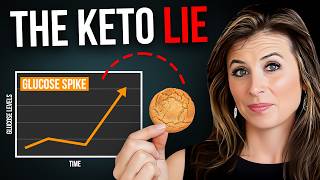
Dr. Ashley Lucas (PhD nutritionist, RD) explains how many "keto" labeled grocery products are misleading: manufacturers use tiny serving sizes and subtract sugar alcohols/novel fibers (e.g., maltitol, soluble corn/tapioca fiber, isomalto-oligosaccharides) to report low "net carbs," yet these ingredients can still raise blood glucose, cause GI distress, and fail to provide lasting satiety. She gives concrete examples (keto granola with 2-tablespoon servings, keto tortillas listing corn/tapioca fibers, keto cookies with tiny serving sizes), details maltitol’s metabolic behavior (GI ≈35–52; roughly 50% behaves like sugar), and offers a 10-second label test (look for ≥15–20 g protein, realistic serving size, whole-food-first ingredient list, avoid multiple sugar alcohols/maltitol, and prefer foods that keep you full 3–4 hours). She contrasts "fake keto" packaged snacks with real low-carb choices (eggs, steak, tuna, seed crackers, almond/coconut flour wraps) and briefly promotes her PhD Weight Loss program and packaged macro-formulated foods as a tool.
Questions this video answers
Over 11,600 people.
Collectively more than £480,000.
About 35 to 52 (depending on syrup vs. powder form).
About 60 to 65.
Assume about 50% of maltitol (e.g., 7–8 g of 15 g) acts like real sugar and impacts blood glucose.
Chapters
Today, we're talking about one of the biggest marketing tricks at the grocery store. Keto products that aren't actually keto. That's right. From keto cookies to keto granola and keto bread, many of these products still spike your blood sugar like crazy. They increase cravings and they can stall your weight loss for sure. Some only qualify as keto because the serving size is so, so tiny that no human could possibly stay full by eating that amount. So today I'm breaking down how this happens, what to watch out for, and the keto labeled products that are secretly working against you.
Hey, really quickly. If you're interested in hydrating yourself optimally and want to do it in an efficient and effective way, I created an electrolyte plus mix just for that. It's called Dr. Ashley's Electrolyte Plus Creative.
I know.
And it's crafted with essential electrolytes, vitamins and minerals for maximum absorption. With patented forms of zinc and vitamin C, it supports immune and adrenal function. Plus chromium picolinate regulates healthy blood sugar levels while helping to curb those cravings. Say goodbye to headaches and fatigue. Visit DrAshley wellness.com and use code Ashley10 for 10% off your first purchase or 20% off your first subscription order with.
Free free shipping plus enjoy 30 day money back guarantee.
Now back to the episode.
Welcome to the Dr. Ashley Show. I'm Dr. Ashley and I'm a PhD nutritionist, a registered dietitian, and the owner and founder of PhD Weight loss and nutrition, where to date I have helped over 11600 people collectively drop more than £480,000 nationwide. And my goal with this channel is to give you the information you need to create positive and lasting change in your own life. So let's dive in to keto products gone bad. Now, we live in a time where the word keto sells and brands know that. And unfortunately, many products use this as a marketing strategy on their label rather than a true metabolic benefit. So today we're going to walk through the fake keto products, the misleading serving sizes, why net carbs often lie, and then what real keto and low carb eating should look like for weight loss, if that interests you, and what real keto reduced carb or low carb eating should look like if weight loss is your interest. Now, if you've tried to follow a low carbohydrate lifestyle or you follow a keto diet or Atkins diet or carnivore diet and you just feel like it is super restrictive or it's not working for you, then you should definitely check out PhD weight loss. You do not have to follow a severely restricted carbohydrate lifestyle to drop weight and maintain it. There is a way where you can actually eat the foods you enjoy and hit your optimal weight. If you feel like a customized and personalized plan that guides you in exactly what, when and how much to eat would benefit you and your weight loss and wellness journey, definitely come check out PhD weight loss now. If you are listening to this on a podcast platform, you can go go to myphdweightloss.com to learn more. Or if you are watching this on YouTube just head on into the description and click the link for my PhD weight loss now. A lot of keto items are only keto in their name. What I mean by that is these products aren't low carb in any meaningful way. They simply shrink the serving size to make the carbs appear low. I went to Costco the other day and they had so many low carb keto high high protein items and when I looked at the back of the label, the serving size was like 2 tablespoons. I'm not even kidding you, granola. If any granola says that it's keto, it's because the serving size is 2 tablespoons. 2 tablespoons would not even register in my gut that I've eaten anything. Realistically, most people eat about a half cup to a cup of granola if weight loss is your goal. By the way, granola is not your best friend because it is so calorically dense and it tastes so good. We could eat the number of calories and the amount of energy we need for most of our day in like one sitting. So not the best breakfast item or any item if weight loss is your goal. Anyway, if we look at this also from the keto perspective, if you were to consume a half cup or a full cup of granola, which is the average serving size that most people consume, that will triple the carbs or quadruple the carbs and your blood sugar will rise like crazy, let alone the amount of calories, like 800 calories that you consume just in the granola alone. Keto cookies, where the listed serving size of the cookie is like the size of a quarter. If you eat three to four of these, or maybe the whole bag like most of us. If you're like me, I would eat most of the bag of a keto cookie, you're now in full carbohydrate territory and you're probably gonna have crazy GI distress because the type of sugars they add, which we'll talk about, cause terrible GI distension and gut distress. Another example is keto ice cream, where the sugar alcohols and the fibers technically reduce net carbs, but the body still absorbs enough of the substrate to spike your blood sugar. This happens all the time. So these type of products rely on mass manipulation and not on metabolic truth, which is what we're all about here. Right? So let's talk about the net carb trap. Okay. Why blood sugar still rises even when the label says 3 grams of net carbs. If you are wearing a continuous glucose monitor, you'd be able to try all these different foods and see which ones spike your blood sugar. And I've heard from a lot of PhD weight loss clients that when they eat these types of foods, their blood sugar still goes up. That's because a lot of these keto products use soluble corn fiber, tapioca fiber, maltitol, which I'll get into here in a minute. Isomalto oligosaccharides, which is a type of fiber in sugar, and then modified starches. The food industry will subtract all of these to calculate net carbs. So they take total carbs, they subtract any of these items. I just read off to you, and whatever is left is the net carbs. And they say these are the only carbs that impact your blood sugar. So if you're watching blood sugar, if you're watching your total carbs, you could say, oh, my gosh, this is like a free food, but it really isn't. And your gut doesn't subtract them the same way that this simple equation does. Now, here is a real world example. Take a 4 gram net carb keto tortilla. These will still spike blood glucose in many individuals who do wear a continuous glucose monitor. The reason why is because the body still converts a portion of these ingredients into glucose just over a slower timestamp. Now, slower doesn't mean zero impact. And for weight loss, we care about stability, not just the number printed on the label. So I wanted to dive in really quickly on the topic of maltitol because it's my least favorite sugar alcohol. A lot of keto products use it because it's cheaper and it's sweeter than a lot of different alternatives. But metabolically, it behaves much more like regular sugar than the industry wants you to know. So if you are ever getting a diet product or a low carb product or a keto product make sure you look at the ingredient list and see if it has maltitol in it. Maltitol can still cause significant blood sugar and insulin spikes, which is what we don't want. That's why we're eating lower carbohydrate to begin with. And it has a glycemic index of about 35 to 52, depending on whether it's a syrup or a powder form. And just for reference, table sugar has a glycemic index of about 60 to 65. So maltitol is not a low glycemic sweetener. It's a medium glycemic sweetener pretending to be keto. So the math around maltitol, which is really important, if a product has 15 grams of maltitol, I want you to assume that about half of those, about 7 to 8 grams act like real sugar in your body. So you can't subtract all 15 grams from the total carbs. You can only subtract half of them. So 50% of maltitol is absorbed and converted to glucose. That's what you're going to assume. The other 50%, and this is where a lot of the GI distress happens. The other 50% is fermented in the gut. This leads to gas and bloating and lots of digestive discomfort for many people, including me, and really bad for my husband. So when a product says that it has three net carbs, but it also lists 15 grams of maltitol, your body is actually experiencing closer to 10 to 12 grams of impact carbs, not three net carbs. If we include all of the sources that impact the body. Now, better sweeteners, if you want to still stay low. Carb would be stevia, monk fruit or allulose. If you want to go into a deep dive behind sugar, alcohols and non nutritive sweeteners. Zero calorie sweeteners, all of these things. I've done a long video on this for you and talk about the science and which one I like the best and why. So if you are listening to this on a podcast platform, come on over to YouTube and you guys on YouTube, head on over into the description and click the link for that video. It's been really helpful for quite a few people and I hope it's helpful for you if you haven't watched it yet. Now I want to talk about the satiety problem or fullness problem that comes along with fake keto foods. So even if the food says it's technically Low carb, it often fails the most important test. And that test is, does it keep you full? Most keto label snacks are lower in protein, they're high in processed fats and sugar alcohols, and they're engineered to be hyper palatable, just like all other ultra processed foods. This leads to rebound hunger, blood sugar dips, evening cravings, overeating later in the day. I know my husband for example, he's very like sensitive to overeating. He has a high probability of overeating. And if he eats a protein bar that's highly processed, even like one of my more favorite ones, like a quest bar, I think it's a decent brand and has about 25 grams of protein in a bar. Like it just won't register in his brain that he's been fed and he could eat like six of those where he, if he ate, let's say 20 to 25 grams of protein coming from a steak, it registers in his brain differently. He'd still want to eat more steak, but overall he would eat less total calories in real food, real steak than than he would if he had to depend on a protein bar. So a keto snack doesn't generally keep you full for three to four hours and if it doesn't then it's not supporting your metabolic health. A good frame of mind to be in is, okay, if I eat this meal or if I eat this snack, will I be full for about 3 to 4 hours? If the answer is yes, then it's pretty much a well designed meal or snack. You can count on that. If not, then something's off. And I just, just because the label might say that it's healthy or keto or low car and your body doesn't respond that way, then it likely isn't good quality for you. Your body knows the very best. Now let's talk about real keto versus fake keto and I want to talk about some products that might actually be supportive options. Healthy, less processed, focused on your body, staying full. This could be like almond flour or coconut flour wraps. It could be seed based crackers with like whole seeds, not with modified starches. High quality protein of course, like the eggs and steak and tuna and chicken slices, Greek yogurt, cottage cheese, full fat unsweetened plain Greek yogurt specifically is my favorite. Low carb whole foods, like your non starchy green leafy veggies, avocado mixed with some kind of animal protein is going to be your best keto. Low carb friendly foods. Now items that are misleading are like the keto granola, keto cookies and brownies. Keto bread with T? Tioca starch as the number one ingredient. Keto tortillas with corn fiber as number one ingredient. Keto ice cream loaded with allulose and soluble fiber blends keto bars with 2 grams of protein and 20 grams of fiber from fillers. If you need 3 to 4 servings to feel satisfied, it's not keto, it's candy in disguise. Now, as a part of PhD weight loss and our program, we provide about 70 to 80% of the food or snacks for your day. If to use them, there's no additional cost to the foods. It's just a tool to help you get from point A to point B. And they are packaged foods. Now, I have created the macros of these foods to be specific for a purpose of getting each individual into this really healthy, safe state of fat burn. Now, you don't have to use the foods if you don't want to, but they are a tool. And I would say 97% of our clients choose to use the foods that. Because what it does is it gets you off the foods you're accustomed to that you say you love, that generally don't love you back. And they do that in a way that is slow and gradual, but allows us to make a very quick metabolic shift so that your food hunger go away, your cravings go away, the food noise goes away, you'll feel a reduction in inflammation within a number of days to weeks. For some people, better sleep, better focus, significant weight loss, and then we gradually release our food. So you're never dependent on them. They're just a helpful tool. So there can be a time and a place for foods that are packaged that have specific macros. But these keto foods that are relying on serving size and have a ton of sugar, alcohol, specifically maltitol in them, that don't have adequate protein, that don't keep you full, are not serving you. So what you can do is you can use this 10 second label test and I'm going to teach you how to use this and read this to you and you could jot it down and ask yourself these questions as you are determining if a product at the grocery store is going to be sufficient for you. So number one, does it have at least 15 to 20 grams of protein? If not, it's not going to keep you full. Number two, is the serving size laughably tiny? If you need to triple the serving to be satisfied, toss it, don't buy it. Number three, does the ingredient list. Start with whole foods. If it starts with corn fiber, tapioca starch or chicory root fiber, proceed with caution. Are there more than two sugar alcohols? If there are, and it's maltitol specifically, look for gas, bloating and cravings in your future. And number five, does it actually keep you full for about three to four hours? If the answer is no, it is a metabolic distraction. Number one, you want to make sure that you swap fake keto foods for real keto foods. So this is like seed crackers instead of keto chips or almond tortillas instead of four net carb wraps. No matter what, make sure you choose protein first. Protein you know creates natural fullness and reduces how much you need from carbs. And number three, look beyond the label. Don't let marketing override your metabolism. All right you guys, I want to hear your thoughts. If you are watching on YouTube, drop your thoughts on keto foods. What ones have tricked you, what labels you are confused on reading and we can help you with that. Drop all your thoughts in the comments below. Make sure to subscribe so you do not miss a new video. And thank you so much for watching. I hope that this has helped. Remember, you've got to step up to make the change. Lead with your heart, train your mind and do not negotiate with your body. I'll see you next time.
More from Dr.





If I Was Over 50 & 30 Pounds Overweight, This Is Exactly What I'd Do to Burn Belly Fat


