The Lazy Guide to Losing 30 Pounds Fast
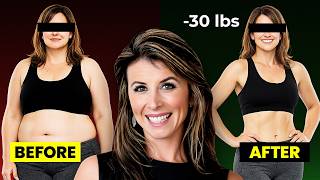
In this 30‑minute YouTube presentation Dr. Ashley Lucas, a PhD‑trained sports nutritionist and founder of PhD Weight Loss, argues that conventional weight‑loss tactics—calorie counting, excessive cardio, and strict meal‑prep—are biologically counter‑productive because they trigger a survival response that slows metabolism and raises cortisol. Drawing on research with professional athletes and her own clinical experience with over 13,000 clients, she explains that the body’s primary driver of fat loss is the hormonal signal from the type of food consumed, not the sheer amount of calories burned in the gym. She then outlines a six‑step “lazy” protocol designed to make the body feel safe and promote natural fat loss: (1) prioritize protein at each meal, (2) eliminate added sugars and liquid carbs, (3) include satisfying dietary fats, (4) walk briskly for 30 minutes daily (with optional heavy‑lifting), (5) eat a structured afternoon snack to prevent evening overeating, and (6) prioritize adequate sleep to keep cortisol low. Throughout she shares client anecdotes, cites metabolic research, and promotes her customized coaching service and a GLP‑1‑supporting supplement (GlucoCut Plus). The video concludes with a call‑to‑action for viewers to adopt one of the six habits, subscribe, and visit her website for personalized plans.
Chapters
What if I told you the laziest version of you is the one who finally drops the weight? Now I know how that sounds, but stay with me for a second because in this video I'm going to give you the lazy guide to losing 30 pounds. No calorie counting, no 2-hour gym sessions, no meal prep marathons on Sunday afternoons. And this is not a gimmick, it's actually how the body prefers to lose fat. Here's the thing: if you're watching this, you are probably not lazy. In fact, I'd bet you've worked harder at weight loss than at almost anything else in your life. You've counted the points, you've logged the calories, you've dragged yourself to the gym at 5 in the morning, you've probably white-knuckled through diets that left you starving and thinking about food all day long, and the weight either didn't move or it came back With interest. So when I say lazy, I don't mean careless, I mean efficient. I mean finally putting down the 80% of effort that was never moving the needle and keeping only the 20% that actually does. That's what this guide is. And I've heard this over and over again when I have clients come into PhD Weight Loss and they're like, oh my gosh, everything else in my life I have control over except for my weight. Or we really believe, and I'd love to hear your thoughts in the comments below, that in order to lose weight, we need to force the body harder. Let me know if you have this belief. What I've found over and over again through helping over, what, 13,000 clients to date, is that you can't force the body to drop the weight. We've got to get the body out of survival mode and back into safety so that it can actually begin to feel safe enough to let go. Now, I'm Dr. Ashley Lucas. I hold a PhD in sports nutrition and chronic disease. I'm a registered dietitian, and I'm the owner and founder of PhD Weight Loss. We have helped over 13,000 people to date collectively drop more than 480,000 pounds nationwide. And something that might surprise you is that I have never once counted my clients' calories. I have no idea how many calories they're consuming. The hardest workers are usually the ones working against their own biology. I have been there, and I want to today show you an easier way. So first, I want to clear something up because I know there is probably— if you are like me and like many of our clients— there's probably a voice in your head that says that the reason you are carrying this weight is that you didn't try hard enough, that you didn't force the body well enough. Guys, that voice is wrong. And you'll be happy to hear that the science backs me up on this. All that grinding, the chronic calorie counting, the punishing cardio, the 2-a-day workouts—your body reads it as a threat. When you drastically undereat and overtrain, your body doesn't think, "Wonderful, she or he's finally serious." Your body thinks, "We are in a famine and we are being chased." It slows your metabolic rate, it raises stress hormones like cortisol, and it holds on to fat, especially around the belly, as a protective fuel source. Now, when I was earning my PhD in sports nutrition and chronic disease, I was studying exactly this. I was, uh, studying energy metabolism, and I took two groups of individuals and I pair matched them by age and muscle mass because those two things are the main predictor of our metabolic rate. I had one group of professional athletes And then I pair matched them to recreationally active people, pair matched again by age and muscle mass. You would think that the professional athletes would have a speedier metabolism, right? They would burn more calories at rest and they would eat more. Well, what the research showed was those professional athletes chronically restricted their calories and they weighed the same than the recreationally active individuals. However, the control group, those recreationally active people, ate significantly more and had a significantly significantly higher metabolic rate, right? So you could see in these professional athletes that their metabolism had slowed, and when they stopped exercising as much, or if they quit their profession, their athletic profession, they would pack on pounds so quickly. And that's because their metabolism was so depleted and so slowed. There's also research showing that when heavier individuals dramatically increase their exercise, metabolism can actually decrease by as much as 15%. Your body, I always say this, it never makes a mistake. It was just protecting you from your own effort, just like it did with these professional athletes. So this lazy guide is not about doing less because less is fun. It is about doing less because less is what actually convinces your body that it is safe. And I know this is really hard and the opposite of what we usually think, and I am right there with you. But a body that feels safe is a body that can and will let go of fat. So here is the core principle: 85 to 95% of fat loss comes from what you eat, not at the gym. Within food, it is not really about the amount as much as about the signal. That's why I say, you know, calories matter, but the type of calories you consume matters even more because that's what's gonna give the body the signal to either burn fat or store it. So every meal you eat tells your fat cells one of two things: store or burn. When you eat sugar and refined carbs, blood glucose spikes, insulin rises, and insulin is the storage switch. So as long as it is elevated, fat burning is essentially switched off, and the compensatory crash an hour later, that's gonna send you hunting for more food. And that's not a weakness, that is chemistry. When you eat protein, and healthy fat, blood sugar is gonna stay flat, insulin stays low, and the burn switch stays on. Now here's the quote-unquote lazy part. You're full, the food noise quiets down on its own, and you're not having to use discipline or willpower to resist anything because there's nothing screaming at you to resist, right? That's the whole trick of the Lazy Guide. We make the right thing the easy thing. That is the key to dropping weight and keeping it off. You have to make the right thing the easy thing. Now Martha, one of our clients, um, in Asheville, said it cleaner than I could when she was sharing her story. She said, the diet is so easy and my coach is amazing. I've learned a tremendous amount about the reason for my body's resistance to weight loss and how to find solutions. I'm finally starting to drop weight when nothing else would work. Everybody responds on its own time, and your numbers will be your numbers, but this is exactly what we see when the work stops being a fight. And honestly, if you want the laziest possible version of all of this where you don't even have to think, that is literally what we built PhD Weight Loss to be, right? We create your customized plan, we tell you exactly what and when to eat, we take out all of the guesswork, we adjust your plan week by week as your body changes. It's a very dynamic process, and we handle the thinking so you just follow the path and can start to reset the body and reset the mind. Because 80% of this journey of dropping weight and keeping it off comes from your mind. There is no counting, no guessing, there's no willpower marathons, there's no white knuckling. If you've got 30 lbs or more to drop and you are tired of working so hard, you need to go to myphdweightloss.com or just click the link in the description, and one of our nutritionists will learn about your body and build a plan specifically for you. So here is step 1: eat protein first and let it do the counting. I would love for you to forget tracking calories. Just make protein the anchor of every meal. Eggs, beef, poultry, fish, high-quality dairy. Eat it first before anything else on the plate. Protein is the most filling nutrient there is. It stimulates your body's own natural fullness hormone, GLP-1, and it protects your muscle while the fat comes off. You want to aim for a solid serving with your first meal of the day and your last meal. Those are the two key meals. For muscle synthesis. And then the amount really depends on your body, but I would say a range of 30 to 55 grams for each of those meals. When you allow protein to lead, your appetite is gonna self-regulate. So the portion control really happens automatically. I don't know, I know there are a few outliers there, but have you ever like overeaten butter, for example, or have you ever overeaten steak? Maybe some people have. You can drop it in the comments below. But you're much more likely to overeat the bread basket than you would be ground beef. So when we eat protein first, the portion control just happens automatically like that, which is exactly how the Lazy Guide likes it. Step 2, you want to subtract sugar and don't add rules, right? Most diets pile on a lot of rules. The Lazy Guide removes one thing. Sugar. It's hiding in your salad dressing, your pasta sauce, oh, so much in your smoothies, your morning juice. The lazy trick for reading labels is to take the total carbohydrates in a serving and divide by 4. That is roughly how many teaspoons of sugar you're looking at. Like, there's more to it, but we're, we're just going simple here. So one small smoothie, I don't care if it's sweetened with dates or juice or mango or whatever it might be, It can be 10, 15 teaspoons worth of sugar. Drop the sugar and all the liquid carbs, the juice, the soda, the beer, and you remove automatically the blood sugar rollercoaster that has been generating your cravings. One subtraction. We're gonna win here by subtraction, and half the battle quietly disappears. I was in Costa Rica last week and there was a fellow who was driving us around and he was so great, and he asked me what I, what type of work I did, and I said that I lead a weight loss company, and he said, oh gosh, weight up to 450 pounds and had recently dropped 200 pounds. And I said, well, what were the two things that you focused on? And he said that the top thing that he did was removed all the liquid sugar, and he used to like sodas and sweetened beverages, and no more sugar at all in his liquids. And then the other thing that seemed to work for him was some intermittent fasting. I have lots of videos on the topic of intermittent fasting if you want to check that out. I'll make sure to link one of my best ones in the description there for you. Okay, step 3: stop fearing fat and eat food that is satisfying. This is actually everyone's favorite step, and when they come into PhD Weight Loss, they're like, oh my gosh, I can have butter and heavy cream. And by the way, guys, this is not the Atkins diet, and you can still consume those things. You want to put butter on your broccoli, you want to use full-fat salad dressing, enjoy the ribeye with the marbling, have coffee with my favorite food, heavy cream. Dietary fat slows digestion, it keeps you full for hours, it supports your hormones, it makes this way of eating something that you can do forever because the food is good. Diet food requires discipline, real food does not. Step 4, walk. That's it. You guys don't need to earn your fat loss on an elliptical machine or doing a spin class every day. At PhD Weight Loss, we ask our clients for one primary thing, a 30-minute brisk walk every day. That is the whole cardio program. Now, every person responds differently, and your numbers will be your own, but here's what we see all the time in our client data. Most of our men drop about 3 pounds a week, and most of our women about 2, 2.5 pounds just walking. Now, if you want bonus points, and I think that this is really important as well, lift something heavy a couple of times a week to keep your muscle, because your muscle is your metabolic engine. But the days of punishing workouts, and oh my gosh, I am right there with you if you are like, "Oh, I need to burn calories, I need to get out there and run or ride my bike." After my professional dancing days, I thought I still had to punish my body, so I would ride on the road, like road cycling. I got very fast and strong because I would ride 250 miles a week. And I was packing on the pounds, especially around the stomach area, because I was so inflamed and I was doing too much. So we want to get away from the grind and we want to focus on the type of exercise that actually moves the needle. If you feel like exercise is a component that might be holding you back, maybe you're not doing enough, maybe you're doing too much, then I also have really great videos on the topic of exercise and why cardio is making you fat. I'll make sure to include that in the description as well if you want to check that out. Step 5: Eat the afternoon snack. For most people, again, there are outliers, eating an afternoon snack is the key to success. Around 3 or 4 in the afternoon, eat something. A full-fat, maybe low-fat plain Greek yogurt with some berries, some hard-boiled eggs, a bit of bone broth, maybe add some extra collagen peptide powder in there. One small habit is what's going to keep you from walking into dinner ravenous, being able to eat a cow, right, and undoing the whole day in 20 minutes. Lazy people don't fight evening hunger, they prevent it. Remember that your environment is always stronger than your willpower. So when you get home, you're not going to want to have the kids' snacks out on the counter. You're not going to want to have a bowl full of candy or nuts right out there. You don't want to do that. You're going to eat a clear afternoon snack, and the next thing that you put in your mouth is dinner. Step 6 is sleep. This is the laziest fat loss tool ever invented. Poor sleep actually raises cortisol. I think one night of sleep can increase cortisol by 27%. Elevated cortisol tells your body to conserve fat. Especially around the belly area. Now I'll tell you what we see with our clients when the scale stalls and the food is on point. 99% of the time it is stress or sleep. So here's your permission slip: go to bed. It counts as working on your weight loss. It's so important. I'm not kidding you guys, it really does. Now one more thing that makes the lazy path even smoother: while your body is relearning how to keep blood sugar steady and quiet those cravings, I created a supplement called GlucoCut Plus for exactly this. It supports your body's natural GLP-1 activity— that's your own fullness hormone. It helps to stabilize blood sugar and energy through the day, and it supports the lean muscle you want to keep while the fat goes away. It's not a stimulant, it's not a shortcut around the food, it just helps your body feel steadier while you're making the change. It is amazing and our clients love it. You will find it at DrAshleyLucas.com. And there's a link in the description with a discount code. Use code ASHLEY10 for your first order. Here is the lazy guide altogether: protein first, subtract the sugar, enjoy the fat, walk 30 minutes, and if you can, do some heavy lifting, um, something overload the muscles in some way. Eat your afternoon snack, do not skip it, and go to bed. 6 things, no counting, no grinding, no suffering. And I would love to have us all hold each other accountable. So in the comments below, will you let me know what is one thing you are going to make sure you add into your habits? One thing of the 6 that we've talked about, what are you going to start implementing? Now I want you guys to notice what is really happening here. Every one of these steps works because it makes your body feel safe. Steady blood sugar, adequate fuel, low stress, real rest, right? A body that really feels safe does not hoard fat. It releases it. It doesn't need it anymore. You're never failing because you were lazy. You were stuck because you were fighting a body that was only ever trying to protect you. Stop fighting it, and 30 pounds gets a whole lot lighter. And one last thing, Jeff over in Davidson area in Charlotte wrote this in his explanation of his experience after 5 weeks, just 5 weeks on his plan: The plan is doable, and I'm rarely hungry. I find myself not only more energetic but more positive and generally happy happier, and it was so much easier than I expected. Doable. Not heroic, but doable. That's the goal. Every person responds in their own way, and your story will be your own, but that's what easy looks like when it is built on real biology. Now, if you want to see exactly how I'd structure this, the step-by-step plan I'd personally follow to drop 20 pounds in 60 days, meal by meal, I've made an entire video on it, and it is the perfect companion to this one. Just click right here. And if this video took some weight off your shoulders before it takes it off the scale, subscribe above so more people can find the easier way and so that you don't miss another video. Remember, you've got to step up to make the change. Lead with your heart, train your mind, and listen to what your body already knows. I'll see you next time.
More from Dr.





If I Was Over 50 & 30 Pounds Overweight, This Is Exactly What I'd Do to Burn Belly Fat


