The Only 9 Groceries You Need to Drop Weight FAST
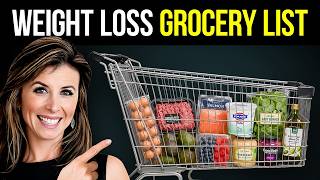
This content was created by Dr. Ashley Lucas. This content was uploaded by Dr. Ashley Lucas. This is a YouTube video titled "The Only 9 Groceries You Need to Drop Weight FAST" (published 2026-06-05) featuring Dr. Ashley Lucas, a PhD nutritionist and registered dietitian. It is an instructional/educational talk in which she outlines nine whole-food staples (pasture-raised eggs, beef, wild-caught fatty fish like salmon/sardines/mackerel, full-fat plain Greek yogurt, avocado, non-starchy vegetables, fermented foods, berries, and extra virgin olive oil) and explains how they support natural weight loss by stabilizing blood sugar, boosting GLP-1, improving gut health, preserving muscle, and reducing inflammation. The video includes practical meal ideas, portion guidance, references to science, calls-to-action linking to her PhD Weight Loss programs and a GLP-1 Gut Longevity Plus supplement, and invites viewer engagement.
Chapters
If you've ever stood in the middle of a grocery store with a list a mile long wondering how on earth eating healthy got so complicated, I want you to take a breath. You do not need 50 ingredients. You do not need a different diet every Monday. You do not need a cart full of protein bars, low-fat snacks, vegan, vegetarian snacks, shelf-stable shakes promising to do the work for you. You actually need very few foods. 9, in fact. And when you understand why these 9 foods work with your biology instead of against it, this whole process becomes so much simpler than the diet industry has led you to believe. I'm Dr. Ashley Lucas. I'm a PhD nutritionist, a registered dietitian. I'm the owner and founder of PhD Weight Loss, where we've to date helped over 13,000 people collectively drop more than 480,000 pounds nationwide. My goal with this channel is to give you the science-backed information you need to release this weight naturally and keep it off for the long term. Before we get into the list, I want you to hear this: the reason most diets fail is not because you lack willpower. It is because they ignore your physiology. They have you eating foods that spike your blood sugar, crash your energy, leave you ravenous by mid-afternoon, or maybe they don't even talk to you about what you should be eating and you're just taking a medication and eating less food in general. Your body is not broken when it craves more food 2 hours after a so-called healthy Your body's not broken if it's losing a ton of muscle mass in response to taking a medication. It is responding exactly the way it was designed to respond when it is not given the right signals. The 9 groceries I'm about to walk you through are not a magic list. They're just a set of staples that tell your body the truth, that it is safe, that it has actually been fed, and that it doesn't need to hold onto fat for protection anymore. Let's get into it. Number 1, pasture-raised eggs. Eggs are, in my opinion, one of the most perfect foods we have access to. They are a complete protein, which means that they contain every essential amino acid your body needs to preserve and build and rebuild lean muscle while you are dropping fat. The yolks of the egg, that's the part that was demonized for decades, and that makes me so angry because it's the best part. It contains the fat-soluble vitamins and choline and healthy fats for your hormones, and your hormones depend on those things. For most of my clients, 2 to 3 whole eggs at breakfast does a few important things. It stabilizes your blood sugar from the very first meal of the day. Super, super important. It triggers your body's natural GLP-1 response, which is your 'I'm full, I've been fed' hormone. And it sets the tone for a low insulin, low-key, chill morning, which is what allows your body to actually burn fat instead of store it. Do not fear the yolk anymore. Do not buy egg whites in a carton. Buy real whole eggs from pastured hens if you can find them. If you can't, still get the whole egg. Number 2, beef. I don't care if it's grass-fed or conventional. If you can do grass-fed, great. If you can't, still get beef. This one matters especially as we age. You know, red meat, specifically from grass-fed sources, is one of the richest dietary sources of heme iron, vitamin B12, zinc, high-quality protein. And these are the exact nutrients that we tend to be low on, Specifically for menstruating women, low iron alone can mimic everything from fatigue to slow weight loss to brain fog, but also very important for you men too. The research on saturated fat has shifted dramatically in the last decade because when I talk about red meat being healthy, people are like, oh my gosh, what about saturated fat? You know, the data simply does not support the old story that red meat causes heart disease. We now know that dietary cholesterol for most people doesn't influence our blood cholesterol. What red meat does do is that it supports the protein-forward meals built around real meat to keep you feel longer, to preserve your muscle, and to stabilize your blood sugar. Ground beef is one of my favorite weeknight staples. It's super fast, it's more affordable, it's endlessly versatile. You know, we have taco night, we have beef stroganoff night, and we don't use noodles with it. We put ground beef in lettuce wraps so many different things. Taco bowls over cauliflower rice, lettuce wraps, meatballs, simple beef and veggie skillet. I mean, it adapts into anything. In the morning, scrambled eggs with ground beef. Put ground beef in anything, really. If I haven't thought of something you love ground beef in, drop it in the comments below. We're a community here. I learn from you as well, and so does the community. So please, any ideas, thoughts, what you like to put ground beef, how you like to make it— oh my gosh, please, please share. I would love that. Number 3, why wild-caught salmon, or even sardines or mackerel. You need omega-3 fatty acids. Most people are dramatically deficient in them, and that deficiency does drive chronic inflammation, insulin resistance, and the kind of stubborn belly fat, the visceral deep belly fat that I always talk about. It drives it, and it makes it so that it won't budge no matter how hard you try. Wild-caught salmon delivers omega-3s in their most bioavailable form, along with a clean dose of protein. It's a perfect combo. Sardines are an underrated option if salmon just doesn't fit into your budget. You know, they're shelf-stable, some brands are pretty darn inexpensive, and it's really one of the most nourishing foods on the planet for your brain, for your joints, for your metabolism. I've gone through such a phase personally around increasing my omega-3s from real food. I actually put together a guide with the help of my team on brain fog and belly fat and the way that sardines can really help with it. So if you want to learn more, and I included some recipes and how I enjoy them, sardines specifically, mackerel I like too, just go into the description and there will be a link for a guide that has everything for you. You want to aim for 2 to 3 servings of fatty fish per week, and I promise you that your inflammation markers will thank you. Your brain will just soak it up and feel so much better. Now, if you're sitting here and you're thinking, Dr. Ashley Lucas, this makes all the sense in the world, but I have no idea how to put it together into a plan that actually works for my body. Well, that is exactly what we do every single day. We live and breathe it at PhD Weight Loss. We build customized plans that take into account your health history, your hormones, your metabolism, your real life, the mental and emotional aspects that— by the way, you guys are the biggest needle mover when it comes to weight loss. You cannot avoid your mental emotional habits, behaviors, and drop weight and keep it off for good. If you want to lose weight and actually keep it off, you gotta think about the whole self, the whole body. If you are interested in learning more, if you think this would be helpful, head on into the description and I'll include a link there for you to myphdweightloss.com. All right, number 4, full fat plain Greek yogurt. I want to be clear here, full fat, maybe low fat, not fat free. No fat free yogurt. And most definitely no flavors. Most flavored yogurts, and I talk about this all the time, most of them on the shelf have more sugar than ice cream, and that sugar is going to spike your insulin and undo everything you're trying to accomplish. A good plain full fat, maybe low fat yogurt is one of the most protein dense foods you can buy. It's amazing. It also provides natural probiotics which support your gut microbiome. Your gut microbiome, you know, plays this massive role in your natural GLP-1 secretions. I have so many videos on this. I'll include one of the videos on how to naturally increase GLP-1 secretions in the description as well. Remember that a healthier gut means a stronger full signal, fewer cravings, better blood sugar control. So you definitely want to be thinking about fermented foods in your gut. I love a small bowl of full-fat, maybe low-fat plain Greek yogurt. I'll put some berries on it, maybe some seeds, maybe a little bit of honey if my kids are eating it with me. They like to do Greek yogurt with honey. I actually just made my daughter and her friend a snack of that right before I sat down to share this with you. That snack, it hits the protein when you add berries in it, gives you fiber, healthy fat. It just gives you it all at once, and it carries you into dinner without feeling ravenous and without having that kind of, oh my gosh, I could eat a cow feeling. Number 5: Avocado. I really do like avocado. Avocados are one of my favorite sources of healthy fat for people. They're rich in monounsaturated fats, fiber, potassium, magnesium. Those last two electrolytes, potassium and magnesium, they are the electrolytes that most of us are running low on, and the deficiency shows up as fatigue, cramping. If you have muscle cramps outside of activity, like not during the workout, usually it's a magnesium deficiency. Also poor sleep. Now, healthy fat, like I've said, many times before, many times is not your enemy. It is actually one of the most powerful tools you have for staying full and stable between meals. The thing to be mindful of with avocado, and this is true of all fats, is portion, right? Like a quarter to a half of an avocado per day is really appropriate. You can add it to your eggs, you can slice it on top of a salad, or you can just like mash it up and put it on the side of your plate with whatever you're eating. Fats are calorically dense, and even the healthy ones account. They're all important. Number 6: non-starchy vegetables. I'm talking leafy greens. I'm grouping these because they all do the same job. They add fiber, they add micronutrients and volume to your plate without spiking insulin. So these would be like spinach, arugula, kale, broccoli, cauliflower, zucchini, bell peppers— all include in that— asparagus, mushrooms, cucumber. I'm sure there's others. Jicama. Now these are the foods that you can lean on liberally. You can eat as much as you want. Fiber matters here for two reasons. One, it slows the absorption of the food you are eating with it. This helps to keep blood sugar much more stable. Number two, it feeds the good bacteria in your gut that support your natural GLP-1 production. So every time you add a real whole fibrous veggie to your plate, you're literally training your body to feel fuller on less. Quick note: if a particular veggie does not agree with your body, you do not have to force it. Some people I work with do not tolerate cruciferous veggies very well. That's, uh, like broccoli specifically is a hard one to tolerate. Actually, cauliflower seems to be a little bit easier, but for some it really doesn't work. For some people, spinach, kale, and that's okay. You know, what you want to do is you want to choose the ones that work for your body. The list is long enough that you're going to absolutely find your favorites. In the comments below, I would love for you to talk about what your favorites are here, how you like to you enjoy those veggies so that we can all get some ideas. Number 7, fermented foods. This is like sauerkraut, kimchi, fermented pickles. Not all pickles, by the way, are fermented. I like the brand Bubbies— have no affiliation to it, just like it. And kefir, if you tolerate dairy. These are the foods that a lot of Americans are not eating, and it shows in our gut health. You know, your gut is roughly where 70% of your immune system lives. Did you know that? It's where most of your serotonin is produced, and serotonin is your feel-good neurotransmitter. So if you feel like your mood is off, you're depressed, I really consider looking at your gut and adding these foods in there. It's also where your natural GLP-1 is secreted, and by what you eat, you can actually significantly impact how much GLP-1 is being secreted in your body naturally. Now, a daily serving of fermented food, even just like a tablespoon of real sauerkraut on the side of your meal— this is what I do my best to do— it'd begins to repopulate the beneficial bacteria that modern eating has completely wiped out. If you've been on antibiotics, it's one of the biggest things that you want to do. You know, this is one of the smallest changes with one of the largest downstream effects on cravings and satiety. You want to look for refrigerated unpasteurized options. In the produce section is usually where you're going to find it. It's not in the shelf-stable jars in the condiment aisle. The live cultures are what you're paying for, and that is something that usually is going to be refrigerated. Having a healthy gut is so impactful in just overall wellness, but specifically in successful weight loss, that I created a supplement specifically to help with the gut, with GLP-1 secretions, and with the longevity perspective wrapped around all of them. It includes Akkermansia, which is a very well-researched strain of bacteria that has been found to significantly increase GLP-1 levels. I added in it eriomin, which is a citrus bioflavonoid which has been shown to increase GLP-1 by 37%, natural secretions of it. And then I also added in grapeseed extract and resveratrol, which are two very, very strong antioxidants that help the body from a longevity perspective and create the environment within the gut where the good bacteria can live. So if this is something that you're interested in, you know that your body would benefit from a probiotic and some antioxidants. If you've been on antibiotics, Akkermansia is one of the strains that antibiotics completely knock out and you should definitely repopulate it. This is my GLP-1 Gut Longevity Plus supplement. I'll include a link to Dr. Ashley Wellness in the description and make sure to use code ASHLEY10 to get your discount. Number 8, berries. And I don't care if they're fresh or frozen. I just don't want them in any kind of like sugar juice, right? When my clients ask me about fruit, berries are always the answer. They're lower in sugar than most fruits. They're high in fiber. They're loaded with antioxidants and polyphenols that support your cellular health. They help to reduce inflammation. Now, frozen berries are not inferior to fresh. They are often frozen at their peak ripeness, which means that they actually retain more of their nutrients than berries that have been sitting in your fridge for a week. So keep a bag in the freezer. You can toss them into your yogurt, into a smoothie. You can thaw them, you can eat them with breakfast with some protein in there. A third of a cup, a half a cup at a time is plenty. Pair them with the protein and fat. Don't want to eat them on their own. And when you do pair them with the protein and fat, you're going to have much more stable blood sugar. Number 9, extra virgin olive oil. And I'm also going to say with this first First cold-pressed extra virgin olive oil. I know that's a lot of words, but if you think about it, the first cold-pressed means it's the first pressing of the olive oil, so you get more polyphenols, more antioxidants. This is going to be your main oil for salad dressings and for cold use. You're not going to cook with it at high heat because it's not very stable. Now, a true extra virgin olive oil is one of the most well-studied foods in the world. The research on it is really consistent. It supports cardiovascular, uh, heart health. It reduces inflammation. It helps your body absorb the fat-soluble vitamins from your veggies. You can drizzle it on the roasted veggies. You don't wanna cook with it. You could build a simple salad dressing with like olive oil, apple cider vinegar, maybe a little salt, some shallots, some herbs. You could finish a dish with a clean little, like, you know, drink of it. For me, at night before I go to bed, I usually have a tablespoon of olive oil with a little squeeze of lemon in it. Also, just as importantly as adding in the olive oil, you're going to leave the seed oils and the vegetable oils on the shelf. The oils I'm talking about that you do not want are canola, soybean, corn, vegetable oils, these are so inflammatory. They're hidden in a lot, like a lot, all of them actually, all of the processed foods. So you wanna bring your kitchen back to olive oil, and then like avocado oil is the best fat to cook with. If you're a little bit confused on what oils you want to use for different purposes, and like there is some oils that are better to cook with at high temps, versus low temps, I have helpful guide for you. So I'll make sure that we include that in the description. So check that out. Now that's your list— 9 groceries, not 90. And here's what I want you to notice: there's not a single ultra-processed item on the list, right? There's no diet bar, protein bar, protein cookie, shelf-stable shake masquerading as a meal. You guys, this is intentional. Weight loss, it's not about finding the perfect low-calorie version of junk food. It's really about giving your body real whole food in the right combinations so that it stops fighting you, so it can acknowledge and recognize that it's been fed. When you build your meals around quality protein, healthy fats, fiber, and a small amount of like strategic carbs from real foods, your body finally has what it needs to let go of the weight it's been holding on to. You don't need a kitchen full of a ton of ingredients. You just need to have a few well-chosen staples used on repeat. That's what sustainability and consistency, which are the two most important things— they go together— that's what it actually looks like. If you want to take this grocery list and turn it into an actual day of eating, I made a video walking you through exactly what to eat in a single day to naturally boost your own GLP-1 and to start crushing cravings without medication, or if you're on medication, to do it the right way. I'm going to link it right here for, and it pairs really well with this list. And you guys, if this video was helpful, I ask you to subscribe so that you do not miss the next one. And so that it pushes this content out so that more people can be helped in the best way possible. You know, I drop new videos every week to help you take back control of your weight and of your health. My goal is that you can step up, you can better your life, you can become more self-sufficient. You know, most importantly, I really, really want you to remember that your body is not broken. It is just responding to the signals you've been giving it for like probably a really long time. And when you change the signals, you're gonna be able to change the response and the body can change the response so quickly it will blow your mind. Remember, you've gotta step up to make the change. Lead with your heart, train your mind, and listen to what your body already knows. I'll see you next time.
More from Dr.





If I Was Over 50 & 30 Pounds Overweight, This Is Exactly What I'd Do to Burn Belly Fat


