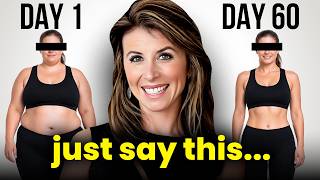
In this presentation Dr. Ashley Lucas, a PhD‑trained sports nutrition scientist and founder of PhD Weight Loss, explains how a single self‑critical thought that many people repeat each morning—such as “I hate what I see” or “I’ll love myself when the weight is gone”—triggers a physiological stress response that blocks fat loss. Drawing on data from over 12,500 clients, she shows that the lowest body‑image scores at intake predict the greatest long‑term weight‑regain, not because of poor diet or discipline but because the thought initiates a cortisol surge. Cortisol raises blood glucose, spikes insulin, and blunts leptin sensitivity, driving the body into a fat‑storage mode, especially in the belly. She illustrates the mechanism with a detailed case study of Sandra, a 54‑year‑old client who had dieted since age 19 yet could not sustain loss because her morning self‑criticism repeatedly activated this hormonal cascade. Lucas argues that weight becomes the arena for this loop because it is visible, emotionally charged, and tied to identity. She proposes a reframing technique: replace the self‑critical sentence with an honest, empowering statement that restores a sense of safety (e.g., “My body is not my enemy; it is responding to stress”). This mental shift lowers cortisol, stabilises blood sugar, and re‑engages leptin, allowing metabolism to shift from storage to burning. The talk emphasizes that mindset and metabolism are inseparable, and sustainable weight loss comes from pairing desire for change with self‑love, not from more willpower. The video concludes with calls to action for PhD Weight Loss services and Dr. Ashley Wellness products.
Chapters
In over a decade of working with more than 12,500 clients at PhD Weight Loss, I started tracking something that had nothing to do with food. At intake, we ask every new client a simple question: on a scale of 1 through 10, how do you feel about your body right now? And what I found changed the way I think about weight loss entirely. The clients who scored themselves the lowest on the scale The ones who felt the most frustrated, the most at war with their bodies, those were the clients who struggled the most to keep the weight off long term. Not because they lacked discipline, not because they were eating the wrong foods, but because of something they were saying to themselves every single morning, often before they even got out of bed. A sentence so automatic, so familiar, that most people do not even hear it anymore. And today I want to show you exactly what that sentence is, what it is doing to your hormones, and most importantly, how to interrupt it. I'm Dr. Ashley Lucas. I have a PhD in sports nutrition and chronic disease. I'm a licensed registered dietitian, and I'm the founder of PhD Weight Loss, where we have helped over 12,500 people collectively drop more than 500,000 pounds nationwide. And I want to be clear about something before we go further on this. I'm not a therapist. I'm not a mindset coach. I am more of a metabolic scientist. So when I tell you that a thought pattern is keeping you in fat storage mode, I am not saying that as a motivational speaker. I'm saying it because the physiology backs it up, and I am going to show you exactly how. I want to tell you about a client named Sandra. Sandra came to PhD Weight Loss about 2 years ago. She was 54 years old. She had been dieting, in her own words, since she was 19. Low calorie, low fat, Weight Watchers, keto, Ozempic— she had tried everything. And every single time, she would lose weight and then gain it back, sometimes more than she had lost in the first place. When I looked at Sandra's food journal, her nutrition was actually really good. She was doing a lot of things right. So I asked her a different question. I said, Sandra, What is the first thing you think when you look in the mirror in the morning? She didn't hesitate. She said, I hate what I see. I'll feel better about myself when this weight is gone. And there it was, that sentence, that one sentence said every morning for 35 years. Sandra didn't realize it, but that one sentence was not just an emotional response. It was a hormonal trigger, and it was one of the key reasons her body kept holding on to fat no matter what she dead. Here's something most people don't hear: your body is not broken. I'm Dr. Ashley Lucas, PhD and registered dietitian, and after helping thousands lose weight, I realized something important. When people diet without proper support, the body pays the price—metabolism, hormones, energy, and even muscle mass. At Dr. Ashley Wellness, everything we create is designed to work with your body and not to fight it. Clinically studied ingredients, high absorption rates, no fluff, because weight loss should feel empowering, not depleting. Visit drashleywellness.com, use code YouTube10 for 10% off your first purchase or 20% off your first subscription order with free shipping. Plus, enjoy a 30-day money-back guarantee. Back to the show. Now, this sentence has a few different versions, and you probably have your own, and you might recognize yours here. I will love myself when the weight is gone. Or maybe it sounds like, I hate what I see in the mirror. Or my body's working against me. Or I cannot believe I let myself get here. Maybe why can I not just get this under control? The exact words vary. You'll have your own flavor to it, but the metabolic effect doesn't. Because here's what that sentence is doing biologically every single time you think it. Your brain does not distinguish between a physical threat and a psychological one. When you look in the mirror and your first thought is one of shame, frustration, or self-rejection, your brain registers that as a threat and it responds accordingly. Cortisol floods your system. That is your primary stress hormone. And here is where it gets directly relevant to fat loss. Chronically elevated cortisol has 3 specific effects on your metabolism. First, cortisol raises blood sugar. Even if you have not eaten anything, your body dumps stored glucose into your bloodstream as a survival response. Blood glucose rises, insulin rises with it, and when insulin is elevated, your body is in fat storage mode, not fat burning mode, which is what we want. Second, cortisol specifically drives fat storage into the belly. The belly fat feels the most stubborn, the most resistant, the most personal. Cortisol is one of the primary hormones responsible for keeping it there. Third, chronic cortisol elevation suppresses the hormones responsible for fat burning. Specifically, it blunts your body's sensitivity to leptin. Leptin is the hormone that signals fullness and activates fat metabolism. So when you stand in front of that mirror and say, "I hate what I see," before you have even eaten a single bite, you have already started a hormonal cascade that makes fat loss harder for the next several hours. The cycle looks like this, just so you know: self-critical thought in the morning, or any time of day really, cortisol spike, blood glucose rises, insulin rises, fat storage mode turns on, hunger and cravings increase, willpower feels harder, you feel worse about yourself, the same thought returns tomorrow morning, or probably throughout the day. This is not a discipline problem. This is a hormonal loop, and it is being triggered by a sentence. Sandra was not failing at weight loss. Sandra was caught in a biological cycle that the sentence was restarting every single morning. If you are hearing this and thinking, yes, this is exactly the loop that I'm stuck in, I want you to know that this is one of the most common patterns we see at PhD Weight Loss, and it is one of the most important ones we work on. Not because mindset is separate from metabolism, but because, as you just your mindset is your metabolism. If you want a personalized plan that addresses both, head to myphdweightloss.com. The link is in the description. Now, you might be wondering something deeper. Why weight? Why does this show up in this area of life for so many people? Why not finances, career, relationships, or some other struggle? Now, After working with thousands of clients, here is what I have come to believe. Weight becomes the arena because it's visible. It is emotional. It touches identity, belonging, worth, confidence, and how we move through the world. It becomes the place where our relationship with ourselves gets exposed. And over time, I started noticing something surprising. The people who struggled the most were not weak, They were not lazy. They were not lacking discipline. They were often the most driven, the most caring, the most self-critical people in every other area of life, which led me to a question I never expected to ask as a metabolic scientist. What if this struggle is not happening to you? What if this struggle with your weight is happening for you? What if the body becomes the classroom where you learn how to stop withholding love from yourself? Because Here is the pattern we see over and over again. I will love myself when the weight is gone. I'll feel confident when the number changes. I'll finally be proud of myself when I fix this. And that sounds motivating on the surface, but biologically and emotionally, it creates a state of chronic self-rejection. Can you see that? The body does not thrive in rejection. The body thrives in safety. This is where the entire conversation starts to shift. So how do we interrupt the loop? It's not with forced positivity or forced affirmations. It's not with pretending you love how you look today. It's not with all the positive thinking that your nervous system doesn't believe. The interruption is a reframe that restores partnership and power. So instead of waking up and thinking, I hate what I see, my body's working against me, it's betrayed me again, why can't I fix this? I'm working so hard. We replace these sentences with something honest and empowering, maybe something like, my body is not my enemy. It is responding exactly the way a body under chronic stress is designed to respond. That sentence changes everything because the moment you stop seeing your body as the problem, you stop putting yourself in a victim role. And this is super important. Victim mindset sounds like, this is happening to me. My body betrays me. Why is this hard for me. Empowered mindset sounds like, "This is happening for me, and maybe I even chose this on some level so that I could work through and break through a pattern that keeps coming up in my life that's no longer serving me." Maybe it sounds like, "My body is protecting me," or, "This is a challenge, an opportunity to learn how to support myself differently." That shift is not just emotional, It is physiological. Safety lowers cortisol. Safety stabilizes blood sugar. Safety allows fat loss to happen. Your nervous system has to feel safe before your metabolism will let go of stored energy. This is the part most weight loss conversations miss. Fat loss is not just a nutrition process. It's not just about taking a medication and eating less. It is a safety process. Now, I want to share a perspective that has changed the way I see this work entirely. The people who succeed long-term are not the people who never struggle. They are the people who stop asking, why is this happening to me? And they start asking, why is this happening for me? What is it teaching me? Maybe this journey could be teaching you consistency. Maybe it's teaching you boundaries. Maybe it is teaching you self-worth or teaching you how to prioritize yourself. Maybe it's teaching you how to speak kindly to yourself for the first time or teaching you that it's okay to ask for help. When you see the struggle as training instead of punishment, you stop fighting it. You start working with it, and that is when change actually becomes sustainable. I want to give you permission to hold two truths at the same time. You are allowed to want to change your body, and you are allowed to love it right now. Those two things are not in conflict. They are actually the only combination that works long term. They're the only option if you want to drop this weight and keep it off for good. Wanting change without love keeps the body in defense mode. Love without action keeps you stuck. But when you have love and action together, that's what creates transformation. Your body is not broken. It is not stubborn. It is not failing you. It has been protecting you in the only way a body under stress knows how. And when you stop declaring war on it, it stops needing to defend itself. And that is when everything begins to change. If you found this helpful and you're listening to this on a podcast platform, please leave a review. If you're watching this on YouTube, I would love for you to drop your comments below on this perspective. How can you look at your journey as something that's happening for you? And what if you looked at it with the mindset that you potentially chose this struggle for some reason that's beneficial to you? What would that look like? What would that change? Now, if this resonated with you or made you think of someone you know, someone who has been dieting for years and still feels stuck, please share it with them. This might be exactly what they have been waiting to hear. Now, I want you to remember that you do not need more discipline. You do not need more willpower. You need a new relationship with yourself and potentially the struggles that you're facing. And the sentence that you say tomorrow morning can be that change. Remember, lead with your heart, train your mind, and stop fighting the body that has been trying to protect you all along. I'll see you next time.