These "Healthy" Breakfasts Might be Keeping You Fat
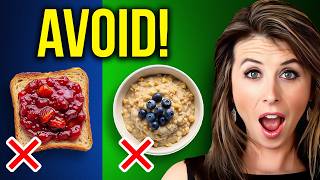
Dr. Ashley Lucas explains why oatmeal, smoothies, and granola spike blood sugar and shift your body into fat-storage mode. She recommends extending your overnight fast to 12-14 hours, then eating 20-50g of protein with healthy fats instead of carbs. The "breakfast is most important" claim came from cereal marketing.
Chapters
If you've been starting every morning with what you thought was a healthy breakfast, say some steel-cut oats, smoothie, maybe some fruit, some toast, some avocado toast, and you're still struggling with belly fat, maybe you're struggling with afternoon crashes, cravings that just won't quit, I want you to know something really important. You are not doing it wrong, and you're certainly not broken. Your body is actually responding exactly the way it was designed to respond. The problem isn't your effort, it's not your discipline, The problem is that no one ever really explained to you what's actually happening in your body during those first few hours of the day. I'm Dr. Ashley Lucas. I'm the owner and founder of PhD Weight Loss and Nutrition, where we've helped over 12,600 people collectively drop more than 480,000 pounds. My goal with this channel is to give you the science-backed information you need to work with your body instead of against it. Here's what I want you to understand. While you sleep, your body enters this incredible repair and recovery state. Your brain is also working to recover. Your liver is busy burning through stored sugar. Your cells are cleaning themselves up, and your metabolism is humming along in what we call a fat-burning state. This is your body doing exactly what it's supposed to do. The challenge is that the moment you consume certain foods first thing in the morning, even foods you've been told are healthy, you can flip that switch from fat-burning mode right back into fat-storage mode. This isn't about breakfast being bad, It's about understanding that your morning meal sets the metabolic tone for your entire day. And when that tone is off, everything else feels harder than it really should. So let me break this down for you. Your bloodstream at any given moment only needs about 4 grams of sugar to function. That's about 1 teaspoon. When you're fasting, blood glucose is around 80 milligrams per deciliter. That's a healthy, balanced state. Now think about what happens when you have a typical healthy breakfast. I'm talking a bowl of oatmeal. That bowl of oatmeal can contain over 40 grams of carbs. A smoothie from your favorite juice shop, often 60 to 100 grams. Even if it has, you know, if it's sweetened with dates or maple syrup or agave nectar, something natural, it still has the 60 to 100 grams of carbohydrate often. And the body metabolically doesn't care where this sugar really comes from. Even 2 glasses of orange juice can deliver over 50 grams of sugar, and because it's liquid, it hits your bloodstream really quickly. When all of that sugar floods your system, your body has no choice but to release insulin to manage it. And here's what a lot of people don't realize: when insulin is chronically elevated, fat burning stops. When fat burning stops consistently, your body shifts into fat storage mode rather than fat burn mode. This is why you can be doing all the right things and still feel stuck. It's not a willpower problem. It's not a flaw in discipline. It's a timing and composition problem. And here's something really important. Research shows that you can have elevated insulin levels, what we call insulin resistance, for years before your blood sugar numbers look abnormal. Your doctor might tell you everything looks totally fine while your metabolism is actually under significant stress. If you're listening to this and thinking, this explains so much about why I crash mid-morning or mid-afternoon, or this is why my belly fat just won't budge no matter what I do, you are not alone. This is exactly the kind of metabolic pattern we see with our clients who come into PhD Weight Loss every single day. If you want support in creating a customized plan that works with your unique metabolism, just click the link in the description for myphdweightloss.com. We'd love to learn more about your situation. All right, so what does a metabolism-supportive morning actually look like? First, let me say this: you do not have to eat breakfast the moment you wake up. Your body doesn't need fuel immediately. In fact, extending that natural overnight fast even by just an hour or two can be incredibly beneficial for many people. Now, everybody is different. But for a lot of people, if they can get into this state where they haven't eaten for about 12 to 14 hours, it's really beneficial. Now, after you've had that 12 to 14 hours where you haven't eaten anything, and when you do eat your first meal, here's what matters most. You want to lead with protein and healthy fats. So this could look like eggs scrambled with some veggies and avocado. It could be steak and eggs if that's your preference. It could be a protein-forward smoothie made with high-quality protein powder. I like whey. Some healthy fats, maybe some frozen berries. It could be leftovers. At PhD Weight Loss, we recommend that your first meal of the day contains somewhere between 20 to 50 grams of protein depending on your body size, your gender, your activity level. This helps to keep insulin low, keeps fat burning active, and sets you up for stable energy throughout the rest of the day, which is key if you want to drop fat weight. Now, what you want to avoid, at least in your first meal, are high-carb, high-sugar options that spike your sugar. This would be things like a low-fat sweetened yogurt, even if it's sweetened with fruit on the bottom. Oftentimes non-fat, low-fat yogurts have a lot of added sugar. Oatmeal or granola, you want to avoid toast with jam, fruit juice, sweetened smoothies. Most cereals, like the majority of cereals except for a few brands, are just going to spike your glucose level. Now, these aren't evil foods, they're just not ideal for your first meal if you're trying to support your metabolism and drop the stubborn belly fat. By the way, if you want to dive deeper into exactly what to eat throughout the day, not just breakfast, I have a really awesome video that walks you through a full day of eating to boost your natural GLP-1 levels and to support fat loss. I'll just link that in the description so you can watch it next. Now I know what you might be thinking, but Dr. Ashley, I've always been told breakfast is the most important meal of the day. Here's the truth: that phrase was actually created by cereal companies. Like, Kellogg created that phrase as a way to market his cereals. It's all about marketing. It's not about your biology or your physiology. Now, what about muscle loss? Won't skipping breakfast cause me to lose muscle? This is a really common concern, and I totally understand it, but muscle loss is driven by chronically low protein intake throughout the day and insulin resistance. It's not caused by when you eat, for example. So when you fast, your body actually releases growth hormone, which helps preserve muscle. The key is making sure that when you do eat, you're getting adequate protein. So it's true, a lot of people who love to fast do not get adequate protein in because they don't focus on it for the rest of the day when they do have their eating window. All right, another objection might be, I wake up hungry, doesn't that mean that I need food? Morning hunger is often a sign of blood sugar instability from the day before, not true caloric need. I know personally, if I've been, been knocked out of fat burn, say I eat really big meal the day before, or I eat a lot of carbohydrates that my body's not used to, I will wake up the next day, even if I've eaten more, hungrier. Now, morning hunger is often a sign of blood sugar instability from the day before, not true caloric needs. So I feel this personally. If I have a big meal, maybe it's like Christmas holiday or Thanksgiving, and I eat foods that I don't usually consume during the day, and maybe some more carbohydrates, some more sugars, the next morning I will be really hungry. Now, this is not a true caloric need. Like I said before, I ate plenty the day before to last me through today, but it is because I have shifted my blood sugar. When you start eating in a way that supports insulin sensitivity, that morning hunger often disappears within just a few days. So I know for me, if I'm hungry the next day, it's usually because I've knocked myself out of fat burn the day before. Now, here's what I want you to take away from this. Your body's super smart. It's super intelligent. It's been doing exactly what it knows how to do based on the signals you've been sending it by how you eat. If those signals have been high carbohydrate, high sugar mornings, your body has adapted accordingly, and it's going to tell you it's hungry the next day because it's craving more sugar. Now, the beautiful thing is when you start sending different signals, when you prioritize protein and whole foods and healthy fats in your first meal, When you give your body time to stay in fat-burning state, everything can shift. You may notice your belly fat finally starts to respond, your energy becomes stable instead of a roller coaster, the mid-morning crashes disappear, the cravings quiet down, and you stop feeling like you're fighting your own body. Now, this isn't about restriction at all, it's about repair. If you're someone who struggles with blood sugar stability and cravings, you might also benefit from some additional support. Now, I created GlucoCut Plus specifically for people in a loss or maintenance phase who want to help stabilize their blood sugar. For those people who want to reduce cravings and support their metabolism naturally, you can check it out at drashleywellness.com. The link is in the description. Just use code ASHLEY10 to get 10% off. All right, I hope this has been helpful for you. Here's what I want you to remember: your body isn't working against you. It's been protecting you, adapting to whatever signals you've been sending. And when you start working with your body, with your biology, when you understand how insulin and timing and food composition actually affect your metabolism, everything becomes much easier. You don't have to fight harder, you just have to work in a smarter way. And speaking of metabolism and fat loss, if you want to understand exactly how to naturally boost GLP-1 levels, which is what those expensive medications are trying to mimic, I have a video that walked you through an entire day of eating to do just that. Click here to watch it next. Now, if you have any questions about your breakfast meal or your hunger in the morning or any kind of feedback, drop it in the comments below. I am here to help you and to support you. Remember, you got to step up to make the change. Lead with your heart, train your mind, and do not negotiate with your body. I'll see you next time.
More from Dr.





If I Was Over 50 & 30 Pounds Overweight, This Is Exactly What I'd Do to Burn Belly Fat


