This Couple Lost 65+ lbs Each in 26 wks! How They Did it...
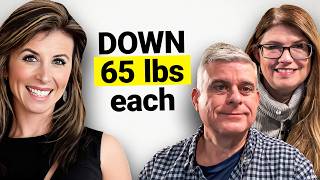
Radio personalities Charlie and Debbie Nance each lost 65+ pounds in 26 weeks through the PhD Weight Loss program, using intermittent fasting and metabolic flexibility. They stopped heartburn, gained energy, and kept the weight off by treating it as a lifestyle, not a diet.
Chapters
Welcome to the Dr. Ashley Show. I'm Dr. Ashley, and today's guests are voices many of you know and trust, especially if you've ever listened to Country 103.7 in Charlotte, North Carolina, on your drive home. Charlie and Debbie are joining me today. Charlie and Debbie Nance. And they have been making millions of people laugh on the air since 2006, turning the commute into something that feels like time. Time with friends. Now, about four years ago, they decided to take on a new challenge together and begin their journey with PhD weight loss. Within six months, they had lost more than 130 pounds combined. And they're going to be sharing their experience openly and honestly with us today. And most importantly, how they've kept off this massive weight loss for over three and a half years. Now, today we're talking about mindset, partnership and the day one approach that they took that helped them make this big change possible. So let's dive in. Hey, guys. Quick interruption to the Dr. Ashley Show. After a decade of helping thousands shed pounds, I realized the need for an electrolyte mix tailored to support lean muscle mass and metabolic needs. People always talk about electrolytes for different sports or lifting weights, but what about for weight loss? It's a marathon of its own. Drum roll, please. Introducing Electrolyte plus, your marathon champion. Packed with patented ingredients for optimal absorption, it fuels metabolism, supports adrenals, and stabilizes blood sugar. Say goodbye to those headaches and lightheadedness. Visit DrAshleyWellness.com and use code ASHLEY10 for 10% off your first purchase or 20% off your first subscription order with free free shipping, plus enjoy a 30 day money back guarantee. Back to the show. I am so excited to talk about your journey and hear the advice, the guidance that you have to share with others who are motivated to make some changes in their life. So I'd love it if you guys could share with me. What was that conversation you all had? I think it was May of 2022 when you all got started with PhD weight loss. And I know you've been through a lot of things before this. When you came in, you were skeptical. I had to really tell you it's all gonna be okay and that it's all possible. But what was the conversation you guys had together where you're like, yeah, I think we're gonna give this a shot.
Well, we had just reached a point in our lives where we were uncomfortable. You know, we didn't feel great, we didn't have a lot of energy. Moving around was not pleasant. We were just. Everyday life that should have been pleasant and easy was just getting to be a struggle. And so we were just kind of sick and tired of feeling sick and tired.
We had just gotten back. We had been on a trip doing a broadcast of our show from Jamaica. And when we got back, I hadn't paid attention to pictures or anything, but when I looked at the pictures, I just went, oh, my God. What, what is, what's happened to you? I mean, I was, I was an athlete my whole life. And, and, and to see what had just become, I just went that, I, I can't do this anymore. And, and like you said, we tried, you know, all the other diets and everything in the world over the years. And sure, we'd lost weight before, but it had always come back in full force. And so we just sort of said, okay, we're going to give this, this thing one more try.
Yeah. Because as you know, it comes on gradually, and so it kind of sn until you reach that tipping point to where you just realize, wow, I don't even feel like myself anymore. And, you know, we had tried a lot of things, and this just made so much sense.
When you say you felt sick and tired or you hit that tipping point, like, share what that was for you, it's different for each person. What, what did that feel like? What did it look like?
Well, number one, I mean, just the obvious that a lot of people struggle with. You just start feeling bad in your clothing, things don't fit the way they used to. You start having the low energy, getting through the day, you just get tired quicker. My knees were giving me trouble. I was having pain in different places and joints. Just my, my body trying to move around, all of that extra weight. It just, it wasn't built for that. And it was starting to show.
Yeah. And I just, I just didn't like the way I looked. And it was, it was just, it was, there was really a moment getting back from Jamaica when I just looked at the pictures and I, I, I just looked like this. Like I'd stuck an air hose in my mouth and just blown myself up. And I didn't wreck it. I no longer recognize who I always imagined I was or who in my mind's eye I was. And it was, it was just that moment I said, this, this has to stop, and this has to stop now.
Well, and social media has a sneaky way of reminding you what you once were.
Now. I saw the replay stories.
Your past, those memories will pop up and you look at it and you think, wow, that's me just a few short years ago, and that's not me now. You know, how were you able to
trust in the process and not just say, oh my gosh, this is going to be another thing. Why, like, why did you give it a go?
I think after doing research on the program and talking with you and talking with several of the coaches at the center, it just made sense from a scientific point of view. You know, we, we had, depending on your age and what era you grew up in, with the diet trends of the past, you, you had different points of view on what you thought were the triggers and the problems and the, the things to stay away from and the things to embrace. But this kind of knocked that out of the water and in a good way, it made sense.
Yeah, I think that was, and I will say this at first, and by at first, I mean the first couple of days, going in, talking with you, talking with your people and getting the paperwork in front of me. At first, I will admit it was a bit overwhelming. I looked at it and I was, there's, there was a lot, and I'm a college, we're college educated people. There was a lot to digest. Bad choice of words. There was a lot to, to absorb and a lot to sort of rationalize. And at first it looked like, oh, my God, how can I do this? But then when you just sort of slow down and you, like Debbie said, all of a sudden it really made sense from a scientific point of view. And just, you know, once you got out your, your scale and you're measuring things and you, you go through it for the first couple of days, it becomes second nature and it's no longer overwhelming at all.
Yeah, at the beginning, it's a big change for a lot of people. And then it, you realize that it does become pretty easy and simple as you establish it as a new habit, your new way of living.
Well, it's like I tell friends who ask me about it, it's just the way we were meant to be eating all along. You know, we just, we weren't educated before about it, but it now is second nature because it's the way we're supposed to be eating.
Yeah. I think I was in my 40s or maybe had turned 50 when I realized that that food pyramid in elementary school was brought to you by the people who made Fruity Pebbles, you know, tap. Well, that was a huge, a huge marketing scam.
Yeah, that's right. And now they've updated the pyramid. Looks much better. Have you guys Seen that?
No, I haven't.
I've heard about it.
Okay, I'm going to send it to you guys. I'm going to text it to you after this so you can see it. And you're going to be so proud because there's meat and cheese and healthy fats up at the top that we're supposed to focus on. Grains are at the bottom. So I'm super excited about it. I'm going to share it with you.
Well, that's awesome, because like I said, we grew up in a time where fats seem to be a dirty word, you know, and then when you learn you need those healthy fats in the right proportions and it just, a light bulb went on, you know?
Yeah. You know, speaking of fats, that was one thing that I discovered early on because I've, I've never been a big breakfast person and, you know, tried at first to do the breakfast and then the snack or whatever, and I just felt like, you know, I don't, I don't want to eat, I don't want to eat that breakfast. But, you know, the healthy fats, and by this I mean the two tablespoons of half and half in my coffee every morning and how that would satiate me until I was ready to eat at 11:30 or 12. And I, I never would have thought that was possible. And that was one of those science things that I went, oh, wow, this really does work. And this is why it works. And I, I, you know, when you mentioned fats, that popped into my head is that was a huge breakthrough for me.
What else was surprising to you that you learned? Because one of the things that's really important to me is that people are understanding why they're eating this way and what makes sense in their body. I know the education was important for you guys because you really wanted to understand why you're doing this, rather than say another program where they just tell you what to eat, but not the science behind it or the reasoning why and making it unique to your metabolism. What other information besides the fact that healthy fats are important, help you burn fat, help you stay full, really was surprising to you?
Yeah, I'm a big why person, so it really does help me to know the reason I'm doing it. Like you said, not just somebody putting it in front of my face and saying, do it, because I said so. And, you know, I think it was just the balance of all of the different nutrients and different components of the everyday diet that we had to get right. Because when I would Come in for coaching. They might ask me, you know, well, were you hungrier this day? Because they would look at my food diary and see what I had been consuming the day before. And they would say, did you feel particularly hungry the next day? And I would say, yeah, I was a little extra hungry that day. And they would say, well, because you had either too much or too little of this or that. And it's like a great puzzle that they put together and you could find the reason why. So I think it was just learning the combinations of the right amounts of proteins and fats and things that work together. It's not one thing by itself.
And another big thing that, that I discovered that I'd heard this term but didn't really know what it was. And now I'm a huge, huge believer in this. And that's intermittent fasting and finding that period of time where, you know, and it's different for everyone, where it works for you not to eat. And I really, really make a concerted effort not to eat or drink anything past 7:30 to 8:00 clock at night and then don't touch another thing except for my morning coffee until about 11, 11:30 every day, the next day. And that really, that's all that, that I discovered was a great sweet spot for me. And I'm a big, big believer in
that because we were huge snackers. I think that was probably one of the biggest culprits for us, the in betweens. And especially after we came home from work and had dinner, before we started with PhD, it was just a snack fest, nibble on everything all night long, you know, and it's mindless snacking. You don't even realize you're doing it. You're just grabbing stuff while you're watching tv. So I think it was making an effort to be purposeful in what you're choosing and what you're eating and when you're eating it. And it's not complicated. That was the other thing. So many things that we had done before, it just seemed like you, you had to think about it all day long. But once you get the hang of this, it just came to us easily, you know, and as long as you, you, you know, did what the outline says to do, it just flowed so easily.
Were you hungry? Did you have cravings? Was it painful? Did you feel like you just couldn't wait to be done with the weight loss phase? Or did you feel it was a little bit different? Share your experience around that?
No. Once, you know, I think everybody, when you Start this thing. You have that first week or two maybe where I almost call. It's not. You know, this is a weird term because it has different meanings because of what people take and do, whatever. But it's almost like your body has to go through kind of a detox and you kind of have to, to, you know, you're purging your bad habits and you're getting started with newest. But once that happens. No, I, I don't ever remember going, gosh, I'm hungry. I just remember that I, you know, once we got our, on the regimen, on this regimen and once we know, trained our bodies into this new paradigm of doing things that you were getting what you needed.
Yeah. And you know, when we were eating all of the chips and the cookies, cakes, candy, whatever your vice is, which that was ours, it made us just want more of that, create more. It did. And so when we started lessening that and replaced those habits with the better stuff, it just, we didn't think about that stuff anymore. I didn't even go down that aisle at the grocery store. I had no desire to, I didn't need to, didn't want to. And I knew that it wasn't something that I was going to be consuming, you know. So you started at that point shift as well. It was, it was a big mindset shift for us.
Now what I did discover that was important to me is I really looked forward and it was important to get it right about 3:30 to 4:00 clock every afternoon. We had just gotten started with the radio show and that was when I needed something. I needed a little something. So to find that good, healthy snack or a bar or whatever was really, really vital for me. And so that, that was big for me. Was, was, was finding that and then that if, you know, as far as being hungry or craving something, I would get in that, right, that, that moment, right in that 3:30, 3:45, I had to have something. But that's the only, only time that I would ever go, gosh, I'm hungry. Gosh, I need something. That was it for me once I got into it. I never did a morning snack. Um, but I needed that afternoon snack.
I'm glad you shared that because for all of you guys listening, watching this, I often talk about the importance of a 3 to 4pm snack so that you can manage your hunger and go into dinner not being ravenous and therefore not eating throughout the night like you guys were. It's a really big shift for a lot of folks. I think a Lot of people before going into a program like this might think, oh, I'm just going to save calories by not eating in the afternoon. But that's not the way to go. Right? You guys have, right?
No. And in fact, when you say that I was thinking of this, there were times when I thought, okay, I'm not super hungry right now at 3 o', clock, 3:30, I could skip that. But I knew that that would be detrimental if I didn't have that. Then when I got to dinner at 6:30, 7:00', clock, by the time we got home, I would just want to eat everything. But just having that little thing, you know, right there to break up the day and break up that, that craving, I. I didn't have to worry about that then.
Yeah, it's a big, It's a big deal. Well, you guys talk about the results that you experienced, so I know, you know, everyone looks at how much weight we've dropped. I'd also love to know if you let go of any conditions like heartburn or poor sleep or. I know we talked about energy. I'd also love to hear about what you gained emotionally, mentally. Tell me about what you came away with.
Well, just physically, the one thing I had forgotten about that you brought up, we were going through antacids like crazy before we started.
Yeah, you might as well have had Tums in a candy dish in front of us.
I mean, it was bad. I. We had constant heartburn and that was one of the things that we absolutely were able to give up. Yeah.
Wild, right?
Yeah. I mean, it was amazing. I was so happy to not have to make sure I had those in my purse every time before I went somewhere because I didn't want to be miserable when I was out with friends or something. I knew I'd have to be popping her. That went away completely. The energy level came back up. And just emotionally, the confidence, you know, we. Just. Because we felt better physically, we knew that we. We looked more like ourselves, like we had always looked before. And I think just we felt like we didn't have to hide in pictures. We felt. Or at least I did. I didn't feel self conscious about going out socially with people. You know, I just, that was always in the back of my mind. Oh, you know, I, I just, I had that little voice inside me, you know, telling me, oh, you know, you need to hide if y'. All. I'll take a group picture. Get in the back row. Well, it's just the confidence sword.
I love that. I think that's Most important, the heartburn's nice too.
Oh, yes.
That was huge. Yeah, really. With me, it was, it was just the, the confidence level as Debbie brought up, and also looking at myself and going, okay, that's, that's, that's who you are. You've just got grayer hair. Uh, and I, you know, I can live with that. But, but, but, yeah, that was the big one for me, was I looked who I thought I was again.
And I think people listening like to know how fast it went and it was pretty speedy. I think you guys dropped about two and a half pounds per week. Both of you more than 65 pounds down. You did this naturally without medications. I mean, the medications are everywhere these days. What would you tell someone who's considering going the medication route thinking that it might be easier or faster or share your thoughts around that?
I'm, and this is, I don't want to be one of these weird medical conspiracists people, but I'm very leery of what we don't know. And I always think that all of this started, all of this stemmed from what was essentially a medication for diabetes. And I don't know, and no one knows what are the long term effects of consumption of this at this time. And I say this from, you know, we're, we're all old enough to remember, you know, Finfin was a miracle thing. And look, you know, that's now banned in every country in the world. And I'm not saying that's what's going to happen with this, but I'm just a little fearful of the unknown when it comes to medication, as far as long term effects, especially when the medication has come on so soon. So if I have an option of not taking the unknown and putting the unknown in my body, then that's the route I'm going to go.
Well, and I just like the fact that I can eat real food and do this and I don't have to rely on a medication for the rest of my life. I can go to the grocery store, shop for real food, come home, cook it, eat it and get the results. You know, I just, I like being able to do it just kind of the way we were meant to do it, you know, without the intervention like that.
Yeah. I hope that you feel empowered and not dependent on anything self sufficient, that you can go wherever you need to go and understand what your body needs. I would love to share, for you guys to share with us. I know you lead a busy lifestyle. It's hectic, it's crazy. Like, how did you do this and drop this much weight while traveling? And then how do you maintain it while doing the same thing? Like, if someone's listening, watching this, and they're like, yeah, that's great, but my schedule's like this, or I travel like this. Can you give some tips and guidance along those lines?
Yeah, everybody is busy, especially when you have families, you have jobs, kids, schedules kind of revolves around them and you're on the go. And that was what was great about the program. When we were in the weight loss phase, we could just throw the packets in our backpack or purse or whatever, and if we had access, which we did pretty much everywhere we were to some water and a microwave to, you know, mix up a soup or an oatmeal or something like that, or even, you know, some of the snacks, the crisps that you had, the chips, the bars, whatever, we could just throw that in our pocket and go. And it was a good on the go option because, like, you know, we did do some more of those trips for work. We went to the Caribbean to these all inclusive resorts where you remember you guys going, and so, oh, my goodness,
give me some tips.
Yeah, you just eat and drink as much as you want. And, you know, that was just a recipe for disaster. But it didn't have to be because we had the blueprint. We knew we could get healthy options at any restaurant.
Yeah, well, yeah, once you get into it and once you start, you know, you're, I don't know, three, four weeks in and you sort of get a rhythm of, okay, this is what I can and can't do. It's really not hard to go out to eat and to navigate a menu. It's just, it's not. You just have to, once you understand what you're doing and what you can and cannot do, it's just a matter of reading things going, okay, well, I'll just order this and take this off and put this on the side and then we're fine. And, and it's not, it's not a, it's not as hard as people think it's going to be.
And when you're at a restaurant and we always would ask for the dressings or whatever on the sides, you didn't realize before how much they were putting on your salad until you asked for it on the side. I mean, it was like they were putting a half a cup of dressing on it. We didn't need that.
Yeah, no, that, that, that's a good exercise for people to do is to go out, order a salad with the dressing on the side and then just dip, you know, tip your, your lettuce or whatever that's on your fork in the dressing as you're eating. And you will go through that salad and I, you'll have half a cup of whatever they've given you left of dressing. And then you realize, my God, they used to just pour that on and I just ate it.
Yeah.
What about now that you guys are in maintenance? What are the choices that you make now that were different than before? I know we talked about snacking, so probably snacking still gone. Right, Right.
That's a, the thing that you have to just be conscious of, you know?
Well, and you can look, you, you can have your moments. For example, I'm not going to go through a Thanksgiving and not have Thanksgiving dinner. I'm not going to be invited to a Super bowl party and not have some chips and some dip. But the difference is I'm not going to do that Monday through Friday, 365day, you know, 52 weeks a year. It's, it's learning how to. There are moments where you can allow yourself to indulge, but then you just can't live your life in indulgence.
It's, it's having that control and like you mentioned the word empowerment and knowing that instead of the food controlling you, you're actually the one controlling what you're consuming. And yeah, I mean, not having fries with a burger or maybe you take the bun off or, you know, those are tricks you still, that still stick with you even into maintenance. And, and in maintenance you talk about the dessert table and you know, it's not talking about necessarily sweets and candy, that's part of it, but it also talks about breads and pastas and different things like that, that you have to find that sweet spot where your body is to where what it can tolerate, you know, can it tolerate this or that once a week? Or, you know, and you just kind of rein it in and know that you're not, it's not going to be a full blown eating fat for five days.
And you, and you really, it's trial and error for everyone. You have to learn yourself and you have to, you have to dip your toe in the water and see, okay, what happens when I do this? Can I do this? And I think it's different for everyone. And I think that it's important that when you get in that face, don't be afraid. You have the power at this point over it. So don't be Afraid to see what your limitations are and what you can and can't do. I think the only thing worse than getting started would be, once you've lost the weight, being fearful to live the rest of your life. That would be very sad.
I like that you said that, Charlie.
Yeah.
Everyone has the power within them. Right? That's the most important thing, that's my goal, to give to everyone, is that they have the power to make the choices, to understand what's going on. We never say you just can't eat something. It's up to you to decide, and we help you figure out if you're gonna be more likely to tolerate the food or not. But ultimately, each person's different. So you guys did this together as a couple?
Yeah. Helpful. Yeah. No, that's. That's huge.
And. And.
And I get it. If you've got somebody in your house who's. Who's. Who you're constantly looking at going, stop. But, you know, we were able to do it together, and I think that was a huge, huge benefit for us. Not gonna lie about it.
Yeah. Yeah. We, you know, I. I cooked for the two of us. We made the choices together, and I didn't have anyone in my house, quote, unquote, sabotaging my efforts, you know, and that way. And we were lucky in that our son was already out of the house. He's grown. And so we didn't have a lot of teenage snack food. Yeah. We didn't have a reason for it. We just. We just didn't buy it. It wasn't there. It wasn't a temptation. And doing it together really made a difference.
What was the dynamic? Were you guys ever competitive with each other? Was it always supportive? I know, like Debbie, sometimes it can be tough because usually the man drops wood a little faster. So how did you navigate that?
I just had to really talk to myself and say, we're different. Our bodies are different. We're not necessarily going to lose at the same rate, the same amount every time. And there were weeks when he was a little bit better at, you know, the weight loss than I was. And it's just. It's your body, you know, and you can't beat yourself up over it. And that's where I think the coaching really came in and helped because they reassured me of that, that we're just built different, and he's going to lose at a different rate, and it's okay. I wasn't doing anything wrong, so to speak. That's just the way it is. And we still reached the goal, you know.
Charlie, anything to add to that?
Yeah, no, I remember, I remember her getting a little frustrated be because I, I, I sort of got where I got I needed to be in six months. And granted, you know, I'm. Debbie has like, she mentioned she had some knee issues and whatnot. And so, you know, I, and being a former athlete, I love going to the gym. And so I was able to go to the gym or walk the golf course, you know, seven days a week. And I was either go, I was doing something of a, of a high, you know, metabolic, you know, high heart rate conditioning seven days a week. And that, that helped and I think that helped sort of exacerbate my process. And so I consequently got done a little bit, you know, a month or two before she did. And I remember her being, yeah, five weeks, really PO'd about that in the car, leaving PhD every week. But, you know, but I knew she was going to get there.
Yeah. I mean, I knew I would.
Yeah. And yeah, but she just had to venture. But yeah. No, it's just, you know, men and women are different and, and that's just the way it is.
Yeah.
And talk about Debbie, the exercise around. I think a lot of people think, oh my gosh, I'm not going to be able to eat very much. I'm going to have to exercise like crazy. I know, Charlie, you did it because you come from an athletic background. It makes you feel good. You were. I remember you being so excited that you could go back and feel good moving your body, because that's what it was used to.
Right.
For you, Debbie, with your knees, like, how did you manage that? And did you have to work out like crazy?
No, I didn't. I do walk. I start when I first started out, before I started dropping the pounds, you know, it was suggested to walk about 30 minutes a day or move some way in about 30 minutes a day, several times a week, two or three times a week, if you could. I had to work up to it because right out of the gate, I wasn't able to. I would try to walk the neighborhood and I would start hurting, but as the weight started coming off, I was able to add a few more minutes a day. I started out with maybe only 10 minutes to walk around the block or two. And then as things started progressing, I started having less and less pain and the movement seemed more natural. And so I would add five minutes, I would add 10 minutes until I worked up to that 30 minutes. And then when I first started, that's all I Could think about was, it hurts, it hurts, it hurts. But then all of a sudden, I would look at my watch. Oh, I've been going 20, 25 minutes, and I haven't even thought about it. It doesn't hurt. And so that's why I just worked my way up to it. And I got, I like to do things at home, and so I got some little light weights, you know, that I could lift a little bit. I would go on some apps and do some, you know, little exercises and training that they showed you and walked you through. I had a little walking pad that a lot of people use at a standup desk. I just would slide it under my couch in the living room. I would pull it out in front of the TV and just walk in the mornings. 30 minutes while I was watching TV. So it's just some kind of movement. Not anything crazy crazy or anything, you know, that was, you know, making me sweat like crazy.
Yeah.
There was no Rocky movie montage going up.
It was just movement. Just, just getting, getting things going.
And is that now a habit for you guys? Are you still incorporating being active in your daily life and maintenance?
Oh, yeah, no. I, I, I'm at the gym or, or I'm at the gym four to five times a week.
Wow.
And I walk, I'll walk the golf course, you know, when I'm playing on the weekend, I'll, I'll walk doing that because that's my other great passion.
Yeah, I'm not, I don't do as much as he does, but in the warmer months, I do like to get out and do some things. Our work has a gym. We just moved to a new building and they have a gym downstairs that we have access to. So I'm excited to get started in there.
That's great. So you can do that even when it's cold?
Yes, yes.
So you guys go in to work to host the radio show and do all of your things. How do you deal with social pressure? There's probably a room where people bring treats or like, what do you do, Charlie?
The devil. The devil lives in the break room at radios.
It usually does.
It is unbelievable. You know, I, I, radio stations had more donuts than, than donut shops.
Yeah. They will have a meeting and a client donuts or whatever. There's just, there's stuff everywhere.
Tell us your tricks and tips.
Just say no. Yeah. No, you just. And it, it's not. That just sounds so stupid. It's easier to say no when you're seeing the results of what you're doing. In other words, I don't, I don't want to take a step back here. And, you know, we talked, we talked earlier about making choices that just didn't seem. Doesn't seem like a good choice for me right now. You know, I'm not going to choose to have a donut now when I know that at the end of the week, you know, I want to go out and have a burger. And that burger with. With my wife at dinner means more to me than grabbing a donut now in between Morgan Wallen records. You know, I just. So, you know, it's, it's, it's making your choices and, and deciding what you want to do, but it's just always
that planning and mindfulness, because I think that's what got us into trouble to begin with was just the. The carelessness of it and not even realizing what we're putting in our. Our mouths. Just doing it all throughout the day. And before you realize it, it's like, wow, I've. I've eaten all day long. But when you really make a conscious effort and think about it and plan for it, I think that's, that's key for me was really prepping, not even physically prepping meals, but in my mind, prepping for things, you know, and they would always ask us, the coaches would always say, do you have any challenges coming up? Do you have anything? Do you have a birthday party, something coming up where you're going to have to navigate that. So it's just keeping that in your mind of planning ahead and thinking what you have coming. Yeah.
And one of the big things we do at PhD is we shift how your metabolism is working. The way that we have you eat during the program allows for metabolic flexibility, which means that you can burn fat much more easily. And when you are burning fat and in the state, the cravings actually reduce, the food noise goes away. So you can more easily go into one of these rooms. Although I do avoid. I would recommend just avoiding the room and not going in because it's a double. You know, if you have.
That's right.
In the new. In the new building, it's easier to avoid, actually, which is kind of nice.
That's great. Yeah. That's just not a space that you go in. It's not serving you. But even if you did, then it's easier to look at those items. And the body's just like, you know what? This, this isn't for me. It doesn't serve me. It's black or white, you know, it doesn't have the color to it. It's actually kind of poison for my body. And metabolically, it's easier to say no, as well as mentally and emotionally. So I think people really find benefit there. I'd love for you, as we're closing here, to give your piece of advice to someone who might have been in your shoes four years ago where they have tried everything, they're skeptical, they're frustrated, and maybe they just want to give up. What would you tell them?
Number one, don't give up.
Up. Yeah.
And number two, and we, like, we did them all. I mean, we could, we could open up a cabinet somewhere and whip out every diet book that you've ever heard about in the last 20 years. We've got it, we've seen it, we've tried it, but this one works. And what we've discovered is it works long term. And by long term, I mean for the rest of your life. Like, you don't. I don't live in fear of, of, of weighing 240 and 250 pounds ever again. That is, that is something that is so forward. I can't imagine how that could even happen.
Yeah, I don't remember how we did.
No, I don't, I don't know. So, so, so don't be, and don't be afraid to try it and, and just give it your, your best effort and just know that it will work and it will work for you long term. And that's the most important thing.
Yeah, that's the thing. If you're saying, I'm not going to try one more thing, try this one more thing, because in all likelihood, at least for us, I would say it's the last thing you'll ever have to try because it's the one that worked. And it's, it's not some gimmick. It's not anything that's fly by night. This is just the way that we want to do this. We want to do this for the rest of our life. And it just opened our eyes to so many things and changed so much. Like you said of our mindset and just the way we view food and the way we take it in and it's, it's different than all the rest. It really is. I mean, that's not just something we say. It really is different.
Yeah. And again, and I'm not knocking anyone who's on medication or anything like that, but I don't want the rest of my life and, and how I feel and how I eat to be dependent on a pill bottle. I just don't want to have to, to know that for me to be in control of my life, I need to be in control of a prescription. And, and that just, that, that's, that's counterproductive to me. And that's, that may just be my opinion, but, but that's where I am with that.
Thank you, Charlie and Debbie. Super grateful for your time and for sharing your story and for motivating all of us. Thank you, guys.
Thank you.
Thank you for what you did for us.
Thank you guys for joining me today. I hope that this was inspiring, motivating and that you got some good tips that you can implement into your daily life to create positive change. Remember, you got to step up to make the change just like Charlie and Debbie did. Lead with your heart, train your mind and do not negotiate with your body. I'll see you next time.
More from Dr.





If I Was Over 50 & 30 Pounds Overweight, This Is Exactly What I'd Do to Burn Belly Fat


