What It Actually Takes to Lose 40 Pounds in 60 Days
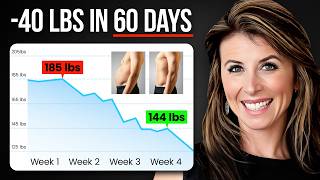
In this solo presentation Dr. Ashley Lucas explains whether and how a person can lose 40 lb in 60 days. She starts by breaking down the math (4‑5 lb per week) and clarifies that such a rate is aggressive but achievable for some, especially those with a larger excess weight. She stresses that success hinges on a mindset shift: abandoning the habits that caused the weight gain and being willing to feel a little hungry or uncomfortable for a focused 60‑day “catalyst” period. The core of the protocol is a simple nutrition framework – protein‑first meals (20‑50 g per eating occasion), non‑starchy vegetables, healthy fats, limited low‑sugar fruit, and the elimination of processed carbs, sugary drinks, and excess alcohol. Dr. Lucas provides a sample day of eating, notes that she does not count calories, and highlights the importance of consistent protein and fat to regulate hunger and blood sugar. Movement is limited to 30 minutes of daily walking (with optional light strength work) to avoid the stress response that can stall fat loss. She mentions a custom supplement, GlucoCut Plus, containing dihydroberberine, chromium, and thyroid support, as an optional aid. The talk also includes personal anecdotes (a client who lost 19 lb in a week, her 13‑year‑old son’s sugar‑detox story) and a testimonial from a client named Christine who finally broke the binge‑eating cycle. Finally, Dr. Lucas promotes her PhD Weight Loss program – a high‑touch, personalized meal‑plan service – and invites viewers to schedule a call. The overall message is that rapid weight loss is possible with disciplined, realistic nutrition, gentle daily movement, a supportive mindset, and professional guidance.
Chapters
Hey everybody, welcome back to the show. I'm Dr. Ashley Lucas, and today I want to have an honest conversation about something I get asked about all the time. Dr. Ashley, I need to lose 40 pounds. Can I do it in 2 months? What would that actually look like? Maybe you've got an event coming up. Maybe you just hit a point where you are done feeling the way you feel. Maybe your doctor gave you a wake-up call. Whatever brought you here, I want to talk to you today about what's realistic. What's healthy, and what it actually takes to lose significant weight in a focused period of time. Now, I want to be clear upfront, this is not about crash dieting, it's not about punishment, and this definitely isn't about doing something extreme that's going to wreck your metabolism and leave you worse off than when you started. But can you lose 40 pounds in 60 days? For some people, yes, and I want to walk you through how to think about it. First, let's do some math together. 40 pounds in 60 days works out to be 4 to 5 pounds per week. That's pretty aggressive. I'm not going to pretend that it isn't. At PhD Weight Loss, we typically see our male clients drop about 3 to 3.5 pounds per week, and our female clients lose about 2 to 2.5 pounds per week when they're following their customized plan very consistently and precisely. So 40 pounds in 60 days is on the faster end of what's possible. Now here's what I want you to The amount you can lose depends on where you're starting from. If you're carrying 40, 50, 60, or more pounds of excess fat weight, especially if a lot of it is around your midsection, your body has more to release. In the beginning, weight loss often comes off faster because you're also losing inflammation and excess fluid that comes with metabolic dysfunction. Now, if you only have 20, 30 pounds to drop, this timeline isn't going to be as realistic for you, and that's okay. You might be looking at 30 to 45 days instead. The point isn't the exact number. The point is understanding that significant change is possible when you commit to doing things differently. Now, I had a client who, um, had 110 pounds to drop, and in his first week he dropped 19 pounds. And I've had that happen probably 20 different times, uh, but those clients had a lot of inflammation and they were making big changes in their diet. Now, this brings me to the most important thing I want to talk about today is mindset. If you have 40 pounds to drop, something about the way you've been eating and living has gotten you here, right? That's not a judgment. That's just a reality of, of how we're here. This means that to get different results, you're going to need to do things differently. I know that sounds super obvious, but I think a lot of people don't fully absorb what that means. Right? They want to lose 40 pounds, but they also want to keep eating the way that they've been eating, just maybe less of it, or maybe try to exercise more. Um, but they don't want to really change what they're consuming. They don't want to change their food, or they want results, but they're not willing to feel uncomfortable. Now, what I tell our clients at PhD Weight Loss is that you have to be willing to let go of the habits and patterns that got you here. Maybe not forever, but for this focused period of time, you need to be fully committed. That means being willing to feel a little hungry sometimes, not all the time, but maybe 30, 45 minutes before a meal, you're going to feel hunger. Being willing to say no to things you normally say yes to. I think saying no is a form of self-respect. Being willing to prioritize this over convenience for sure is going to be important. It's not about being perfect. It's about being consistent and honest with yourself. Now, before I tell you what to focus on, let me tell you what you don't have to do. You don't have to starve yourself. You're going to eat. You're going to eat real nourishing food that supports your body. You don't have to become vegan or give up meat. Actually, please do not give up meat. In fact, protein is gonna be the foundation of how you eat during this time. You don't have to go zero carb. You're going to have carbohydrates. They're just gonna come from veggies and fruits rather than bread and pasta and processed foods. You don't have to live at the gym. Movement matters, but you're not going to out-exercise a poor diet. I know you've heard that before. Food is where the transformation really happens. You don't have to go buy special GLP-1s or powders and potions. Everything I'm gonna share with you today is based on real food and simple movement. Now, you know, if you're listening to this and you're thinking, this makes sense, but I don't trust myself to do it alone, that's exactly why I created PhD Weight Loss. We provide you with a customized, personalized meal plan. We tell you exactly what to eat, when to eat, and how much. So we take out all the guesswork. We check in with you every week. It's very high touch, and we adjust as you go. You know, losing weight is a dynamic process. What works in one week might need to shift by week 4. Actually, definitely does. If you want that level of support, you can learn more at myphdweightloss.com. If you are watching this on YouTube, just head on into the description and you'll see a link there. You know, we would love to get to know you, love to, uh, hear your story, and we can talk about what you're actually going to eat, what it would look like specifically for you. But the first step is actually giving us a call and scheduling that meeting with one of our nutritionists. So head to myphdweightloss.com to check out more. All right, if you want to lose weight at this pace, you need to simplify. You need to take out all the noise and the confusion because you are going to need to focus just on the basics. So here's what your plate's going to look like. Protein first, non-negotiable. Every meal starts with a quality protein source. Now I'm talking eggs, eggs with the yolk, chicken, turkey, beef, fish, seafood. If you eat dairy, I'd like to see high-quality plain Greek yogurt or cottage cheese can work too. Protein does several things for you. It keeps you full, it supports your muscle mass so you're losing fat and not muscle, and it has a stabilizing effect on your blood sugar so you're not on this, uh, roller coaster of cravings and crashes. Now, at PhD Weight Loss, we recommend somewhere between 20 to 50 grams of protein at your first meal and your last meal of the day, with additional protein spread throughout. The exact amount depends on your body size, your activity level, where you are in the process, but the principle is the same: make protein the foundation. Vegetables come second. Fill the rest of your plate with non-starchy veggies if you can tolerate them and if you like them. Leafy greens, broccoli, cauliflower, zucchini, bell peppers, cucumbers, mushrooms, asparagus. These give you fiber, gives you the micronutrients and the volume without spiking your blood sugar, helps to keep you full. Now we add healthy fats for satisfaction. You're not going to fear fat. Fat helps you stay full. It supports your hormones and it makes your food taste really delicious. Avocado, avocado oil to cook in, olive oil, butter, heavy cream, the fat that naturally comes with your protein. All of these are really great. Uh, fruit in moderation. Berries are going to be your best choice because they're lower in sugar, higher in fiber and antioxidants. Maybe an apple, small apple, not an apple the size of your head, but an apple that you'd put in your kid's lunchbox or your grandkid's lunchbox. Maybe some, a small orange, that's fine too. But for this focus period, you're going to keep fruit to maybe 2 servings a day. What you're leaving out: bread, pasta, rice, potatoes, chips, crackers, cereal, anything that comes in a package with a long ingredient list, juice, soda, alcohol if you're open to it. It's going to make the process go faster. Now I know it might sound restrictive, but remember, this is for 60 days. It's not going to be forever. This is a focus period where you're choosing and where you're giving your body the best possible environment to release the stored fat that's no longer serving you. So let me give you an example of what a day might look like. First meal, whenever you're hungry. Uh, if you're hungry when you wake up first thing, that's fine. If it's around 11, that's fine too. It could be 3 eggs scrambled with some, uh, chicken breast, potentially add in some spinach and some avocado on the side, maybe a few pieces of bacon, maybe some sausage if you want it. Then you're going to have some kind of lunch if your breakfast was earlier in the usually about 4 hours after. If you're just starting your fat loss phase, lunch would be, depending upon your body size, around 4 to 6 ounces of animal protein with some of those non-starchy veggies with some full-fat salad dressing, maybe a sprinkling of Parmesan cheese if you like that. Afternoon snack— and I always recommend having something mid-afternoon so you don't go into dinner ravenous, this is so important— it could be some turkey slices wrapped around avocado or a small portion of plain Greek yogurt with a sprinkling of berries. If you really need a drizzle of honey, a light drizzle. Dinner could be a piece of salmon or chicken thigh or a ribeye steak with a pile of roasted veggies, a salad with some olive oil, full-fat dressing, right? That's it. That's a full day of eating that will support your body, keep you satisfied, and allow your metabolism to do its job. I'd add some full-sodium chicken or beef broth in there because you're going to need a little bit more salt. Always talk to your doctor first before adding more salt, but most people People will need more salt when, um, dropping weight and eating in this healthy way. It's a great thing. Um, or you could do some bone broth, herbal tea with some stevia in it, maybe some bubbly sparkling water. You'll notice that there's no calorie counting in what I just described. I never count calories with my clients either. We focus on what you're eating and when you're eating rather than just obsessing over the numbers that don't get us anywhere anyway. When you eat this way, protein forward, you take out the processed carbohydrate junk, you're eating adequate fats, your hunger naturally regulates. You end up eating less because you're not fighting cravings all day. Your body gets what it needs and stops asking for more. All right, now let's talk about movement. I'm not going to tell you that you need to go spend 2 hours in the gym. That's not realistic for most people, and really it's not necessary. It could hold you back if you're doing that much exercise, especially at the beginning. Now what I recommend to our clients at PhD Weight Loss is 30 minutes of walking every single day, 7 days a week. That's it. Walking is gentle on your body. It supports fat burning without spiking cortisol the way that intense exercise or long exercise can do. The walking helps to improve insulin sensitivity. It helps with digestion. It clears your mind. Now, a really fun person to follow who really loves walking is Mark Sisson, so definitely check him out. He actually has a new shoe that he has put out called Peluva. It's the 5-finger toe shoes, so you could check that out. And he has a book on walking too, you know, I forget the name of it currently. I'll put it in the description there so you can check that out. Now if you want to add strength training a few times a week, that is great. Highly encourage you to do that. It will help you maintain muscle mass as you lose fat, but it's not required for the weight to come off. But I really strongly suggest overloading the muscles somehow. It could be with bands or bodyweight exercise. It doesn't have to be you going to the gym if the gym feels daunting. If the gym feels fun and exciting and something new, go do it. Lift weights, not too heavy to create injury, but overload those muscles. All in all, you guys, the key is consistency. 30 minutes every single day is more powerful than an intense workout one time per week followed by nothing. Right now, what's really important is that if you're significantly overweight and you start exercising intensely, your body can actually perceive that as a stress and hold on to fat. I've seen it happen so many times. I had one fellow give me a call the other day and he said, you know what, I need to drop 50 pounds. I know what I need to do. I, I need to become vegan and I need to exercise 2 times a day. I need to do 2 a day. So I'm like, oh my gosh, everything about that is not gonna be supportive to your body. So he said, um, that he was gonna give that a shot and call me in a little bit to let me know how it goes. So I'm, um, I'm awaiting his callback so that I can support him to, to drop that fat. In a sustainable way. Now, I've experienced this myself when I was training for long cycling events after I stopped being a professional ballet dancer. I felt like I needed to exhaust my body somehow. That's what I was used to forever. So I went into road cycling, and I loved it, but I actually gained fat weight despite all the exercise because my body thought that it was in a survival mode. So Don't think you need to punish yourself with exercise. Move your body gently and be consistent, and the food is gonna be doing the heavy lifting here. Now, I want to address something directly because I know it's probably on your mind. Am I gonna be hungry? Maybe at some point, maybe in the first week or two, but as your body adjusts, that should go away. If you're hungry, have a little more protein, have a little bit more fat. But what I want you to understand about hunger is that there's a difference between true hunger and habitual hunger. True hunger is your body's signal that it needs fuel. It builds gradually, and it's satisfied by real food. True hunger eats a hard-boiled egg, you guys. True hunger eats a hard-boiled egg. Write that down. Habitual hunger is what happens when you're used to eating at a certain time or eating a certain amount, or eating in response to emotions or boredom. This is why most of us eat. And that kind of hunger, it feels urgent. It's specific. You don't just want food, you want that food. You want those pretzels, that popcorn, that cake. When you start eating differently, the habitual hunger is going to push back. It's going to tell you this is wrong. This isn't enough. You need more. That's not your body talking. That's old patterns talking. Give it time. For most people, within a week or, uh, 2 weeks max of eating this way, if you're consistent, the hunger and cravings dramatically decrease. Your blood sugar stabilizes, your body starts accessing stored fat for fuel, and you realize that you don't actually need as much food as you thought you did. My oldest son, he's 13 years old, and we've got great healthy foods in the house. We eat this way, protein forward. He sees, um, his dad and he sees me eat this way. But he still was addicted to sugar. Like, he would— we would have natural sugar sources in the house, but like, you know, um, candies like Giggles, they have no dye. So, you know, if you're gonna feed your kids candy, no dye is going to be the better option. What else would he go for? Or lots of like Johnny Pops, great brand by the way. If your kids or grandkids want popsicles, I like that brand. But he would just always go for it. And he runs track and does football, so he's super active kid. But my husband went up to— Dr. Doug went up to New York City. He's on a podcast for a company, LifeMD, and he was interviewing all these people on good brain health and just overall wellness. He's like, the one thing that I came back with— not, you know, we know this and we preach this, both of us do. Uh, but he's like, the number one thing that we need to do to live long and have a strong brain is to not eat processed foods and a ton of sugar. He's like, if you kids wanna do one thing for yourself, it's to cut out the sugar, at least to a high degree, and quit the processed foods. And I know when my son's at school, he's eating crap foods, pretzels, Sun Chips, whatever his friends are eating. Doritos, probably. I think I saw a bag of Doritos in his backpack. You know, I'm like, hey, I don't want to limit him to a degree that when he goes out and leaves the house that he's binging on all these foods, right? He's— I figure we give him the education and we have healthy foods in the house, and then he can choose. So he decided on his own, he's like, okay, I'm, I'm removing all the processed foods, anything that comes from a bag, even if it's like a Giggles or some kind of popsicle. He's, he's like, I'm not doing it. I'm just gonna eat healthy foods and get my, my sweets fix from fruit. And the first 2 days was really tough. Like, I remember sitting up on his bed, this was like 3 weeks ago, I'm sharing the story with you. And he was like, oh my God, my brain. I can't think. Like, this is so hard. I just want sugar. And he's like, but I can do it. I can do it. So he went down and like ate some some steak from the fridge or something and had half an orange. And he's been sticking to it. We had 7 boys over this weekend and he stuck to it. He didn't succumb to social pressure. And I asked him last night how he felt and he is like, you know, the first 2 days were tough. Like he could feel his brain, he couldn't think straight. But he is like, I feel so much better now. He said he's not hungry throughout the day and he used to always be hungry. His brain was always thinking about what was the next sugar source he was gonna eat, what he was gonna eat next. He's like, that's completely gone. He feels like he can focus better in school and that his body just feels less inflamed. He was dealing with chronic inflammation in his sinuses. That significantly reduced— like, he really feels a major difference. So if he can do this at 13, you can do it too. You might feel a little hungry after meals at first, and it's okay, right? You're not starving, you're not in danger, you're just not stuffed, and there's a difference there. And if you're hungry like my son, go get some steak or a string cheese or something like that. You can get through it, and it is worth the push. It is worth the grit and the consistency there. Now, if you're someone who really struggles with cravings and blood sugar stability, and I know many of you do, you are not alone. I want to mention something that can help support you during the process. I created a supplement called GlucoCut Plus specifically for people in a fat loss phase. Our clients at PhD kept asking me what they should take to support their metabolism, and I couldn't find anything on the market that had everything I wanted in the right forms that your body can actually use. So I did the thing that makes the most sense— I formulated one myself. GlucoCut Plus is great. It includes clinically studied ingredients like dihydroberberine, which helps your cells take up glucose more efficiently. It has chromium in it to support healthy blood sugar levels and reduce cravings. It includes support for your thyroid, which is really important when you're dropping weight and your metabolism is shifting. Now, it's not magic, it's not a replacement for eating well, but for a lot of people, it provides that extra support that makes the process feel more manageable, especially in those first few weeks when your body is adjusting. Now, if you're interested, you can check it out at drashleywellness.com. I'll make sure there's a link in the description. If you're watching this on YouTube, just use code ASHLEY10 for 10% off your first order. If you are listening to this on a podcast platform, just go to drashleywellness.com and use that code ASHLEY, A-S-H-L-E-Y, 10. Now I want to be really clear about something. What I'm describing today is not how you have to eat forever, right? This is a focused period, a catalyst, a reset. You're creating a new baseline for your body. You're teaching it how to burn fat again. You're breaking the patterns that got you here. When you've lost the weight, your eating can expand. You could have more flexibility. You might add back in some starches. You might have a glass of wine with dinner sometimes. Life will have more variety, but you'll be doing it from a different place, a place where your metabolism is working with you, not against you, a place where you feel in control, where you understand how your body responds to food. Like a place where you have proven to yourself that you can do hard things. You can. It's worth it. That's what the 60 days is really about. It's not about the 40 pounds. It's about becoming someone who doesn't negotiate with their health anymore. Your body deserves better. One of our clients, Christine, told me something that stuck with me. She said she'd done every diet— Weight Watchers, Atkins, Optiva, Shakeology, Ozempic. Every time she lost some weight, it came right back. And every time, the hunger never went away for her. When she came to PhD and we created her customized plan, something shifted. The food noise stopped for the first time in her life. The cravings disappeared. Her binge eating went away. She's down 45 pounds, and she says for the first time she feels like her body is working with her instead of against her. That's what's possible when you commit fully, when you dive in, when you decide, like my son just did a few weeks ago, that your health is non-negotiable. I heard someone say once that fitness— and I would add nutrition to that— has to become a non-negotiable in your life. It's not something you do when it's convenient. It's not something you negotiate with every day. It's just the way you live. It's who you are. This 60 days could be your catalyst to that. Your boot camp, if you want to think of it like that, but a kind one, right? One that's designed to work with your body rather than punish it. So my question to you is, what does success look like over these 60 days? In the first week, you might drop 5 to 8 pounds, again depending upon where you're starting your journey, and a lot of that could be water and inflammation as your body starts to respond to letting go of the carbohydrate processed junk and to stabilize your blood sugar. Weeks 2 through 4, you will settle into a rhythm. You might be dropping 2, 3, 4 pounds per week if you're following the plan consistently, if it works for your body. Your energy starts to stabilize, the cravings quiet down. Weeks 5 through 8, you're in a groove, right? The weight continues to come off, you're sleeping better, your clothes fit differently. People start to notice these things. Your medications will probably start to shift, so make sure you check in with your doctor By day 60, you've transformed not just your body but your relationship with food. You understand what your body needs. You've proven you can do this to yourself, and then you keep going. That's my goal for you. Maybe not at this intensity, but you could, and hopefully with the foundation that you've built. Now, here's what I want you to take away from today: dropping 40 pounds in 60 days is possible for some people. It requires commitment. It requires consistency for sure, and it does require being willing to do things differently than you've done before. But it doesn't require you to starve. It doesn't require extreme exercise. It doesn't require suffering. It requires eating real food, protein, veggies, healthy fats. It requires moving your body gently every day. It requires trusting the process even when it feels hard and reaching out if it doesn't seem to be working for you, rather than just getting frustrated, giving up and beating yourself up. Your body isn't broken. It knows how to drop this weight. It's been protecting you. It's been holding on to fuel because it didn't feel safe to let it go. When you give it the right signals—stable blood sugar, adequate protein, reduced inflammation—you send it the love, it will release what it doesn't need. You know, I also encourage you while you're going through this process to tell yourself like, oh, This weight loss is so easy. It's coming off so easily. Why am I losing so much weight every day? Why is this weight coming off? And I promise you, as odd as this sounds, your brain will start to function in a different way, right? Your mindset will start to shift because one component of this we didn't talk about is mindset, and it is huge. You can do this. It's not that you're doing it through punishment. You're not doing it through any negativity with your body, but through partnership instead. Now, if this episode was helpful, I'd really appreciate it if you leave a review. If you're listening to this on a podcast platform, please do. If you are watching this on YouTube, please drop your comments below. What are you going to do? Are you gonna take the challenge? What are you excited for? What are you nervous about? Let it all come out. Drop it in the comments below. Remember, you got to step up to make the change. Lead with your heart, train your mind, and do not negotiate with your body. I'll see you next time.
More from Dr.





If I Was Over 50 & 30 Pounds Overweight, This Is Exactly What I'd Do to Burn Belly Fat


