Why Bread in Europe Doesn't Make You Fat — But American Bread Does
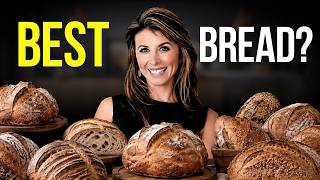
Dr. Ashley Lucas explains why European bread doesn't cause weight gain the way American bread does. U.S. bread contains added sugars, high-fructose corn syrup, and preservatives that spike insulin and damage gut lining, while European bread uses slow fermentation that predigests starches. Glyphosate on American wheat may also affect your microbiome and fullness signals.
Chapters
Hey everyone, welcome back. Today we are going to talk about bread, and specifically a mystery that I hear about constantly from my clients. And maybe you guys have experienced it yourself. If you have, I would love for you to drop your experience in the comments below. Now it goes something like this: you go on vacation to Italy or France or Spain, you eat bread every single day— a croissant in the morning, fresh bread with dinner, maybe pasta in between. You walk around, you enjoy yourself, you don't restrict a and you come home expecting the scale to punish you. And surprisingly enough, it doesn't. Maybe you even dropped a pound or two. Your stomach felt calm. No bloating, no afternoon crashes, no food noise. Then you come home for one week. You have two slices of regular sandwich bread from the grocery store, and you feel puffy and tired and inflamed and hungry an hour later. And here's the part that breaks my heart a little. Most people come back from that trip and blame themselves. They think, well, I was walking more in Europe, or I was just relaxed, or maybe I imagined it. And while these aspects are important, moving the body is important, being in a reduced stress environment is also important to your overall health, right? The walking, the lower stress play a real role for sure. But I wanna tell you today, you weren't imagining it. The bread itself is a different food over there, and understanding why tells us something much bigger about what's quietly keeping so many of us Americans stuck in fat storage mode. If you're new here, I'm Dr. Ashley Lucas. I'm a PhD nutritionist, a registered dietitian. I'm the owner and founder of PhD Weight Loss, where to date we've helped over 13,000 people collectively drop more than 480,000 pounds nationwide. My goal with this show is to give you the information you need to create real, actual, sustainable change in your own life. So I'd love for you to pour your coffee with a little heavy cream, of course, and let's get into it. Before we get into the science, I wanna sit with this reframe for a second because it really matters. So many of my clients carry this story that food is a willpower battle that they just keep losing. And sometimes when I ask if they feel like willpower is the issue, they will say no. And then I ask them, I say, hey, have you ever told yourself, I just need to eat everything in moderation? And many of them will say yes. If you tell yourself that you just need to eat everything in moderation and you just for some reason can't figure out how to do that, that is likely the same thing as you saying that you have a willpower issue. The two are the same, right? So these clients who think that, oh gosh, I should just eat everything in moderation, I need more willpower, they can't understand why they were fine in Tuscany and out of control in Texas. And the answer is not that you have less character on this side of the Atlantic. The answer is that the food environment here is engineered completely differently., and your body is responding to that engineering exactly the same way a healthy, intelligent body should. Your body, I'm of the belief, never makes a mistake. When American bread makes you hungry, bloated, and tired, that is not your body failing. It's saying, oh my gosh, this food is not working for me, it's like poison. This is your body accurately reporting what was in the bread. So let's break this down a little bit. What if the reason weight loss feels so hard is because something's missing? I'm Dr. Ashley Lucas, founder of PhD Weight Loss, and after years in the clinic, I saw the same pattern. People lost weight but felt drained, shaky, or burnt out. That's the gap Dr. Ashley Wellness was built to fill. Our products are designed to support metabolism, hydration, energy, and recovery especially during weight loss and maintenance. Real science, transparent formulas, support your body can actually feel. Visit DrAshleyLucas.com, use code YouTube10 for 10% off your first purchase or 20% off your first subscription order with free shipping. Plus, enjoy a 30-day money-back guarantee. Back to the show. There are 4 big things, and once you guys hear them, that vacation mystery, I hope, is going to make complete sense. The first difference is sugar. When you pick up a standard loaf of American sandwich bread and you look at the ingredients, it's very likely that sugar or even high fructose corn syrup is almost always in there. Did you know that a lot of wheat bread actually just has molasses in it? Um, and they call it like wheat or whole wheat. The only difference is the color of the sugar in it. Now, In much of Europe, traditional bread is flour, water, salt, and a culture or some kind of yeast. And that's it, right? Just those 4 ingredients. In fact, a few years ago, a European court famously ruled that bread used by an American sandwich chain contained so much sugar it couldn't legally be classified as bread for tax purposes. It was closer to a confectionery item, right? A dessert. Think about that, you guys. What we call bread here, parts of Europe essentially classifies as cake. So an American eating toast for breakfast is often having dessert without even knowing it. A blood sugar spike, an insulin spike, and that insulin, remember, is the storage switch. When insulin is chronically elevated, your body is being told to always store fat and not burn it. That crash that follows an hour later is what sends you back to the pantry. And then maybe you go for another crash eating some pretzels, fat-free pretzels. We've been told are healthy. Oh my gosh, one of the, the worst diet foods out there. The second difference is fermentation. And this might be one of the biggest things. Traditional European bread is often slow fermented. A real sourdough or a traditional bakery loaf might ferment for 12, 24, even 48 hours. And during that long fermentation, the bacteria and the wild yeast are essentially predigesting the bread for you. You can think of that to some degree. They break down the starches, so the glycemic response is going to be more gentle. They break down the gluten and the compounds called phytates that can irritate the gut and block mineral absorption. Slow fermented bread arrives in your body. You can think of it kind of like partially digested, a bit more calm. It's a bit more easy for your body to handle. Most American commercial bread is rushed, right? Just like everything in America, actually. I just got back from Costa Rica, and the environment there is so much slower and different than it is here. We are so rushed, even the way we make our bread. It's fast rise. That fast rise process, it takes a couple of hours from the flour to a bagged loaf, it has dough conditioners added to fake the texture, um, that time used to create for us. None of that beneficial predigestion ever happens. Your gut gets handed with the whole entire job of more of a, a type of like toxic ingredient compilation there at once, and your body's letting you know. The third difference is all of the additives. To survive weeks on a shelf, American bread carries preservatives, emulsifiers, dough conditioners, a number of additives that are common in American baked goods but are actually restricted or banned in the European Union. Some of these ingredients, particularly the emulsifiers, are being studied for how they affect the gut lining and the gut microbiome. So remember, we talked about this before, your gut is where so much of your metabolic signaling actually lives, right? It's where your natural GLP-1 is being secreted in the L-cells of your intestine and your colon. The, you know, GLP-1 is your body's, you secrete it naturally and it's your body's own fullness hormone. That's where it gets produced. When the gut environment is disrupted, that fullness signaling gets quieter and hunger and more cravings get louder. So you can think of it like this French baguette maybe that you were enjoying is going to get stale tomorrow. Like if you've ever bought bread from the farmer's market and the next day it's hard as a rock and you're like, "Oh my gosh, I didn't eat that fast enough." That's because it's actually real food. An American loaf, it's soft, right, for 3 weeks because It's not really food anymore. Okay, and the fourth difference is the weed itself. In the US, weed is commonly treated with herbicides like glyphosate. You've probably heard that in the news. Sometimes it, uh, is sprayed with glyphosate right before the harvest. That practice is much more restricted in parts of Europe. The research on what trace residues do to human health is still evolving, and I want to be honest with you about that, but Glyphosate is patented as an antimicrobial. Uh, your microbiome is by definition microbes, so we can think about what it's doing there. A lot of our clients at PhD feel terrible eating bread here, and they feel perfectly fine in Europe, and they are likely responding to the whole package. My mother-in-law cannot tolerate gluten, and she went over to Where did she just— oh, Germany. And she's like, "I can tolerate pretty decent amount of bread." Same thing for me. When I eat bread here, I get such terrible heartburn, and when I eat it over in Europe, I have a totally different response, right? So it's just a different beast over there. The sugar, the speed, the additives, the field that the wheat grew in, it is different. So when you put it all together, American bread is not really one food choice. It is a daily repeated signal to your body. You eat it, you spike, store, you crave, and then you repeat 3 times a day, every day for years. That is one of the quiet engines of weight gain in this country. It is not that Americans love bread more than the French do, it's that the French are eating a different food that happens to share the same name, right? But it provides totally different signals to the body. I can think about one client in particular when I talk about this. Now, you know, this is really the heart of the work we do every day at PhD Weight Loss because it was never about you needing more discipline. It's about you getting the right signals. When we work with a client, we customize their food so their blood sugar stays steady, their gut calms down, and their body finally gets the message that it's safe to let go of the stored fat. The hunger, the food noise fade, not because you are fighting them, They fade because we removed what was causing them. Now, if you have been stuck and this episode is ringing true for you, go to myphdweightloss.com, or if you're watching on YouTube, the link is right there in the description, and one of our nutritionists will sit down with you and build a plan around your unique body. Now let's make this practical because I know what you guys are thinking. Dr. Ashley Are you telling me to eat more sourdough? No, no, I'm not. But let me give you an honest answer, and the same one I give my clients. If you are in a fat loss phase, if you have got real weight to drop, bread mostly needs to step aside for a season, at least a season. No matter which continent it came from, it's likely to let it go for the time being. Even good bread is such densely concentrated carbohydrate, and while we are retraining your body to burn fat for fuel, we keep those carbs coming from non-starchy veggies. If you are in a fat loss phase, if you've got real weight to drop, bread mostly needs to step aside for a season. No matter which continent it came from, it's best to let it go. Even good bread, right, is densely concentrated carbohydrate. And while we are retraining your body to burn fat for fuel, we like to keep those carbs coming from non-starchy veggies. And guys, this is important. Once you have collapsed that excess fat and you are holding your result, bread does not have to be considered the enemy, right? You can add it back in if you find your body tolerates it. You might not even realize how good you can feel without it. That has been my experience. Now, if bread does come back, here's how it comes back wisely. One, real sourdough from an actual bakery where the only ingredients are flour, water, salt, and culture, right? And the fermentation took a lot of hours. Not the grocery store loaf. I don't care if it's sprouted or what with sourdough flavoring maybe. And yes, guys, they do that. They put flavoring in the bread. Okay? Number two, what you're gonna do if you do decide to add bread back in, is read the label like you read it for everything else. And this is what we teach a lot at PhD Weight Loss, is helping you read a label and understand the ingredient list. Now, if there is added sugar or a paragraph of ingredients you can't pronounce, that is not bread, right? That is just a product. 3, eat it the European way, with a meal alongside protein and fat, which blunts the glucose response, right? If you are eating a sandwich with a bag of chips, an apple, and a cookie, you guys, you're not getting any protein, maybe like the, a thin slice of ham and cheese, it doesn't count. That's not enough. All of that meal was a, a dessert basically. Number 4, pay attention to how you feel afterward because your body will tell you the truth every single time. Listen to it. Now, if you spent years eating the American version, the sugar, the emulsifiers, the additives, there is a good chance your gut has taken some wear and tear along the way. Now, the beautiful thing is that your gut is remarkably forgiving. Right? You feed it well, fermented foods like sauerkraut, kimchi, kefir, real yogurt, and it will begin to rebuild, right? Christy, one of our PhD clients in Oregon, she said it best in her explanation after, uh, 8 weeks on the program. This is what she said. She said, I'm not hungry and I have zero cravings. I have added energy and my gut issues are healing. Guys, your body will start to heal very quickly. Now, every gut has its own timeline, and how deep the repair goes depends on where you started. But we did do this gut study, and we found that just, um, within 6 weeks of eating the PHD Way, we were seeing significant improvements and shifts in the gut microbiome. I mean, it's unbelievable how quickly that can happen, right? And the kind of response I see again and again when the food finally matches the body is so positive. A healthy gut isn't just about digestion, it's where you get your natural fullness hormones from, right? You heal the gut and you heal the appetite, even mental health improves. We see from our client survey data that there's an 88% increase in mood and mental health. Wild. And I, I know that a big component of that is coming from healing the gut. When you heal the gut, the appetite quiets down as well. All good things when we focus on gut health. Now, on the topic of gut health, if you want targeted support while you're rebuilding your gut, This is exactly why I created my supplement. It's called GLP-1 Gut Longevity Plus. It's built around Akkermansia, which is a key probiotic that supports the gut lining and helps the body to secrete GLP-1 levels naturally. I also paired it with, uh, eriomin, grapeseed extract, resveratrol— really potent polyphenols, antioxidants that have been shown to increase natural GLP-1 levels and to support metabolic health as well. If years of the standard American food supply have left your gut just needing some repair— that's likely the large majority of us— this can be really meaningful and a big piece of the puzzle. If you're interested in looking at the supplement, if you're listening to this on a podcast platform, that's drashleywellness.com. Or if you are listening to this on YouTube, just head over into the description and there will be a link for you and a special discount code. Use discount code Dr. Ashley Lucas, um, and get that special discount when you check out that supplement. All right, you guys, so the next time someone tells you about their magical trip to Italy where they ate bread every day and came home even lighter, you're going to know that it's not magic, right? It was not a character transplant. It was flour, water, salt, and thyme instead of sugar, additives, and speed. Their body got clean signals. It responded the way a body always responds to clean signals. They also had reduced stress and likely were moving, and that combination allowed for a calm and satisfied body that was willing to let go. And, you know, I think the, the biggest lesson underneath this entire episode is that your body has been giving you accurate information. It's so intelligent. The bloating, the cravings, the afternoon crashes— those were never evidence that something is wrong with you, right? They were evidence that your body is paying attention even when the, the label isn't telling you the whole story. So you wanna learn to listen to that reporting. Listen to the reporting that your body's giving you. Give your body food that it recognizes. That means food that doesn't have a long ingredient list. And then so much of the struggle quiets down on its own. Now, if you guys enjoyed this episode, it would mean the world to me if you'd leave a 5-star review. If you're listening to this on a podcast platform, it helps people find this information and step out of the blame cycle, which is so important. And if you want to keep pulling on this thread, I have a whole episode on the 11 dirty food chemicals hiding in everyday foods that could be sabotaging your weight loss, and it pairs perfectly with what we talked about today. So go ahead and check that one out next. It's going to be right here if you're watching this on YouTube. Drop your comments below. I want to hear from you. And remember, you've got to step up to make the change. Lead with your heart, train your mind, and listen to what your body already knows. I'll see you next time.
More from Dr.





If I Was Over 50 & 30 Pounds Overweight, This Is Exactly What I'd Do to Burn Belly Fat


