Why “macro-Dosing” Protein Is the Secret to Real FAT LOSS
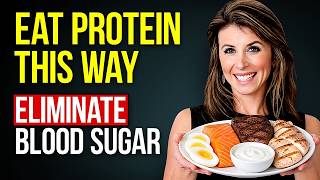
Dr. Ashley Lucas explains macro-dosing protein: eating 35-55 grams per meal across four daily meals to stabilize blood sugar and burn fat. She recommends eggs, wild-caught fish, grass-fed beef, Greek yogurt, and poultry, and shares how one 70-year-old client's consistent protein intake eliminated cravings and transformed her energy.
Chapters
Here is something that one of my clients said to me recently that I want to share with you because I think it captures something important. She said, "I didn't realize we were basically macro-dosing protein all day to keep my blood sugar in balance." And she said it was like a light bulb that had just gone on in her head. She had been thinking about protein the way most people think about it, as a thing you try to eat enough of so that you can check off a box, that you can say you did it. When she started understanding that every time she ate a quality source of protein, she was essentially sending a stabilizing signal to her brain, to her entire metabolic system, something clicked. The cravings quieted, her afternoon crashes stopped, the scale actually started moving in a way that it hadn't in years. Her mind was blown. She was around 70 years old, and ultimately she dropped 50 pounds, about 2 to 2.5 pounds per week at her age, and she just could not believe it. And she attributed it— for her body, her metabolism was this kind of macro-dosing of protein throughout the day. This is what today's video is about, and I want to talk about what macro-dosing protein throughout the day actually does to your blood sugar. I want to talk about why that matters so much for fat loss, and then I'm going to walk you through 5 specific protein sources that I recommend to my PhD Weight Loss clients, what makes each one valuable to your body, when to use it, and I want to talk about how it fits into the approach we use at PhD Weight Loss every single day. I'm Dr. Ashley Lucas, Lucas. I am a PhD nutritionist, a registered dietitian. I'm the founder of PhD Weight Loss, where to date we have helped over 12,800 people drop more than 480,000 pounds nationwide. I have spent over a decade now working with people whose metabolism was disrupted, like mine, by years of dieting, by blood sugar volatility and chronic stress. And protein timing and distribution is one of the most consistently powerful tools that I use. So let's dive in. First, I want to make sure we're clear on what I mean by macro-dosing protein, because it's not a trendy concept, but it is a physiological one, and I think it will allow you to better understand what we're doing and why we're doing this. Your body cannot store excess protein the way it can store fat or glycogen, or in other words, carbs or sugar. Glycogen, carbs, sugar, kind of the same thing. It has no protein reserve it can dip into when you skip a meal or undereat at breakfast. What this means practically: when you go long stretches without protein, which a lot of people do, starting their morning with coffee, maybe something sweet or starchy, bagel, some oatmeal, a smoothie, açaí bowl, your blood sugar has nothing to anchor it. It rises with whatever carbs you've consumed. This triggers an insulin response, and then drops, and that drop is what produces that mid-morning fatigue, causes the hangriness, the irritability, the loss of focus. It's why you might start yelling at your kids or your grandkids or your spouse. It causes the cravings for something sweet or something caffeinated to pull yourself back up. And then the worst part is that this cycle repeats throughout the day, every day, and over time it's one of the most reliable ways to keep your body stuck in fat storing mode rather than in this fat burning beautiful mode that feels so good. When you distribute protein consistently across your meals, and the meals I'm talking about for sure are breakfast, dinner, and then I'd love for you to get a lunch in there and a mid-afternoon snack. If we can hit all 4 of those, amazing. If we can hit 3, okay. When you do this, you are doing something very specific to your blood sugar. Protein slows the digestion of everything else that you're eating with it. It blunts the glucose rise that would otherwise follow meal. It stimulates glucagon, which works in opposition to insulin and helps keep blood sugar from crashing. It triggers GLP-1, which is your body's own natural fullness hormone, which signals to your brain that you're satisfied, that you've been fed, keeps appetite regulated for hours. And most importantly, it provides the raw material that your body needs to protect and maintain lean muscle mass, which is your number one primary fat-burning tissue. Every single one of those effects compounds across a day of consistent protein intake, and that's why I call it macro-dosing. Consistent strategic doses, a certain amount per meal that keeps the system running the way that it's supposed to. You don't want to just drip protein, small amounts of protein throughout the day. That's not going to get you where you need to be, and you definitely don't want to skip it early in the morning and early in the day and just eat it one time, say at the dinner meal. That's not going to do your body any good. Now the numbers matter here. For someone in a fat loss phase, I typically recommend somewhere around 0.8 grams of protein per pound ideal body weight per day distributed across meals. Would love your first meal and your last meal of the day to have the biggest amounts. Now the amount depends on your body, your gender, your amount of muscle mass. If you're a PhD weight loss client, we will tell you exactly what you need and when. But a good generalized amount is like somewhere between 35 to 55 grams of high-quality protein. The middle of the day, like lunch and your afternoon snack, accounts for the rest. The afternoon snack specifically is something I emphasize consistently because it is the meal most people skip. I guess it's not a meal, it's the snack. It's the eating time that most people skip, and it's one that I have found in my clinical experience that most directly prevents that ravenous, out-of-control hunger that undoes the entire day of good choices at dinner. I remember I was talking recently to a surgeon who would go all day, not really eat very much, and then when he came home, he's like eating his kids' snacks that were left over in their lunchbox, and there's a bowl of nuts on the counter and he's eating those, and then he heads into the pantry and eats half of a protein bar. Like, healthy foods, but it's just all over the place, and then he goes and sits down and eats dinner when ready. Instead, if he had eaten food spaced throughout the day, we did this for him. Ultimately, we were able to convert his metabolism to become fat adapted, and that allowed him to go longer periods of time without eating. But at the beginning of a weight loss journey, our body's not fat adapted generally, and we need that snack. A small protein-forward snack around 3 to 4 in the afternoon is not extra eating. You want to do that. It's blood sugar management. It's metabolic protection. It's setting you up for a better chance of success. Now, if what I just described— these afternoon crashes, the cravings that feel out of control by evening like I talked about with this surgeon, if the scale that won't cooperate no matter how hard you try sounds a little bit familiar to you, that is not bad luck and it's not a personal failing. That is a blood sugar pattern that we know exactly how to address. This is what we do every day at PhD Weight Loss, we build a client plan specifically for you, structured around protein timing framework, customized to your body, your history, your goals. If this sounds like something that's interesting to you, that you think would be helpful, just click the link in the description to learn more, or you can head to myphdweightloss.com. The best bet is to give us a call so we can learn about you and your body. So let's talk about the 5 protein sources I recommend most and why each one earns its place in this approach. First one is eggs. Eggs are so lovely. I look at them as nature's multivitamin, like this perfect little packet. They're one of the most complete bioavailable protein sources available, and what I mean by this is that the protein in an egg is absorbed and used by your body with exceptional efficiency, like someone meant to make it that way. A large egg contains about 6 to 7 grams of protein, and when you eat 2 to 3 at breakfast with veggies and a healthy fat like avocado, you're looking at a meal that stabilizes blood sugar. We could add a little bit more protein to it, maybe like some chicken or some steak or some Greek yogurt, depending again on your body size. But that's going to trigger a real GLP-1 response. It's going to keep you full and focused for hours without a glucose spike anywhere in sight. It is so much better than a bowl of oatmeal— steel cut oats, I don't care— with some raisins on it and some milk in it. Guys, so much better. The egg, the egg yolk is really important when you eat it. If you are listening to this and you eat egg beaters, throw those away and eat the whole real egg as nature intended. I want to address directly the fear around egg yolks. The yolk is not your enemy. The yolk is actually where all of the vitamins are, all of the fat-soluble vitamins, the choline, which is really important for your eyes. If you're pregnant or you know someone who's pregnant, eat eggs and a significant portion of the nutrition actually lives in the yolk. Whole eggs every time. The research on dietary cholesterol from eggs has shifted considerably. We're finally getting to the truth. The old advice— advice— to eat only egg whites was doing people a significant nutritional disservice. There's actually a lot of people who have allergies to eggs, and they have allergies to the whites but can handle the yolk. So actually, like, the yolk is, is better for you than the whites. But really, again, the combination of them are perfect. The second protein source is wild-caught salmon and fatty fish, including my new favorites, sardines and mackerel. Now, salmon specifically, and these other fish, but we're talking about salmon right now, gives you high-quality complete protein alongside the omega-3 fatty acids, the EPA, DHA, and these fats have meaningful anti-inflammatory effects and support your brain, support your hormones, support your metabolic function. Chronic inflammation, I always say, is the root of all disease. It is one of the biggest barriers to fat loss that I see clinically, and it's one of the most under-addressed ones, I would say, that's out there. When the body is inflamed, it holds on to weight, it resists change. And the omega-3s that come from the salmon and sardines and mackerel directly support a less inflammatory internal environment, which makes everything else you're doing with your nutrition work even better. So you'll want to aim for fatty fish about 2 to 3 times a week. You can do canned salmon and sardines. These all count, and they're significantly more budget-friendly than the fresh fillets if you can't manage that. Third is beef, grass-fed if you can, but actually out of all of the animal meats. Beef is the best one to do conventionally if you can't manage grass-fed in your budget. I want to push back a little here on the cultural narrative that red meat is something to minimize or feel guilty about because the science does not support that framing really when you dig into it and you actually see good nutritional science, which is actually hard to find, particularly for grass-fed beef. But again, if you can't manage it in your budget, just any kind of beef. Beef will do. Grass-fed beef is a little bit more nutrient-dense, and in general, all beef is a complete protein. It's rich in iron, zinc, B12. It's rich in conjugated linoleic acid, which is a fatty acid that has been associated with support for fat burn, fat metabolism, and lean muscle retention. It's also one of the most satisfying protein sources available, and this means that it's going to keep hunger more quiet for a longer period of time. You could do a beef bowl with sautéed zucchini and mushrooms. You could do fermented salsa or kimchi on top of that for a delicious quick dinner. If you made something like this, it would help to stabilize your blood sugar overnight. It would support muscle repair during your sleep. It will have you waking up the next morning without blood sugar going up and down. That usually drives poor breakfast choices. You also don't need to eat lean cuts exclusively either. Like, a little marbling or a ribeye is not something that you have to fear. The fat is part of what makes this food satiating and metabolically useful, something that pairs really well with the protein-forward approach I'm describing, especially if your blood sugar has been unstable and you feel like cravings are still loud even when you're eating better. Maybe you're newer into this approach, or you've been trying this and it's just not working. You could check out GlucoCut Plus. I formulated it to complement exactly this kind of nutritional strategy. It supports your body's natural GLP-1 activity. It helps stabilize blood sugar between your meals. It promotes metabolic balance so that your body is more inclined to burn rather than store. Folks are saying that it really helps to quiet the cravings and support a speedier fat loss. It will not work for you if you don't do the work with your food and your lifestyle. So totally honest and open there, but it does support the environment you're building. You can find it at drashleywellness.com. Use code ASHLEY10, and the link is in the description below. Fourth protein source is one of my favorites, plain Greek yogurt, full fat, or if you really don't want to do full fat, you could do low fat, but do not do fat-free. No fat free. I want to be specific about full fat and plain here because those two words do matter a lot. Low fat, again, is okay, but in general, these nonfat and low fat flavored regular yogurts are typically loaded with added sugar, and it doesn't make it better if it's coming from a nut milk or an oat milk. Oat milk actually is the worst when it comes to blood sugar regulation. These immediately counteract everything you're trying to accomplish with blood sugar stability. But the full-fat or low-fat plain Greek yogurt, on the other hand, is different. It's protein-rich. It's got the probiotics in it that support your gut microbiome. We've talked about that. It's directly connected to how much GLP-1 your gut produces and how well your hunger signals function. But primarily, it doesn't have as much sugar in it, and it has like, I don't know, 2 to 3 times as much protein per serving. You could do some of the plain Greek yogurt, you could add some chia seeds or some Zen Basil seeds to it with a few berries, you could add in some vanilla-flavored whey protein. It's really delicious and it's one of my favorite afternoon snack recommendations. I will eat it myself. It can deliver 20 grams of protein depending on the brand, and again, if you add in some whey, you can increase the protein significantly. It's got fat, it's fiber if you add the chia or Zen Basil seeds, and it supports the gut at the same time. Like, it's a win-win-win. Like, there's a lot of metabolic work being done there for a simple, quick snack that you don't have to cook. Fifth is chicken and turkey. I include these together because they occupy a similar nutritional role and are often the most practical proteins for people navigating a super busy schedule. Poultry is versatile It's easy to prepare in bulk, right? You can transport it. You can make chicken salad out of it if you like that. It's easy to work with and you can put it into soup and do anything with it. On top of salad, you could do grilled chicken over mixed greens with olive oil at lunch. You can do turkey in a lettuce wrap with avocado as an afternoon snack. Leftover rotisserie chicken in a bowl. I think we have a really great recipe. It's called Egg Roll in a Bowl. It's delicious. You could look something like that up. The practical value of these proteins should not be underestimated because the best protein is the one you actually eat consistently. Where I see people go wrong with chicken and turkey is pairing them with carb-heavy sides and light dressing and tortillas that spike blood sugar and undo the blood sugar stabilizing effect of the protein itself. If you go to Chipotle, for example, you can get chicken in a bowl, but just don't get it with the rice and the beans and the the corn, more heavy on the avocado, some cheese, some sour cream if you can tolerate dairy. I would use lettuce as the base instead of all of those grains. So pair your poultry with, like I just said, non-starchy veggies, a real fat-based dressing, and you've built a meal that holds your blood sugar steady for a really long time. Now here's what I want you to walk away understanding: blood sugar ups and downs is not a fix feature of your biology. It is a pattern that is largely driven by what you eat, when you eat, and how consistently you give your body the protein that it needs to stay regulated. The afternoon crash, the evening cravings where you're like watching TV and sitting there eating pretzels. Pretzels, you guys, I don't like to like demonize certain foods, but pretzels aren't serving you. Really, they're not. Like if you're eating pretzels at night, let those go. If you are right now, you are not alone, and I'm gonna hold you accountable to that. So drop in the comments below that you're letting pretzels go, please. When you have these afternoon crashes, the evening cravings, you wake up hungry at 2 in the morning, that is not normal. When you have the scale that doesn't move despite your best efforts, these are symptoms of an unstable blood sugar environment. That environment can be repaired meal by meal, starting with the very next thing you eat. It reminds me of this fellow, Carlos, who we helped drop 50 pounds in like such— in 3 months, it was wild. And he was hungry all the time, he was running marathons and just not dropping weight. We were able to shift the way that he ate, create a customized meal plan, shift his mindset around food, and the fat melted off effortlessly. Macro-dosing protein, like we just talked about, across your day is not complicated. It doesn't require a nutrition degree. It requires that every time you sit down to eat breakfast, lunch, afternoon snack, dinner, there is a quality source of protein at the center of the plate. If you are ordering eggplant Parmesan, you're not getting protein. If you're ordering, I don't know, spaghetti, not getting enough protein. Eggs in the morning, salmon or chicken at lunch, a handful of something protein-forward in the afternoon so you arrive at dinner dinner as a lovely, calm, regulated human being rather than someone running on fumes, totally reactive. Maybe some beef or chicken at dinner to support your metabolism through the night. That consistency, that's simple, that is what changes the blood sugar pattern. And when the blood sugar pattern changes, you guys, the cravings change, the energy changes, and the weight changes. If this clicked for you today and you want to go even deeper, I have a video that walks through an entire day, the entire day of eating, using exactly this protein-first framework, breakfast through dinner, every meal built around blood sugar stability and natural GLP-1 support. I'm gonna link it right here for you, so go check it out after this. And if you're not subscribed yet, well, this is a really, really great time to go and do that. There's a lot more on this channel about how to work with your metabolism rather and fight it. We're not about fighting it anymore or forcing it anymore. And I'd love for you to be here for it. Remember, you've got to step up to make the change. You can do it. Lead with your heart, train your mind, and do not negotiate with your body. I'll see you next time.
More from Dr.





If I Was Over 50 & 30 Pounds Overweight, This Is Exactly What I'd Do to Burn Belly Fat


