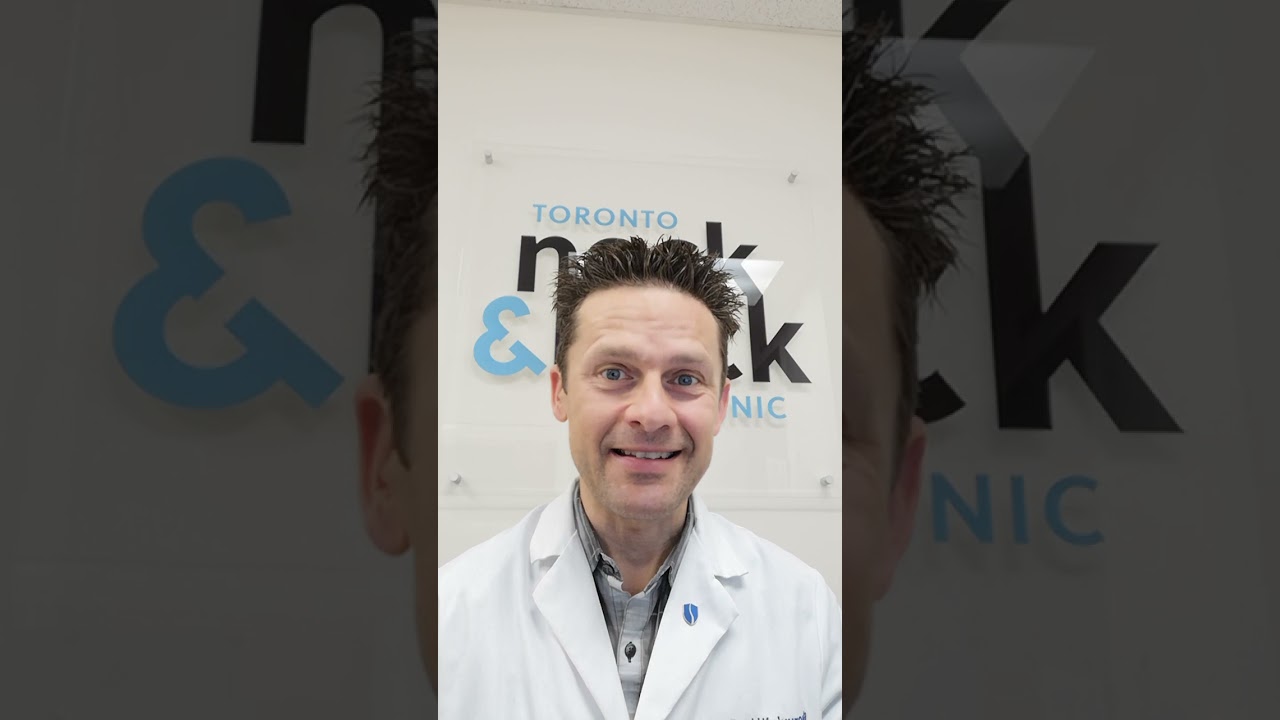
In this YouTube daily health update, Dr. David Koivuranta of the Toronto Neck and Back Pain Clinic presents six recent health‑related findings and practical wellness tips. He begins with a disclaimer that he is not diagnosing or treating anyone, then shares concise summaries of recent research: (1) an eLife analysis of 5 million adults linking blood type to clotting, bleeding, kidney stones, and pregnancy‑induced hypertension; (2) a Circulation study showing high dietary salt impairs monocyte development and may suppress immune function; (3) a Radiology review indicating that better mid‑life cardiorespiratory fitness lowers the risk of bronchiectasis on CT scans; (4) a JAMA analysis of over 10,000 adults revealing that each five‑year increment of living with diabetes raises dementia risk at age 70 by 24%; (5) a Self magazine list of eight daily habits (hydration, mindful eating, outdoor time, activity, vegetables, dark chocolate, sleep, gratitude) that support overall health; and (6) a Journal of Clinical Nursing survey of 550 nurses showing 87 % experienced low back pain, with mechanical lifting aids reducing that risk. Dr. Koivuranta emphasizes the value of personalized health information, encourages viewers to explore their own genetic or blood‑type profiles, and offers practical advice such as reducing salt, staying active, and using proper lifting techniques. He invites viewers to request the written update, ask questions via DM, email, or phone, and promises a next update later in the week.
Chapters
Hello everyone, it's Dr. Dave. Hopefully you're all doing well. You had a nice start to your week. You're looking forward to a fun Tuesday. Coming at you on behalf of the Toronto Neck and Back Pain Clinic with your daily health update for Tuesday, June 1st, 2021. Welcome to June. Gonna look at 6 areas of health and wellness to start the month today. As usual, somewhere around this video, you can read through all 6 areas. If you'd like a copy of the daily health update, uh, we're happy to send that to you. And if you have any questions, we'd be happy to answer those for you as well. You can DM us on social, send us an email here at the clinic, or even give us a call. We'd be happy to help you out. Always a pleasure to be of service. Not gonna treat, diagnose, prevent, or cure any illness or disease with our time together today. However, we will share with you some of the information that's floating out and about based on some of the research and literature out there, even from some of the top leading magazines and interest pieces that, uh, reflect some of the health and wellness stories that are impacting people right today. And hopefully that's of interest and helpful in your own health and wellness journey. Good to stay tapped into some good health information every day so that at least you're thinking about your health every day, uh, for at least a little bit, if not a lot, for good reasons hopefully rather than bad. So, uh, the journal eLife, or a report from eLife, April 2021, talked about blood type being linked to certain health conditions. They did an analysis of data from over 5 million adults, and it revealed that individuals with type A blood are more likely to develop blood clots, while those with type O blood are at increased risk for bleeding disorder. Adults with type B blood have a lower risk for kidney stones, and women with either type O or RhD-positive blood have an elevated risk for pregnancy-induced hypertension. The author of the study, uh, notes that these findings lay the groundwork for future studies to identify the mechanisms behind disease development or for investigating new ways to identify and treat individuals with certain conditions. The interesting thing about this study is not only the predilection based on blood type for certain conditions, as they noted in the study based on the analysis, but that individualizing and customizing a healthcare approach and treatment for problems if people have them related to their health is very important. That personalization and individualization can go a long way to getting good results. So it's interesting to learn more about you specifically and get information not only based on perhaps your blood type, but also maybe based on your genetics or DNA. There are tests out there that show you may be predisposed to benefits and/or detriments from certain things like the type of exercise you do, the type of nutrition you consume or don't consume, and even sleep patterns and habits. So good to do some research on yourself, find out as much information as you can about how to keep you healthy, and it may support some good outcomes for you. In the long run. The journal Circulation, April 2021, talked about too much salt, uh, suppressing the immune system. We hear about salt connected to high blood pressure, of course, but in this study they looked at the correlation with salt and the immune system. There are cells in the body called monocytes. They're a type of white blood cell and they play a role in the body's immune response. In a recent experiment, researchers observed that exposure to high salt concentration can disrupt the monocyte development, causing the cells to mature differently, which may impair immune function. The finding reveals yet another reason to reduce salt intake to improve one, one's overall health. But again, some caution— that would of course depend on your current health status and your body's need or desire for some level of sodium. Of course, exercise can reduce risk of airway disease, according to the journal Radiology, April 2021. Bronchiectasis is a potentially serious lung disease characterized by repeated cycles of inflammation that can cause airways to become enlarged scarred, and less effective at clearing mucus. A review of data concerning over 2,000 adults whom researchers monitored for 30 years found that participants with better cardiorespiratory fitness at midlife were less likely to have CT scans showing signs of bronchiectasis. The author notes that these results amplify the benefits of fitness to human health when a sedentary lifestyle is a concerning world epidemic. It also highlights that fitness might be a tool to preserve lung health. The airways are challenged by what we breathe in every minute, and fitness may help to preserve lung health from injuries. So a good positive side effect from your activity that you engage in, hopefully on a daily basis, is that it may help your lungs stay healthy for as long as possible. And there is a theory that those people who can keep all their body parts doing what they're supposed to do for as long as possible may get through life with the best level of health. And when you have a good level of health, you just have a better likelihood of having some good experiences every day, 'cause you can focus on those things that you are doing and still taking care of yourself, of course, but because you wanna stay well, not necessarily trying to get well. The Journal of the American Medical Association, April 2021, looked at developing diabetes at a young age and how that increases one's risk for dementia. They looked at analysis of long-term data concerning over 10,000 adults, and it revealed that the risk for dementia at age 70 increases 24% for every 5 years an individual has been living with diabetes. So being able to stave off or prevent that adult onset type 2 type diabetes could have some health implications in terms of preserving overall health. So taking care of yourself and avoiding those conditions avoids concomitant or concurrent health problems from developing. The magazine Self has an interesting list of 8 things that so-called healthy people do every day. The editors list the following The following simple daily habits that can help one live a healthier life. First is drink more water. That sounds good. Eat without distraction. So having some mindfulness around what you're eating, how much you're eating is probably a good idea. Agree with that. Spend time outside to get fresh air. Of course, that sounds wonderful as well. Hopefully you live in an area where fresh air is available. Getting harder these days on our lovely planet. Find ways to stay active. There's our fitness or movement component. You do wanna stay active every day. Eat more vegetables. That's certainly a key. Add some dark chocolate to your diet. So that's the interesting one. And I don't think there's a problem with that. There are some health benefits and some pretty significant ones, I suppose, and could just put a smile on your face. And then the last one, of course, very important. Oh, sorry, second last is to get adequate sleep. So we've covered activity, sleep, and nutrition, which of course are 3 components, key components, fundamental components to health and wellness. And then finally, remind yourself of things you're grateful for. So some chocolate for your mood and then being grateful or focusing on gratitude to also help with your mental health and wellness. So it's a pretty good list. Nothing wrong with doing all 8 of those things every day. Uh, it might be useful to try and add some of those or improve those areas if you're noticing you maybe you're not doing quite as as well. Then finally, the Journal of Clinical Nursing, February 2021, looked at low back pain being common among nurses. Questionnaires completed by over 550 nursing professionals revealed that 87% experienced an episode of low back pain during the previous year. Further analysis showed that nurses who use mechanical lifting aids when maneuvering patients were less likely to develop low back pain. The findings suggest that improving lifting practices in hospitals could significantly reduce the prevalence in back pain among these healthcare workers. So patient transfer is very difficult, not only on nurses, but even PSWs and different kinds of caregivers, even at-home caregivers. There is a device a patient told me about, don't know the specifics, but he mentioned that they were creating a conveyor-type system in a bed to help move patients in the hospitals. Currently has a very high price tag because it's new technology. But, uh, will help definitely with those patient transfers, which are challenging. Uh, you need a team of people and some good technique to preserve or be careful with your back when helping to move a person. So a good thing to do if you are in a position where that's part of your task every day, certainly take good care of yourself. Make sure that your back is working really well and is as strong and stable as it makes sense to help you do whatever it is you need to do each and every day. All right, a long drawn-out daily health update for your June 1st, and I hope you found some good information in there. Enjoy your Tuesday. The rest of the week is still coming. I bet it's going to be a good one for you. Keep an eye out for those good experiences you're trying to create. They're coming your way, and we'll catch up with you tomorrow midweek with your next daily health update. Until then, have a good day. Take care.