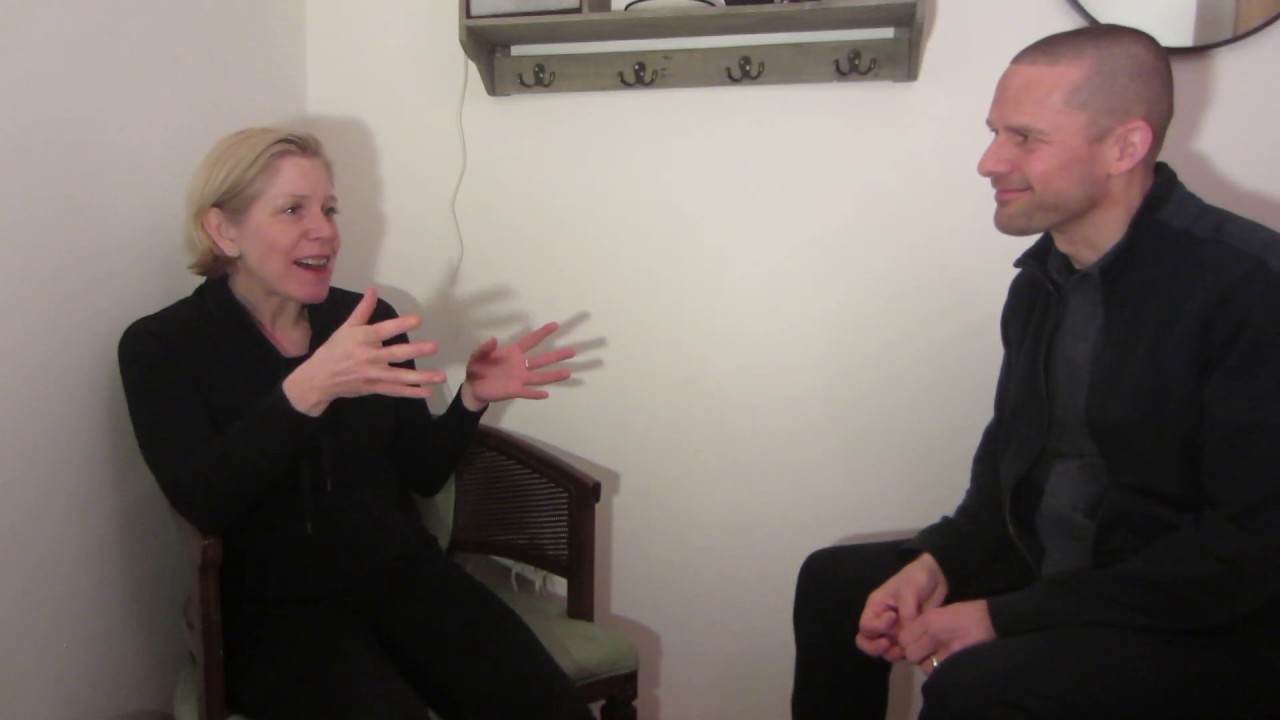
In this Daily Health Update episode, Dr. David Koivuranta sits down with reflexologist Kit to demystify reflexology. They explore why clients seek reflexology—primarily for relaxation, stress relief, and pain mitigation—and explain how specific zones on the feet correspond to internal organs and systems (e.g., lungs, liver, pancreas, diaphragm). Kit describes how stimulating these reflex points can improve circulation, support the lymphatic system, and promote autonomic balance between the sympathetic and parasympathetic nervous systems. The conversation also covers the growing public awareness of reflexology, driven by the Reflexology Association of Canada and training programs such as the Woodstep School of Reflexology. Kit shares teaching methods and technique names (caterpillar, hooking) and highlights the educational value for new practitioners. They discuss how the feet act as a “story” of a person’s health history, offering insights for runners and athletes. The episode concludes with a call to action, encouraging listeners to consider reflexology as a regular wellness practice and providing contact information for Kit’s Reflexology Hub.
Chapters
Hello everyone, it's Dr. Dave. I'm here with you today for our daily health update, a special weekend edition, and it's Saturday, February 22nd, and I've brought in a caring, kind, compassionate individual who is also a reflexologist. So I have Kit with me here today. Hi Kit.
Hey, how you doing?
Good, good, thanks. How's your day going so far?
It is good, thank you.
Awesome. Thanks for joining me today.
Well, thanks for asking.
My pleasure. You know, I've been a middle-long distance runner for over 30 years, chiropractor for over 20, and man, runners have some terrible feet sometimes. I've been blessed with okay feet, but I think I've treated a lot of feet and I've learned a lot about the foot, but no one knows the foot better, I think, than a reflexologist. But there's a lot of misconceptions about reflexology too, that it is just about the feet But I'm glad you could come today and spend some time with me because I want to talk about what people use reflexology for, what reflexology really is in some way that people can understand in a simple kind of way, and maybe some tips or suggestions you have for people to, you know, what they can do when they want to access reflexology to get the most out of it.
Oh, absolutely, yeah.
We can chat on that a little bit?
Absolutely.
Okay. So in your experience, in all the years that you've been doing reflexology, why do people come for reflexology? What's up with that?
The number one thing I always see on a form is the word relaxation. They come for relaxation, and that is usually also from stress, right? Because they're all stressed out from either their jobs, their family life, or they are feeling some pain in their feet or somewhere in their body, and they just want to come and have a moment to relax. They don't know what they've signed up for sometimes, but by the time that they're done their treatment, they're like 100% on board. Gotcha.
And you think they come because someone else has told them, "Oh, you gotta go for this reflexology thing because it's so relaxing." Yeah, I think that's one thing, absolutely.
The other thing is there's been a big resurgence with reflexology. It's becoming more well-known. People are reaching out to different holistic practices, and reflexology is a big one, especially with the Reflexology Association of Canada, who have really stepped up their game and are putting more stuff out there to educate the public.
Gotcha. So it's a matter of people not even knowing what's available to them in terms of treatment options or just ways to improve their health and wellness, relax a little, decrease their anxiety a bit in their life, force them to slow down, take a break for themselves. So when I was a kid, when I was a young boy, my mom was a single parent, I'm an only child, and in the evenings when we were hanging out or whatever, I always asked my mom to rub my feet. So I think she did it first and it felt great and then I was like addicted, like please rub my feet.
Yes.
It's such a wonderful feeling, but what— how come reflexology focuses on the feet? Like what's the connection there? Obviously it feels good, but it's way more than a massage.
Oh yeah, no, you're working on the reflexes of the feet. What the reflexes are, are the different parts of the body that are mirrored on the feet. So something like your lungs, which is in the balls of the feet, is mirrored on both feet because you have two lungs, is the idea, right? And then, so we work that reflex to help with your breathing, and the diaphragm is right underneath there as well. So we're working to help with the breathing, which usually helps reduce the stress levels and increases the circulation so that you start to get rid of any of the congestion in the body. So something so small like that, it makes sense. That totally makes sense. Right? Working the nervous system consists of the brain and the spinal column, which I think you can relate to. For sure. Right?
Makes sense.
So once that, you start working the spinal column, especially all those nerve endings, which are reaching to all the different organs, the different systems, the tissues, the whole body has a conversation. And when it starts to have a conversation, it's trying to find its balance with the parasympathetic system, which I call wine and dine. And then with your sympathetic, your fight and flight, right? So we're trying to get a nice balance, or a fancy word, homeostasis, right? Gotcha. So then you have things like your liver, which is located predominantly on the right side of the body, so we will work on the right foot. Then your pancreas, which is predominantly on the left side, we work on the left side of the foot.
Hmm, so people here, they find out about this reflexology thing from a friend or family member, they look up on it, or maybe they have some benefits, so they're like, I should go try this reflexology thing, and they're probably hoping for a foot massage, maybe to relax, help with their anxiety, force them to disconnect for 30 to 60 minutes for their appointment. But the icing on the cake is that there's a whole bunch of these fringe benefits that can happen to their health by getting that reflexology.
Oh, absolutely. And think about it, the feet— the reason why we a lot of times focus on with the feet is because the feet are the furthest away from your heart. So think about how much stagnation can go you know, go throughout the body that way. So if you start increasing the circulation from the feet and then getting it through all the body, and you've got your lymphatic system, all these things, there's nothing but benefits, right?
Makes sense.
And the worst thing that's going to happen is that you're going to feel relaxed.
Yeah, heaven forbid, right?
Right?
So in 1997, I graduated from chiropractic college and I practiced in Thunder Bay for 4 years, and during those 4 years I worked part-time at the Toronto School of Business teaching in the massage therapy program, just the basic sciences. I didn't teach any hands-on massage or anything because I'm not a massage therapist. But as I was growing my practice, I was doing that part-time, and I remember telling the massage students, I said, look, learn how to massage the feet because people's feet are abused. And as we get later on in years, our feet are sore or achy, and it's hard to have a good experience every day if our feet are sore. And I definitely said to them, if you know how to massage people's feet, you could have a really big business because people will come just for that. Yeah, they do. And here's reflexology. Which is just for that. But the reflexology training allows you to have that extra benefit of affecting all these systems through those reflex points, right?
Oh, absolutely. I also work as a teacher with Woodstep School of Reflexology here in Toronto. And, you know, students— like, we do, we do incorporate a 5-minute massage at the end, but that's just to go over all the different areas that we've been working with different types of techniques, one called caterpillar which sounds exactly what it is, but that's just to cover all the different reflexes in all the different parts of the body. And, you know, like these little names, and there's one called hooking, you know, like they're very simple terms, but they're very effective. And it's so great when people, like, they didn't know, like you get new students and they get so excited about how, because they receive treatments and they're giving treatments as well, right, when they're doing their case studies. So you get to see all the different levels and then they get excited and they tell other people. Next thing you know, reflexology, you know, it just gets carried down the line. So that's what we have to keep doing. We have to keep moving forward, educating everybody in any way that we can. And like for runners, very big, right? But the feet really tell— your feet tell a story and they tell you what was going on with your health. So, you know, there's ear reflexology which tells you something about your health as well. It tells you about your health right at that moment. So you could palpate parts of your ear and you'll find areas of sensitivity, and that's what's going on in your body right now. The feet hold a little bit more of a history. It's a timeline, essentially. You might be holding stuff. Calluses could mean that, you know, you're holding on to a memory. The tissues have memory as well. So I just think it's fascinating because every foot tells a different story, and no two feet are the same. No two people are the same. So you have, you know, a million stories out there, and I get to access them every single day.
That's amazing. Bottom line is there's way more to this reflexology thing than meets the eye or the foot. Yeah, that's great.
We could be here for years.
It's funny how something like that has such far-reaching effects. Well, listen, thanks so much for joining me today.
Oh, thanks for having me.
Yeah, my pleasure. I know the readers of the Daily Health Update, people who get it Monday through Friday, and then some people who tune into our podcast on on a regular basis are going to appreciate learning about this today. And on the Daily Health Update every day, there's 6 areas of health and wellness that we touch on from prevention to mental health to diet, nutrition, and a lot of times we talk about things like dementia and neurological health and, you know, the feet, other than the tips of the fingers, maybe the lips and the tongue which have a lot of nerve endings in them, the feet are probably top 3, 4, or 5 for sure. Yeah, a lot per square centimeter, inch, right? So there's a lot going on there, and whether it's for relaxation or anxiety relief, or you're just looking for more solutions, things to do for yourself, which we talk about every day, and that's why we do the Daily Health Update daily, is because people who plug into health and wellness on a daily basis tend to have their thoughts focused more on what they can do for themselves every day. Choices, decisions, eat this, not that, move here, get up. People who don't tap into health and wellness on a daily basis may not have that front of mind and their health can deteriorate. But reflexology is another thing people can have on their radar to schedule in for themselves on a weekly or monthly basis for them to do something positive. Yeah. So hopefully we've demystified some of that today and all of you will be encouraged. I know I love reflexology. Kit's even done treatments for me. And I know you'd be in good hands if you came to see her. But if you have any questions, reach out, find either of us on social media, Kit's Reflexology Hub. You can email me and I'll put you in touch with Kit. Just reach