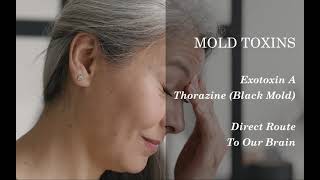
Dr. Diane Mueller, a mold illness survivor, explains how mycotoxins like ochratoxin A trigger intense emotional changes: anger, crying, anxiety. She describes being unable to walk at her worst and offers strategies to protect relationships during recovery, like using safe words and leaving the room when triggered. Emotions improve once the toxins clear.
Chapters
Hey, everybody. Dr. Diane Mehler, mold illness and Lyme disease survivor here. And in this video, I want to talk about mold and emotions. Now, as somebody who has gone through mold illness, I thought I was dying. At some points I had to be carried because I could not walk. I totally understand how mold illness can just take over the emotional body. For some people, this can look like more like rage and anger. For other people, it can be being really extra sensitive and crying very easily. This, there can be a lot of different ways this expresses. But one of the things that commonly happens is this almost vicious cycle, right, where we launch into these emotional outbursts, right? Whatever they are. And for me, it used to be anger and a quick to anger, quick to frustration, a quick to lash out. And I could lash out and go into these angry episodes. And then all of a sudden later on I would look back on it and I would feel. Feel bad about my anger outbursts. But it felt like I was out of control, right? It felt like there was no way I could control this anger. And it felt real, powerless, and frankly, really scary. So one of the reasons these sorts of things happen is because of the level of inflammation that you have in your body when you have nerve or when you have mold illness. Another reason for this is we actually see that our nerve cells will die and our nerve cells in our brain. So there's been multiple studies that have show toxins such as ochratoxin A and trichothecenes, Trichothecenes being a toxin from black mold. That these types of toxins, when we breathe them in through our sinuses, they have a direct route to our brain, right? And when these molds and these mycotoxins get into our brain, they can actually cause nerve cells to death, to die. Which means that we don't respond to stress during these situations in the same way because our nervous system is so dysfunctional. So one of the first things to do is hopefully educate your friends and family on this. If you can come up with any sort of trigger words or safe words or think of anything that can be done to break state if you're finding that you are in these emotions. One of the first things I definitely hope that you recommend your friends and family members is that you don't get gas lit, right? Because these emotions, they're real. Like usually the frustration or the sadness or the anxiety, whatever you're experiencing, it's not that that's not a real experience. The experience is very real. And if you're frustrated and anger, angry, you have A right to be those emotions. Right. Of course the situation is depressing. Of course the situation is frustrating. All of those things are true. So it's really important in teaching people how to care for us during this time that it's a. It's a group dynamic, right. That we honor the fact that we have. And we admit the fact that we have these challenges that. But we don't do that in a way where we gaslight ourselves. Right. We can talk to our loved ones and we can say and explain like, my nerve cells are dying. There's research on this, and that's why I'm having these anger outbursts and I'm really. Or these. These crying episodes, or that's why I'm so anxious. And I'm really sorry about the impact. Honor the impact. And also, like, this is really, really hard. And, you know, honor the fact that you are angry or you are sad about what's happening. And when it feels like the body is failing, it's a normal response to be angry. And then finding ways to talk to your loved ones about what can be done in these situations. So you know, what can be done. If you feel angry, is it okay with your loved one if you just get up in a hurry and walk out of the room? Right. And sometimes that's the right choice because it's going to be better to just leave than to take this out on somebody. But we want to have a strategy like that and have somebody help, you know, somebody understand our strategy so that if we're angry and we just get up and leave, they're not going to feel abandoned and isolated from a conversation. Right. So you want it as much as possible when you're not in some of these emotional states that are so common and so understandable. When you have mold illness, you really want to talk to your friends and loved ones about some sort of strategy you can both live with. So you're really working to not stress out the relationship and stress out, you know, your parent, child relationship, your parent friend relationship, your, you know, parent partner, or your. Your partner partner relationship, whatever that is, and come up with a strategy of what can be done in those moments to help keep the relationship safe, but also make sure that however it's done, you're not wrong for having these emotions. Right? None of that is wrong. We just want to have a way of you while you're healing and while you have these strong, strong emotions, we want to find a way that you can actually express these emotions in a safe way that's not going to damage your relationships long term because those are really important things. So want to make sure you're not gaslighting yourself. It's a very, very normal thing to have crazy, wild, radically big emotional responses when you are dealing with mold. And we want to help educate your loved ones, your friends, your family, those in your life of how to work with you to support you while you're healing from these things. And the great thing is these emotions do get better once the, once the mold is gone, once any other infections or toxins are eradicated. I've seen so much amazing change in my clinical practice around people getting off medications, people being happy, people being just carefree because of the fact that they do not have all of these toxins in their body causing inflammation and causing cellular death. So again, I'm Dr. Diane. Subscribe to this channel if you're enjoying this material and I'll see you in the next one.