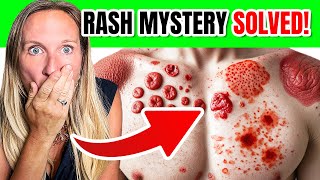
Dr. Diane Mueller explains that unexplained skin rashes usually point to gut or liver problems, not just surface issues. Hidden parasites like Toxoplasma, fungal overgrowth, and liver detoxification problems can all push toxins out through your skin. Standard stool tests miss things, so she recommends eosinophil counts and total toxin panels to find the real cause.
Chapters
Hey everybody, Dr. Diane Mueller here talking today about unexplained skin rashes. So there's many different things that can cause skin rashes, but in, in a lot of ways, skin rashes are, I say, a very deep problem of the body, meaning usually there's something coming very from very interiorly oriented to create a skin problem. Now, some common things that your doctor might have talked to you about are things such as hormones. Right? That comes up a lot. Sometimes histamine and allergies come up a lot. Sometimes people talk about food allergies, that comes up. But usually those are some of the top things, or people are just told that it is an inflammatory reaction and are given a topical steroid to make it calm down. Now, not that there's not times to use certain things like that, there are. However, usually if this is happening, there's an underlying reason for it, and just using something like a topical steroid, for example, while it might make the rash go away, it is not going to get to that underlying cause. And the thing, anytime we are covering up symptoms and just doing something to suppress a symptom, the number one thing to be concerned about is whatever imbalance that's happening in the body to create that symptom, it's still happening, right? So we want to figure out the why. Many times in skin conditions, it comes from a gut issue or a liver issue. In fact, those two categories beyond which I said— with the ones I mentioned beyond the common things— I would say are the two most common categories that I see abnormalities from a functional perspective. Now, in the gut, this could be due to things like a chronic hidden parasite. This could be due to things like low stomach acid or due to things like a fungal overgrowth, right? Any of these things I often see manifest in strange skin conditions. So we do want to consider all of those things. We do want to do proper stool tests. We want to remember that with parasites, there's not a stool test on the market that will really get to all the parasites that could be there. And even in cases where they are testing for a wide variety of parasites, Remember, with a stool culture, the parasites are only going to show up in the culture if they end up in the stool. If the parasites are dormant, if they're very inside your cells, deeper in your tissues, they might not actually excrete into the stool, and their stool could therefore turn out to be a negative sample. But that doesn't mean that they're not in the body, say, causing more problems. So I do see parasites come up quite quite a bit. There's a common parasite, Toxoplasma, for example, that's estimated that 80% of 80-year-olds have this parasite because it is in so many things, right? So the longer you live, the more likely exposure you have, and the more likely you have this parasite. So we want to consider that as a huge, huge, huge thing. If you get your blood test done, if you get your white blood cell count run, which is a common test, and you see that you have a high number of eosinophils. In some cases, this can indicate a parasite. Eosinophil is a type of white blood cell that can elevate in parasitic infections, although it doesn't all the time. But that's a test, another test you could run just to see. So any of those things we want to consider. We do want to consider with the liver, one of the big things is the liver is about detox, right? The liver is about 500 things, so it's not just detox. But one of the things the liver is really good at is detoxification. Now we have different ways of getting toxins out. The liver helps to break them down, but then we get toxins once they're broken out, broken down through our stool, our urine, our breath, our sweat, and our lungs through breathing. And so what can happen sometimes is if we are not digesting things well, if we have a problem with our gut, or if we have just a huge toxic load, this can be from anything such as environmental toxins we see in the air, the soil, our water, to things like mold, right? And mold toxins and water damaged buildings, to toxins that are also there as, as subagents of their various infections. Because when we have infections, they tend to release toxins. So when we have any of these types of toxins, one thing that can happen is if our toxic load is high, our body will try to get these toxins out of our skin. And in that case, they can come out of our skin, and in that case, they can irritate our skin, leading to something like a rash. So these are all sorts of things to consider. Total toxin tests, for example, making sure we're getting stool culture, SIBO tests. Micronutrients even play— can play a role. Vitamin A— we want to be careful about vitamin A because too much is very toxic to body. However, vitamin A is very, very helpful for skin health. And so if we have a deficiency in something like vitamin A, that could perhaps lead to an issue as well. These are some of the things you want to think about beyond the standard things. Remember, if you want to get tests done, you can always join my online education portal, my group program, Be Your Own Doctor program as I call it, in which case you get access to direct-to-consumer labs to test for anything like I'm talking about here. I'll put a link to that in the show notes of how you get signed up for that. And please do leave your questions. Please do subscribe. I'll see you all real