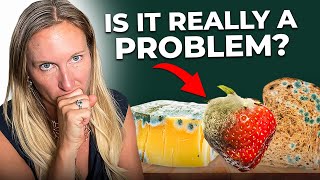
Dr. Diane Mueller explains how mold in food disrupts your gut microbiome and forces your liver to process toxins. Some molds cause immediate food poisoning, others subtler damage. Mold on food and mold in water-damaged buildings affect your body differently, with the latter often more dangerous.
Chapters
Foreign, in your fridge, on your food, bad. What should you do with it? I'm Dr. Diane, your chronic illness expert. That's what we're talking about today. Here's the thing. Not all molds are the same, but consuming moldy foods is problematic. Remember that we have a microbiome. We have a healthy microorganism system all over our body that's responsible for our immune system. It also aids in things like activating vitamins and minerals and so many more things. So when we're consuming a microorganism that is not a healthy microorganism for us, such that we see in mold, with moldy foods, it can actually cause problems in our gastrointestinal tract. Also, mold does release toxins, and different molds release different toxins. As far as the level of toxicity on our body, that's going to depend from mold to mold. But mold will release toxins that your body and your liver will have to deal with. So in summary, yes, if you have mold on your food, throw it away. There is a different level of different types of mold could make you actually acutely sick where you have food poisoning. Others you might not actually notice acutely. But don't let that persuade you to think there's not something happening there. If you see that mold, it's not a good sign to eat it. You definitely want to get rid of it. And remember that molds that are growing on your old food are different types of mold typically than the moles that are growing in water damaged buildings. The mold and water damaged buildings, which are very, very, very common, are much more impactful from a health perspective. So check out some of my other videos on this channel, such as the one I put out last time to really understand the impacts of mold from a standpoint of your house and mold growing in your house and what happens from those molds, because they're much more problematic oftentimes than the mold in our foods, even though we should not be eating moldy food. All right, everybody, please do subscribe for more information just like this. Please also make sure you check out my get well quiz. This is a quiz quiz that I developed to help you when you've been dealing with all sorts of various chronic issues that doctors have not been able to figure out. The point of this quiz is to shine light onto some of the top few things that could be missing from lab testing. And so it helps you direct and take back to your doctor and say, like, we didn't get this tested. This could actually be related to my symptoms. So go take my quiz. And there's information about how to do that all over this channel and also in the description here of this video. And that's all for now. I'll see you next time.