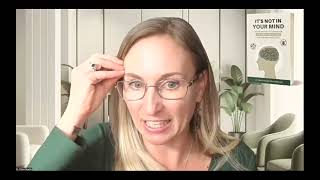
Dr. Diane Mueller, a chronic illness clinician, explains why patients with fatigue, brain fog and pain aren't getting better. Missed root causes include mold toxins, chronic infections, neuroinflammation, and thyroid problems that show up as free T3 and reverse T3, not just TSH. She walks through which labs to order and how to treat each one.
Chapters
Hey, everybody. Welcome to tonight's webinar. I'm just going to introduce myself for those of you that don't know me and let people trickle in. So we have quite a few people signed up tonight, so I'm really excited and hopefully everybody is present and ready to learn. I'm Dr. Diane Mueller. I know a lot of you probably know me, and for those of you that don't, I am a chronic illness survivor. I had Lyme, I had mold, I had fibromyalgia. Crazy, crazy pain where I actually thought I was. It was like pain so bad I felt like my leg was being sawed off. So that's a little bit about my history and how I got into this world of chronic illness and treating some of these really wild chronic diseases that are not responding. So as the masterclass information, you know, as we talked about on the, the information about tonight's class, the whole, one of the whole things we're covering tonight is what's missing. Why are you not getting better? What the heck is going on? Right. So I have a presentation planned for tonight. I'm going to pull that up in a second. But I really want to make this super pertinent to you. And for those of you that have decided to show up live, you get the extra special ability to allow me and to to help you more by customizing what I'm going to talk about for you. So I will go through the presentation if nobody has question. But the more you tell me about what's going on with you, the more I can help because some of our goal tonight is to really start identifying what tests are you missing, Right. What are you missing? What is not getting better? Why are you not getting better? You know, what's going on. So if you would put in your chat for anybody, I would really, really love it if you would participate so I can customize this like I said. So if you'll take a minute to put in the chat what symptoms you have and what lab tests you've had done, then my goal is to help you identify why you're not getting results or why you're not getting full results or why there's a few symptoms left. Right. So if you can give me some of that information, I will customize this, this particular power or this particular lecture for you. So I will pull up my PowerPoint while you're doing that. No brave souls want to put this in the chat and make it customized to them. All right, you guys, well, I'm just going to go through this, but I hope, like I said, I hope you guys will participate because it just makes it so much more personal. And one of the things you're going to see here is that when I go through this, there's so many different root causes that can come up with this. So chronic fatigue and brain fog. Like, what is deeply going on with these couple of conditions? And why am I talking about them together? So I'm talking about them together in part because. Because essentially a lot of the root causes are the same, right? So a lot of these root causes are the same. And when a lot of these root causes are same, what that winds up meaning is we can talk about them together. Because what we're seeing is certain things, for example, that will inflame the nerves and cause the nerves to actually die, which happens all the time. Very scary, very fixable. But things that can do that will actually in some people lead to, say, the nerves and the brain dying, literally. And the nerve cells of the brain dying, literally. Again, scary, fixable. And. And so that was what. One of the things that will lead to, say, brain fog and cognitive dysfunction and dementia and all those things, right? Another thing can be something like chronic fatigue. Okay? And so when we have things like nerves dying and we have all of these inflammatory things, one of the areas that can start dying is the mitochondria, the powerhouse of our cells, right? So some of the same things that will cause, like, the nerve cells of our brain to die can also cause other parts of our body to die that are related to fatigue. Okay. So, Joanne, you're talking about how it began for you after chemo with breast cancer seven years ago and then got worse after developing mycotoxin illness two years ago. The only talk, the only test you had was mycotox. So you're welcome so much for asking. Thank you so much for participating. So this is great. This is a wonderful question. Thank you for being vulnerable here. Because one of the biggest things here is really in, like, looking at the root causes, right? And we're talking about something like mycotoxins. So mycotoxins, just so everybody knows. So we're talking about toxins from mold. Very, very, very common. And now we're starting to see more people test for these things. But with mycotoxin illness, there's usually some sort of genetic predisposal. So what will happen is we are in, say, a moldy house. And I'm going to relate this all to chronic fatigue and the whole. Everything we do, I'm going to relate back to the purpose of why you guys are here. So let me explain this and just bear with me as I kind of put all these pieces together for you. So with something like mycotoxins, we have a genetic predisposition, right? And this genetic predisposition means a very, very common genetic predisposition affecting a quarter of the population. And what this will mean is that when people with this genetic predisposition breathe in mold toxins, then those mold toxins wind up being. They build up in the body. Because what happens is the immune system, due to this genetic anomaly, is not able to tag the mold toxins as bad. When the immune system cannot tag the mold toxins as bad, can't remove them. So they build up so we can have a genetic predisposition. But as you're sharing here, Joanne, as you're sharing, one of the things that can happen with this is we can wind up having these scenarios where something like chemo, right, something like cancer causes our immune system to not work in the same way, causes a lot of inflammation our body. And those kind of things can activate that gene, right? That activate that gene that makes us more susceptible to mold. So it already can be a lot, right, when you are, you know, like you're healing from something like breast cancer, right? So there's already so much like physical and emotional mental stress around that. But then the other thing is those types of treatments can be that key instigator that all of a sudden isn't predisposing us for these other things because the immune systems weakens. So how that relates to chronic fatigue and fibro and. And brain fog, right? So we see in research that mold toxins. And again, I'm going to say some scary stuff throughout this lecture, and I'm going to keep saying scary but fixable because I don't want you guys to leave this in your nervous system to be up, you know, really charged because you're scared. All of this stuff, I'm telling you because I want you to know what's going on in your body and understand it. But I want you to come out of this, like, not being scared and knowing, like, okay, I understand it. I have steps, because this is fixable stuff we're talking about here. So what will happen and what we see in research, like with Alzheimer's, for example, we see some studies that will show that mold toxins make their way to the brain and actually can cause Alzheimer's types of plaques. And the thought and the theory that researchers are saying around this is that what's Happening is these plaques that are related to Alzheimer's actually have these immunological properties to them. So they actually are designed body makes these plaques to try to trap things like toxins and infections that make their way to the brain. And we don't want to have them there. So essentially, from that standpoint, we want to make sure then that we are really considering that, okay, these plaques and these things that are related to dementia are actually happening because the body has gone haywire, but it's trying to fix something like a toxin or infection in the brain. So that's what's happening with some of the brain fog. There's one of the things of why mycotoxins can lead, and toxins in general can lead to pain as well as to fatigue. Couple different things. Fatigue happens because when toxins enter the brain, especially something like a mold toxin, it will actually change. It will cause parts of the brain to inflame. And some of these parts of the brains that inflaming are actually parts of the brain that triggers thyroid adrenals and even sleep cycle, even our melatonin, our sleep hormone. So we don't sleep as well. We're not making thyroid hormone and we're not utilizing it. Sometimes we make it and the blood levels are fine, but our cells can't use it or our adrenal glands. And our adrenal glands produce cortisol and DHEA and these hormones of energy. Well, when we have mold toxins in the brain, sometimes we're not getting that signal to secrete those things, right? So that leads to fatigue. Pain comes from some of these things. Because what will wind up happening is because of the neurological inflammation, because of the nerves getting inflamed. Our nerves, they work in a way by signaling pain by input. So if I were to take my hand and I would slam it down real hard on this desk, right? If I slam it hard enough, I get a signal to my brain that says pain. If I lightly tap it, that signal doesn't go off. When the nerves are inflamed, and mold and other toxins are things that can inflame the nerve, it changes that that impulse, that signal where I lightly tap my hands, and instead of no signal to the brain going that says pain because of that nervous system inflammation, it sends a hyperactive signal to the brain, and the brain interprets that input as pain, Right? So that's some of what's happening there. So, you know, in thinking about, you know, your question, Joanne, you know, so it's like, yes, as far as like fibromyalgia. And try childhood trauma, you know, really influencing that. Oh, absolutely, because with fibro and pain, remember what I'm saying, it's all these different inputs. So the more different inputs to disregulate the nervous system, the more different things that. That's making the nervous system, you know, kind of do this thing. If you. For those of you that are watching me, I'm like, shaking my body right now. The more different inputs that's making the nerves fire at smaller and smaller signals, the more likely we're going to get something like the pain of fibro. So oftentimes with these symptoms, when we're talking about chronic fatigue and brain fog and fibro and pain, we're talking about all of these different inputs changing. And so from fibro perspective, it can be a combination of. Absolutely. Childhood trauma, 100% very, very important, because the nerve is firing too easily. It's a survival mechanism. It's normal. It's a natural process of childhood trauma, but it still is contributing to that nerve, sending that signal when it's not supposed to. Mold can do that. We also really want to consider because mold and Lyme go hand in hand due to genetics. So we have genetics that predispose us for Lyme, like, for Lyme being worse. We have genetics that predispose us for mold illness. Those are very similar genetics. So oftentimes those things go hand in hand in our myth. And Joanne, if you want to let us know, I'm going to move on to another question here. But in the meantime, if you want to let us know, besides fibro, if you have any other symptoms, then we can talk a little bit more about potential lab tests you're missing. Lyme, though, is oftentimes one that is a very big one with mold illness. And. And it goes hand in hand. So I would definitely be considering Lyme as a possible missing test. Okay, thank you, everybody, for writing. Okay, Stephanie. So while Joanne's answering that, I'm going to move on to Stephanie. So welcome, Stephanie. Glad you're here. Thank you for writing. So you've said you've had these issues for so long. So if you had, you've had a style dectomy, a jugular decompression, however you think you have neck arthritis, do we know about cranial cervical instability? Best treatment. Okay, so here's the thing. Here's always the thing. When we're talking about, like, structural components of this, whether we're talking about neck, whether we're talking about back, we're talking about pelvis, we absolutely want to consider, you know, structure. We want to consider these things. But it sounds like you are right, you are considering. And I imagine with diagnoses like that, you've had a lot of imaging done. So you do want to consider structure. Like I'm definitely curious for you if you've had any sort of physical trauma, car accidents, those types of things. So we absolutely want to consider that physical stuff like you're doing. So you can do one of the things from a physical, physical standpoint with some of what you're doing. You always want to make sure, like here's some basic things, I'm going to talk basics first. We always want to make sure that we're doing things, for example, like making sure the fascia, that fascia is that outer muscular sheath that covers the whole body. So we want to make sure that the fascia, because the fascia can get really tangled up. It's. And it can get like knots in it. And what happens when the fascia is not laid the, like these perfect planes of tissue on top of each other is that it can actually pull bones out of place. It can lead to some of this pain, it can lead to some of that cervical instability you're talking about. So I would definitely want to make sure that just some of the basic things like fascias in place, right? I would absolutely consider something like Ehlers Danlos syndrome. I don't know if that's been looked for, but that's a condition and you can do lab tests for it. A lot of doctors don't do it, usually have to go to specialty companies for Ehlers Donlos. A lot of the. Because there are genetic tests to see if you're predisposed for it. It's genetic condition and what it is is when you have loose ligaments, oftentimes it's diagnosed just by, just by your symptoms, essentially. But even if you have something like that, like, and like, and I'm looking like the way I look at this from a functional, holistic root cause perspective is what is going on where you could have say this instability, right? What is going on where you could have some of this arthritis? What is going on where you could have this, this, this compression. So if it's not a trauma and there's no trauma history, definitely consider a Donlos. And from there I would be seeing like what the heck is going on where your neck is continually inflamed. You know, like, I would consider things for sure, like anything ent making sure you're going to a holistic dentist. And there's no source of infections in this area because that can cause so much inflammation in the neck. And I've seen situations where, like, regular dentists miss things and people are just full of all of these infections. And when dentists, the holistic dentists do cultures of the mouth, they'll actually find a ton of different infections. And it's causing so much inflammation and it's creating this cervical, all these cervical and TMJ issues. So I would definitely consider that. I would look for sure, I would consider staph infections in the nose, especially something called Mark Ons Markons is a very resistant form of staph that typically is not tested for by standard docs. So I would absolutely consider that and looking at that, and then I would make sure that you are doing. You would look for anything from a tmj, like working with a. A sleep apnea specialist to make sure you're not doing anything in your jaw and grinding your j. Because you can't actually breathe at night. Right. So there can be a lot of instability if you're doing all of this jaw stuff because you're trying to breathe at night because you have sleep apnea. And, you know, sleep apnea is very commonly considered in people that are not an ideal body weight. And, you know, I don't know what your body weight is, but one of the things to really make, you know, make sure people know is that it's not looked for in cases, oftentimes when people have healthy body weights. And so but we now we see so much of it like, I am incredibly healthy body weight. And I had, you know, I had mild sleep apnea. I had to do a tongue tie surgery and all these different things to help me reset my jaw is a tongue tie as an adult. This was just several years ago and that was leading to mild sleep apnea. And it was not looked for. It was just like me seeing a biological dentist and, you know, and then discovering this. Right. So I would definitely consider all of those things. And then the other question beyond on that is always also coming back to the gut, because when we're dealing with chronic inflammation, and I know this is in your neck, but I still think there's a. We're talking about a chronic inflammation scenario here. Then I always want to know what is going on in the gut, especially because oftentimes, even from infections, we'll pass infections back from our nose and our throat will pass them to the gut, and it'll go from the gut to the nose and the nose to the gut, because these, these areas are connected through our esophagus, right? They're connected through our esophagus and our oral cav cavity. And we can pass these infections back and forth. And what's going on in the gut can cause so many infections and inflammation. Right? So that's also very, very huge. So hopefully that helps. Let me know if there's any more information or questions you have. Okay, Janet, so you have congenital hypothyroidism, you have very much stress currently, and the blood test keeps showing low tsh. So your health workers keep lowering their medication. The lower amount of medication, the more fatigue you have. Oh, I see this all the time. I'm so, so, so sorry. Okay, let me walk everybody through. So we're all on the same page about how the thyroid works and what TSH actually is. And this is very important in our chronic fatigue conversation, because I see this go wrong all the time. TSH is that most standard test that is run in conventional medicine. TSH is not thyroid hormone. It's a brain hormone. What's what? The brain, the thyroid and the brain are always supposed to talk, just like the brain supposed to talk to all of our glands and contribute to all of our hormones. So what's supposed to happen in health is TSH goes up when we have low thyroid. So basically, if we. If our thyroid's producing hormone, and thyroid does energy and helps with hair and helps with weight and helps with bowel function. So basically our thyroid, if our thyroid starts to fall, what is supposed to happen is our brain is supposed to kick on, and our brain's supposed to say, oh, I don't have enough thyroid hormone. I'm going to increase the TSH because the. That's the brain signaling the thyroid to release more thyroid hormone. So the brain increases TSH when thyroid hormone goes low, so the brain can tell the thyroid to work. In cases where we're talking about low tsh, what, what they're going off of is that oftentimes when thyroid hormone goes way high, when things are working correctly, when thyroid goes way high, then what's supposed to happen is the brain sends a signal and says, like, oh, we don't need to send the signal to the thyroid. We have so much thyroid, we need to turn down the communication and stop talking to the thyroid. So then the brain sends TSH really low. And that essentially then is going to say, okay, well, thyroid, we already have enough. You don't need to hyper secrete normalizing the thyroid. So this is A key thing, you guys, because I see so many people running and making decisions about the thyroid, just about this, because of this tsh. Because if everything is functioning perfectly with the thyroid, you would tend to see that a low TSH would mean a high amount of this thyroid hormone. However, what about cases where the brain's just, like, not sending the right signal? We can also have cases where TSH is low because the brain's not working. The brain doesn't. The brain doesn't see a signal. It's not responding, so it's not sending a signal to the thyroid at all. And we have low TSH and we have low thyroid hormone. Right. The number of times I see situations like this are too many to count. And unfortunately, it is the standard in medicine to run TSH as the main way of monitoring thyroid when this brain hormone is actually not telling us for sure what's happening with thyroid. So my strong suspicion for you, Janet, is that it is not this. It's that you. Is that you have a very, very low hypothyroid still and that they're monitoring it just with tsh. And, of course, the lower amount of medication you have, the more fatigue you have, because you actually have lower thyroid. So for you, I would Definitely get free T3 and free T4 tested. These are thyroid hormones. Remember, TSH is brain hormone. So when we're dealing with fatigue. And this is for everybody listening, that has fatigue. When we're dealing with fatigue, we want to make sure that we're not just talking about TSH. We want to make sure we're talking about free T3 and free T4. These are the thyroid hormones, and you very much like. The other thing I'll see is sometimes TSH and free T3 are tested. You really. I'm sorry, TSH and free T4 tested. Just those two. You really need to make sure you are testing free T3 as well. And the reason for this is that T3 is the active form of thyroid. So oftentimes, like, the. The new thing to do is not just test tsh. The thing I see more and more over the past year, it's like, o. Okay, we're testing TSH and T4. T4 is not active thyroid hormone. It can't do anything. It is literally inactive. The body activates it and turns it into T3. And it's only when thyroid is in the form called T3, it's only in that form that it gives us energy, that it helps our brain function, that it helps us poop, that it helps Our hair stay on right? Does it that it helps all of these things that that thyroid is, it like does for us. So we're not testing T3. We're missing this main component of thyroid. So it's super, super duper important that, that we do all of this. Okay. So I'm not surprised about that. So you would want TSH, free T3, free T4. I would also suggest doing a reverse T3. Here's another take home thyroid. Important, important point for you guys. So reverse T3 is not tested for a lot. Now. In order for hormones to impact us, in order for hormones to work, they have to get inside our cells. So we can have all. We can like have super high hormonal levels. But if they do not actually land and impact our cells, if they don't actually influence on the cellular level, it's basically like we don't have them, they don't do anything. We have to look at what's happening inside the cell. So reverse T3, known as RT3 will block regular thyroid hormone that, that T3 from working at the cellular level. What this means and why this is important. So if you get your lab test done. I'm coming out of focus. If you get your lab test done and you have free T3 and free T4 and TSH and all these things, and let's say the active form of thyroid that I'm talking about, the T3, let's say this is really good, right? And you're like, oh yeah, I don't. My thyroid's good. My T3. Listen to this class. I took this workshop. Thyroid was good. I Tested my free T3. It was good. But if you have a high amount of reverse T3, and by high, I mean much higher than 10 or 11 on a lab test, it goes like closer to 20. But usually I find that people with 10 or 11 have thyroid issues. If you have higher than a, than a 10 or 11 of this reverse T3, you can have all the regular T3 in the world and your cells are going to think you are deficient. It's going to block it, and so many times it's not tested for it. So that's, you know, that's a huge, huge, huge problem there. And if your thyroid condition, you know, with what you're saying, Janet, when you're saying like, okay, if it's because of a smaller gland, only a quarter size of normal, then I, I mean, you still are going to want to do these tests, right? So you, like, from a standpoint of like, you still want to see, like, I understand that because it's smaller, you're going to produce less hormones, but you're still going to want to see all of these principles still apply. Right? It's just going to be more likely that the result for you is, like, where somebody else, like a low thyroid could be coming from a gut dysfunction or a liver dysfunction. You're going to want to consider those root causes. For you, you know, the root cause probably is, like you said, it's this congenital issue. You have a smaller thyroid than normal. Okay? So that's probably the root cause. But you're still. All of these same lab tests still apply to. You still want to make sure where you're at with, like, the medication that all these things are in alignment. So it doesn't change any of those types of testing. You still want all those types of testing. It just means that often other people, when the thyroid's the root cause or one of the root causes for things like fatigue and brain fog, that what actually causes that thyroid to go out of balance oftentimes comes from places like the gut. You know, infections in the gut or toxins can cause it. I mean, for you, there's probably not those root causes, but the thyroid test, you still, still, still, you know, those tests are still incredibly important. Okay, so I'm going to move on to the next one. Please, for everybody that is new and has recently entered the room. We are. I'm answering questions today, and that's how I'm. I really wanted to run this webinar yet tonight is to really make this super personal to you guys. So again, for anybody new here that has joined us late, please do put your questions and your specific things in the chat, and then we can talk about some of the, you know, the missing things. And so the more, too, you can tell me about your symptoms, that will also really, really help. Okay? So, Ava, so welcome. So you're saying your. I don't know if it's chronic fatigue or brain fog. So I'm going to make an assumption here that it's both started after multiple viral infections. Ebv, cmv. So the two viruses that cause mono hpv. So, so when we're talking about these sorts of things, right, these chronic viral infections, here's another curiosity for mine that I see oftentimes with chronic infections. So usually when chronic infections and like, when chronic, we can get these infections and we can clear them, but when we see symptoms start after an infection and they don't go away, one of the most common Things I see is that there's actually another chronic hidden infection. And the immune system got so dysregulated and it was working so hard because we have. We have so many infections, right, that can live dormant inside of us. And a lot of times people think of just like mono, shingles, hpv, right? So it's like we think of like, some of these common ones, and we think I, you know, from a chronic infection state, a lot of people are unfortunately just still under the impression that like chickenpox, for example, is one we have to worry about. You had chickenpox at a child, for those of us that are old enough to have had that, and then you have to worry about it later if it reemerges and it shingles, right? And that comes out with stress. Stress. And we see that with mono, and there's some awareness around HPV and some of these things, like recurring. But what we actually realize is there's so many infections that live dormant inside of us. Viruses, bacteria, right? Fungus. There's so many different types of infections that can live dormant. And so when we have something like a chronic viral thing, you know, like you're talking about multiple viral infections, and all of a sudden it's like, oh, my gosh, I get this fatigue and I get this brain fog, and it's come on and I can't. It's just not going away. Usually what that's a sign of is that there's another hidden infection that has not gone away, that it's, like, reemerged because our immune system, say in your case, Ada, you have. Your immune system's like, oh, I have to go after the, the. The ebb. I have to go after the cmb. I have to go after the HPV and the immune system so busy going after those infections that it's. Anything that is dormant and living there all of a sudden reemerges. Right. And so I would say for you, the number one test I would start with, as far as, like, what could be going on, the number one test that I would be looking at is actually the big chronic infection panel by Vibrant Wellness that will go through not just, you know, the viruses and also look for other viruses to see if you have, like parvovirus, for example, is a very common one. I see also Parvov virus, also with hidden arthritis. So, you know, that's another thing for, you know, even you to think about, Stephanie. And so when I, when we have these chronic infections, like, like with this test for uava, that I'm talking About with vibrate, it will go through other viruses. But it's also going to look for hidden bacteria, right? So we can look for hidden bacteria, hidden parasites. And so it's going to look for some of these other things. Because I do strongly think that what likely can be hap that is happening is you have those infections, but it's not just that your body's not clearing those, is that your immune system so diverted from those infections as these other things that were in dormancy come up and reemerge and, you know, been on. Oh, I've been doing a lot of podcasts today. I've been doing a lot of interviews today. And one of the common things that's been coming up all day is this. This conversation that I see happen where people come to my office and a common thing that will happen is like, like, okay, I've tried 12 or 20 or sometimes 30. I've been to all these different doctors and we've done all of these things for, you know, for something, you know, we could be talking about ibs, fatigue, ebb, whatever we're talking about here, that all of these different treatments and they want to know, like, what is like, like, do I have that treatment, that magical treatment that's for, say, ebv that is better than all these other treatments, right? And they've tried 20 or 30 other things most of the time in these cases. And it happens a lot. So these conversations happen a lot. Most of these times in these cases. It is not that the right treatment hasn't been found. Right. There's a lot of doctors out there with a lot of really good treatments. So if you've tried a ton of different things and it's like, what the heck is happening? It's actually can be a huge sign that it's not the treatment problem, that it's the lab test, that you're missing a piece of the puzzle. So that's especially true if you're like, wow, I've tried so many different treatments for this. Because a common thing that will happen is we get one diagnosis and we think, oh, we found the reason. We found the reason. Here it is. You know, all these reasons you guys are giving me. Awesome. It is great to have a diagnosis. But over and over and over again, what I see, like, most of the people that come to my clinic, most people, when we run lab tests, we find like a dozen things wrong with people, like a dozen different ways we could diagnose a dozen root causes. And so it's so common that what happens is we find this thing and it's like, oh, yeah, it's the ebv, right? It's a cmv. Absolutely. Absolutely. Those things need to be addressed. But oftentimes, if we're not getting well, it's because all these other factors and we get. So it's so easy because we had that diagnosis for, you know, we take that to another practitioner and it's like, oh, yeah, I have these labs. It says, I have ebv, nothing's working. And the practitioner gives us another treatment, and then we go to another person and we go bouncing around trying to find the right treatment for this, when it could be that any of these treatments were actually pretty solid. It's just that they haven't been done with looking at all these additional root causes. So that's probably where I would start for you, which is that, you know, that initial. You know, the information you're giving here, ABA is like looking at that. That big chronic infection panel by Vibrant Wellness. So, so, so, you know, so important. And I'm gonna. I'm gonna keep going here and answer more questions here, but I'm going to take a moment because I'm talking about a lot of these tests. So one of the things that I have for your. You guys. So this is. This is my. I have a group plan, a group wellness plan, and my office. And in this group plan, it's only 99amonth. So it's like super reasonably priced. And I keep it that way because what we do in this plan is. It's like a. It's probably close to about 80 different videos that go through a wide variety of health conditions, how to test, how to treat, how to get tests. But in that program, you can also access all of these labs that I'm talking about. You get discounts off of retail on those labs. And. And we talk about treatment and we do two Q&As like this, just for the people in that program. A month where you can come and ask me questions so that I'm talking about this. And you're like, oh, my goodness, how am I going to get this, this, you know, these labs, how am I going to get all this information? Then, you know, then we, like, that's, you know, that's your ticket in. And so you can sign up for that. There's a 49 and a 99. I would recommend signing up for the 99. The 99 is where you get the live Q&As with me, the 49, if you want. That is just all of the video content, all the protocols, access to the labs, still really valuable, but most people, I find, really do well with the one on one call. So I'm going to keep answering questions here, but I just want to at least throw that in there. So that link of how you do that is in the chat, but I just want you to. I wanted to throw that in here now. So if you're listening and you're like, okay, you're telling me these labs, like, how do I get these? Because most doctors don't order these kind of labs. Anything I'm talking about in here, with an exception of, like, the, the dental, you know, things you can get in, you know, from. From me through that very, very affordable program. Okay. So then other things. So, Janet, I know you said a little bit more. I'm going to come back to you, though. I'm gonna. I want to make sure everybody that's posted gets time to get some time with me, and then I will work on coming back to the rest of what you've said here. Oh, you're welcome. Yeah. And if you have anything more aba on that, I will do my best to circle around if, If. If time allows. But you're very welcome. Thank you for participating. All right, Gail, so on to you. So basically your question here is that how do you figure out if something is mold or something else? Your son has been fatigued and tired, and you don't feel like he's processing things. He has a history of mycotoxins and mycoplasma, IgG and IgM, but you don't know where to begin. Okay. Yeah, this is. I mean, you're. It's always just like, so much more tender. Right. When it happens to the kiddos. So from a standpoint of fatigue and tired and processing things. So processing things, I kind of put in, you know, into that. That brain fog or cognitive decline standpoint. So here's the thing. So if you have a history of mycotoxins, I'm going to make a conclusion. Conclusion based upon the way you're saying that. And you can correct me if I'm wrong here, that you have lab testing to verify that it truly is mycotoxins. If you haven't had that, it's definitely worth doing urinary mycotoxin test to see if that's true. Right. From a standpoint of fatigue and brain stuff, you know, mold and mycoplasma, which is the bacteria that causes, for many people, walking pneumonia, these can be huge, huge, huge root cause issues. And if you have not treated these things. Okay, yes, you did the mycotoxin test the. Would you say, two years ago? So if you have not treated those things, it's definitely a really good place to start. You know, I really am thinking about. I'm thinking about Lyme disease. I'm thinking about Bartonella. I'm thinking about Babesia. I'm thinking about that staff called Marcons. I'm thinking about basics like, like thyroid and adrenals and micronutrients, gut function H. Pylori. Like, there's so many things that really, truly can cause these symptom pictures. And yeah, just like we were talking about with aba, like, oftentimes when, you know, when symptoms are here, it's a conglomeration of a lot of different or a lot of different root causes. And some of the first step in taking this in step by step, some of the first step is to really start working on some of the things that you already know. It is the most important thing when people have mycotoxin illness to make sure it's not in your home. And because mycotoxin illness, this mold illness, like I started this conversation tonight, is a genetic predisposition, meaning some people are genetically predisposed to have that toxin buildup. Because of that, we can have people living in a very moldy house, and some people can be sick because they have the genetic predisposition and other people cannot. So I just want to make sure that's very clear for everybody. Also, another thing that comes up when, like, we're thinking about moldy houses and moldy buildings is so common, especially for people that own their homes to be like, I had a mold inspection when I bought the place, never had any water damage. I'm very sure the number of people that tell me they're very sure they don't have mold in their house, most pretty much everybody says that almost. And the number of people that are wrong are most of them. And here's why, is because the inspector test, when they do the tests on the home, they typically do air samples and they compare indoor air to outdoor air, and they look at humidity. There's so much more to mold testing than that. And for example, black mold, which most people know is. Is essentially the big bad mold, right? There's a lot of molds that cause illness, but black molds at that, big bad mold. Black mold's very heavy. The toxins from it, very heavy. It's very sticky. What does this mean? You're not going to find very much of it. In air, because it's so sticky and so heavy, it will actually drop out of air. It doesn't suspend in air. You find it on dust. You find it on samples that are either called dust samples or surface samples. They're also sometimes called swatch samples. And so from when a standpoint of that, you know, you want to make sure that you're really testing the dust. So you had it in your building, so that's, you know, that's good from the standpoint of exposure. Now if you're psych. What we always want to remember with mold is if there's no mold around, if you truly have eliminated the exposure, even without treatments, though, there should be at least about a 10% improvement. Right. So we see that. I see that over and over again. Not saying it's like the cure all, you still want to get the toxins, that there could still be other root causes. But if you, when you, when he was eliminated from that building where, you know, you're saying you got rid of it, if there are symptoms, if there was not a 10% improvement in symptoms, the likelihood that he is still getting exposed someplace is high, really high. So if you're saying like, okay, he's in a dorm at school, from a standpoint of mold, you really need to test it with an Ermie. So an Ermie you can actually buy. I do. We do have them in my group program, but you can buy them directly online. I use a company called Enviro Biomics. And so you can order that, you know, by signing up for my program, you can order that one, honestly, just online. But I would recommend testing his dorm. And I say that. And even if, like, you can't say, get him out of the dorm, what that's telling you is if you can treat right now. Because if you're. Because if he's living in mold, you're. The treatment's going to be like, basically, like, very difficult until he's out of it. So that's like one of your first steps, I would say, is like, you have to know if he's living in it, right? So you absolutely want to know if he's living in it. And if you're, you know, if you. Once you know that, then you can start doing protocols to remove it. So in my book, I go through a lot of those protocols. It's in my book I go through, like, which binders actually attach to the different molds to pull them out. I also go through those protocols in my course. So I can help you with that. But the first step for you for sure is figure out if he's living in it. And then from there, you know, you definitely want to treat the mycoplasma and all that, but. But really from there, the next steps, once you're, like, not living it, then you want to essentially start eradicating it, you know, and then, like, look for, like, treating the mycoplasma, treating, like, testing for some of these other things I'm mentioning. So from a standpoint of, of mycoplasma mold, what to deal with first, you can really do it in either direction. The dangerous thing sometimes, in the. I shouldn't say dangerous, the cautionary thing sometimes is anytime we kill microbes, microbes release toxins, right? And anytime they release toxins, your body has to eliminate them. So essentially you want to make sure that you are eliminating them. And if you have so much mold buildup and you have so much toxin buildup, and then if you try to kill the mycoplasma, depending upon how the body handles it, that it could actually make symptoms worse. And so the biggest thing, so, so it's fine to do the mycoplasma work first. And that can actually take pressure off the body sometimes to do it. It's not wrong, but you basically want to see if, if the, you know, if your son can tolerate it. And if, like, the symptoms are dramatically worse, then, you know, then it's probably going to be a problem. So you can start, I would say, starting with a couple herbals, just like antimicrobial herbals usually. A lot of times with mycoplasma, a lot of times I wind up, you know, telling people that, yeah, you do need to do antibiotics. So it is oftentimes an antibiotic scenario. But you could try an herb like a berberine, right? A berberine based herb. You can try these types of antimicrobial herbs to get a sense of how he's going to react, right. Can he handle some of these herbal supplements? And if he's like, wow, you give him a, you know, a thousand milligrams of a berberine in a day and he has a huge reaction. Probably not the time to treat the mycoplasma. If it's like, okay, it's not a huge reaction. It is, it's a much more, okay, time to treat the mycoplasma. So just, you know, just follow symptoms that way and, you know, and again, like, you know, you guys sign up for my group program. I'm super healthy healthy or help super happy to have conversations like this continually and just, you know, check in on you guys and we can go through things and help you guys. Okay, So I think my next. Next question here was from our anonymous person. Welcome. So you got off work no problem. So you're fatigued all the time. You have brain fog. Forgetting to do things, forgetting to put things away. Anxiety, depression, adhd, Adderall, Zoloft, as well as IBS without a gallbladder. It's nice to have your gallbladder. We can still work without it, so no problem there. Muscle aches all the time. Joints too. Yeah. This is like, such a story that I just hear over and over again. I'm so sorry. So blood test, thyroid, sugars, etc, all good. Exception of high cholesterol due to your ice cream, and check for rheumatoid arthritis, normal. This is like the story that I literally talk to my clients about pretty much every day. Don't know what's wrong. All the major, all the most common tests are normal. It's like, why the heck do I have ibs? Why the heck do I have anxiety and depression? Why do I hec. My. Is my brain not working? I'm exhausted. So. And. And thank you for telling that. You know, telling me that you're vegetarian, so. There are so many things. So many things. I mean, you know, one for sure is like, you know, obviously, elementary school counselor. There's a lot of stress. My. My little sister actually does the same sort of thing. So I. I know firsthand from her about some of the stress with that job. So I. Obviously that's contributing to some of this. But. But some of these other things you're saying here. So your school building having mold due to water damage. So you're not in that building anymore. You're in a portable that's outside. So, you know, it's your own classroom outside. So that's super helpful. So here's, you know, here's a question for you is kind of like, with what I'm saying about, hey, if you're in mold and you leave mold, most everybody gets this tiny little, like, it's. It's like. It's like, like it just turns the signal down a little bit where it's like, okay, it's not saying that you're feeling awesome, but, like, maybe it's just like, not quite as bad as it used to be. I strongly suspect for you that mold is an issue because the way your symptoms read is truly like, not. Not every prey baby presents like a mold textbook. You're Presenting like a mold, you know, mycotoxin textbook. So I definitely think you want a urinary mycotoxin test, you know, Absolutely. Get that run. So you're not sick anymore. You were sick every day last year. Okay. So that's a good sign. So that's a, hopefully a helpful sign about not being in mold anymore. We don't know for sure until we, you know, you, like, test your house and some of those other things. But the fact that you're like, oh, you're less sick than last year, that's a really good sign. So I would add absolutely bottom starting line for sure. Get your mic, your urinary mycotoxin test run, because there's reasons for this. Again, like, the body does not do this for no reason. So I were to start with, like, blood tests or, you know, lab tests for you, based upon what you're saying, I would absolutely start with that urinary mycotoxin test. I would make sure you have some of these other basic things. Like, I know you're saying, like your thyroid is fine. I would make sure that you're doing full thyroid panel, that TSH, that free T3, that free T4, that reverse T3 at a minimum, like we're talking about. To make sure there's nothing going on there. I would get your adrenals test and minimum cortisol and DHEA with the ibs. There can be so much going on there that is also contributing to this picture. Right? I don't see ibs. Cause like, this kind of a widespread symptom you're talking about, for most people, it can be like you can get some level of fatigue and some level of brain fog with ibs. But the way you're describing it, I definitely don't think this is just happening in the gut. I just haven't seen that with a 15 years of clinical experience here. And so I would really consider a stool culture. I would consider a small intestinal bacteria overgrowth breath test. So that's four things I listed. Mycotoxins, full thyroid adrenals, which is cortisol and dhea, and a stool culture at a minimum, but also possibly sibo. So that would be five. So that's where I would start right now. There's so many other, you know, things like from a vegetarian perspective, you want to consider micronutrients, right? So, you know, something like an organic acid test. Because micronutrients, you guys, it's so common that people will come in and be like, I got blood work done. And my. I got my potassium and my calcium and, like, all my micronutrients are normal. Well, that's not telling us what's inside your cell. That's telling us what your blood is like. And we want our blood to be really stable, which really means our cells will deplete themselves that nutrients of nutrients to keep our cells stable. Because, for example, calcium makes our heart contract. Right? We definitely need calcium stable in the blood because that's regulating our heart contracting. And if our heart doesn't contract right, we obviously die. So our bones, for example, will leach calcium. We have mechanisms where our bones will leach calcium to keep our blood level so we can, like, stable so we can help have our heartbeat. So because of that, this is an example of what I'm sharing. We don't see always what's happening in the blood. It doesn't always match what's happening in the cells. So the organic acid is another really, really big task. The other thing. So, so basically what I had said is, yeah, IBS is definitely totally a pain. That's cute. I haven't seen that. The pitta. Okay, so urinary mycotoxin, full thyroid cortisol, D, H E A stool sibo. That was that minimum. But I would also consider an organic acid test in order to, you know, to look at some of those micronutrient tests, levels. And please, please, please, please check out. I'm gonna put this link here again. Please check out this program because I think this would be so helpful for you. We can go over your lab test. We can talk about what they mean, what they do. I think this will help you a lot. So thank you so much for showing up and answering all these questions. And I hope you will join my program because I do think there's a lot of. A lot of stuff we can do here together. And you're so very welcome. Okay, so we have about nine more minutes on our call today. So let's see how many more I can get to today. Okay, so we are down to. Yvonne, you're up next. Hi, Yvonne. Okay, so you had mycotoxin test and mold. You had a leak from a pipe, black mold. No other mold was. Was found. You suspect that your own job site had mold and you have left. Awesome. You've been treated and better should you move to. Okay, so let's answer that. And you also say you had an Ermian inspector gene test shows that you don't process toxins. Well, your adult son has bipolar mold, chemical exposure, sleep apnea. So, yeah, I'M definitely worried about like, you know, when you're saying your, you know, your job site had mold, you left, you feel level better. I would say depending upon what that Ermian inspector say, you know, and that Urmi. Oftentimes with the Urmi, the Army comes back and you want below about a 5. I've seen people handle the handle sometimes mold in their house up to like a 7 or 8 on an Urmi as far as an URMI score. But that being said, like if you have mold air and you're still having symptoms, even though you feel better because you're getting less exposure from your job, you still have symptoms. And with your son, so, so my question is with your adult son is, is he living with you? You know, if he's living with you, then, you know, definitely like take whatever comes from that Urmian inspection under, you know, huge consideration. He's not living with you, then he definitely should get his test. Not living with you. So then you, I would definitely say like Ermie and you know, inspection a minimum of an army on his place from a standpoint, because you do have that genetic predisposition, right? So there is this genetic component. Now if it's, you know, if you're feeling like, okay, you're totally better, you know, and you're like, I have zero symptoms, then whatever is at the house is probably not hugely bothering you. You know, it's really bad. I don't think any of us should be around mold. But for your son, I would ask is with that, with bipolarism, I see so much with that and mold. And the other thing I see a lot with that is toxic metals. So for, for your son, what I would really consider doing from a toxin test would be an environmental, would be like a total tox test, which is more of a bigger price point. So if you can't do that, if that doesn't work into the budget, then at least do mold. But if you, if it does work into the budget, you definitely want to consider that, you know, other types of things such as, and whether they're saying chemical exposure. The total toxic tox test is cool because it's going to look at mycotoxin, it's going to look at toxic metals, but it's also going to look at things like pesticides, glyphosates, BPAs and other things with plastics. So we can really start to fine tune the treatment right when we know what's in there. So I would definitely say the total tox test for sure. Especially with that chemical exposure. I Would also, you know, another thing we also want to consider, consider and you can look online for them. I, I have this in my course, but you can also find them online is something called pyro urea. So you can look up online like pyro urea questionnaire. What pyro urea is, it says a genetic condition where the body makes these molecules called pyrroles. And pyrroles, what they'll do is they'll grab a hold of our B6 and our zinc and a few other nutrients too, but it'll grab hold of these couple key nutrients that are actually needed to make serotonin and dopamine and our brain chemicals work. And it's very, very common with things like bipolarism, with anxiety, with depression, with any mental health anomaly. It's really, really common to have pyria and it's not, it's not looked for very often. A lot of docs don't know about this. You can get it lab tested, but the lab tests are highly inaccurate because these pyrroles, these molecules, they will break down at the slightest light. So if you do a lab test, what's supposed to happen is you're supposed to urinate in a dark room. You're supposed to cover the urine sample in foil so light doesn't hit like the cup. The lab tech is supposed to open it in a very, very dimly lit room. And the whole thing is supposed to happen in dimly lit environments. The likelihood, unfortunately, that a lab tech is going to follow through on doing all of this and handling urine in a dimly lit room, I haven't. It seemed to be super awesome. So this is so online, if you look up like research based pyro urea questionnaires, you'll find these, these questionnaires that can give you a good insight as to if this is happening. And I do it that way because I frankly just get nervous about the sample. But I would say that's, those are kind of the big places for you to, you know, to really start. Yvonne. All right, J.B. you're going to be our last one for tonight. So what genetic tests do I recommend if you have mycotoxin illness is an important doing neurozooma. Plus, any suggestions on moving out of, if you cannot move out of mold right away. Okay, great question. So genetic tests, I do also like Vibrant's genetic test that goes over. It's, it's one of their new tests on the market and it's basically an environmental toxin genetic test. So what it does is it's going to look and say like, oh, you are genetically sensitive to not being able to break down the mold toxin aflatoxin or you're genetically sensitive to not be able to break down a certain pesticide or you're genetically sensitive. We can go on and on and on and on. And I like that one because it's so actionable. Like I love tasks. I really try to focus on tests that are when we get the results, there's a very specific, specific action we can take. And so essentially with, from a standpoint of, you know, of actionable, if you know, for example, like, oh my gosh, like for me when I've done this test and I already kind of suspected this, but I do not break down pesticides like at all. Right. Pesticides genetically for me are very, very, very hard. So higher spray pesticides, foods, I eat organic anyways, but higher spray pesticides sized foods, I'm going to have even more of a tendency if I'm out to eat with my friends at a non organic restaurant, which most restaurants are non organic. I'm going to really be careful about avoiding foods that are higher spray pesticides foods when I make my choices because I don't detox them. Well, somebody else, they might find that they don't detox say a, a, a particular thing like in cosmetics or home products. And so they're going to want to make sure that they're spending extra money and awareness avoiding those things. Right? So from future choices, genetic tests like that give us actionable future choices where we know where to spend our resources of time and money to make sure that we're tailoring things really well in our, in our choices. Right? So that's, that's probably my favorite genetic test out there as far as the neurozoomer. So the neurozoomer, you guys, for those of you that don't know this test, it's a cool test from a standpoint of being able to see if there's an autoimmune process, if there's a process where the immune system is attacking various components of the brain and the nervous system, it's not actionable, right. Because it doesn't tell us why that's happening. So from, from the utility of the neuro zoomer, the way to use that is basically as a marker of progress. Right? So we can use it to say like, okay, we're going to test the duro zoomer at the beginning and let's say we have this level of inflammation and these structures, brain and the nervous system being attacked and then we do all these treatments. And one of the ways we make sure that our treatments are working well is that we go back and do the neuro zoomer, but it doesn't tell us what treatments to do. It doesn't really tell us the cause. So I don't tend to use the neurozoomer. Plus if I'm going to use it, then I will tend to use it more as like the very end of treatment to just make sure there is not any damage that was not healed and you know, and that sort of thing. So. But from a standpoint of where's like the top most important areas to spend time and money, it's not the top area that I would test. So if you cannot move out of your place right away, the biggest things, it's like you can use, you know, air filters out there, you know, air doctors. One of you know, my favorite air filters out there. You can use, you know, good quality air filters. You definitely want to have a plan for getting out of the house if, you know there's, there's mold in the house. These whole, these companies out there that like, will be like, oh, you can fog and you can do these things and mold goes away. Hate to say it, but I've seen so many people do it and not get better. And I would rather people spend money, save their money until they can do it right than doing it these like, cheaper ways that don't tend to work right. I just have not seen good results with those things. Sometimes I see like, oh, I'm better for a week after I do something like that. But it's not. These types of like superficial cleaning don't get to the root cause. So I would be very, very cautious about that. Now if you can't move out right away, the biggest things to focus are on the other things. Like in my book that's on the screen here, it's, it's not in your mind you can find on Amazon. In my book, I go through one of my, you know, my four step process. And part of my four step process is in the beginning, really building up the adrenals, really building up the thyroid, really building up the micronutrients and making sure you have those foundational things that heal. So I would definitely, you know, from the standpoint of what you can do now, you, what I would say is like, it's going to be pretty pointless to do much as far as detoxing mold when you're living in it. You can run the genetic tests such as the One I'm talking about from Vibrance to make sure that you are actually eliminating the things in your life that are taught not mold but maybe other things are genetically pre disposed to. You can do like thyroid and adrenal and some of these other types of testing and you know, you can do those other types of testing to start building up your body and making it stronger. Right. And I would really focus on that and you know, and then just work on your moving process. Another thing, if you join my program prior to move, I can help you go through and talk about like. Like what stuff you can save, what you need to get away, how to clean things properly, how to look for a place, how to find a place. We go through all of that. I've watched so many people through stuff like that. So yeah. So I hope you will join so I can help you more. And Bill, I'm so glad you asked that question. So my book is not currently on audible. That is true. Right now it is just available for read but I am finishing up the audible right now and I'm going to do a big relaunch on that on my book is coming this summer as my audible comes out. So unfortunately it's not available yet. But I realize that is a problem and it is in the works and I will definitely send out an email and I will probably have some sort of fun, you know, party around it and we'll send you guys all the, you know, all the information on the celebration of that being out and get that information to you guys. So thank you for asking that Bill. It's not out yet but it is in the process of coming out and, and I don't have an exact date yet but, but we are, we are getting there with the recording. So it is coming. Yes. And I will definitely get you that pre release information and that's our time tonight guys. So thank you so much. This is how I really like envision doing these types of, these types of workshops. This is basically how our Q and A goes in the be your own doctor in the, you know, in the group program. So I hope you will join like join that we can answer your questions on so much detail. You bring your labs, we can screen share them, talk about your labs, mean what to do. It's so fun. So thanks all for being here. I wish you all the best as always in your healing process and you know how to find me if I can help you. See you later. Oh how you join, it's super easy. So that link there, that link there. Yvonne all you do is go to that link. I put it in the chat. So all you do is go to that link. Just. Again, the main thing there is, you'll see two options, the $49 and the $99. The big difference there is the $49 does not have the live Q and A's. They have the all the same protocols, all the same access to labs, all the same videos on how to do everything. But if you want the live Q and A's, that's what you get from that price jump at that 99 is. Is sessions like this. So. And that's where you get to say, okay, show up, bring your labs. We'll screen share, and we'll talk about them. And pretty much everybody that joins, I mean, everybody has such similar symptoms. So it works really, really well because all my, you know, all my people are struggling with brain fog and fatigue and pain and these chronic, chronic conditions. So we all learn from each other and share ideas and, and all of that. And yeah, and you can definitely join on your payday. It's no problem. The big thing I always like people to know is, you know, there's always some point where there's like, okay, there's so many people and people aren't getting their questions answered. You know, if that happens, I'm gonna have to cut off the number of people in the group because it really is important to me to get everybody questions answered. But I don't think that will likely happen before the 10th. So I think you're totally good there. But I just like to say that as a warning because it is very important to me to be able to, you know, provide this value and, you know, and be able to communicate with you guys and ask. Answer your questions and all that. So it's truly a pleasure. So I hope to see you guys on there, and I'll talk to you guys another time. Have a great night.
More from Dr.





What are typical symptoms especially neurological ones for Lyme disease HIGHRES