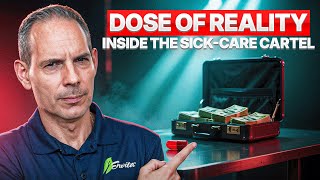
In this solo presentation Dr. Dino Prado, founder of In Vida Medical Center, traces the origins of chemotherapy to the wartime use of mustard gas and argues that modern oncology still follows the same high‑dose, population‑averaged model that was designed to manage rather than cure cancer. He critiques the reliance on maximum tolerated dose, double‑blind placebo clinical trials, and surrogate endpoints that yield only modest survival gains. Prado advocates a shift to an immune‑centric, precision‑medicine paradigm that uses multi‑omics (DNA, RNA, immune spatial biology) to identify individual tumor drivers and design n‑of‑1 treatment plans. He explains how low‑dose “micro‑dosing” can trigger damage‑associated molecular patterns (DAMPs) to awaken natural killer cells and dendritic cells, fostering a self‑sustaining anti‑tumor immune response. The talk also exposes the financial incentives of big pharma, pharmaceutical benefit managers, hospitals, and insurers—coined the “sick‑care cartel”—that prioritize drug volume and markup over patient outcomes. Finally, Prado highlights adaptive monitoring tools such as circulating tumor DNA, methylation signatures, and extracellular vesicle scores to track remission beyond conventional imaging. The overall message is that education and personalized, immune‑focused care are essential to break the current management‑only model and improve quality of life for cancer patients.
Chapters
Chemotherapy began as a weapon. Chemo didn't start in a clinic, it started in a War. In 1942, Yale doctors gave the first intravenous chemotherapy after noticing mustard gas wiped out the white blood cells. Clues that trace back to the 1943 Bari disaster. During the war, early responses were dramatic and they were short. So you saw some tumor kill in some cancers and that was exciting. Hope met toxicity and secretly the data was lifted in 1946 and chemo began. So what we see that these are the origins of chemotherapy. But I think it's important to know that today that it's still that same model. It's more modernized, we have more data. So if cancer care began with a wartime poison, why do so many systems still act like more is better, even when the benefit is often measured in months? I'm Dr. Dino Prado, founder of In Vida Medical Center. For the last 25 years we have helped patients who have failed some of the top hospitals across the United States, failed integrative care through precision testing. Our goal is removing the guesswork and helping people get precision. Today I'm going to pull back the curtain on why the old model that manages cancer isn't the way forward. But rarely designed to cure. That's what we're seeing in oncology today. It's more of a management model, not a cure model. And how an immune centric precision approach can change your entire path of your cancer treatment. For decades the rule was maximum therapeutic dose or maximum tolerated dose. The higher the dose and you could survive it. That was the logic. Chemotherapy was good, but in many metastatic solid tumor it often meant short term control, heavy side effects. It could push metastasis, spread, weaken the immune system. And this is the problem with the high dose chemotherapy. When is more chemo helping and when is it harming you? And that's the problem we have in the standard of care oncology. First of all, the drugs are not selected on precision. They're selected on a double blind placebo clinical trial model. And the patients are given that that may have helped an average of people with your type of cancer, but not your specific cancer. Because each cancer is different, has lots of heterogeneicity, lots unique markers between two cancers, same type, same stage. And the other important thing to note is that when we do these thousand plus marker tests, it becomes evident that patients are not on the right treatment. About 90% of the patients we see are on the wrong chemotherapy. When we do DNA, RNA and immune spatial biology, which is multi omics testing. So this is the Problem. Across a decade of approvals, new cancer drugs have extended the life of people about three and a half months on average. And roughly 30% showed no overall survival increase at the time of review. Many approvals still lean on the surrogate endpoints like tumor shrinkage or response or delayed progression, not on actually living longer and better, which is the most important marker. Smart drugs have tried to come in and help, but they usually slow things down. And many of them are cytostatic and not cytotoxic, meaning they slow the cancer down, they don't necessarily kill the cancer. Which brings us to the core of the shift that is needed in today's oncology. We need immunocentric, precision targeting, so the treatment, whether chemotherapy, natural phytotherapeutic agents, on or off label, repurposed drugs, cellular biologics, we need to focus on immunotherapy when possible because that's where we're going to see the best, best responses. Immune centric means to wake up and recruit the body's own immune system, direct immune system care. So not just a PD1 inhibitor, but the actual body's own immune system. The way our body's God given natural killer cells have been designed to go after and kill cancer. We want to awaken that throughout the whole process of care. And that has been the way we've designed algorithms for custom targets is by looking at immun cell death. And this is the key because properly timed dying cancer cells release these important molecules called damage associated molecular patterns called DAMS, Curriculum ATP, HMGB1. These are all these signals. I don't want to confuse you, but those are the danger signals in micro doses that tell our dendritic cells and natural killer cells exactly how to hunt down and kill the cancer. See what we just don't understand today is that by giving these high dose chemotherapies, we're actually harming the patient, we're wiping out the immune system and we're removing the body' intelligently heal itself. And so when we get into precision oncology through DNA mapping, next generation sequencing, transcriptomics, immune spatial biology, all these thousand plus markers and multiomics, fancy words for all these tests, they tell us exactly how we can correct the immune system and how to get the immune system involved. They tell us what caused the cancer, what are the drivers of the cancer and we can custom build the treatment plan, we can design the combinations for the individual. This is called n of one treatment, not double blind placebo clinical trials to treat the averages, but to treat you the Individual, individual. This is the key. So whether you're using a repurposed drug, or you're using phytotherapeutics, or you're using a conventional drug, or you're using cellular immunotherapy, you need to know what the right targets are. And then they can be chosen in immune centric care to boost your immune system and your body's natural ability to fight cancer. The selection of the agents, the right agents, the right targets, makes all the difference. So this shapes your entire care and it can change the entire trajectory and outcome for each patient. Even the doses and the quality of life is significantly better. Micro dosing getting direct to tumor. Avoid avoiding a lot of the side effects. Patients can look great like they're on vacation, hiking, have energy. This can change the whole thing. Because once you have the right targets, you don't need high dosing, you don't need maximum tolerated or maximum therapeutic dose. You can go with the micro dosing. That's just what you need to help your body reduce the toxicity. Get the body's ability and its immune system to fight. And instead of knocking down the immune system, you can rebuild it. You can teach the immune system how to find and go after the cancer so you don't have immune evasion and you avoid metastases or you slow it down. This is the important of the delivery of smart precision treatment. So we need to talk about this for a minute because this isn't happening in standard oncology. Most patients are getting a one size fits all model that is not immune centric. It is not designed to build your immune system or help you to go into long term remission. It is simply designed to knock the cancer down temporarily and then go on a drug that manages you. When following National Comprehensive Cancer Network guidelines, a standard of care from double blind placebo clinical trials. You're not always getting immune centric care. You're usually getting standard of care and that's for the masses, for the populations, not for you. So it's important that your treatment is specific for you and that the tumor microenvironment around the cancer is properly reviewed and dealt with. Think of it this way, these are like gangs sitting around your tumor, blocking the police of your immune system from doing the work. I've said this a number of times and this is not even looked at. It's not even something available. What we do is develop drugs that we hope are immunotherapy drugs. They work on some people, not on others. So if we look at the example like PD1 inhibitors only works maybe according to Frontiers, on 19% of patients long term. And that's all because of these environments. They have to be cleared so the immune system can go in and do its work. I believe very strongly in the n of one custom planning. I believe very strongly in detailed root cause analysis. Infections, chemicals, heavy metals, toxins, treating those, and in rebuilding the immune system for the patient. But to do it in a precision manner, not in a let's try this and let's try that, but in targeting. And then how that medicine is delivered plays a huge difference to patient responses. This is what we've seen. When you stimulate these dams and you teach the immune system to do its work, you're going to have better responses in our clinical experience and better care and immune, immune centric care. And this is really the key. So this is why this is important. Because if you don't hear it here, you're not going to hear it anywhere else. The standard of care models are really driven in an old design. These blockbuster drugs that make billions of dollars that mainly are used to manage cancer. You've got PBMs, pharmaceutical benefit managers, these insurance companies, they don't care about outcomes. They're a business. What they care about is how do they make money. And they were found recently by the FTC in 2025 to be shuttling drugs to their own pharmacies in the area of cancer to make billions of dollars. They don't know what's going to work for you or not. And then finally, the hospitals that have so much invested in cancer treatment can mark up cancer treatment drugs from 120 to 630%, all just in the drug alone. From the estimated acquisition costs, the procedures can be marked up from about 250 to 600, Medicare, depending on the hospital. So all of these costs that are changing, this is what these institutions are focused on. They're not focused on outcomes. And I say that because that's how that business model is built. Unless you have doctors, facilities, infrastructures that are looking out for you, that are doing the work of precision targeting and custom building the plan for you, you won't have access to it. And so this is just how it works. Insurers don't make their money. If you think of insurance companies by developing treatments that are cheaper, cost effective and improve outcomes, they make money by more people getting sick and increasing premiums on large populations like employer groups and larger groups. That's how they generate their revenue. So they're not incentivized, unfortunately, to do the Right thing. And I call this the sick care cartel. It's unfortunately not going to change anytime soon between big pharma, P PMs, hospitals, they're businesses, they're doing what they do every day. But you need to be working with doctors that are in the precision targeting and my belief so that you can get the N of one care. You don't want average care. You want the right care that is for you. Not just double blind placebo clinical trial care that was done on large populations because these cancers are different. In these double blind placebo clinical trials, they are not running every single transcriptomic DNA immune profiling to see all the differences between patients. They're looking for one target, one marker that can make a difference and they treat it through the averages. And you are not an average. No two cancers are alike. So this is why N of 1 treatment is so important. And you need to know what your drivers are. Get your immune system in the game. Not populations and averages, but a philosophy and a treatment strategy that's customly built for you. Immune centric designed to help you with the right combinations to overcome whatever the complexities you have in your cancer and give you the best chance of responding while improving and maintaining your quality of life. And then monitoring it with adaptive monitoring to make sure you stay in remission or have the best chance of reaching remission. Not just waiting for tumor markers and imaging, but using things like circulating tumor scores, methylation and vesicle scores which tell us leading indicators how the cancer is responding. This is the key. I hope this was helpful and I hope this helps you understand a little bit more of how the oncology world works. In my opinion, education is the best way forward. And we can switch this model so that people get the detailed care data that drives their best treatments forward. May the Lord bless you on your journey to healing uncomfortable.