Beating Breast Cancer Twice — Why Precision Care Prevents Recurrence | Dr. Dino Prato
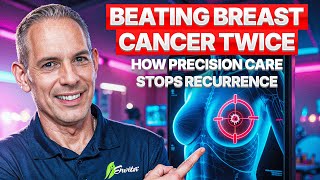
In this single‑speaker presentation Dr. Dino Prato recounts a breast‑cancer patient who, after a standard mastectomy, chemotherapy and an integrative‑medicine RNA test (Sinatra), experienced a contralateral recurrence within a year. He argues that the failure stemmed from reliance on NCCN guideline‑driven, one‑size‑fits‑all treatment and on limited testing that did not capture the tumor’s true molecular drivers. Prato then outlines his clinic’s 25‑year‑old, proprietary precision‑medicine platform – branded Oncometa at Invita – which integrates extensive multi‑omics (full DNA NGS, RNA transcriptomics, immune spatial biology), custom drug design (on‑label, off‑label, phytotherapeutics), immune‑centric therapies (NK‑cell, dendritic‑cell engineering, cryoablation with DAMP release), and adaptive monitoring (circulating tumor cells, methylation scores, extracellular vesicle profiling). He explains how this ecosystem would have identified the patient’s specific drivers, enabled low‑dose, genetically‑targeted fractionated chemotherapy, preserved and re‑programmed the immune system, and continuously tracked remission, ultimately preventing recurrence. The talk includes claims of dramatically higher response rates and quality‑of‑life metrics from a 2024 published study, and positions the Oncometa approach as 10‑15 years ahead of conventional oncology. The presentation is aimed at patients and caregivers seeking alternatives to standard care, mixing clinical explanation, case narrative, and promotional messaging.
Chapters
Imagine being told you beat breast cancer only to find out a year later it's back. And not only is it back, but it's in the other breast. How did that happen? Surgery, chemotherapy, and it returns. Unfortunately, this is not an uncommon story and more importantly, how could have that been prevented to begin with? I'm Dr. Dino Prado and today we're going to rewrite the breast cancer playbook. And over the last 25 years, my team and I have helped patients who failed the top cancer hospitals in integrative care. And this story is quite interesting because we're going to talk about how this patient in this particular scenario not only did the standard of care, but was being treated with integrative medicine alongside care. Very common situation that occurs and the targets are all wrong. And we'll go into that here in a minute. So a year ago she found out she had two lumps in one breast and she chose to do a full mastectomy because of the breast architecture instead of a lumpectomy. And then it followed the standard playbook, National Comprehensive Cancer Network guideline, breast cancer selections. Now, I want to say this because I always use nccnn, but I want to make that clear. That's a treatment that everybody gets at all the major hospitals because it is the guidelines. This is based on stand standards, not you. These are averages, not your specific markers. I mean, I say this over and over again, but it's important to understand that when you do the markers, two breast cancers are totally different. So it's no surprise that these treatments are hit or miss and oftentimes are not the right targets. In fact, when we do proper testing, 90% of the patients are on the wrong medication. So they built the chemo plan, put her on the standard population care guidelines on what happened with no mapping, no drivers. However, this patient did integrative care, ran the Sonatara DX blood test to tell her about, about a few RNA signal markers and the cancer came back. It came back within a year and now there's a new lump in the other breast. What do we do with that information and why did that happen in the beginning? And I'll tell you why. Number one, treatment wasn't targeted correctly. I've been doing this for 25 years. We have over a decade plus experience in advanced testing, what I call next generation sequencing, RNA transcriptomics, immune spatial biology, that that's critical for patient care. When you look at all, that's over a thousand plus more data points. But they're not just data points, they're specific drivers. And markers where we have entire ecosystem to treat that patient. So when you don't have an ecosystem and you just run these tests and you just randomly do standard of care, that's the problem because the testing is only one part of it and that's important. But then you need the algorithm to map it. Then you have to go custom build the therapy for the patient and use innovative delivery mechanisms to help the patient, meaning low dose targeted care. None of this was done. So you have no adaptive monitoring. So this patient gets treated. They're doing okay in the beginning and their adaptive monitoring is let's wait for tumor markers and let's wait for another image if a tumor pops up. This is archai. We monitor this with circulating tumor cells, methylation scores, vesicle data, and we know if that tumor's coming back or not. There's no question. But this patient went into an integrative doctor and did the Sinatra testing for rna, but they missed the whole key component of the test. These are looking for maybe, you know, very few number of RNA signals that are supposed to tell you the smoke of if the cancer's coming back. And this is the problem with integrative care. It's a lot of these tests that are out there that might tell you something. And a patient gets a false sense of confidence. But what you need is detailed mapping and entire personalized ecosystem from A to Z. And that's the key. So they hoped the surgery and the chemo would do be enough, but it wasn't. And this is such an unfortunate story that I hear all the time with patients. My heart goes out to them because they don't know better and they're in the model of the hope and wait. Instead of having the right data, the right ecosystem, the right custom drug build, the right delivery and the game changes significantly and the right monitoring. But you don't have to hope and wait strategy. You can go beyond these National Comprehensive Cancer Network guidelines that everybody's using and find out what's right for you. Because it just provides standard pathways. And yes, they've consensus of pathways. But remember, two patients, same breast cancer type, totally different responses because of these markers. They're essentially two different cancers completely, even if it's the same type and stage. But you're going to be treated like everyone else. So let's back this up a minute. Let's rewind this. I'm going to show you what we did to help the patient, but I'm going to rewind this and tell you how this could have been better. Right now, from the beginning. Number one, proper testing. You always hear me say this. I think I'm like a broken record. Precision targeted testing, more targets, better care. Well here's what that really means. Number one, we've had full NGs. We know what all the mutational points are. The problem is if you just run standard DNA NGS testing, you're just going to find a few mutations and a few conventional drugs that work on some mutations if you have them. And all they're going to typically do is slow the cancer down. So that's number one. That's the problem. Number two, if you only do DNA, where are you going to do the custom drug design to fit other breaks that you might have in those mutations? This is why you need custom pharmacies that can go on label approved drugs for your cancer, off label which are drugs that are being repurposed. They might be used for something else, but they're working in your mechanisms of action. And key phytotherapeutics that are for your right targets and your own natural killer cells, dendritic cell immunity, which is the key to breast cancer. You heard me say that the key. This treatment had no targeted immunotherapy. They ran this Sinatra test by an integrative doctor to hope to help with the immune system. They were clueless. It didn't work. These are only looking at a few RNA signals. This is not state of the art technology. It'll look and feel that way, but nowhere near the thousands of markers and deep mapping that I'm explaining. This makes all the difference. Now let's go back to this patient. We have not done the surgery. This patient would have gotten simple freezing of the tumors, cryoablation because they were small enough and in the right regions. And we would have preserved the immune system. The treatment would have been custom built based on her exact targets. Then we would have used genetically targeted fractionated chemotherapy, GTF micro dosed. Why is that important? Because now we're not only going to kill the cancer with no side effects, no hair loss, no energy loss, good body health, but we're going to release damage associated molecular patterns, fancy word damps. And these damps are going to stimulate the immune immune system. So now that the natural killer cells and dendritic cells know where that tumor is, they can go to the rest of the body to get rid of micro metastatic cells that were totally missed. In this case, they weren't tested for and they were missed. And now we would have seen that that tumor wouldn't have Returned Why? Because the immune system now is tight. Second thing we would have done is found out all the drivers for the cancer. Causative agents, infections, chemical toxins, heavy metals, in addition to the drivers that are transcriptomic, that go way beyond these few dozen RNA tests that they ran with the Sinatra test. We would have run what the drivers are, shut the drivers down and custom build the medicines for the patient. Do you see what I mean when I'm talking about an entire ecosystem for personalized precision medicine? It's not just run a test run to your doctor standard of care. It has to be built from A to Z. And I don't know anybody in the world that has the ecosystem we've developed. It's a very special ecosystem. Two and a half decades, 400 people on our team, researchers, doctors, and I'm not just trying to do some shameless plug for our facility. This breaks my heart because I see this over and over again. Patients know there's something out there that's better. They understand that there's places that can target for them, but they don't get it because they don't understand it. And then they go standard of care and then they fail standard of care and the disease returns a year later. Or they do some integrative care along the way, feeling a false sense of security without really having the right target. That's the big difference. So now we've treated this person, they're in remission, we're holding remission. And we're using adaptive monitoring. Circulating tumor cells, methylation scores, vesicle scores. This tells us, hey, the cancer's gone, it isn't coming back. And if something changed in that marker, then we would retune the immune system, retune the right transcriptomics, retune to make sure they remission. And the longer you hold remission, then that's where you get into the long term response that you need. And we have these prognostic markers, these are very advanced tests, not all circulating tumor cells tests are the same. Because this looks at multiple markers, not just one. And I won't get into all the details of the science of that, but we're looking at multiple surface markers instead of one. Which is giving us more of a definitive understanding of that cancer not returning or returning based on those circulating tumor cells. What are those? Those are the little cells that leave your tumor and can go out into the body and set up shop somewhere else for metastases. Now without, without this targeted ecosystem of care, how do we help that patient? You can't you're going to basically take. Your patient's going to feel exhausted, tired. Now what's the next move? It's a year later, this tumor has returned. They don't know what to do. There's a new lump on the other breast. So now they go back in for more lumpectomy, more chemotherapy, no targeting. Then second regimen, step two and the protocol that they failed, step one and then it can spread to the bone brain. And now you're in a very aggressive and we have great success even with those patients for the same testing because now we can rebuild the immune system if we need to. We can take the natural killer cells, the dendritic cells and design them. So this precision is where we like to call oncometa. It's an entire precision modeling platform. First of all, all the Doctors and our team, 40 plus physicians are trained in molecular targeting. Minimum one year, 2000 hours. It doesn't matter if they were an oncologist before an integrative doctor, naturopathic doctor, Domd doesn't matter because they're not trained in molecular targeting at this level. We have to train our physicians. We've been doing this for two and a half decades and we know that when you have this type of molecular pattern and targeting, the physicians require training and certification. So their Anka medic certified, I get certified with our group to be able to do this work. Secondly, we're going to be testing all those markers and then running the test to look at resistance pathways, growth pathways. And the most important part is the immune system. I've said this before, why did that cancer come back? It's the immune system. It's the first and last defense. What does high dose chemo do to the immune system? I'll go back to the original case I talked about here a minute ago. The patient had high dose chemo. What did I do? Wiped out their immune system. The surgery played a little role. The cancer cells spread, they set up shop on the other breast. So you went from thinking you had a cure to return of disease in a because the immune system was not originally typed for the cancer. And then you had metabolic inflammatory signaling and the cancer grew and you used some integrative test off the shelf, which sounds great, to hopefully think this was going to help you. And it didn't because it wasn't detailed and precise enough, it wasn't comprehensive. Where you go from testing to drug planning, targeting, monitoring, it's a whole ecosystem. You need adaptive monitoring for the patient. So this was a difference. So we went in able to freeze this little tumor, rebuild the immune system, change the targets for the genetically targeted fractionated chemotherapy in this patient. And this is a common story by the way. We see this all the time, these variations of the story and the cancer went into remission, cleared up. We had a very advanced case. So even in this case here, this was a simpler case because it was a return of disease. But we've had cases where just recently we had metastases to the bone, to the brain, very severe breast cancers. And in this case we had to rebuild their immune system because when we looked at their immune system, it was not only depressed, their natural killer cells, dendritic cells were not typed to the specific damps and the specific peptides markers that were necessary for their cancer. We typed them, we grew them, we bu built their NK's, DC's, re gave them back to the patient with the right targets, with the right micro dose targeted treatments and they went into full remission. And here we didn't even do surgery. We cryobladed. You could always look up IceCure. This is great work that was originally done out of Israel. You can avoid surgery with the right size tumors. And there's really a couple places where cryoablation of these tumor of these tumors works well. Number one, the tumor is small and it's almost equivalent to lumpectomy, but to my opinion, much better because you maintain the antigens and then when you use our follow up mechanisms, you're going to be on top of it. And so you avoid surgery, reconstruction, all of this. And then the other categories where it's so metastatic, now the cancer is so metastatic that obviously the surgical removal in so many ways doesn't make sense because it's already spread to the bone or to the brain, other places in the body, it's already moving. In this scenario, cryoablation is fantastic again. Or you have a high circulating tumor cell count which shows it's already spread. And a lot of doctors don't even run this, but they know it's already spread, it's in other areas. So now we can freeze the tumor, maintain the antigen. So what is this when we freeze a tumor? Think of the outside of a tumor, like a snake that sheds its skin. And these antigens are the fin fingerprint that your immune system needs to be say, basically, I've got this, I know where this is, I can take it out. These are the antigens and these antigens shift and mutate. And that's one of the reasons that cancer can evade your immune System when we freeze the tumor, unlike surgical removal, we maintain the antigen. So now when we begin immune centric care, we can teach the immune system to go after the antigens of the tumor and get a systemic immune response. Do you understand that's so critically important? That is so important because sometimes when you remove the tumor, it's great if you can get everything, but sometimes, sometimes you don't. And now you've lost all the immune information which is the key to long term response and remission. That's. That right there is worth listening to this because that makes a big difference. So even if you're in the middle of care and you did surgery and the cancer returned somewhere else, that technique can be used again if we need to, along with immune centric care. What I mean immune centric care, where the immune system is going to do the work, minimally invasive, direct to tumor targeted. We can go right to the tumor with the catheter size of the hair, with those genetic targets, with those immuno targets, feed the tumor, seal the blood supply, come out with a band band aid and now create a kill for that cancer and an immune system reaction that lets your whole immune system turn on, recognize it and go after it. So the difference is in this case, that patient had the mastectomy and all that chemo and then the tumor returned on the other breast. With our care, we would have treated the tumor in that one little area. And what we typically see is both tumors disappear because of the immune system. We only treat one and the other one dissolves. Why? Because the immune system's doing the work. And that's the importance of precision targeted immunotherapy. And this is where, why we, we like to look at oncometa. It's the whole process, from the doctor training to the laboratory testing that I always talk about in great detail. And then the drug design that's custom, for you, then the delivery and then the adaptive monitoring, that process and ecosystem is way ahead. It's about 10 to 15 years ahead of everybody else. So when patients are out there trying to get help and they find an integrative doctor and they cherry pick a lab test or try this, we're going to try that. This is all guesswork. We have done the work, we have created the systems that have helped our patients with this targeting. Now, once we have this, we don't have the same side effects with chemotherapy because we're metronomic dosed, we're at 10% the dose, we get the response we want without the side effects. And more importantly, we get the immune response we want without destroying the immune system like you do with high dose chemotherapy. So this is so important and I can go into all these details and I think sometimes I apologize if I lose everybody as I get into the details, but this is the key. For the first time then, this patient wasn't guessing anymore. We got her data and we were able to treat her, bring her into remission, beautifully, monitor the remission, adaptive monitoring. And she's alive and she's going to be okay. And this is the breast cancer playbook. Not just by chance, not by hope, but by precision using care that's going to make a difference. Patients need to know the difference, that when you or loved ones are faced with breast cancer, you don't have to go about this alone. You can get this playbook, this data set, run the testing, build the custom drug design, deliver it in the custom way that can help you and you can overcome these problems. The sooner you implement precision targeted care, the better. And this is what we call Oncometa. This is the work we've been doing with our medical center at Invita now for over 25 years. And we've just developed this to point where it makes such a major difference for our patients. You don't have to be scared, you don't have to be alone. You can just get the data, get the targeted care and you can see the difference in response. I'm also just not going to tell you. Well, this sounds like an excited doctor who's been doing this for years. No, we have a published paper in 24, we have another one coming out. We had a 35 times better responses and 43 times better quality of life than standard of care. Oncology with late stage cancer patients, the most difficult cohort, the late stage, the ones that basically you're just doing palliative care on, these are late stage. Imagine what we're able to do for early stage. It's amazing because this technology works better the sooner you implement it, because you get the guesswork out. So I want to encourage you that I'm speaking because I've been doing this for years and I really believe people are going through a lot of unnecessary suffering, a lot of guesswork that they don't need to do because the technology exists. I'm Dr. Dino Prado. I hope this was helpful and may the Lord bless you on your journey to healing. Bump.










