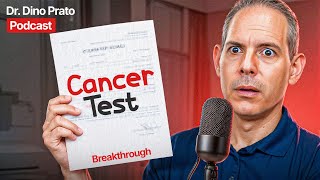
Dr. Dino Prato explains circulating tumor cells (CTCs), cancer cells in the bloodstream that can be counted and profiled to predict treatment outcomes and guide therapy. Research shows higher baseline CTC counts predict worse survival. Insurance delays keep this test from most patients.
Chapters
I want to introduce you to the technology that can completely change how we diagnose, treat, monitor, predict cancer treatment from the beginning to end. It's called circulating tumor cells CTCs. Hi, I'm Dr. Dino Prado, founder of Envita Medical Center. And for 25 years we've been at the forefront of precision oncology, helping patients from around the world, often after they've been told that there are no more options. And according to the New England Journal of Medicine, and even in our years of clinical experience, these circulating tumor cells can give powerful information. They are broken away from the tumor and they enter into the bloodstream. You see them. We see tumors visible in imaging and in scans. If you're feeling lost or overwhelmed during your cancer treatment, well, this is great. It can tell you if your treatment's working or not. If your CTCs are going down, treatment's going in the right direction. If it's going up, your treatment not be not working so well. So this is really important. It can be used on many different levels. The number of CTCs in your bloodstream can also predict survival or predict treatment response. Research published in Cancer Research shows patients that higher CTC counts at the baseline tend to have shorter survival. So we want to knock those numbers down with precision treatment and drop those CTC numbers so we can keep our eye on the ball and help our patients achieve the goals that they're looking for. Just as AI detected subtle changes in imaging before the human eye can see, we can do that now. With circulating tumor cells. We can spot these tumors that are spreading at a cellular level before they become large, grow and metastasize. We can monitor treatment and even get information from the tumor that can tell us about better treatment, genomics, transcriptomics, and even immunoprofiling. The problem is insurance is slow to cover it and lagging to bring on and technologies into our everyday oncology. Just like what we saw with PET scans or AI assisted imaging. And this isn't unique to CTCs. On average, when you try to even approve a new drug, it takes about six years to go through the trial period, then get approved, then a handful of years for insurance to widely get it involved. And it can take some time. So this is unfortunate because patients don't have time to wait. They need that technology now. The processes can take a long time before it's available to the average patient. That means patients today need to find the care that's right for them. They need to do their homework and get access to better technology to give them life Saving technology to help them. The science is here and it's ready, but it isn't in the system. And so we live in a world where AI can outread a radiologist. But CTCs give us the oncology breakthrough. We need to see the invisible predict treatment, predict outcome, help guide treatment in very powerful ways. It's even steering our care remissions, response rates. It's going to get even more powerful. The science is here and the technology's ready and we've been using it for a number of years in our facility with our doctors and we've been using it very successfully to help our patients. The only question is, will you keep driving blind in the conventional model or are you going to start getting into precision care? And I really encourage patients to explore that for themselves with their doctors and the right targeting that they need. I hope this was helpful and exciting. If you have any questions, don't hesitate to reach out. We have resources, people standing by that can help answer your questions. May the Lord bless you on your journey to healing.