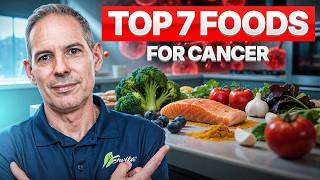
In this 30‑minute monologue Dr. Dino Prato, NMD, outlines a practical, lifelong eating strategy for people fighting cancer. He argues that the most important dietary shift is to eliminate ultra‑processed foods, refined carbohydrates, and seed oils, which fuel insulin resistance, inflammation, and a dysbiotic gut microbiome. He then builds a nutrient‑dense plate composed of organic, grass‑fed proteins, healthy fats (olive oil, butter, tallow, omega‑3‑rich fish), colorful vegetables, sprouted seeds, and fermented foods to restore gut immunity (70 % of immune cells reside in the gut). Specific bioactive components are highlighted: beta‑glucans from mushrooms and oats to activate innate immunity; cruciferous sprouts (broccoli, Brussels sprouts) for sulforaphane‑driven glutathione production and detox; glutathione (oral/liposomal/IV) and walnuts for liver detoxification; polyphenol‑rich berries, lycopene‑rich tomatoes, garlic, and EGCG from high‑quality green tea for anti‑angiogenic and anti‑cancer effects; anti‑inflammatory agents such as omega‑3 fatty acids, curcumin, and the fibrinolytic enzyme lumbrokinase (with cautions for patients on blood thinners). He recommends supplementing with the probiotic Akkermansia to further boost gut immunity. The protocol is framed within a Mediterranean‑style diet that can be adapted to ketogenic or low‑sugar versions, and he suggests using AI tools to generate personalized meal plans. Intermittent fasting (16:8) is added as a simple cellular‑cleansing practice. Throughout, Dr. Prato balances clinical experience with mechanistic explanations, urging patients to adopt a sustainable, whole‑food approach rather than chasing trendy super‑food fads.
Chapters
If you're fighting cancer, here's the truth no one's telling you clearly. Your anti-cancer diet is important, and we need to move beyond just adding some superfoods. It's removing the things that are quietly sabotaging your immune system because that's a critical part of cancer. I'm Dr. Dino Prato, and for the last 25 years, my team and I have helped patients who have failed some of the top cancer hospitals across the country with precision targeting. And today I'm going to focus on the foods you should be eating and things you should be doing to be healthy in your diet. And I'm going to just tell you from clinical experience, a lot of the stuff you see is, you know, not clear. It's this food does that and that food does this as like it's a super magical food. But that's not really the case in cancer. You need good balance with the diet, and I'm gonna go through that today because cancer patients don't need trendy diets. They don't need just to add some superfoods. They need a way of eating that they can eat the rest of their life. They need nutrient-dense, low-processed, low-sugar, get the sugar out of the diet, the high refined carbohydrates out of the diet, and they need to improve immune surveillance, get the inflammation down, and improve the metabolic function and their microbiome and their gut. This is so important, not just the insulin and the IGF, but we want to get that microbiome improved and we want to get oxidative stress down. So we're going to talk about that today, and I'm going to give you some key nutrients, things you can do, foundational foods that amplify your health. And this is important. So number one, get rid of the ultra-processed foods. We don't want any refined carbohydrates, seed oils, anything that's going to potentially disrupt the gut microbiome and cause problems with insulin and IGF-1. We want that out of the diet. So we're eating foods that are whole, we're eating organic foods, we're eating grass-fed beef, and we're eating vegetables, sprouted seeds that we make in our own kitchen that are loaded with antioxidants. And we're working with our digestive system, eating fermented foods, the kefirs, the fermented vegetables, to help our gut so we have good gut microbiome and that sugar is being moved out. And the data in this is a bit complex, but any type of added sugar is going to push insulin resistance and inflammation and can feed cancers from a metabolic perspective. Remember, cancers are bimodal. They're metabolic, so yes, we want to get that sugar out of the diet, but they're also mutational, so we want the right targets in treating it. So we want to look at cancer's metabolic pathways. And once you see that, it's really not complicated. It's just cleaning up the diet by deleting the soda, the junk food, the candy, the desserts, the sweets, and get into the right farm-to-table healthy eating the way our ancestors used to eat. This is going to help you and your family tremendously. So I'm going to go through these foods here in a minute, but I want to give you this background because it's not a magic fix. It's about changing the way we live. So you start with the most nutrient-dense foods first on your plate. These are the proteins, these are the colorful fruits, particularly vegetables that give us that diverse color, real healthy fats— butter, olive oil, tallow. Yes, these are healthier fats. Fibers from our fermented seeds and fermented foods like yogurt and kefir and fermented vegetables, kimchi, etc. Put a little bit in our diet throughout our meals, we're going to be eating healthy. So the plate looks like I'm eating healthy meat, I'm gonna eat a healthy vegetable, and I'm gonna have healthy oils on that. Olive oil is one of the best— the peppery, organic, high-quality olive oil, not the garbage stuff. So now I'm fixing the gut microbiome, and these are superfoods for my immune system. Remember, 70% of your immune system is in your gut, and that's important. So let's improve healthy fats. We're going to increase some fatty fish during the week. So it could be wild salmon, sardines, anchovies, mackerel— getting those into the diet. Or we can take omega-3 fatty acids to help reduce the inflammation. This helps us because it's important our bodies have anti-inflammatory patterns. And of course, we can use things like curcumin and liposomal curcumins to also help with that inflammation pattern and reduce the cell clustering, because the more the cancer cells cluster, the more metastatic they are. So we add things like lumbrokinase. If you can tolerate it, you take your Luki lumbrokinase 30 minutes before your meal, then you eat, and you eat healthy, because now you're preventing the stroke, heart attacks that cancer patients can get from thick blood, and the metastases that happens with thick blood, because we've reduced the fibrinogen and the viscosity of the blood, and now we're eating nutrient-dense foods. You see, simple things, not hard. These are so powerful, and they make such a difference, and they help the terrain, your circulation, your body to absorb new nutrients better, and to get the antioxidants that the body needs, because we're adding the right foods into the diet. And you know, we want to prevent bleeding, so if you're already on blood thinners, be careful if you add baluki lumbrokinase or you add fish oil because you're going to get too much bleeding. So make sure you're under the care of a doctor, but you can monitor that. Number 2, beta glucans. These are huge. These are in mushrooms and oats, but particularly the beta glucans in mushrooms have huge immunotherapy properties. They interact with a receptor that basically modulates innate immunity on your macrophages and neutrophils. In the literature, when you eat these mushrooms— and you can eat them in food or you can take them as a dietary supplement, which I really recommend both— they help you because they get your immune system and NK cells moving, and they help your body develop memory, immune memory. So you have a long-term response. If your immune system figures out what that cancer looks like, now you're able to build longer-term immunity. That's really important. Nutrient-dense foods. And now we have our beta glucans. Now let's move to the part everybody likes— cruciferous vegetables. So you can take broccoli seeds, sprout them. You can do that with pretty much any seed. Brussels sprouts, or you can eat them as well. And these are going to help you increase your glutathione. You can also take supplements that are broccoli, cauliflower, bok choy. They have all these sprouted seeds, and they have the concentrated sulforaphanes, and these are going to have anti-cancer properties. Now, some cancers respond better than others, and there's actually markers we can look for when we're looking at sulforaphanes, but they help with detox because one of the things that every cancer patient has a difficulty doing is taking the trash out. Their ability for their liver and body to detoxify has already been disrupted, probably due to exposure to carcinogens, infections, heavy metals, and other toxins in their body. Then you add chemotherapy, you get where I'm going here. So we can improve glutathione liposomal. That's what we have. We use it. IV is even better in the clinic. We can get glutathione from walnuts. We can get them from these foods. So we want to help the liver detoxify, and that's important. We can add foods like arugula. These are really nutrient dense if your body can handle it. If you can't, that's okay. Some people can't handle vegetables, others can. And these are going to help with circulation and they're going to help us with our immune system. So we're using food like a medicine here, and we're combining that also with the right dietary supplements to provide antioxidants, liver detox, and immune boosting. Now let's look at things like berries. Berries are low in sugar. Berries can be very toxic with pesticides. We want organic blackberries, blueberries, raspberries. These help the gut microbiome. They're anthocyanidins, polyphenols, and they're very good, and they have anti-inflammatory, anti-cancer properties. They're anti-angiogenic, which I really love. These are very powerful. So berries and walnuts and maybe a little bit of fermented yogurt, and you're starting to see a phenomenal snack that's anti-cancer, rich in polyphenols, good in protein, great in gut microbiome. And that's if your body can digest that, so that's important. These play a really important component in a patient's total health because it's bringing in these little superfoods that make all the difference, and they also are helping with detoxification, gut microbiome. That's really important. I'm going to go back to the fermented foods here for a little bit and look at things like kimchi, sauerkraut. If you can digest these, they're fantastic. Kefir, yogurt, just add them into your meal. So you're eating your protein on your dish, you have maybe some vegetables you can digest, really healthy oils or fats that are good for your gut. It's got a little bit of fiber. And then you come in and you have maybe at the end a little bit of yogurt or a little bit of kefir or a fermented sauerkraut. This depends on everybody's body and food sensitivities, but if you feed the microbiome, you're building your immune system. And here's where we like to add Akkermansia. Akkermansia is a probiotic that's great for gut immunity for cancer patients. So now we've added that into our gut immunity along with these, and now we're going to see such a great benefit. So we've made fermented foods and we're eating those with our meals, and we've added this healthy component to our diet, and we help our body heal. Now let's look at green tea, EGCG, because that's the actual component we like. So if you look at like a quality matcha green tea or brewed green, green tea that's organic, doesn't have a lot of chemicals, clean, this is fantastic. It has anti-cancer properties. Actually, if you look at EGCG, which in intravenous formulas with phytotherapies that we use, it has similar benefits of like PD-1 inhibitors. Now, they're not the same thing, but it gives you an idea that nature has benefits to immunity. And if you can drink some green tea and get the coffee out, it's going to work better for you. That's going to help you boost your immune system. It's easy to do, and it's something that your body can use as the polyphenols and, and all the different phytochemicals in EGCG that are there in that green tea that can be helpful. And then you've got all this on board. And so now you've got immune modulators, Akkermansia probiotic, you've got gut microbiome. And essentially you can eat a very good Mediterranean, old-school Mediterranean diet. I'm not talking about pastas and breads and gelatos and creams. I'm talking about eating, you know, sprouted seeds and grass-fed meats like lamb, or, you know, even beef or bison or wild-caught game or fish, salmon, right? Things that I'm talking about, anchovies, sardines, these are all going to be good protein sources with polyphenols all rich foods. Now, don't make it so you hate your diet. That's why I brought in the word Mediterranean. I'm giving you these superfoods and I'm saying, look at these foods, they can make a big difference in your life. But I'm also telling you not to become a fanatic because you need to do things that you can follow the rest of your life. And one way to do that is to look at the Mediterranean diet, which has a lot of these foods. You can bring in some of these superfoods and create your own diet. And that's why I like using, for patients, the AI function. Go to your ChatGPT, go to your Gemini, go to your Grok, whatever you like, and put in there, give me these foods that I was just got from the Dr. Dino Prato podcast. I want to improve them in my diet. I want to use these foods, plus I want a Mediterranean diet, and give me a meal plan recipe. You can even put in a diet and sleep program, and it'll build it for you, and it'll build it for you at a PhD nutritional level, which will give you help and something you can follow real quickly. I also like lycopene and tomatoes, maybe even a 30-milligram lycopene supplement. For people that have high IGF-1 or growth factors that they're worried about, this can help kind of dampen it because it binds up the IGF-1 so it's not a growth signal. We love things like garlic. This is another superfood to have in your diet. These are all part of that Mediterranean diet. Rosemary, legumes— if you can't digest legumes, that's fine, you leave them out. But if you love them, you can ferment them. These are great, and you can get these fermenting kits for seed sprouting right off of Amazon, and there's other companies that sell them, and they're very easy to do. And within 4, 5, 6 days, now you have sprouted foods that you can add to your protein and get that microbiome really, really healthy. So this is what I call 7 superfoods. We want to remove all the refined carbohydrates and sugars. I think everybody agrees that's step 1. In In fact, all the studies you see, whether it's a vegetarian diet or ketogenic diet, number one reason they work is because the refined carbohydrates and sugars are out. And if you want to be more ketogenic, you can do a Mediterranean ketogenic diet because it gives you less sugar and it improves the gut microbiome as long as you're getting that good fiber there. Berries, I like the berries I just mentioned. You got fermented foods, you got beta glucans and the mushrooms, glutathione and walnuts and your olive oil that's organic and peppery. All this food is clean and organic. And now this is making a difference. We're drinking green tea, you're getting some EGCG. We've got lumbrokinase or enzymes on board to reduce metastases, the spread of cancer. We got those beta glucans on board to boost immunity. And we're— Akkermansia as our probiotic. And these are superfoods that are going to change the way your whole cancer journey goes. That's the power of these foods. And I know that's probably more than 7, but I was just going because I want you to see it the way I see it. It's a combination of the way you eat and the nutrients and supplements you take that you can combine, stack them in your best interest to help you heal. You can also add a 16:8 intermittent fasting. Very simple to do, and that will enhance some of the cleaning of your cells that goes alongside supplementation and diet. I hope you found this helpful and this makes a difference for you. Things you can even add with your family and help your own family members eat healthier and boost their immune system. Remember, 70% of our immune system is in our gut, and we want to promote that. Please subscribe and share this with friends and families to change the way people eat so they can live longer with a healthier life. May the Lord bless you on your journey to healing. Mm-hmm.