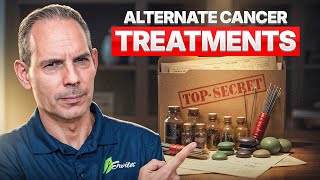
In this monologue Dr. Dino Prado, founder of Envita Medical Centers, argues that the central question for cancer patients is not whether alternative treatments work in general, but which molecular targets need to be hit. He presents a precision‑oncology framework that combines conventional chemotherapy with integrative agents—high‑dose IV vitamin C, medical ozone, methylene blue, ivermectin, and mebendazole—only when specific biomarkers (miRNA, transcriptomics, hypoxia‑inducing factor‑α, spatial‑biology, circulating tumor cells, methylation scores) indicate they will affect the tumor’s oxygen‑signaling, immune‑coldness, or drug‑resistance pathways. He explains the biochemical rationale for each agent (pro‑oxidant vs antioxidant effects of vitamin C, super‑oxygen delivery of ozone, mitochondrial support and photodynamic sensitization by methylene blue, P‑gp pump inhibition by ivermectin, tubulin/angiogenesis blockade by mebendazole) and cites limited clinical data (e.g., phase‑II IV vitamin C in metastatic pancreatic cancer). Prado stresses the necessity of rigorous molecular testing, dose‑optimization, and monitoring to avoid adverse drug interactions (e.g., serotonin syndrome with methylene blue) and to adapt therapy in real time (N‑of‑1 approach). He critiques the “one‑size‑fits‑all” paradigm of both conventional and integrative oncology, urging a data‑driven, target‑focused strategy that leverages the best of both worlds while acknowledging regulatory limits (most agents are not FDA‑approved for cancer). The talk concludes that success hinges on customized combinations, precise timing, and continuous biomarker‑guided adjustments rather than blanket use of popular alternative therapies.
Chapters
So many patients ask, will this work for my cancer? Speaking about integrative alternative treatments, it's a good question, but the wrong starting point. Better. First question is, what are my targets? Because when you know your targets, we can now stack therapies both conventional and integrative to hit those targets correctly. Integrative agents can be very powerful, especially in the correct combinations. I'm Dr. Dino Prado, the founder of Envita Medical Centers. By the grace of God, we've been able to help patients who failed some of the top hospitals and we helped them move to a more of n of 1 precision targeting, which changes the results. Today we'll cover integrative tools, popular ones, Ozone therapy, ivermectin, menbendazole, methylene blue, high dose vitamin C. If you have like a tumor control panel in your mind, think of it this way. You can measure how these different things work if you have the right testing, but if you don't, you can't. You can use switches like specific tests that look for MIRNA or look for transcriptomics. We have over a thousand plus data points. We, you can look at hypoxia inducing factor alpha, indifference switch, and you can look at these combinations and see how they work. But when you start combining one chemotherapy and you combine a natural agent and then another agent, they actually all change the game because they're all doing different things at different levels. And if you can map that out with the right data, now you know what to give and when to give it. That's the key to precision. Oncology hypoxia means there's low oxygen level. And when these tumors often have low oxygen, they use this to grow, they recruit blood supply, they turn the immune system down. All of this through hypoxia. So a lot of the stuff, stuff you're going to hear in integrative medicine is going to be revolved around oxygen. Dr. Odo Warburg won the Nobel prize for showing that cancer cells use more glucose and fermentation versus healthy cells use oxygen. So one of the things that cancer cells do is they use this low oxygen and environment to weaken immunity. Now I know everybody thinks, well, you can just do a ketogenic diet, get the sugar out. That's a good start, but it doesn't bring patients into remission. If that was all we needed to do, we would have the answer. It'd be just stop eating sugar. But that's just one little piece of the puzzle from true. You need to find the targets, plan the match targets and measure these switches so you can combine them when you understand what level the oxygen is playing in this tumor. Well now we can look at these agents. So high dose vitamin C, low dose, it's an antioxidant, high dose, it's a pro oxidant so it can help with the tumor, reducing blood supply to the tumor. Almost like a drug Avastin in some ways. Right? I'm not making the direct claim that the two are the same, but it has a natural mechanism without the side effects and it can enhance other chemotherapy effects when combined with the right drugs if those targets gets are right for you. So there was a study done not too long ago, phase two using 75 grams of I.V. some doctors go 100 or even higher three times a week. And it helped people with metastatic pancreatic cancer improve their outcomes. It increased the survival rate, reduced some of the side effects in the analysis. So this is good, this is like one study. High dose vitamin C and some cancers can be helpful. But the problem is in integrative medicine that's almost like a standard treatment, Everybody gets high dose vitamin C and it doesn't, doesn't do all what we want it to do either because it depends on your markers. Do you have the right mRNA? Do, do you have the right hypoxia inducing phag factor markers? Do you have the right targets with the chemotherapy? Are you testing for this? Otherwise it can be helpful but it may not help us with the long term remission goal that we're looking for. Same thing is true of ozone therapy which most of this research comes out of Europe. Yellow bocce did a lot of it in Italy. Germany's done a bunch of research in this area. We know that medical ozone adds like a super oxygen to the tissue, helping that extra oxygen cingulate come in, enhancing chemo radiation with the reactive oxygen species, but really creating an immune stimulation of like IL2 and 6 and these immune cascades. So it's really like a primer in the paint and helping other treatments work. Well of course it's not FDA approved and really neither is high dose vitamin C for cancer. These are integrative agents. But again it works under the same idea of improving oxygen to the tumor. Methylene blue, one of the more popular ones. If you use it in low dose it can help increase oxygen to the tumor. You know many, much of what it can do is support the mitochondria, increases tumor oxygenation. So you can look it up and it's a drug that's been around for a very long time, but it's being used everywhere and sometimes maybe overused and not used in the right dosing. And so it can be a photosensitizer. When you're using photodynamic therapy in tumors, it's being used in trials where you use a methylene blue, excite it with light and help kill the cancer cells. This is from Frontiers. So it's important to watch these drugs interactions and make sure you're not taking antidepressants. It can affect serotonin syndrome and cause interactions. We want to make sure you're safe. I'm just going over these because these are very popular agents that we get calls all the time where patients are taking these agents and chemotherapy and it's not working. And I back to the thing I said in the beginning. It's all about the targeting and the combinations. These agents may be great for you at the right dose and the right combinations. And you may need other integrative agents. These are not the only. These are just four simple ones. There are so many phytotherapeutics, immunotherapy modulators that can be customized based on your data and it's important that you have that. But when you improve the oxygen to the tumor, you can slow down some of these mechanisms and enhance the chemotherapy. That's why some of these things are not isolated and work in combination with each other. We can look at one of the more popular ones, Ivermectin. It's an old anti parasitic drug and it has some anti cancer properties in the published literature. But you have to know how is it helping you? Is it working on your right targets? Do you have like a pack one pathway or does can it reverse drug resistance with a PGP pump? So cancer cells can have a PGP pump that pumps out the chemo drugs like ivermectin and there's other actual agents that do this too can slow down that pump, help the chemo to accumulate according to the published data. So sometimes these agents can be used in combination. But we're making a mistake when people are just taking it and saying this is all I need to do and do nothing else. And it's not combined with treatment. This is where I' believe patients are not getting the best care by any means trying to do this on their own. And this is why it's important to be working with doctors that are trained in molecular targeting that can move from conventional to integrative and open up the toolbox, but use them in the right spaces where it might fit for you. So if you Understand more about something like ivermectin. You really want to look at that tumor microenvironment and the immune system. Ivermectin may be able to do that and shift those M I RNA and other agents that lead to a better type of immune response for the tumor. But it has to be specific. So this is why some people have seen results with these things, but not everybody. Same thing with menbendazole. You know, it's a worm medicine that's being repurposed, but it's the mechanisms that we want to look at. It acts on tubulin and angiogenesis, stopping the blood supply. And again, is that what you need? Is that what the target you need? Because you might need an immunotherapy target that's very different, or you might need a different anti angiogenic agent. If you look at these agents I'm mentioning that I've gone over, they have similarities in the oxygen signaling pathways. So they can also help enhance chemotherapy. Because if you have suppression of hypoxia inducing factor alpha, meaning you take this hypoxia and change it where now you're getting oxygen around the tumor, it's going to help some of the chemotherapy work more effectively. This is an important thing. And some of these, you know, are now, you know, being used in small clinical trials because menbendazole can pass the blood brain barrier, which can be exciting if used in combination with other drugs with brain cancers. Again, not a treatment for brain cancers if you have a right target in combinations with other therapies to help you. So it's important to understand how this works. You can't just go on your own doing your own medical care. You have to have the right target. Chemo gets smarter when you have the right signaling, and I use the word chemo general, whether we're using an on label drug, FDA approved chemotherapy, or we're using an off label drug and already a drug that's been approved, but we're repurposing it, or an integrative compounded agent that's being combined. They're all forms of chemo. That's the goal. We're trying to kill the cancer cells, but they have to be custom for you. You can't just give everybody the same thing. And that's what's happening often. Whether you're doing integrative care or conventional care. Everybody's kind of getting the same thing without the customization and precision. This is why the care isn't working the way they want it to. Because It' not targeted for them. What worked for one person or what you saw on the Internet or heard from a friend may not work for you because you have different pathways. For example, let's say you're on to splatin, you start developing resistance and so therefore where do you go now? How do you combine these agents? And you, you may have other markers and targets telling you there might be other agents you need to take. So now at that moment, you can combine that with an integrative agent, microdose it, bring it right to the tumor, and response changes to a much more positive response. So we need to run testing. And when I go back to the type of testing we use in precision, we're using a thousand PL targets. These are just a few I mentioned. There's many other targets along the oxygen pathway. Understanding if the tumor is oxygen rich, if the immune system's cold, if the patient has other weaknesses in their body that's leading to these conditions, such as infections and chemical toxins. These all need to be addressed to really help the patient. So the answer isn't just everybody gets a high dose IV vitamin C. The answer isn't just take methylene blue and the same with ivermectin and then Bendazole. Same idea. You want to make sure that the treatment is targeted for you. It's the combinations that matter. This is the difference between precision oncology and guesswork. That's why response rates are so much higher when you have more targets. Imagine in conventional oncology, as I've said before, you're only using like 24 targets. And maybe it's a biopsy, tumor markers and imaging, and then you're in an NCCNN guideline protocol which was designed to treat the masses with your type and stage of cancer, not your precision targets. So now you got maybe 24 data points instead of a thousand plus. And then you get the inner on the integrative side and it's let's try this, let's try that, let's try this. We give everybody the targeting. Besides some basic functional medicine tests, which could be helpful for nutrition and other aspects, where's the cancer targeting? Where's the ngs next generation sequencing DNA or the transcriptomics or the immune profiling or spatial biology which would guide us with a proper N of one care. When we have N of one, we can measure and we can repeat so we can adapt care. If we see the care moving where it's becoming resistant, we can adapt in real time before we see a tumor develop because we're using things like circulating tumor cells and methylation scores, we can better target the genes, the PAT pathways, the immune system. Understanding how to turn that tumor on to be hot so that it goes out to the rest of the body and it's working to go and kill the other cancer cells. This is the goal of immunotherapy. Even if you're on drugs like PD1 inhibitors. That may only work partially because we know only 19% of patients get long term benefit with them where others may get more of a short term because that's not the whole picture. But if you have testing, we can help fill in the gaps of those other parts of the immune system to help it respond. And that's the goal. Of these combinations too often do the one size fits all protocol and integrative just like they do in the conventional care. And really what you need is the best of both and you need targeting. Because when you have data and targeting you can create a safe plan, a one that's better in the right combinations and used in the correct dosing that's helpful for you. And so this is the key. It's data over dogma, targets over averages. And most of these tools have real studies and mechanisms, but they have to be targeted to you helping your body's health healing response. This is how we see the pattern in winning with cancer is when you have this data and it's targeted. I hope this was helpful and you learn more about targeting and even how integrative care needs to be targeted for you. May the Lord bless you on your journey to healing.