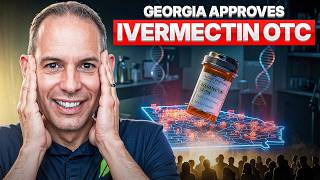
In this solo, podcast‑style monologue Dr. Dino Prato, NMD, founder of Invita Medical Centers, examines Georgia House Bill 1089, a proposal to make ivermectin available over‑the‑counter. He explains that the bill does not claim ivermectin cures cancer, but would remove prescription barriers, sparking a polarized public debate about medical freedom versus safety. Prato outlines the limited pre‑clinical and early clinical data suggesting ivermectin can act as an anti‑cancer adjuvant when matched to specific molecular targets (e.g., PI3K, mTOR, STAT3 pathways and tumor‑microenvironment immune modulation). He warns against self‑medication and veterinary‑grade products, emphasizing that ivermectin is not FDA‑approved for oncology and must be used under physician supervision. The core of his argument is that precision oncology—using multi‑omics profiling (DNA sequencing, RNA transcriptomics, immune spatial biology, circulating tumor cell monitoring)—can identify patients whose tumors have the right targets for repurposed drugs like ivermectin, menbendazole, or fenbendazole. He calls for systematic physician training in precision oncology, integration of on‑label and off‑label agents, and insurance coverage for comprehensive testing. Prato provides a decision framework for patients (right target?, right combination?, monitoring?) and argues that true medical freedom requires access to accurate testing and knowledgeable clinicians, not unrestricted OTC sales. The talk concludes with a call to spread awareness of precision oncology to improve outcomes for cancer patients.
Chapters
Georgia just dropped a bomb. A new bill would make ivermectin available over the counter. No prescription, no doctor approval, just walk in and buy it. And the internet is on fire. Half of the country is shouting, finally, medical freedom! And the other half is saying, this is dangerous, people are going to hurt themselves. But here's what almost no one is talking about. This is not just about ivermectin. This is about what's happening with cancer patients when they hear there's nothing left that you can do, and then they discover a cheap drug that they want to try that's been around for decades. With real laboratory research behind it, and the system responds with only the word, no, we can't provide that to you. Who gets control of your medical choice, your freedom? Today I'm gonna show you what the Georgia bill actually says, what ivermectin science really shows us in cancer research, and why both sides often get it wrong, and what precision oncology really can do to help and make a difference. I'm Dr. Dino Prato, founder of Invita Medical Centers, For the last 25 years, my team and I have helped thousands of patients who failed some of the top cancer hospitals across the country by using precision targeting. Now, before you do anything, make sure you're working with a doctor. And now let's get started. First, let's get into the facts. Georgia lawmakers are considering a House Bill called HB 1089, a proposal related to making ivermectin available for over-the-counter, and it was introduced in late January 2026. So let's be clear, this is not Georgia approved ivermectin cures cancer. This is access to medicines as patients need them. Supporters argue that people are already trying to get ivermectin. However, it's difficult, including putting them in risky situations, not really having the oversight of a doctor, and patients not having access sometimes can cause dangerous behavior. Critics argue its easier access can increase misuse, being that people just get it over the counter and overuse it, and they can have interactions, and it may interfere with their care. And cancer patients are watching this asking one question: could this help me? Can this cheap over-the-counter drug help me? This is the right question, but if you answer the question with politics instead of biology technology and data, you'll fail the patient. And that's my problem, because this is what happens every day in oncology. People get treated, then recurrence— that disease oftentimes comes back— then another treatment, then you got progression. And eventually someone says, we're running out of options. That patient now goes home, searches the internet, finds technology, and just tries to incorporate it on their own. And that's the problem. So they'll look at alternative treatments or repurposed drugs or ivermectin as the cure to their cancer, and what they find is a mess. Some honest information but really no clinical experience in targeting, some exaggerated information, and some with false hope, and some outright scams, or just making the claim this is going to cure your cancer. And that's really missing the boat. What makes ivermectin go viral is these combinations. It's familiar, it's cheap, we know it's fairly safe, has a lot of safety data, it's been around for a long time, it has decades of use, and it's been approved with indications. And there's a real preclinical research showing anti-cancer benefits, activity you see in animal studies and others, and in combinations creates hope for patients. But hope without of guidance becomes chaos. And before I go further, let me say this clearly: ivermectin is not FDA approved for the treatment of cancer. It's not approved. That's why you're not going to have your oncologist prescribe it for you. It's not a proven cancer treatment. It's not a replacement for your oncology care or chemotherapy regimen. In fact, it works better when it's in combination with the right treatments if you have the right targets. A lot of this information is inaccurate and hype, but it's because patients are looking for help, and who blames them? You know, I've been working in this field for over 25 years. Patients are seeking scientifically accurate medical care, because there is a legitimate use for ivermectin in oncology when the targets are correct. We've seen it clinically, along with menbendazole and fenbendazole. All these drugs, they can be helpful. It's not hype, and we don't want to dismiss it. There are uses for this, but doctors need to be trained on what are the right combinations and how to help their patients. So we need to get to the science, the data over the dogma. We need to look at what each person needs. Remember, each person is unique, and their targets are going to be unique. And there's a place sometimes for these off-label medications, and there are many of them that can fit alongside their care as adjuvants. You look at the multiple reviews and papers that discuss ivermectin interacting with pathways involved in cancer, there's a lot of them, like PIK3, mTOR, and STAT3, and not to mention the tumor microenvironment that has to do with immunity, where you can block the immune system and ivermectin can help that immune system work better if those targets are correct. These pathways can relate to tumor growth, survival, invasion, and resistance. So ivermectin does have a place in oncology, but it has to be guided correctly. There are also publications that describe the possible effects in the tumor microenvironment, which is what I'm most focused on— immunotherapy. Because at the end of the day, the first and last defense against cancer is your immune system. So we need to stop really guessing, and we need to get to the research. And at the same time, we need to help treat each person's individual blueprint for their cancer. And that's where precision oncology comes in. So if someone says to you ivermectin cures cancer, they're really missing the boat. It can be a very important adjuvant to help improve care. And if someone says ivermectin has zero benefits or relevance in the cancer research, that is totally inaccurate. So the key is finding right for you. It's not getting involved in the politics, but getting involved in what patients need. The right statement is ivermectin with the right testing and the right targeting can have anti-cancer signals that can help a patient, and we've already seen this clinically. But it has to be the right target, and it doesn't mean everyone should be taking ivermectin or benbendazole or fenbendazole or any off-label drug just because it's cheap. It's the right combinations. So now what I'm going to say to you is that patients deserve options. Patients deserve precision. They deserve doctors that are going to work with them to putting it all together— on-label, off-label, integrative care, adjuvant care that's working as a concert to bring the patient into remission. Not the one-size-fits-all, every cancer hospital gives the same NCCN guidelines, National Comprehensive Cancer Network guidelines, depending on your stage and type of cancer based on double-blind placebo clinical trials. Because everybody is different, two people with the same cancers will have different markers. It's called heterogeneity. And when you test, you can see sometimes where these antiparasitic drugs like ivermectin can be fantastic adjuvants along with the right chemotherapy. In fact, 90% of the patients we see are on the wrong chemotherapy based on detailed testing. So the testing takes away all of the guesswork and helps the patient get the full treatment plan that's customized for them. Now, the FDA has repeatedly warned that ivermectin misuse and high dose can be dangerous, and yes, that's true, but we don't want to take it to the extent where you're just doing this on your own. If you're under the care of a doctor with the right proper combinations, we can see great benefit as adjuvants. So suddenly we see people charging lots of money online for ivermectin, a very inexpensive drug, just to help patients get access to But that's also wrong. What we need here are doctors that are trained both on, on-label, off-label, integrative, and in what I call precision oncology. Because if you have the markers and the data, it takes the guesswork out. The doctors can put in the right programs and help our patients live longer with a better quality of life. That's the key, because sometimes we have a very small window. A patient may have a late-stage or difficult cancer, and you don't have a lot of room to be guessing and making mistakes. So you need to know, is ivermectin the right target, or is there another drug? There's a lot of off-label drugs that could be helpful. So this is not a political conversation. No, ivermectin is not a miracle drug. It does have some fantastic mechanisms, but we shouldn't treat it as it's forbidden either. It needs the right training and the right adjuvants based on the patient's biology. Oftentimes even integrative doctors will prescribe it saying, well, you know, it's not going to hurt, I can combine it, it's pretty cheap. But they still don't know the targets. They don't have full data sets to understanding which patients would benefit from which off-label drugs with a combination of on-label drugs. That's why precision targeting gets the guesswork out, whether you're doing conventional, integrative, and what I really like to talk about is precision oncology. That's the difference. So we ask the right questions, do the right testing with multiomics, and when we have this deeper mapping, we get out of the guesswork and we can help our cancer patients heal. So first, we like to look at DNA sequencing, next-generation sequencing. But here's where the difference is: RNA transcriptomics, which is rarely ever run. This gets us into over 1,000+ markers, plus looking at the tumor microenvironment. This is the most important part: immune profiling and immune spatial biology, which shows us what's blocking the tumor from the immune system going in. And that's what we need to change, and that's where Ivermectin Ivermectin with the right targets can have great benefit. So these are the questions we want to ask. Are there specific pathways that are driving the aggressiveness of this cancer where Ivermectin can add as an adjuvant, as a repurposed drug, not on its own, to help the patient respond better to care? Because that's what the data shows us. We don't want Ivermectin really be used alone in that scenario because that's not where it shines. It shines in the right combinations. So let's elevate the conversation of repurposed drugs. We have a lot of drugs have been approved and been used safely for years, but the combinations are important based on testing and targeting and how we deliver them. It's important to understand that we don't use these repurposed drugs to replace chemotherapy, immunotherapy, but as adjuvants using real precision targeting. And that's the key— the right agent, the right target, the right time, the right combination for you, the real monitoring. So not only do we know you're on the treatment, because a lot of people will go online, buy these treatments, but is it working for you? Who's monitoring this? Do you have the right adaptive monitoring with circulating tumor cells, methylation scores? You can see if the treatment is working because that tells us a lot. And if you're a patient or you have loved one who has cancer, that's what you want. So let me walk you through some clear questions you need to ask. Should I try ivermectin? Well, the answer to that question is, do you have the right target for it? And if you do, the answer would be yes. The next question you want to ask is, in what combination with your current treatment and how would you use it? And then how would you monitor it? Because those are so important. So it's not just about, is the Georgia bill a good or bad bill to open up access? I always think patients having access is a great idea, but it's so much better to be working with a doctor that knows what they're doing and has lots of clinical experience so that you're not on their own, because things can get really difficult in cancer. But at the same time, we don't want patients buying dangerous veterinarian drugs on their own and trying these things without working with a doctor who can guide you through the right combinations. So that bill that's coming out in Georgia, it doesn't really solve that. What we need to do is open up patients' access to precision oncology, because if they have access to precision, they're going to get all the right testing, they're going to get all the right on/off-label integrative agents custom built for them. And we need insurance companies to cover that. That's what we really need. That's the real change in helping people live longer. We are able to people early to prevent cancer and then treat them with care to reverse the causative agents of the cancer, the root causes. And then we're also able to treat people with cancers and advanced cancers with the right targets. That's what I've seen in my clinical experience with our team is when we have the right data, we're able to make a big difference in helping patients. So you need to keep asking the right questions. Do you have the right strategy in place for your cancer? Are these combinations right for you? And that's why I recommend you work with a doctor that knows what they're doing. And I really am a big fan of medical freedom. And I think with medical freedom, it's important to have guidance with physicians so you're not on your own, because it can get really complicated when you're on a lot of medications. And yes, you can harm yourself. We want to avoid that, and we want to look at the data and not just go off of emotions. So doctors need training in precision oncology. When a doctor enters our team, even if they're an oncologist or primary care or naturopath, whatever they might be, it's going to take them at least 1 year and 2,000 hours of training to be trained in precision oncology, where they can use these combinations and these strategies unique for each patient's best targets. Here's what we know. That when we have the detailed precision targets for each patient, they're always going to have better outcomes and better quality of life. That's why this is so important. So I hope this was helpful. This gave you an idea to understand more about what's happening in this new bill and how to approach it. If this is your first time watching our podcast, join, subscribe, share it, because it helps get the word out there for precision oncology so we can help patients around the world. We can help illuminate doctors and others that need to learn about precision oncology and how it can make a difference in helping their patients. May the Lord bless you on your journey to healing.