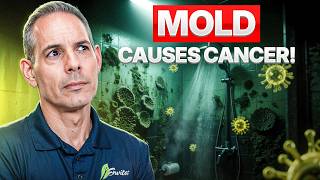
In this presentation Dr. Dino Prado, founder of Envita Medical Centers, argues that many cancer patients face a second, often overlooked battle: exposure to mold, mycotoxins, and related chronic infections. He explains that standard oncology rarely screens for these biotoxins, yet they can keep the immune system in a state of chronic inflammation (CIRS), weaken immune surveillance, and impair the effectiveness of chemotherapy, radiation, and immunotherapy. Prado outlines a stepwise clinical protocol: (1) eliminate ongoing environmental exposure by remediating water‑damaged buildings; (2) bind and eliminate gut‑resident toxins using agents such as cholestyramine, bentonite, or clay; (3) employ adjunctive blood‑cleansing methods like ozone therapy (EBOO); (4) calm systemic inflammation; (5) reset immune balance by optimizing thyroid hormone ratios (T3/T4) to shift from a TH2‑dominant to a TH1‑dominant response; (6) eradicate biofilm‑protected infections such as MARCoNS and other opportunistic bacterial, viral, or parasitic pathogens; and (7) use targeted immune profiling (e.g., CD57, viral load assays) to guide precision treatment. He stresses that treating these root causes alongside conventional cancer therapy can improve immune competence, reduce recurrence, and enhance overall recovery. The talk concludes with a call for patients and clinicians to ask about mold and biotoxin testing, work with environmental doctors, and support the channel to spread this integrative oncology perspective.
Chapters
What if I told you some cancer patients are fighting two battles. The battle of the tumor and the battle of the invisible enemy infections. And one of those is mold and mycotoxins, not just a little mildew. I'm talking about water damaged buildings, hidden leaks that have been in people's houses for years. And I've seen this over the decades. And here's the important part. Standard oncology often does not check for any of these. You're lucky if they'll even bring up the subject of other infections. This is the reality. But these can be potential root causes to not only the cancer, but the weakening of the immune system that going to need to overcome that cancer. So a patient can be doing chemo, radiation, immunotherapy and still feel like their body's losing ground. Or the diseases come back in another form because the immune system is distracted. I always talk about the immune system being critical in cancer and their inflammation stays high. So we need to treat both of these. And it can happen with mold exposure. That's what we're going to cover in this episode. I'm Dr. Dino Prado, founder of Envita Medical centers. For the last 25 years, we've helped patients who failed some of the top cancer hospitals in the United States. And we've helped them with precision targeting. So cancer care is not just about killing cells. It's also about keeping your immune system strong enough to finish the job. But mold exposures can push the body into a chronic danger mode. And in a high risk cancer patient, especially blood cancers with very low blood cells and other types of cancers that have transplants, Mold isn't just annoying. Certain molds can become serious infections when immunity is low. That's why hospitals often use air controllers for certain high risk patients. Pharmacies prepare medications and clean their countertops with peroxides to mold. So the big question is, if we protect high risk patients in hospitals and all our medications for mold, why don't we ask about mold exposure at our home and through testing when we're working with patients? That's the important part. Let's separate it. Mold spores are particles you can breathe in. Mycotoxins are chemicals some molds can produce. Now, does that mean that every household mold exposure causes cancer? Absolutely not. But here's what it means. Some mycotoxins have a strong link to cancer in the scientific literature, especially from food exposures. For example, alpha toxins found in peanuts is known for its link to liver cancer. Other mycotoxins have concerning classifications in the data. So I want you to hear this clearly. Even when mold doesn't cause cancer directly, mold exposure can still stress the immune system signaling, raise inflammation and create all kinds of noise in your body, worsen fatigue, brain fog and put a patient at higher risk of developing cancer, not to mention make it hard for them to fully recover from cancer if their immune system isn't working well. And that can make treatment harder. And this is where the term comes in that many patients hear about online. Sirs, Chronic inflammatory response syndrome. We've seen this in integrative medicine, worked with it for over two and a half decades. So inflammatory response syndrome is described as a complex of multi system illnesses that can happen after exposure to biotoxins, including water damaged buildings. In this model, the body does not turn off the inflammation pathway correctly. Get lots of histamine, lots of response going in the body. And we see these with patients that have Lyme disease, chronic infections and mycotoxins and mold. People can feel, feel stuck, brain fog, fatigue, sleep problems, pain, mood changes, sinus problems, gut issues and their overall health, poor histamine responses and more all cascading down this surve. So this is really important. But there's been some published clinical papers describing this approach, most notably by Dr. Schumacher. Some of you might know the Schumacher protocol for working with this type of exposure. And so the very first step we need is to get rid of the ongoing exposure, the toxic exposure, whatever it's in the food, we want to eliminate, reduce that number. Two, we want, want to get the immune system balanced because it's usually dysregulated. And if the patient is stuck in this inflamed pathway, we want them to recover. That's what matters. So think of recovery like climbing steps. I'm going to go through these steps because a lot of people don't know them. It's like when you want to get rid of the mycotoxins, mold exposures often infections first you want to get out of the exposure. So if it's something like mold in your bathroom or mold in the house, you want to get that out. Or in some cases they're so bad. We've had patients move out of their houses because it was just riddled with dangerous mold. You can't really detox if you have constant exposure. One of the tell tell signs I've seen is the patient's in the clinic, they're doing great, they're here, they're under our care, and then they go back home and they feel worse again because of the mold exposure. Almost Immediately because they were exposed to mold. But when they're outside of the mold, they feel better. That's one telltale sign that the building has problems. So you have damage in the building, leaks somewhere. Water can get almost anywhere and leak and cause these problems. So we want to start with the basics. Get rid of the leaks, the humidity, the musty smell, hidden water damage, that's number one. So get out of the source of the mold. Number two, we want to bind those toxins in the gut. So the big idea here is using protocols and binders that have been around for a long time to clean out the toxins from the gut. Cold styramine was commonly prescribed, but you can use other things. Bentonite, clay, there's all kinds of different things to clean the gut, get those toxins, help move them out. Common binders are cold styramine. It's not a casual supplement plan because it needs to be supervised from with a doctor. But that process takes some time to get that out of the gut and heal the gut because you have binders and you can have a problem with absorption in the gut lining. So that's number two. Number three, a lot of integrative doctors, they'll use ozone therapy, things like EBOO and others, to basically clean the blood, oxygenate the blood. In a sense, it's not a cure. It helps with immunity. It's an adjunct of therapy. Always remember, whenever you use ozone as adjuvant, but it can help people with these toxicities, even with chemical toxicities. And number four, calm inflammation, calm the inflammatory pathway. Number five, reset immunity. So this is thyroid function. Oftentimes patients have too much T4, not enough T3, and they might need microdosing to shift that TH1 versus TH2 immunity. Now, I don't want to be too confusing, but if you have too much TH2 immunity, it's more inflammatory. TH1 is more antiviral, antibacterial, anti cancer. So we want to shift the immune system long term, helping the patients use all their body's pathways for healing. Now, the other thing a patient can have often we've seen over and over again, is Marcons is a biofilm nasal infection that's very hard to clear. Marcons is really a representative for a multi antibiotic resistant staph infection. And you have to treat it and you have to strip the biofilm and it's usually in the nasal passages. And so this becomes part of that treatment plan. So biofilm here is really important to eliminate because you want to strip the biofilm so you can more effectively treat the infection. So this is very common in lyme disease and other chronic diseases where we see these combination. That's why when a patient doesn't improve, we know that there's not enough immunity in place, not enough kill to the organism, and there's way too much biofilm blocking it. So we need to look at all these things, Strip the biofilm, target all the infections. Very unlikely that we see patients that have one infection. They usually have multiple infection because their immune systems are weak and they get these opportunistic infections. Now, I mentioned thyroid, and that's pretty simple. You're working with a doctor. You can reset your thyroid, check your T3 to your T4 ratio, because that's going to help with inflammation and your immune system. It's not a cure all, but it's supportive because you still need to get rid of the infections and you still need to clean out the body under the care of a doctor and then restore your immune system. This is why clinically, a little thyroid support can go a very long way in helping reboost the immune system and shift that immune from TH2 to TH1, giving you an advantage. Now, that doesn't fix everything, but it gets us started in the right direction. So now you're starting to see. See some of these tools that are used to help patients. Now imagine having cancer and having all this mold or all these other infections, and you're not treating them well. It makes a cancer treatment more complicated. So what we want to do is be very thoughtful in the cellular biology, in the root cause analysis and helping people heal. Because if we remove these things, it gets our immune system working well. And then our immune system can now do the work of chemotherapy that needs to be done or immunotherapy needs to be done for cancer. So simultaneously, if these are root causes linked to cancer or complicating your treatment, you, don't want to ignore them. So it's not just as simple as, well, I'm going to take these things along our treatment of cancer. Yes, you want to handle the cancer part first, but you want to look at these root causes and oftentimes neutralize them during treatment and then come in and handle them after you've put the cancer into remission. Because if you don't, this is just my clinical experience, Cancers will come back. You need to get rid of these root causes because they're linked to chronic inflammation, chronic infection, Immune suppression linked to molds, linked to mycotoxins and other infections. So we want to clean the blood purify. We want to do our work with immune modulation, and we want to put these mycotoxins at rest. In fact, if you went into a tumor after that tumor has been killed, or you go into that tumor and biopsy, sometimes you'll find actual fungus infections in the tumor that are there. So there's things to be said about cleaning the body out and doing that correctly. So here's some of the questions you can ask your doctor. You know, have you tested for these infections? Work with an environmental doctor who understands immunity. Infection, mold, mycotoxins, Lyme disease. Because those factors need to be dealt with if they're at the root cause of the cancer. And you want to work a protocol that's going to help you first get rid of the cancer, at the same time, neutralize these infections, the marcons, the mycotoxins, if it's lyme disease, whatever might be there, chronic viral infections, parasites that are pathogenic, those need to be dealt with to heal the body. So we can test for these things, and then we can treat them with precision as part of the treatment plan so that we're helping the immune system be able to do its work. You hear me talk about all the time immune spatial biology and immune profiling and immunity. Well, guess what? If you have infections, you need to deal with those. And we can tell. There's tests we run, like CD57, other markers in immunity, other immune profiling markers that show us that infections are involved. If you have Epstein Barr, for example, you have a high viral load and you have a lymphoma, you need to treat that. You can't ignore it. And the same thing is if you have mold toxins, mycotoxins with cancer, you need to treat them. And that's really important for you to recover and get your immune system back. I know that 90% of you that are watching this have not subscribed yet. So please subscribe because it helps us get the channel out there to really change the way people think of oncology. Think of it more of pursuit. Not a one size fits all. And the way the YouTube algorithms work is the more you subscribe and share, the more it gets pushed out to the world. And we can illuminate doctors and patients and help change the way people think of cancer so we're not stuck in this one size fits all model. I hope you found this helpful, and may the Lord bless you on your journey to healing. Sam.