Oncotype for Breast Cancer: What It Misses — and How Precision Oncology Changes Everything
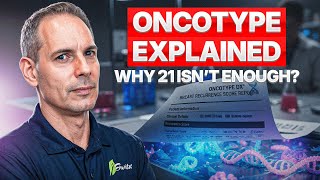
Dr. D argues Oncotype DX gives only a basic risk score and misses what drives individual tumors. He describes a precision approach using DNA sequencing, immune profiling, and a two-week hormone-sensitivity test called POETIC to design custom treatments and catch recurrence years earlier than standard imaging.
Chapters
Oncotype DX sounds smart, but it reads only 21 genes. Your life is not a yes or no quiz. Today I'll show you what Oncotype does, where it stops and how the poetic approach test drives hormone therapy and how precision oncology with next generation sequencing, scriptomics, immune profiling, give a fuller plan with smarter dosing and with even adaptive monitoring. Here it is a masterclass for early breast cancer planning and what doctors are not doing for their patients that gives a great advantage. Hi, I'm Dr. D. For the last 25 years, my team and I have helped patients who failed the top cancer centers across the country by using precision targeting, comprehensive testing and unique treatments that have helped our patients. So let's get started. What is Oncotype dx? So basically this is a test that actually looks to see whether you need hormone therapy alone or hormone therapy with chemotherapy. And it's for ER positive breast cancers and HERK2 negative breast cancers. So it turns this activity from 21 genes into a reoccurrence score. What's the likelihood of this cancer coming back? And the score helps answer one of these questions. Hormone therapy alone or hormone therapy plus standard chemotherapy. But there's limits. If chemo is suggested, care usually follows the standard national comprehensive cancer network regimen guidelines. Basically a population health plan for cancer. Breast cancer that often means maximum dose of chemo which can weaken the immune system, increase side effects, oftentimes even lead to resistance if it isn't the right selection. And you can miss the key tumor drivers because it isn't matched to your body's biology. Even if you only get hormone therapy, you may not address the root causes, metabolic issues, long term immune targets that help support durable remissions. Really the bottom line is Oncotype DX is a gate to standard chemo, not really precision targeted testing and it's only got 21 genes. So it's part of the puzzle, but really doesn't answer all the questions. Now what's the difference between poetic versus oncotype? Well, poetic was a study done on 200 plus women and to really see if hormone therapy was effective. Oncotype gives a score before treatment to guide chemo. Ver is no chemo. The Poetic gives a two week test to really find out whether the hormone therapy is effective or not by measuring a growth marker called Ki67. If you have a low growth marker, a Ki67 after two weeks the tumor looks like it's responding to hormone sensitive breast cancer. And if it worked, they say okay, the hormone therapy is Working. If not, then that means the cancer is more aggressive and they consider beginning more aggressive therapy sooner. So this considers changing and escalating that treatment. Oncotype tries to predict and poetic checks for real time responses. But neither show you the DNA drivers, the RNA activity or the immune landscape you need for your custom targeted treatment plans. So here comes precision oncology and it changes the game. Think of a map versus a satellite. Oncotype is a small map. Precision is the full gps, traffic, weather signal, all the information. By using next generation sequencing DNA, you get a few hundred DNA points. It's not the whole picture, but it finds some mutations and it steers some of the cancer agents. But it's not the entire picture, it's just part of it. Then you get transcriptomics. This is really important. It's the, which shows you what's driving the genes, where the resistant pathways are, what the drug synergies would be. And then here's the big one, immune profiling with spatial biology. It reads the tumor's immune system, the neighborhood. So you can see why your cancer is not responding to the immunity, which is the key because the immune system is the first and last offense to holding and having remission and response. So we know that when we get immunotherapy, it makes all the difference in the world. And there's a lot more to immunotherapy than just giving a drug. It's understanding what's blocking the immune system and getting it to work. Not just chemo or no chemo, but which targets, which integrative agents, which on label drugs that are for the cancer, or off label drugs that are repurposed. What are the combinations that are right for you? That's what precision testing allows us to look at. But here's the kicker. Most of these markers, even after you run them all, all these precision targets, you still need drug planning. Only some of these markers have drugs that are available that you can order and use. So you need custom drug design. You have to build the design, customize it. You need a custom pharmacy to do it. And you have to be able to build on label, off label integrative agents so you can hit all these pathways. But then you have such a huge advantage because you have targeted treatment. It's micro dose, so you don't have the side effects that you normally get. You get a strong immune system and you go after killing the cancer, not just slowing it down. And this is the big difference. This helps the body heal and it gives a huge advantage to the patient. This is the Key to solving the problem for so many patients struggling with breast cancer and really other cancer types as well, is understanding the targets. So what happens is if you use oncotype dx, it's going to tell you, okay, you have a low score, so you don't need chemo. But oftentimes people are pushed to chemo, but it doesn't tell you what your targets are for the chemo, what's the treatment for the chemo, it doesn't match it. So you really don't have all this wonderful information that you need. And it gives and give you the advantage of knowing what your targets are. So now you can do 10 or 15% the chemo dose, micro dose it we call that genetically targeted fractionated chemotherapy. So you have none of the side effects. You stimulate the immune system, you get damps these damage associated molecular patterns which stimulates your dendritic and natural killer cells. So you're not getting this beautiful response. And the phytotherapeutics that are neoadjuvants, that support care, that support the treatment and help them be more effective. So along that path, when you have early stage breast cancer, you need adaptive monitoring. You don't want to wait for tumor markers and imaging which you, you may have already done and say, gee, I want to see if this cancer has returned. But you want to use leading indicators, not lagging indicators. These are information that's going to come way before a tumor develops. And for this we use technology like advanced circulating tumor cells, which look at multiple, multiple markers within a circulating tumor cells to tell us if the cancer is coming back or increasing methylation scores and other technology help us indicate that a cancer is coming back or likely to come back. So let's effectively treat that before we see a tumor. And that's so much better than to wait to see a new tumor appear or to see that you're resistant to therapy. This is the huge critical advantage that's missing in the puzzle of cancer treatment today. If you ask me, it's not being done. People are guessing and they're trying to figure out what to do without the proper testing. What you need to do is get the right testing so you don't mess around and you know exactly what. So even though we can look at it as a 1, 2, 3, you can use oncotype if you want. It'll give you some information on whether to do chemo or not, but it doesn't really tell you what chemo or how to do it. You can also pre treat with a hormone Blockade, like an aromatase inhibitor, and then wait two weeks later and see if it responded. That gives you a little bit of information, like the poetic study, did it work? But what then you really need is the precision targeting. You need precision for the immunotherapy, for the right targets to understand what caused the cancer, what are the pathways of treating the cancer. Precision aims to protect and engage all this information, which gives you a huge advantage because you don't win without your immune system. I mean, long term, that's the key. And you hear about these breast cancers that come back later. You can avoid so much of that if you have the right targeting upfront because you're removing a lot of the guesswork. What we really want is what I mentioned, the DNA, RNA and immune profiling, the spatial biology which is so important, telling us so much about the cancer to build the right targets, know what caused the cancer, and get the immune system in on the fight. See, this is what's missing today in oncology. We're just not seeing this. Patients are just doing whatever they're told or it's followed by some protocol that is a one size fits all. And I don't think that's clinically where we are with the advanced technology we have. So don't stop at the oncotype DX and look at the DNA, ngs, the rna, the immune profiling. And really, you're not going to find places that do all this. This is not like standard testing you can get at your normal oncologist or integrative doctor office. We have specialized laboratories, specialized pharmacies. It's just much more deeper planning, understanding what's going on so that you can get the care you need and the best technologies today. May the Lord bless you on your journey to heal. Don't.










