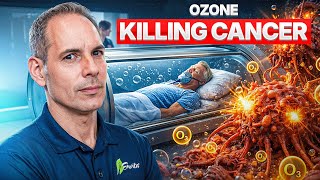
In this presentation Dr. Dino Prado argues that the major barrier to effective cancer treatment is tumor hypoxia, which drives the Warburg metabolic shift, up‑regulates hypoxia‑inducing factor‑α (HIF‑1α), suppresses immunity, and creates an acidic microenvironment that protects cancer cells. He proposes that restoring oxygen—through hyperbaric oxygen (HBO) and medical‑grade ozone therapy—acts as a “primer” that re‑oxygenates hypoxic tissue, normalises mitochondrial function, activates protective oxidative‑stress pathways (e.g., NRF2), and sensitises tumours to chemotherapy, radiation, and immunotherapy. Prado reviews pre‑clinical and clinical studies (Clavo 2004/2018, B. Coing 2022, International Journal of Environmental Research and Public Health 2023, Scientific Report 2021, Journal of Radiation Research 2024) that show improved oxygen delivery, reduced HIF‑1α activity, lower side‑effects, and better quality‑of‑life outcomes when ozone or HBO are added. He describes a precision‑oncology workflow: using RNA‑seq, spatial immunology, and other biomarkers (high HIF‑1α, VEGF, glycolytic gene expression) to identify patients who would benefit, then delivering controlled ozone or HBO under medical supervision before or alongside standard therapies. Safety considerations, dosing protocols, and the need for experienced physicians are emphasized. The talk concludes that while ozone is not a cure, it is a powerful, evidence‑based adjuvant that, when integrated into personalized, integrative oncology plans, can improve treatment response and patient recovery.
Chapters
Imagine you're trying to paint a masterpiece on a wall that's cracked and covered in soot. You could have the best painting and the finest brush, but it still won't stick. That's exactly what's happening in cancer care today. We use the latest in chemotherapy, immunotherapy, even gene targeted drugs. But the tumor microenvironment can suffocate with low oxygen. But what if we could prime the canvas, restore the oxygen, balance the reactive oxygen species, and reignite the immune system so treatment finally works. That's what ozone therapy and hyperbaric oxygen therap can do for cancer patients. For more than two decades, these tools have been quietly helping doctors around the world support patients during cancer treatment. Not as a replacement, but as a precision adjuvant that makes every other treatment work better. I'm Dr. Dino Prado, and for the last 25 years, my team and I have been privileged to help thousands of patients who have failed the top cancer institutes around the country. We for many years have been one of the top users of ozone therapy. And we understand it well after 25 years of using it on thousands and thousands of patients to support them. But there's a target with oxygen. So we're going go into this here in a minute. When you change the environment inside the body, when you improve oxygen, circulation, mitochondrial function, you can often change the outcome in some cases because it depends on the patient's individual markers. Cancer isn't just about rogue cells. It's about the balance with oxygen based therapies, which can support the body's healing process and help the conventional treatments or the chemotherapy or immunotherapy work better. So let's talk about one of cancer's biggest secrets. It's called hypoxia. Most solid tumors grow faster than their blood supply. Means part of them becomes oxygen starved. The low oxygen state flips the power switch in cancer biology called hypoxia inducing factor alpha. When this turns on, cancer cells change their metabolism, they hoard sugar, they support the production of lactic acid and fermentation. Just the same thing we saw with the Warburg effect. This acidic, low oxygen environment protects cancer cells and it down regulates the immune system. It's all part of that mitochondrial shift that we talked about in cancer. So when we send chemotherap therapy or immunotherapy without fixing some of these oxygen imbalances, it's like trying to paint over a crumbling wall. The treatment can't stick. And that's what I've seen in two and A half decades that there are special cases when we're treating patients where ozone therapy can make a big difference. Now here's where ozone and hyperbaric come in. Hyperbaric oxygen therapy is a simple concept. You breathe pure oxygen inside a pressurized chamber. That pressure drives oxygen deep into the tissue, Even areas where poor blood flow or tumor is hypoxic. And usually this therapy is patients can do in between care. But ozone therapy is even more powerful, about 24 times more powerful than hyperbaric. On the other hand, it adds a O3, an oxygen cingulate that's used, and it creates this controlled spark of oxidative stress. The spark wakes up your cells. It tells your mitochondria to produce more energy, your immune system to get mobilized, your antioxidant systems to upregulate. And this balances a lot of the body's system out. Think of it as a reset button for your metabolism. Not enough to damage your body, but enough to remind your body how to heal. And so it's all done under medical supervision. But in some patients, this is a very powerful primer. It's not used alone, it's used in combination. Let's make this simple and evidence based. A Spanish researcher by the name of Dr. Benito Clavo led one of the early pilot studies back in 2004. He found that ozone therapy could improve oxygen delivery inside tumors. That means oxygen actually reached areas where previously it was starved. And in 2018, his team published again showing that when ozone therapy was combined with radiation and chemotherapy, the treatments worked better and the side effects were lower. Again in 2023, a study in the International Journal of Environmental Research and Public Health looked at cancer survivors still struggling with fatigue, neuropathy, inflammation after chemo. Ozone therapy significantly improved the quality of life scores. We have our technique that's a bit stronger, called Helio Bosch that has been shown to boost the mitochondrial energy and antioxidant capacity. In fact, clinically, oftentimes when a patient is under care, we'll use something apheresis to clean the blood, remove all the tumor die off material, and then use the ozone therapy to oxygenate in patients where they need this primer, where they have a lot of hypoxia inducing factor Alpha. Researchers like Dr. B. Coing in 2022 found that ozone increased the energy reserves of the immune cells, helping them function better under stress. And when it comes to the hyperbaric oxygen, in 2021, studies in the scientific report showed that it reduced the hypoxia inducing factor alpha activity it reversed some of the Warburg effect and it helped lung cancer cells switching their metabolism back towards normal energy production and making them more sensitive to treatment. Put simply, oxygen and ozone therapies help your cells remember how to breathe, recover and respond the way they do normally. We always talk about that. We want to move away from that high sugar fermentation, the Warburg effect, the hypoxia and to the oxygen. So enter precision oncology. Here's where it makes a big difference. In precision oncology, we connect this as part of the integrative care. When the targets are necessary and it's often is necessary. We can now hypoxia in a patient. We can understand if the tumor needs that through tools like RNA transcriptomics and immune spatial biology. And if the data shows these high levels of hypoxia inducing factor alpha VEGF or glycolytic genes, it tells us that the tumor is starved and needs oxygen. That's when oxygen based priming makes sense. And if you utilize it prior to the chemotherapy, that again is designed as a target. It helps the patient respond better to care. By reoxygenating the tissue through ozone. We prepare a microenvironment so chemotherapy and immunotherapy can target drugs better. It's like tuning a musical instrument before the concert. If it's off key, even the best song won't sound right. And that's what ozone does. It tunes that tumor microenvironment so treatment can work better. For years people have always asked me, is ozone the cure to cancer? No, but it is a powerful adjuvant. When it's necessary, it can help change the tumor microenvironment and act as a primer. So every other therapy works better. When the body is in tune. Precision medicine can truly perform even in patients that are doing preventative care. If they pre use ozone therapy prior to to let's say an IV antioxidant, the body is primed to absorb more antioxidants. In that about 20 to 30 minute window, you get an increase in the antioxidant enzyme, then everything upregulates and then you can piggyback that to create a greater nutrient absorption. You've probably heard about reactive oxygen species like ros. This is called free radicals. And yeah, you might be concerned, but only when it's in excess are they harmful. But in controlled amounts they're actually helpful. Ozone therapy creates this pulse of these molecules just enough to activate a protective system like NRF2, which boosts your antioxidant enzymes and detoxification pathways, something cancer patients need. At the same time, this mild release of reactive oxygen species makes cancer cells more vulnerable to the immune system, More vulnerable to radiation and chemotherapy, and even checkpoint inhibitors. They have a clear target. In 2024, the Journal of radiation research paper combining ozone with radiation Reduced tumor volume far more than radiation alone. That's synergy. So that's what precision oncology allows us to do, is combine all the right target patients to get the care they need. And that's really the future of adjuvant oncology, is understanding these combinations. And that's what precision oncology does. Of course, balance is everything. Hyperbaric oxygen must be used properly under supervision. Ozone therapy must be performed by doctors who have experience and know how to use it and have been using it for years. And it can combine well with treatment. When used correctly, it can be hugely supportive and helpful for patients, Especially those that struggle from fatigue, brain fog, nerve pain, poor wound healing. After conventional therapies, Think of it as helping the body catch its breath again. I think that's about best way to explain it. In parts of Europe, especially Germany, Spain and Italy, Oxygen and ozone therapies have become integrated into the oncology world for decades. Doctors there use them to enhance radiation responses, Reduce chemo side effects, Speed recovery. These therapies are now being reevaluated worldwide, not as a replacement to treatment, but to help patients recover, to act as primers during treatment, tools to prepare the body for the next step in treatment. So here's the bottom line. Cancer thrives in a low oxygen environment and high sugar. This hypoxia inducing factor, alpha, fuels cancer. Resistan and things like hyperbaric oxygen and ozone therapy lower that switch. They improve the oxygen flow and wake up the immune defenses. When used as part of a precision integrative plan that's customized for you, they can make a great difference in helping from chemotherapy. Immunotherapy as a primer to help therapy work better and more effectively. In our clinical experience, that's what we mean by truly personalized precision care. I hope this was helpful. It's an exciting area growing how does oxygen play a role in cancer treatment? May the lord bless you on your journey to healing. I.