Peptides & Cancer — The Dangerous Ones You Must Avoid | Dr. Dino Prato
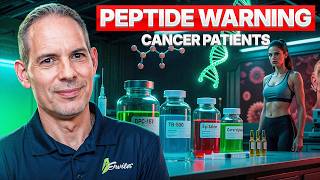
In this solo instructional video Dr. Dino Prato, NMD, explains how short‑chain amino‑acid molecules called peptides are being touted as powerful tools for anti‑aging, muscle growth, joint health and cancer support, but also why many of them can be hazardous for oncology patients. He first outlines the fundamentals that must be in place – optimal diet, sleep, exercise and gut health – before any peptide is introduced, emphasizing that peptides merely amplify existing biological signals. Prato then provides a brief regulatory history, describing the 2012 New England Compounding Center fungal meningitis outbreak, the 2013 Drug Quality and Security Act, and how FDA restrictions pushed peptide production into an unregulated underground market dominated by overseas compounding. He categorizes peptides into three risk groups for cancer patients: (1) red‑flag peptides that stimulate IGF‑1, growth hormone, angiogenesis or tissue repair (e.g., CJC‑1295, tesamorelin, BPC‑157, epithelon) and should be avoided during active disease; (2) yellow‑flag peptides that protect mitochondria or aid recovery (e.g., MOTS‑C, SS31) but must be timed away from chemotherapy windows; and (3) potentially beneficial adjuvant peptides that can boost immunity or recovery (e.g., thymosin α‑1, delta‑sleep‑inducing peptide, LL‑37) when used under strict medical supervision and with appropriate biomarker testing. Throughout he stresses that most peptides are research‑use‑only, not FDA‑approved, and that sourcing from the black market carries sterility and purity risks. The video concludes with a call for patients to work with qualified integrative oncologists, to prioritize lifestyle fundamentals, and to view peptides as supportive signaling tools rather than miracle cures.
Chapters
What if for the next 20 years of your life you could be stronger, you could slow down aging, have less joint pain, good memory, no dementia, Alzheimer's, reduce your cancer risk, have steady energy, build muscle? Because right now something powerful is happening in medicine called peptides, and that's the promise that they give, at least in the research, the promise of these things. And so that's why most any integrative conference you go to right now, anywhere in the world, the talk is about these peptides and how they can help signal the body to help people heal. Now, not just because it's trendy, but because people are seeing some benefits with these peptides. They have to be done correctly, but there's a danger for cancer patients. There's a fast-growing market. It's at about $2 billion underground market in the U.S. alone. People are importing, mixing, injecting these things at home, and even major outlets have been reporting these trends. So stick with me, we're going to discuss the power of peptides, what they do, and the things that cancer patients should be careful of because they could be dangerous. I'm Dr. Dino Prato, founder of Invita Medical Centers. For the last 25 years, my team and I have worked with complex cancers where patients have failed some of the top cancer institutes in the country. And with using precision targeting, where we look at over 1,000 data points, not just like 24 in standard oncology, we're able to build precision care. And when we do that, we see 35 times better outcomes, as we published in our recent paper, and 43 times better quality of life. And that just continues to improve because of our algorithm. So I'm going to share with you today the world of peptides in a way that every cancer patient should understand. Specifically when you're dealing with cancer, because some can be harmful and some might actually be helpful. But before you get started and do anything, make sure you're working with a doctor and know that the peptides, most of them that I'm talking about today, are not FDA approved and they're for research use only. And you have to be very careful because a lot of these are sold on the black market. Before we talk about peptides, let me make some clarity. Before anybody should do peptides and you're working with a doctor, you should have great diet, great sleep, great movement, get the exercise going, fix the body. Those are the fundamentals. The gut microbiome, the nutrition, nutritional dense foods, make sure you're sleeping well and you're getting good exercise, because these things need to be there. Because peptides are signals, they're signals that amplify things in your body, and we don't want to amplify chaos, and we don't want to have, if you will, mud in the water. We want to make sure we don't have muddy waters, we have clear signaling. And so we clean the body, help the gut microbiome, and then we start using these peptides. In some cases, some are legal and some are not, so I just want to make sure that you know the difference. Okay, so restarting the body is so important, and that's what peptides can do. Can help repair. So why are peptides everywhere? Why are these peptides growing? Well, first of all, you need to know what is a peptide. They're just short-chain amino acids, basically 20 to 50 amino acids. And these are basically amplifying signals on the cell surface. And if you understand biochemistry, cell biology, and understand patient care, which integrative doctors study thoroughly, then you can nudge these signals to release the right pulses to help with immunity, inflammation, muscle growth, energy, sleep, brain signaling, all these different things. That's why this space is growing. But it's also the Wild West. If you have a chain of amino acids that's like 2 to 4, those can be called bioregulators. And those are very exciting because they can make it to the nucleus of a cell where the DNA is and act almost like an adaptogen to help repair and heal that DNA. So the idea there is to add to people's lifespan so people can live, you know, into 100 with good quality of life. That's the excitement behind peptides. But in oncology, we have to draw a line in the sand. Many cytotoxic therapies work to push cancer cells— metabolic stress, oxidative stress, mitochondrial damage, and apoptosis. Because we want the cancer cells to die. So during that window, many clinicians need to avoid peptides that strongly signal things like IGF-1, growth signals, angiogenesis, blood supply, anything that's pushing build tissue faster, repair signals, and strong mitochondrial protection at the same time. So there's a right time and wrong time to use them, and some you're just going to stay away from because you don't need growth signals if you have a cancer history. So we're going to talk about these and we're going to go into them in detail in this episode. Every cancer cell has a signal to grow or recruit blood supply. We don't amplify that. Even if the cancer is in remission, we want to make sure it's dormant and we don't want to add growth. There's other ways we can get to helping the body. It's the right timing, the correct mechanisms, and working with the right integrative doctors that understand biochemistry so they can support you. Now, I'll walk you through the most common peptides. We'll organize them. I'll kind of tell you the ones I think are red flag, those that you need to operate with caution, and those that actually could be helpful and stimulate healing in the body. And these are the guides that I'm going to kind of give you to help understand this. I'm not going to give you dosing and protocols because for safety's sake, I think it's important you're working with a good doctor. Okay, so let's get into this. Let's talk about why peptides went underground, because that's something nobody explains. You'll never find this anywhere, but I'm going to tell you why they're called research use only and being sold online, and sometimes in very scary situations. But we have to go back to 2012 and the New England Compounding Center tragedy that sparked a national safety crisis, and contaminated injections caused deadly fungal meningitis outbreaks and some And so what happened is the Center for Disease Control and Prevention investigated these and they went to work and they started putting in warnings. If you know how Washington works, they never let a good crisis go to waste. So Congress responded and in 2013, Obama signed in the Drug Quality Security Act and it became law. So what this did is it not only, which I think was a good thing, helped compounding pharmacies' 503As be safer, but it started to regulate what they could and couldn't make. And here's where the problem lies. The US Food and Drug Administration expanded their their work to include these bulk substance lists, these use of compounds that they basically said, oh, compounding pharmacies can't make these anymore, they're not safe to be made. But here's the problem I have with that. What it literally did is created further royalties for Big Pharma. So under the auspices of safety, instead of going into these compounding pharmacies and saying, hey, we want you to follow these safety steps, they shut that down. Now why that's a big thing is for over 100 years, compounding pharmacies were under the control of their state regulations. And now FDA came in, they put in these lists, they got rid of a lot of these things that were going on. And when it came to peptides, they created more lists just recently to shut these down, basically say you can't make these anymore in a compounding pharmacy, we're going to move them out. And so what happened, especially in the bodybuilding community and other areas, it went to an underground market where people are trying to buy these things from somebody they know. And most of the stuff is from China and they say it's 99% pure. But knowing compounding pharmacy very well, I can tell you that you need sterility, stability, testing, and that level is so important in clinical care. So that's why this is dangerous. Because it's moved that market to underground and now they sell it as not for human use or animal use only. And it's a bit dangerous. And so we want to be careful and we don't want to just take anything we see online. I just want to give you that warning. And you know the history because this could have been changed. It's another debacle started by FDA in the Obama administration and hasn't really been corrected, even though Kennedy himself and other members of Congress use peptides for their own health and bioidentical hormones and other things they do with integrative care to give them energy. So people are using these things. We just know to what to that degree, but it would be much safer if the pharmacies could make them under the doctor's prescription so patients get the proper guidance and oversight they need. So we're going to get into the peptides now. I just want to give you that background that most people don't talk about so you understand why they've been pulled from the market. Okay, here we go with the red flag peptides that cancer patients should not take. Why? They push growth. They can push IGF-1, could be growth signals on cancer cells. They can increase blood vessel recruitment, angiogenesis, and they push this build and repair, which sounds exciting, but in cancer we have to be careful. These are the popular ones like CJC-1295 and epimorlin, which are usually used together. These are going to push growth hormone. You're going to see tesamorlin, somorlin. Those two are actually legal and you can compound them. The other ones you can't, but either way they're both going to push active cancer. We don't want anything pushing that growth. Some of these can be used to burn visceral fat and to help build muscle and help people recover, but they also can be harmful in cancer. That's why we're concerned about them. We don't want to use these in cancer, anything that's pushing IGF-1. So in cancer care, we have to be very cautious with these. These are the peptides that build and repair. Now, one of the most popular ones is BPC-157, which is usually used in combination with KPV, which is anti-inflammatory to the gut or helps with Candida in the gut, or TB-500 or thymosin beta-4. And then you can see them in different names like Wolverine if you're a bodybuilder, or see them in CLO. These combinations are combined and sold this way because they're popular for repair, and they do have a master repair signal. But In cancer, we don't want these because these repair signals push angiogenesis. Where we did want them is in cardiovascular disease or post-operative healing or helping with joint recovery or exercise recovery, all those types of signal repair. But in the cancer world, we don't want to push blood vessels. We don't want to recruit blood vessels. We actually want to shut those down, especially when we're dealing with active tumors. So the other one I want you to be careful of is epithelon. Epithelon is in the pineal gland. And here, this is where people get a little reckless, where they're not doing it the right way. And the lab Data talks about how this helps to extend telomeres. So usually in a protocol, they'll use it for 20 days every 6 months to extend life and reduce cardiovascular disease and other important things. But when we have active cancer, we don't want to push immortality biology. We don't want to extend those telomeres in the world of cancer. So during and around cancer care, we don't want to use it, even though there's studies that show that it can prevent cancer in a healthy patient. So that's why that is also cautious to use. It's a smaller amino acid. It can get to the nucleus and be very powerful, but we want to be careful during cancer. Now, these are more what I call yellow flag. These aren't either bad or good, but they have to be timed correctly. And this is what brings us to the mitochondria. A lot of these peptides kind of mimic what exercise does, but they also benefit the mitochondria in other ways. Some of these are very popular, like MOTS-C or SS31. These are mitochondrial repair, mitochondrial protection signaling. And here's the rule: you don't use these during chemotherapy because in essence you don't want to protect the mitochondria because you might block the chemotherapy benefits. So during the kill window, of your chemotherapy, you don't want to use these. These could be used after to help repair mitochondrial health depending on your situation and your biochemistry of your body. So in cancer care, the most dangerous word is timing. We just don't want to give things— if we give them the wrong timing, we're going to block that care. Now let's get to the peptides that I think have important use in oncology, and these are the ones that we need to look at, have a lot of data, and are supportive. Number 1, it's called thymosin alpha-1. This is approved in 33 to 35 countries. It's used as an adjuvant in vaccines stimulate the immune system. So let me tell you, in integrative medicine, I've been at this for almost 26+ years, and we used to use thymus and gland all the time. So after we'd use chemo targeting, microdose and treat, we would inject the actual thymus and gland to stimulate the thymus, and it would reduce side effects of chemotherapy. This is actually similar but a little bit stronger. It helps with T cells. It'll help your immunotherapies in cancer, your NK cells, inflammatory cytokines and signaling. It also will help keep cancers at bay in remission because it's helping your T cell maturation. See, After the age of 10, your thymus gland stops growing. And so as you get into your 30s, it kind of stays plateau, and then it just weakens as you age. And so this helps that thymus to mature the T cells and get your immune system going. It's like a coach for the immune system, and it's not an end-all, it's a signal. So if you're going to work with thymosin alpha, it is an approved drug in the United States for an orphan drug status like melanoma, and it's not easy to get compounded. But this medicine would be one that would be very helpful in certain cancer cases where patients need help with immunity. And even though this is not a peptide, this where I would look at thyroid, T3 to T4 ratio, make sure my T3 was stronger than T4 because I'd want to change my immunity from a Th2 to Th1, which just means shift from inflammation to cancer killing. All that by using a microdose T3, fixing thymosin alpha-1. This could be really helpful as an immune stack under the supervision of a doctor. Another one could be what we call DSIP, delta sleep-inducing peptide, which helps you sleep deeper, get those 9 hours of sleep and recovery autophagy as you sleep. That's all happening in the brain because the brain is basically recycling itself. And this could be very powerful in patients who have tried already magnesium and other techniques for sleep, other natural approaches, and they just have a hard time breaking the cycle. This could be used to help with sleep because sleep is where our parasympathetic kicks in and where healing happens in our body. So we want to encourage good sleep patterns. The next one is called LL-37. This is a double-edged sword because you see it often in potentially used in Lyme disease patients around the world where it can be helpful against infections, but in some cancers it can potentially be antitumor if you have the right markers, and in other cancers it can actually grow the cancer. So things like, at least in the literature, colon, gastric, oral squamous cell carcinomas, and where you have markers for LL-37, you could use it with the supervision of a doctor. But in cancers like breast, lung, ovarian, prostate, pancreatic, melanoma, squamous cell carcinomas of the skin, liver cancers, this could actually be harmful. So you have to be very careful, make sure you have the right markers, that's under supervision of a doctor. Again, I'm giving safety here of each one of these, but the combinations should be put together by physicians if you're going to use them and make sure they're coming from a clean source and not really from the black market. That's why it's important to work with a doctor. This is why peptides sometimes get called a smart bomb because they can help with signaling. They're not curative, they don't kill cancer, but they build the immune system signaling. They're adjuvants. Think of them as adjuvants. That's really what they should be considered. Whether you're healing and repairing the body, helping your gut microbiome or helping gut inflammation, or you're helping immunity in cancer, or you're helping put on muscle, sleep better, turn back the time in your health. They're smart signaling, and that's how you need to see them. And that's where their adjuvants are supporting good diet, good lifestyle. And in oncology, we need our centered treatment first. We don't want to just stack peptides. Peptides are not a miracle where you just take them and they change everything, but they can give you an advantage in healing and promote the body. So I don't want you gambling by going online and trying all these different things. If you're going to use peptides in any intelligent manner, make sure you're under the care of a doctor and you're combining them first and foremost with the right drug targets, which I go into. Standard oncology, we find when we patients that come to us, and we've been doing this for 25 years, they're on the wrong treatments. 90% of the patients are on the wrong drug targets, and they're given way too much chemo, which is already weakening their immune system. So when we can get the right targets and go microdose and do immunotherapies custom to the tumors and build the cancer cell vaccines, you could use peptides to pulse immunity and help with that immune cycle repair and helping the body. But we want to stay away from anything that pushes cancer growth. So I hope this was helpful. This gave you an idea of what peptides are, what they're not, and the industry that they are. So So I hope you enjoyed this episode, and don't go on the black market buying peptides. Make sure you're always working with a good doctor and focus on the fundamentals: sleep, nutrition, exercise, stress control. Clean the body and then make sure your signaling is correct with a doctor. Now, right now, over 90% of you watching aren't subscribed, and with that one click, you can help us build the algorithms to move precision oncology out so people don't have to be stuck in a one-size-fits-all model. It changes the way doctors think and patients think all around the world. I get reports all the time from people about how they're learning things they didn't will before. So I really appreciate that. I hope you found this episode helpful, and may the Lord bless you on your journey to healing.










