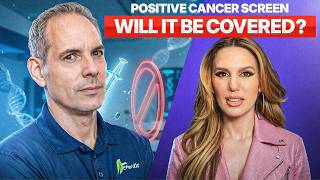
In this solo YouTube episode, Dr. Dino Prato, founder of Invita Medical Centers, uses the high‑profile case of Disney actress Christy Carlson Romano—who received a positive multi‑cancer early‑detection blood test but was denied insurance coverage for a PET scan—to illustrate systemic barriers that patients face after a positive screening. He explains that such blood tests provide only a signal, not a definitive cancer diagnosis, and outlines a step‑by‑step algorithm for acting on that signal: (1) advanced imaging (PET, MRI, etc.), (2) circulating tumor cell (CTC) analysis and methylation scoring to locate and assess spread, (3) tissue biopsy for confirmation, and (4) if imaging is negative, a comprehensive root‑cause analysis (inflammation, hormonal/metabolic factors, infections, toxins, heavy metals, mold, mycotoxins) followed by repeat testing (e.g., oncosomes). Prato argues that when cancer is caught early, treatment can be minimally invasive or even lifestyle‑driven, whereas advanced disease requires deep multi‑omics profiling (DNA, RNA, immune spatial biology) to identify >1,000 tumor‑specific markers for precision oncology—far beyond the limited data points used in standard NCCN guidelines. He critiques insurance companies and large hospitals for being financially disincentivized to cover preventive testing and imaging, noting that early detection saves lives and ultimately reduces costs, yet the system rewards treatment revenue. He urges patients to start broad multi‑cancer screening in their mid‑20s to early‑30s, obtain cash‑pay imaging if necessary, and take ownership of their health by pursuing the outlined algorithm, addressing root causes, and seeking precision‑targeted therapies when needed. Throughout, he emphasizes patient empowerment, the need for policy change, and the potential to eliminate many cancer deaths through systematic early‑detection and follow‑up.
Chapters
A Disney star with a positive cancer screening. Insurance says no, we're not paying. Christy Carlson Romano, the Disney star from Even Stevens, shared that she has a positive cancer screening, and then she hit the insurance company to pay for the PET scan, and they didn't want to pay for it. They didn't approve it. So let's put this all together. We have a celebrity with lots of resources and a platform to speak to the world, and she still runs into delays with these fabulous insurance companies when she needs answers. So what chances does the average person have? Here's what they don't tell you. The system loves to celebrate this idea of early detection. But when the tests light up and when the signals are positive and when you actually need the follow-through, that's where too many doctors freeze, too many patients get confused, and too many insurance companies don't pay the bill that can be life-saving. In this episode, I'm gonna show you the importance of multi-cancer early detection tests and how to use those signals correctly so that patients can get the best benefits. I'm Dr. Dino Prato, founder of Invita Medical Centers. For the last 25 years, my team and I have helped thousands of patients, including those that have failed some of the top cancer hospitals across the country, with precision targeting and testing that helps us gain more information so that we can treat people precisely. Now, before we go any further, make sure you're working with a doctor before you change anything. Let's get started. Early detection is being marketed everywhere. Even on the Super Bowl, you saw the marketing. But the real bottleneck is not always the test. It's what happens after you get a positive signal, because a lot of doctors still don't have the clear playbook for what to do with this information. Information of early detection blood tests, and patients are not being taught the difference between what a signal is and a proper diagnosis for cancer. So let me make it simple. A positive early cancer detection blood test is only a signal. It's not a definitive diagnosis for cancer. It just gives you one marker, which means you need to move in a certain direction, and I'll show you that here in a minute. It's not the same thing as saying this person needs to start chemotherapy immediately. Once you have that early multi-cancer early detection test that's positive, now the next step is imaging, and that imaging includes two steps. Yes, it could be a PET scan, it could be MRI, could be whatever, depends on the type of cancer it is. But in addition to that, you want to run circulating tumor cells and methylation scores because you want to see, number one, where this cancer might light up in the body, and number two, has it potentially spread. And then it leads us to the third step, which is a biopsy. If we find the tumor and biopsy it, now we have a definitive diagnosis for cancer. We have two routes to treatment. We have a roadmap. Think of it like a V in the road, the right and the left. In one roadmap, we get that signal, we did the imaging, but it didn't have circulating tumor cells and didn't show that it metastasized. In that case, when you're in there getting the biopsy, you could freeze a tumor. You're done. It's over. Get rid of it. If it's small enough, you just blade it. You're done. You don't even need surgery. Change diet and lifestyle, and you've reversed that cancer. In another patient where the disease is already spread, now we need multi-omics deep testing— DNA, RNA, immune spatial biology. And I'll tell you why, because that's going to tell us the 1,000+ markers that are unique to your cancer so we can treat it with precision and not the one-size-fits-all model of NCCN guidelines, which are often failed patients. When you think about it, their success rates are based on surgery. It's getting rid of the tumor early. Other clinical treatment, in my opinion, weakens the immune system. It's really not targeted, and in my clinical opinion, archaic. It's not the state of the art. So you want that signal. Now, what happens if you don't have either one? So you come back with a positive signal from an early detection test, a multi-cancer early detection test, but you have no imaging. Now you can do more testing. This is called root cause analysis. We want to look at inflammation, hormonal metabolic factors, infections. One of the top causes of cancers— bacterial, viral, fungal, parasitic, mycotoxins, mold— and clean that out of the body, reestablish the immune system, decrease the inflammation, look at root causes and get rid of those chemical toxins, heavy metals, infections, and help the body heal. Because you're seeing inflammation or you're seeing infection, which can be risk factors for cancer. So that's the way you're supposed to treat this. Now, I've had patients contact me and say, Dr. Prato, I have a positive early cancer detection test, but my doctor didn't know what to do. He sent me in for imaging and it came back negative, and then he just sent went home and said, we'll look at it later. And I said, that's a mistake. This is where you need to run all the root cause analysis. You need to stay on it, because if you run the root cause analysis and you find chronic inflammation, infection, chemical toxins that I just went through, now you need to clean these out of the body, improve the body's detoxification, fix the gut microbiome, improve immunity, change diet and lifestyle. And if you retest, you can test another category, it's called oncosomes, which give you even more information of early signaling of cancer. See, there's different levels to this, and unfortunately people don't know that. But I'm glad that she's getting tested, and I'm I'm glad that she's making noise about this as a famous person because it's opening up the conversation for so many patients to realize, geez, why am I not running these tests more often? With the right algorithm like I just went through, we don't have to have anyone dying from cancer. We can catch most of them very early, and we can change people's diet and lifestyle and avoid the dying and suffering and costs and expensive cancer with this type of work. Now, in my opinion, I don't think the insurance companies are that interested, nor are the big hospitals, because early detection will mean catching it early, which all the money is in the treatment, it's not in the prevention. And that's my problem. I think we need to be working towards getting people covered and prevented, and these insurance companies should cover the PET scan. If you think of it this way, the insurance company covers a PET scan, they find the cancer early, she survives, it saves the insurance company a lot of money. But that's not how it works. Insurance companies actually don't make money by saving money. The more the cost of care is, the more they can raise the rates on everyone, whether it's a family that's being covered or the employer group. And so it's actually the opposite of what you think, and that's why I don't think they're covering these tests. That's why they don't cover circulating tumor cells for early detection, liquid biopsies or this imaging, which we should be running because it's relatively inexpensive compared to the cost of cancer treatment. And if you catch something early, you've saved somebody's life. That's why we need to take our healthcare into our own hands and be empowered to do the right testing. Because I'm not saying they're bad people, but a lot of these industries are financially driven and they're not driven by the best interest of patients. So that's what you need to do. You need to run these early tests. I recommend you start them as early as 25 and 30. Every couple years you run these cancer tests, wide screens. You can look for 200+ cancers. Then get it visualized. If you have to pay out of pocket, you can get a cash pay price for imaging. And then if it's visible, then you would go in and biopsy, get rid of it if it's small, or get the right precision targeting if it's spread. And now you've got this information right away, and you don't have to worry, because if you catch it early, it's very easy to treat, and the cure rates are significantly higher. So that's why we shouldn't fear these early detection tests and have anxiety, but we should know the roadmap and not be left on our own so that we're just talking to our doctor and he says, well, let's just look into this in a few years. No, you need to use this information information now to work on prevention or find the cancer early and get rid of it, or build a plan with precision that's not based on guesswork, but on targeting based on 1,000+ markers, not the National Comprehensive Cancer Network guidelines, which all the major hospitals use, which maybe look at 24 data points, biopsy, tumor markers, and imaging. And if you're lucky, a DNA test. You need to go way beyond that so you can get the right confirmation and pathways specific to your cancer, build the right treatment plans, the right therapies, get rid of the cancer early, and save your life and that of your family. That's what people should invest in. They should be investing in prevention and working with organizations that understand prevention, because if you remove it early, you've eliminated so much pain and suffering. Just recently, we did a screen on a patient, same idea, multi-cancer early detection test, and we found there was a tumor in the kidneys with imaging, and we saved their life, able to remove the tumor. It didn't spread. It was beautiful. The person's gonna live a long and blessed life, not worrying about cancer, and we'll continue to remove the root causes. In this patient, there are other root causes that are being analyzed, inflammation, infections, other toxins. But the key was it was found early, which eliminated a lot of the pain and suffering. That's the key of early detection. We want to visualize those cancers, get them out, and it makes life so much easier for everybody. And we need to get the insurance companies on board, or go to health shares and other organizations who are going to cover these services and make a difference in your life. A lot of these insurance companies are really not that great. I've not met anyone— and maybe you're one of these people, you're welcome to comment below— who loves their insurance companies. In fact, oftentimes you have to fight just to get basic things covered. Even doctors struggle often getting the right things covered for their patients. We need to change that. Patients deserve the best care so they can save their lives and that of their families. So I hope you found this episode helpful. Look at the entire practical playbook. Don't panic. Get the early testing. Get organized in that algorithm I've shown you and in other episodes I've done where I go into this in greater detail. And get the care you need for your family so you don't have to go through what many others do. Now, if you have cancer, don't be scared. Get the right testing, the deep multi-omics planning, so that you can get precision oncology and greatly increase your chances of having a better outcome. Really, at almost any stage of cancer, because when you have that information, you're out of the guesswork, out of the dogma, and you're into the data. And that data gives you a huge advantage of finding the targets you need to get the help that will make a difference for you. I hope you found this episode helpful, and may the Lord bless you on your journey to healing. Sam.